


Quick Answer: What Is Lo Mai Gai?
Lo Mai Gai (糯米鸡, nuòmǐ jī) is a savory Cantonese rice parcel steamed inside an aromatic wrapper. The menu name reflects Cantonese pronunciation; nuòmǐ jī is Mandarin pinyin. Its name means “glutinous rice chicken.”[1]
- Rice: Glutinous rice (糯米, nuòmǐ) forms the soft, sticky base.
- Filling: Chicken and mushrooms are a familiar combination, with other savory additions varying by recipe.
- Lotus leaf: The lotus leaf (荷叶, héyè) encloses the rice and contributes a gentle earthy fragrance.
This guide focuses on the leaf-wrapped version in Cantonese cuisine. Fillings, packet sizes and presentation can vary.
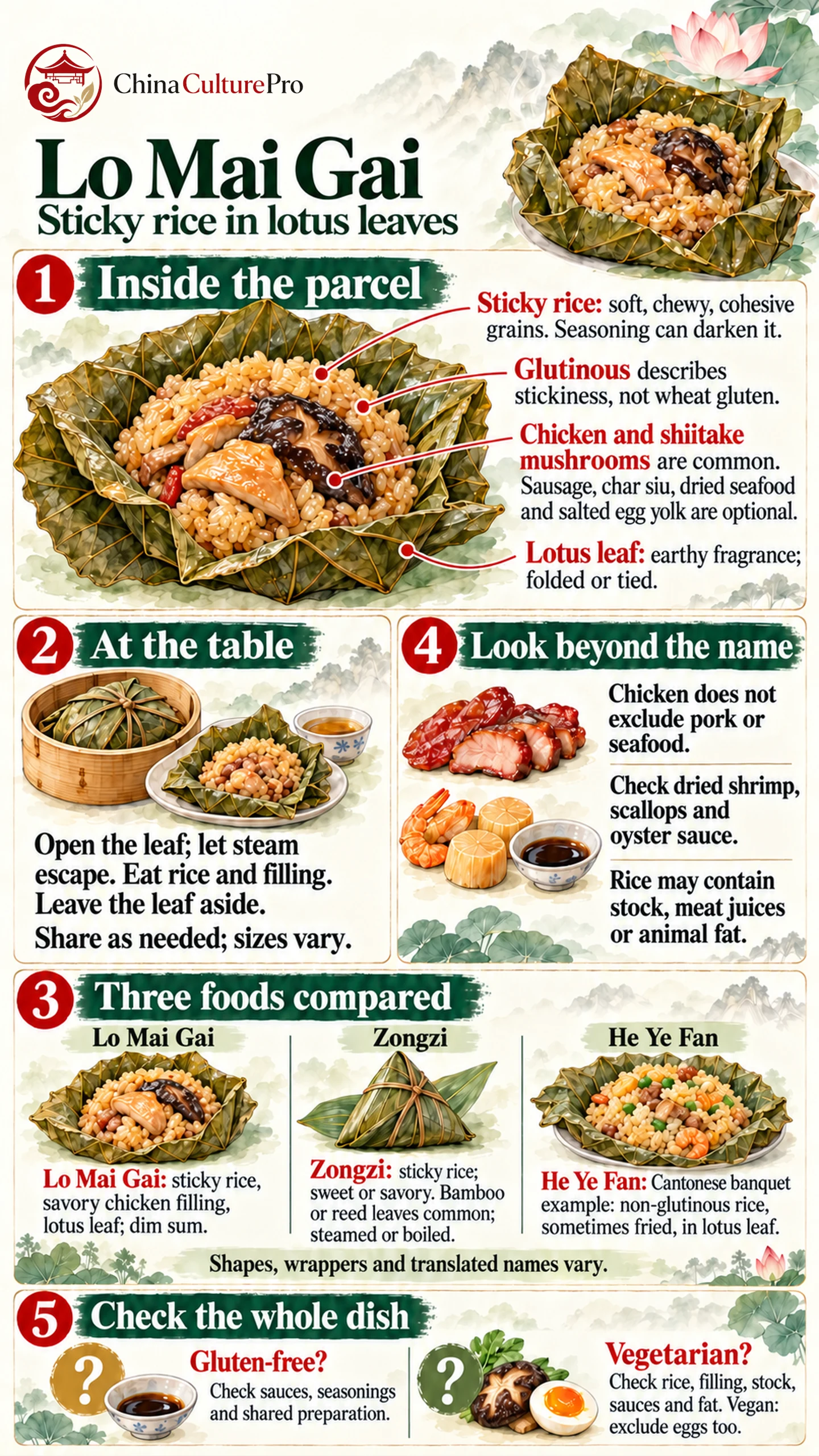
Opening the folded packet releases a gentle leaf fragrance. Inside, soft, cohesive grains surround chicken and mushrooms, carrying savory juices through the rice. Among Chinese rice dishes, this parcel can resemble other wrapped foods, but its rice, filling and serving context help identify it.
Rice, Fillings and the Lotus Leaf Wrapper
Glutinous Rice: The Sticky Base
Glutinous rice, also sold as sticky rice or sweet rice, gives the parcel its tender, chewy texture. The cooked grains cling together, allowing a portion to hold its shape while remaining soft enough to separate into bites. “Sweet rice” names the ingredient; this dish is savory.
The rice takes on seasoning and juices from the filling, so it may look lightly colored or noticeably darker. Its stickiness comes from the rice’s starch properties. The word glutinous describes that texture, not the presence of wheat gluten.[2]
Chicken and Other Savory Fillings
Chicken thigh is a common choice for its juicy texture, while dried shiitake mushrooms bring a deep mushroom flavor and a firmer bite. Other cuts and combinations are possible. Chinese sausage, char siu pork, salted egg yolk, dried shrimp or dried scallops may enrich the filling, but no single packet needs all of them.[3][4]
Soy sauce seasons the mixture and can darken the rice. Oyster sauce, sesame oil and cooking wine appear in some recipes. Rice and filling may be layered or mixed, and their preparation before steaming varies.
The Lotus Leaf Wrapper
Large dried leaves can be divided into pieces and folded around the rice. Their veins and olive-to-brown appearance help distinguish the wrapper from the food inside. Some packets are tied; others stay closed through their folds.
The leaf gives the parcel its shape and contributes a mild grassy or earthy scent during steaming. That fragrance sits alongside the richer chicken, mushroom and seasoning flavors. Using a lotus leaf does not by itself identify every wrapped rice dish as lo mai gai.[4]
How Lo Mai Gai Is Served and Eaten
At dim sum, lo mai gai commonly arrives hot in a steamer basket or on a plate. It provides a substantial rice dish within a meal of smaller shared plates. Morning tea is a familiar setting, though the dish is not defined by one time of day.
Open the leaf on the plate, let the released steam escape, and eat the rice and filling with chopsticks or a spoon. Leave the leaf aside. It can remain underneath the rice while you eat, but it is the wrapper rather than an edible dumpling skin.[4]
Portions vary, so divide the packet according to the table’s appetite and other orders. For sharing a meal, use serving utensils to transfer portions to individual plates; the broader dim sum etiquette guide explains ordering and shared dishes.
Lo Mai Gai vs Zongzi and Lotus Leaf Rice
These foods can share rice, fillings or leaf wrappers. The comparison below describes familiar forms, rather than strict rules covering every regional name. Shape and cooking method are clues, not reliable tests on their own.
| Dish | Rice and filling | Wrapper and setting | Useful boundary |
|---|---|---|---|
| Lo Mai Gai | Glutinous rice with chicken, mushrooms and other possible savory additions. | The classic Cantonese parcel uses lotus leaf and appears at dim sum. | Its filling and size vary; a square shape is not a requirement. |
| Zongzi (粽子, zòngzi) | Glutinous rice with varied sweet or savory fillings. | Bamboo or reed leaves are common; the food is closely associated with the Dragon Boat Festival. | Regional shapes and wrappers vary. Zongzi can be steamed or boiled.[5] |
| Lotus Leaf Rice, or He Ye Fan (荷叶饭, héyè fàn) | A Cantonese banquet example uses ordinary, non-glutinous rice, sometimes fried beforehand, with mixed savory ingredients. | Lotus leaf encloses rice with a more separate-grain texture. | This example differs from sticky-rice lo mai gai, but the translated menu label is not universal.[6] |
On an English menu, “lotus leaf rice” may be a loose description. Ask about the rice and filling rather than assuming that the English words identify one fixed dish.
Ordering Lo Mai Gai and Checking Ingredients
The word chicken does not reveal everything inside the packet. Check the filling, seasonings and rice preparation separately, especially when avoiding a particular ingredient.
- Meat and seafood: Ask about pork sausage, char siu, dried shrimp, scallops and oyster-based sauce. A version without pork can still contain seafood; pieces may be small or mixed through the rice.
- Sauces and additions: Soy, wheat, sesame and egg may appear in different components. Not every sauce contains all of them. Check the actual sauce or product rather than treating its name as a complete ingredient list.
- Seasoned rice: Chicken stock, meat juices or animal fat may already flavor the base. Picking out visible meat cannot remove what has been mixed into the grains. For gluten restrictions, sauces and shared preparation matter as well as the rice itself.[7]
For a vegetarian version, confirm the whole preparation. A mushroom replacement alone does not establish that the sauce, stock and cooking fat are plant-based. Vegan versions also need to exclude egg and other animal ingredients.
FAQs About Lo Mai Gai
Do you eat the lotus leaf in lo mai gai?
Normally, no. Unfold it and leave it aside while eating the rice and filling. The leaf supplies fragrance and holds the parcel together. It is not meant to be eaten like the soft skin of a dumpling.
Is lo mai gai gluten-free?
Not automatically. Glutinous rice itself is gluten-free, but sauces and other seasonings may contain wheat. Shared preparation can also matter. The rice’s name describes its stickiness; it cannot guarantee the ingredients or handling of the finished dish.
Is lo mai gai vegetarian?
The classic chicken version is not. Mushroom-based adaptations exist, but the rice seasoning, stock, oil and sauces must also suit the diet. Removing the visible chicken or sausage after cooking does not turn an already seasoned packet into a vegetarian dish.[8]
Is lo mai gai always wrapped in a lotus leaf?
No. Alongside the Cantonese leaf parcel, Singapore and Malaysia have familiar small-bowl or foil-cup versions, sometimes inverted onto a plate. Wrapped versions also exist there. The presentation changes, so the name alone does not guarantee a lotus leaf.[8]
Sources
[1] Made With Lau. Dad’s Lo Mai Gai: The Chinese Restaurant Way
[2] International Rice Research Institute, Rice Today. A consumer’s guide to rice
[3] Hong Kong Tourism Board. 6 Must-Order Dim Sum for Beginners
[4] Wei Guo, Red House Spice. Lo Mai Gai (Dim Sum Sticky Rice Chicken)
[5] Hong Kong Tourism Board. What to See and Do During the Dragon Boat Festival
[6] on.cc 東網. 飲食嘗識之荷葉飯VS糯米雞 有乜唔同?
[7] U.S. Food and Drug Administration. Questions and Answers on the Gluten-Free Food Labeling Final Rule
[8] Grace, Nyonya Cooking. Lo Mai Gai