
Quick Answer: What Is Xinyang Maojian Tea?
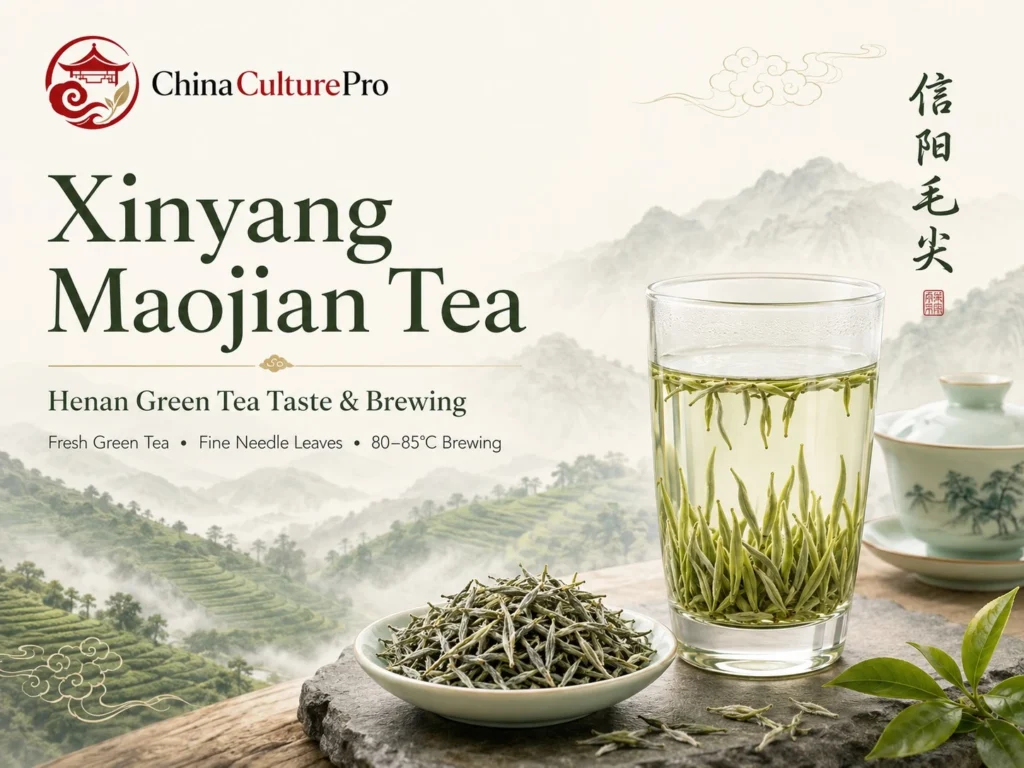
Xinyang Maojian Tea, also written as Xinyang Mao Jian or Xin Yang Mao Jian, is one of China’s famous green teas. It comes from Xinyang in Henan Province, a well-known green tea region on the northern side of the Dabie Mountains.
The name explains the tea directly: Xinyang is the origin, Mao refers to the fine white hairs on tender leaves, and Jian refers to the pointed tender tips or fine needle-like leaf shape. Some English sellers may call it Green Tip Tea or Tippy Green Tea, but Xinyang Maojian is the clearer and more useful name.
The basic points are:
Tea Type: Chinese green tea, not oxidized.
Core Origin: Xinyang, Henan Province.
Name Meaning: Xinyang origin, fine white hairs, and pointed tender tips.
Leaf Shape: fine, round, tight, straight leaves with natural white hairs.
Typical Aroma: roasted chestnut-like, tender, clean floral, or lightly bean-like aroma.
Taste: fresh, brisk, clean, slightly thick, and sweet after swallowing.
Brewing: usually 80–85°C, using a glass cup, porcelain cup, or gaiwan.
Key Difference: Huangshan Maofeng is softer and more floral, while Xinyang Maojian is finer, tighter, brisker, and more direct in returning sweetness.
Key Point: Xinyang Maojian is not every hairy-tip green tea, and not every thin, needle-like green tea should be treated as authentic Xinyang Maojian. Good Xinyang Maojian should be judged by origin, harvest season, leaf shape, natural white hairs, aroma, liquor brightness, fresh strength, bitterness transformation, and clean returning sweetness.
Xinyang Maojian, Xinyang Mao Jian, and Green Tip Tea: Are They the Same?
The English names can be confusing because sellers use different spellings and translations. Xinyang Maojian, Xinyang Mao Jian, Xin Yang Mao Jian, Green Tip Tea, and Tippy Green Tea may all refer to the same tea, but not all Maojian tea is Xinyang Maojian.
| Term | Chinese | Meaning | Scope |
|---|---|---|---|
| Xinyang Maojian Tea | 信阳毛尖 | the common English pinyin name | broadest and most practical search term |
| Xinyang Mao Jian | 信阳毛尖 | spaced pinyin spelling | same tea name, different spelling |
| Xin Yang Mao Jian | 信阳毛尖 | more separated pinyin spelling | same tea name, less common |
| Green Tip Tea | 信阳毛尖 | explanatory English translation | useful for meaning, not the best main title |
| Tippy Green Tea | 信阳毛尖 | another explanatory English name | may appear in product descriptions |
| Maojian Tea | 毛尖茶 | a general hairy-tip green tea name | not always Xinyang Maojian |
| Maojian-Style Green Tea | 毛尖风格绿茶 | green tea made in a similar shape | may be drinkable, but should not be sold as Xinyang Maojian |
A simple rule: all authentic Xinyang Maojian is Maojian tea, but not all Maojian tea is Xinyang Maojian. Maojian can describe a leaf style used in more than one region, so authentic Xinyang Maojian should be clearly connected to Xinyang, Henan, or a related production area.
Why Xinyang Maojian Is So Famous
Xinyang Maojian is famous because its northern green tea origin, Dabie Mountain environment, fine straight leaf shape, and brisk fresh taste work together. It is one of the clearest examples of how regional environment can shape a Chinese green tea.
Its reputation comes from several factors:
- Important Northern Green Tea Region: Xinyang is in southern Henan, making it one of China’s notable northern-side green tea regions.
- Dabie Mountain Environment: mountain slopes, mist, humidity, and temperature differences support slow leaf growth and fuller taste.
- Local Tea History: Xinyang has a long tea-growing background and strong local tea identity.
- Fine, Round, Tight, Straight Shape: this is the classic dry-leaf standard for Xinyang Maojian.
- Natural White Hairs: white hairs are part of the tender appearance, but they should look natural.
- Brisk Fresh Taste: good Xinyang Maojian is often more direct and energetic than softer green teas.
- Clean Returning Sweetness: bitterness should be light and able to fade into clean Hui Gan.
An experienced Chinese tea drinker would still judge the cup, not only the name. Origin matters, but specific mountain area, season, picking standard, shaping, storage, and honest labeling decide the final quality.
To understand where Xinyang Maojian fits among Chinese green teas, read our Chinese Green Tea guide.
Where Xinyang Maojian Tea Comes From
Xinyang Maojian is most closely linked with Xinyang in Henan Province. Traditional production areas are often associated with mountain and misty tea gardens around Xinyang.
| Origin | Chinese Name | Location | General Style | Typical Price Position |
|---|---|---|---|---|
| Core Xinyang Area | 信阳核心产区 | Xinyang and nearby traditional tea areas | fine, tight leaves, visible white hairs, brisk fresh taste | highest |
| Shihegang / Dongjiahe / Pingqiao Areas | 狮河港 / 董家河 / 平桥 | well-known Xinyang tea areas | classic Xinyang Maojian style, quality varies by garden and maker | medium to high |
| Luoshan / Guangshan / Xin County Areas | 罗山 / 光山 / 新县 | broader Xinyang tea regions | can produce good Maojian-style teas with regional variation | medium to high |
| High Mountain Misty Areas | 高山云雾产区 | mountain gardens around southern Xinyang and the Dabie Mountains | often cleaner aroma and finer liquor when well-made | medium to high |
| Other Henan Green Tea | 河南其他绿茶 | other Henan areas | may resemble Xinyang style but has less origin value | medium |
| Other Maojian-Style Tea | 其他毛尖风格茶 | other provinces or regions | may look similar, but aroma and taste can differ greatly | varies |
Origin affects value, but it is not the only standard. A famous Xinyang label can still produce weak tea if the leaf material, processing, or storage is poor. A non-core Maojian-style tea can still be enjoyable if it is fresh, clean, well-made, and honestly labeled.
To compare Xinyang Maojian with other tea categories, read our Chinese Tea Types guide.
What Does Xinyang Maojian Tea Taste Like?
Good Xinyang Maojian should taste fresh, brisk, clean, and slightly thick. It can feel more direct than Huangshan Maofeng and more energetic than many soft green teas. Its strength should come from freshness, body, and clean Hui Gan, not from harsh bitterness.
| Tasting Point | Good Xinyang Maojian | Weak Or Poor Xinyang Maojian |
|---|---|---|
| Aroma | roasted chestnut-like, tender, clean floral, or lightly bean-like aroma | heavy grassiness, stale smell, dull aroma, or artificial fragrance |
| First Sip | fresh, brisk, clean, and lively | harsh, thin, sour, or rough |
| Strength | fresh and energetic without being harsh | strong bitterness but weak sweetness |
| Bitterness | light and able to fade | heavy bitterness that stays |
| Astringency | controlled and clean if present | drying, rough, or throat-tightening |
| Liquor | bright, clear, yellow-green or light green-yellow | dull, dark, muddy, or cloudy |
| Mouthfeel | slightly thick, clean, and comfortable | watery, flat, or irritating |
| Hui Gan | clean returning sweetness | weak or absent aftertaste |
| Finish | refreshing and mouth-clearing | dry mouth, stale aftertaste, or throat discomfort |
The classic aroma of Xinyang Maojian is often described as roasted chestnut-like or tender, sometimes with clean floral or lightly bean-like freshness. It should feel natural, not perfumed or sharp.
Good Xinyang Maojian is not simply bitter. In Chinese tea drinking, “strong” does not mean harsh. The better sign is fresh strength that turns clean: a brisk first sip, light bitterness that can fade, clear Hui Gan, and a mouth that feels fresh after drinking.
What Good Xinyang Maojian Tea Looks Like
Dry leaf appearance is one of the most useful clues for Xinyang Maojian. Good tea should show the classic shape: fine, round, tight, and straight.
| Good Signs | Warning Signs |
|---|---|
| fine, round, tight, straight leaves | coarse, loose, bent, or uneven leaves |
| natural visible white hairs | excessive loose hairs, strange powder, or hairs falling off heavily |
| sharp tender tips and even shape | too many broken pieces or mixed-grade leaves |
| natural green or glossy green tone | overly bright green, dull gray, or dark brown color |
| dry, clean, and light texture | damp, soft, or flexible leaves |
| fresh chestnut-like or tender dry aroma | moldy, sour, stale, or chemical smell |
Good Xinyang Maojian is not simply “the greener, the better,” and more white hairs do not automatically mean better tea. Look for fine, round, tight, straight leaves with natural white hairs, clean aroma, natural green color, and no loose powder or exaggerated fuzz.
Xinyang Maojian vs Longjing vs Biluochun vs Huangshan Maofeng
Xinyang Maojian, Longjing, Biluochun, and Huangshan Maofeng are all famous Chinese green teas, but each has its own standard. Do not judge one by the shape, aroma, or taste of another.
| Point | Xinyang Maojian | Longjing Tea | Biluochun Tea | Huangshan Maofeng Tea |
|---|---|---|---|---|
| Leaf Shape | fine, round, tight, straight | flat, smooth, straight | fine, tight, curled like a snail | plump, slightly curved, peak-like |
| Visible White Hairs | naturally visible | usually not obvious | obvious and important | naturally visible |
| Main Aroma | roasted chestnut-like, tender, clean floral | bean-like, chestnut-like, lightly roasted | floral-fruity, tender, lively | orchid-like, fresh floral, tender chestnut-like |
| Taste | brisk, fresh, energetic, clean | clear, fresh, mellow, structured | delicate, fragrant, lively | soft, gentle, mellow |
| Processing Character | pan-fired and shaped into fine straight leaves | pan-fired and flattened | pan-fired and curled | baked green tea character |
| Classic Origin | Xinyang, Henan | Hangzhou / West Lake and nearby areas | Dongting Mountain area of Taihu Lake, Suzhou | Huangshan, Anhui |
| Best Brewing Range | 80–85°C, sometimes 85–90°C for mature tea | 75–85°C | 75–80°C | 80–85°C |
Longjing is clearer and steadier, Biluochun is more fragrant and lively, Huangshan Maofeng is softer and more floral, and Xinyang Maojian is brisker, tighter, and more direct in Hui Gan.
To compare Xinyang Maojian with Dragon Well, read our Longjing Tea guide. To compare Xinyang Maojian with Green Snail Spring, read our Biluochun Tea guide. To compare Xinyang Maojian with Yellow Mountain Maofeng, read our Huangshan Maofeng Tea guide.
How Xinyang Maojian Tea Is Made
Xinyang Maojian is a green tea, so it is not oxidized like oolong or black tea. Its processing is focused on preserving freshness while shaping the tea into fine, tight, straight leaves.
| Step | Chinese Term | What Happens | Why It Matters |
|---|---|---|---|
| Picking | 采摘 | tender buds and young leaves are picked in spring | leaf tenderness supports aroma and freshness |
| Spreading | 摊放 | fresh leaves rest and lose some moisture | reduces raw grassy sharpness and prepares the leaves |
| Sha Qing | 杀青 | heat stops oxidation | keeps the tea green and fresh |
| Rolling | 揉捻 | leaves are rolled and tightened | helps form the fine, tight Maojian shape |
| Shaping / Straightening | 理条 | leaves are arranged into straighter lines | supports the classic fine, round, tight, straight appearance |
| Drying | 干燥 | leaves are fully dried for storage | stabilizes aroma and keeps the tea clean |
The key difference is shape. Longjing is pressed flat, Biluochun is curled into snail-like shapes, Huangshan Maofeng keeps a plumper peak-like form, and Xinyang Maojian emphasizes fine, round, tight, straight leaves.
The goal is fresh aroma, clear liquor, brisk taste, clean Hui Gan, and a dry leaf shape that shows careful handling.
Harvest Time and Seasons of Xinyang Maojian
Harvest season strongly affects Xinyang Maojian’s tenderness, aroma, strength, and price. Spring tea is the main focus, but not every drinker needs the most expensive Mingqian tea.
| Harvest Period | Chinese Name | Time | Characteristics | Price Position |
|---|---|---|---|---|
| Pre-Qingming | 明前 | before Qingming, often late March to early April | most tender, delicate aroma, limited quantity | highest |
| Pre-Grain Rain | 雨前 | before Grain Rain, usually mid to late April | more balanced leaf shape, aroma, taste, and value | medium to high |
| Late Spring | 春尾茶 | after Grain Rain and before early summer | stronger taste, less delicate, more affordable | lower |
| Summer Tea | 夏茶 | summer | stronger bitterness, weaker aroma, often more durable | low |
| White Dew Tea | 白露茶 | around White Dew in early autumn | not as tender as spring tea, but may have a clean sweet aroma | medium |
Mingqian Xinyang Maojian, picked before Qingming, is valued for tenderness and rarity, while Yuqian Xinyang Maojian is often more practical for daily drinking because it offers better balance and value. Summer tea can be bitter but durable; White Dew tea is not the main high-end standard, but some drinkers enjoy its clean autumn sweetness.
How to Brew Xinyang Maojian Tea
Xinyang Maojian is a green tea, so it should not be boiled or steeped aggressively. It is slightly more robust than very delicate Biluochun, but boiling water can still damage its fresh aroma and make the liquor harsh.
| Brewing Method | Teaware | Water Temperature | Leaf Amount | Steeping Time | Best For |
|---|---|---|---|---|---|
| Glass Cup Brewing | glass cup | 80–85°C | 2–3g / 200ml | 2–3 minutes | seeing fine leaves and white hairs open |
| Gaiwan Brewing | porcelain gaiwan | 80–85°C | 3–4g / 150ml | 30–60 seconds first infusion | tasting and better control |
| Porcelain Cup Or Pot | porcelain cup or teapot | 80–85°C | 3–4g / 150ml | 1–2 minutes | sharing with one or two people |
| More Mature Tea | glass cup or gaiwan | 85–90°C | adjust by taste | shorter steeping if stronger | fuller taste, but avoid boiling |
Brewing tips:
- Use 80–85°C water for most Xinyang Maojian. Tender Mingqian tea can stay closer to 80°C.
- Use 85–90°C only for more mature or stronger tea. Do not use boiling water for long steeping.
- Do not rinse Xinyang Maojian. The first infusion carries much of the fresh aroma.
- Do not steep too long. Long steeping can turn briskness into harsh bitterness.
- Use a glass cup for appearance. The fine leaves and white hairs are part of the experience.
- Brew 2–3 times. Later infusions can use slightly longer time.
For water temperature and brewing control, read our How to Brew Chinese Tea guide. For glass cups, gaiwans, and teaware choices, read our Chinese Teaware guide.
How to Taste Xinyang Maojian Tea
Tasting Xinyang Maojian should focus on leaf shape, natural white hairs, clean aroma, bright liquor, fresh strength, bitterness transformation, and clean Hui Gan. Do not judge it only by how green or bitter it is.
| Tasting Check | What To Look For |
|---|---|
| Dry Leaf Shape | fine, round, tight, straight, and even |
| White Hairs | naturally visible, not powdery or excessive |
| Dry Leaf Aroma | roasted chestnut-like, tender, clean floral, or lightly bean-like; no stale smell |
| Liquor Color | bright yellow-green or light green-yellow |
| Wet Aroma | fresh, tender, chestnut-like, or clean floral after brewing |
| First Sip | brisk, fresh, clean, and not harsh |
| Bitterness | light if present, and able to fade |
| Hui Gan | clean, direct returning sweetness |
| Mouthfeel | slightly thick and comfortable, not rough |
| Finish | mouth feels fresh, not dry or locked |
| Spent Leaves | tender, even, soft, and naturally opened |
Good Xinyang Maojian should have energy without harshness. Its bitterness should transform, its sweetness should return cleanly, and the mouth should feel fresh after swallowing.
For aroma, mouthfeel, Hui Gan, and aftertaste, read our Chinese Tea Tasting guide.
Xinyang Maojian vs Other Maojian-Style Tea
Xinyang Maojian has the strongest reputation among Maojian-style green teas, but other Maojian teas can still be useful for daily drinking if they are clearly labeled.
| Point | Xinyang Maojian | Other Maojian-Style Tea |
|---|---|---|
| Origin | Xinyang, Henan, and related Xinyang-area production | other Henan areas or other provinces |
| Reputation | one of China’s famous green teas | lower, but may still have quality |
| Leaf Shape | fine, round, tight, straight | may be less even, looser, or coarser |
| Aroma | roasted chestnut-like, tender, clean floral | may be simpler, greener, or less layered |
| Taste | brisk, fresh, slightly thick, clean Hui Gan | may be lighter, rougher, or less stable |
| Price | higher, especially early spring tea | usually more affordable |
| Buying Risk | higher imitation risk | less origin pressure, but quality still varies |
| Best For | origin-focused tasting, gifting, classic Maojian experience | daily drinking and value-focused buying |
Buying Xinyang Maojian means paying for origin, typical fine straight leaf shape, brisk fresh taste, and famous-tea experience. Other Maojian-style teas can still be good daily teas, but they should not be sold as Xinyang Maojian without clear origin.
How to Choose and Buy Xinyang Maojian Tea
Xinyang Maojian is widely recognized, so imitations and vague Maojian labels can appear in the market. Buying carefully matters, especially when the tea is described as Pre-Qingming or top grade.
| What To Check | Good Sign | Warning Sign |
|---|---|---|
| Origin | clearly says Xinyang, Henan, or a related Xinyang-area origin | only says “Maojian” with no origin detail |
| Specific Area | mentions areas such as Shihegang, Dongjiahe, Pingqiao, Luoshan, Guangshan, or Xin County when relevant | famous origin words used vaguely without detail |
| Harvest Season | Mingqian, Yuqian, or spring harvest clearly stated | vague “premium spring tea” with no timing |
| Year / Production Date | current-year tea with clear production information | no year, no production date, or old tea sold as fresh |
| Leaf Shape | fine, round, tight, straight leaves | coarse, loose, bent, broken, or heavily mixed leaves |
| White Hairs | natural, visible, attached to tender leaves | excessive loose powder or strange white dust |
| Leaf Color | natural green or glossy green | overly bright green, dull gray, or dark brown |
| Aroma | roasted chestnut-like, tender, clean floral, or lightly bean-like | sour odor, stale smell, chemical fragrance, or heavy grassiness |
| Packaging | sealed, practical, and informative | luxury box with vague tea information |
| Grade Claims | origin, harvest, and freshness support the grade | “top grade” or “supreme grade” with no useful details |
| Price | matches origin, harvest, and seller credibility | very cheap “Pre-Qingming Xinyang Maojian” |
The safest approach is not buying the most expensive tea. If you do not have a reliable Xinyang Maojian source, a clearly labeled current-year Maojian from a transparent seller may be safer than a suspicious “top grade Xinyang Maojian.” Good Xinyang Maojian is not cheap, but expensive Xinyang Maojian is not automatically good.
How to Store Xinyang Maojian Tea
Xinyang Maojian is a green tea. Its chestnut-like aroma and fresh strength can fade if the tea is exposed to air, light, heat, moisture, or strong odors.
Store Xinyang Maojian tea this way:
- Seal It Tightly: use a sealed tin, foil bag, or airtight container.
- Keep It Away From Light: light speeds up aroma and color loss.
- Keep It Cool: refrigeration can help, especially for high-quality spring tea.
- Keep It Dry: moisture can ruin green tea quickly.
- Avoid Odors: Xinyang Maojian absorbs smells from spices, coffee, flowers, and other teas.
- Use Small Portions: divide larger amounts into smaller packs to reduce repeated opening.
- Drink After Opening: for best freshness, finish opened tea within about 1–3 months.
If refrigerating Xinyang Maojian, seal it well and let the sealed package return closer to room temperature before opening to avoid condensation. Once the fresh aroma fades and the liquor turns dull, the best part of the tea is already weakened.
Common Mistakes With Xinyang Maojian Tea
Many Xinyang Maojian problems come from using the wrong green tea standard or mistaking harshness for strength.
| Mistake | Better Method |
|---|---|
| Using boiling water | use 80–85°C water for most Xinyang Maojian |
| Steeping too long | keep glass cup brewing around 2–3 minutes |
| Thinking greener always means better | look for natural green or glossy green tones |
| Thinking more white hairs always means better | look for natural white hairs, not loose powder |
| Treating every Maojian as Xinyang Maojian | check origin, leaf shape, aroma, and seller details |
| Mistaking strong bitterness for quality | good strength should become clean Hui Gan |
| Mistaking grassy taste for freshness | good freshness should be clean and sweet, not raw and harsh |
| Storing good tea too long | drink Xinyang Maojian while it is fresh |
| Using smelly cups or water | clean teaware and clean water are essential |
| Buying only by packaging or grade words | origin, harvest, freshness, and taste matter more |
| Judging it by Longjing, Biluochun, or Huangshan Maofeng standards | Xinyang Maojian has its own fine, straight, brisk style |
Learn how to brew Xinyang Maojian before judging or buying more expensive tea. Even good tea can taste poor if brewed with boiling water or stored badly.
Xinyang Maojian Tea Benefits
Xinyang Maojian is often enjoyed as a fresh, brisk, clean daily green tea because it is:
- Refreshing: it contains caffeine and can feel clear and lively.
- Low In Calories: plain Xinyang Maojian has almost no calories when unsweetened.
- Rich In Tea Polyphenols: like other green teas, it contains natural plant compounds.
- A Lighter Alternative To Sweet Drinks: it gives aroma and taste without sugar.
- Easy To Drink Daily: when brewed well, it is fresh, brisk, and pleasant.
Xinyang Maojian is tea, not medicine. It should not be presented as a treatment for disease, weight loss, blood pressure, or cancer.
Final Thoughts
Xinyang Maojian is not every hairy-tip green tea, and not every thin, needle-like green tea should be treated as authentic Xinyang Maojian.
Real Xinyang Maojian should be judged by origin, harvest season, leaf shape, natural white hairs, aroma, liquor brightness, fresh strength, bitterness transformation, and clean returning sweetness. Good Xinyang Maojian is not simply greener, and stronger bitterness does not mean stronger tea quality.
A good cup should have fine, round, tight, straight leaves, naturally visible white hairs, fresh roasted chestnut-like, tender, clean floral, or lightly bean-like aroma, bright liquor, brisk fresh taste, light bitterness that can fade, clean Hui Gan, and a fresh comfortable finish.
FAQs About Xinyang Maojian Tea
What is Xinyang Maojian tea?
Xinyang Maojian tea, also written as Xinyang Mao Jian, is a famous Chinese green tea from Xinyang, Henan. It is known for fine, round, tight, straight leaves, visible white hairs, brisk fresh taste, and clean Hui Gan.
Is Xinyang Maojian the same as Xinyang Mao Jian?
Yes. Xinyang Maojian and Xinyang Mao Jian are two spelling styles for the same Chinese tea name, 信阳毛尖.
What does Maojian mean?
Maojian means “hairy tip” or “downy tip.” Mao refers to fine white hairs on tender tea leaves, and Jian refers to pointed tender tips or fine needle-like leaf shape.
Where does Xinyang Maojian tea come from?
Xinyang Maojian comes from Xinyang in Henan Province, especially traditional Xinyang-area tea regions around the Dabie Mountains. Other Maojian-style teas exist, but they should not automatically be treated as Xinyang Maojian.
What does Xinyang Maojian tea taste like?
Good Xinyang Maojian tastes fresh, brisk, clean, and slightly thick. It often has roasted chestnut-like, tender, clean floral, or lightly bean-like aroma, with light bitterness that fades into clean Hui Gan.
What is the difference between Xinyang Maojian and Longjing?
Xinyang Maojian has fine, round, tight, straight leaves and a brisker taste. Longjing has flat smooth leaves and a clearer bean-like or chestnut-like aroma.
What is the difference between Xinyang Maojian and Huangshan Maofeng?
Xinyang Maojian is finer, tighter, straighter, and more brisk. Huangshan Maofeng is plumper, more peak-like, softer, and more floral.
How do you brew Xinyang Maojian tea?
Use 80–85°C water, preferably in a glass cup or gaiwan. Use about 2–3g per 200ml for glass cup brewing and steep for around 2–3 minutes. Do not use boiling water.
How can you tell if Xinyang Maojian tea is good?
Good Xinyang Maojian has fine, round, tight, straight leaves, natural white hairs, fresh chestnut-like or tender aroma, bright liquor, brisk fresh taste, light bitterness that fades, clean Hui Gan, and tender even spent leaves.
How should Xinyang Maojian tea be stored?
Store Xinyang Maojian sealed, cool, dry, dark, and away from odors. Refrigeration can help if the tea is well sealed. After opening, finish it as soon as possible, ideally within 1–3 months.