
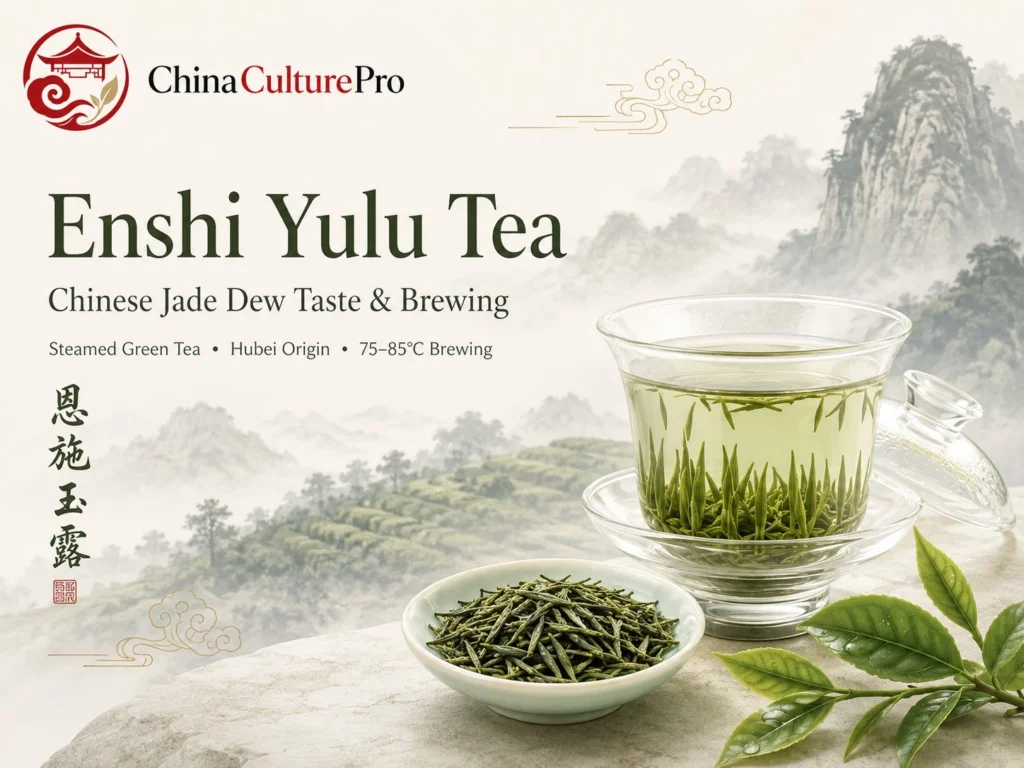

Quick Answer: What Is Enshi Yulu Tea?
Enshi Yulu Tea, also written as Enshi Yu Lu and often translated as Enshi Jade Dew, is a famous Chinese green tea from Enshi, Hubei Province. It is one of China’s most distinctive green teas because it uses traditional steaming, not the pan-firing style used for many famous Chinese green teas.
The name is direct: Enshi is the origin, and Yulu means “jade dew.” The English name Jade Dew Tea can be confusing because Japanese Gyokuro is also translated as “jade dew,” but Enshi Yulu is not Japanese Gyokuro. It is a Chinese steamed needle-shaped green tea from Enshi.
The basic points are:
Tea Type: Chinese green tea, not oxidized.
Core Origin: Enshi, Hubei Province, in the Wuling Mountain area.
Processing Character: steamed green tea, using steam fixation instead of pan-firing.
Leaf Shape: fine, straight, tight, needle-like leaves, often described as pine-needle-shaped.
Visual Standard: the “three greens” — green dry leaves, green liquor, and green leaf base.
Typical Aroma: fresh, elevated, vegetal, tender, lightly bean-like, or faintly seaweed-like.
Taste: fresh, brisk, mellow, clean, lightly savory, and sweet after swallowing.
Brewing: usually 75–85°C, using a glass cup or gaiwan.
Key Difference: Longjing is pan-fired and bean-like, Anji White Tea is soft and sweet, Lu’an Guapian is fuller and more roasted, while Enshi Yulu is steamed, green, fresh, and lightly umami.
Key Point: Enshi Yulu is a traditional steamed needle-shaped green tea from Enshi, Hubei. It is not Japanese Gyokuro, and not every steamed green tea should be called Enshi Yulu. Good Enshi Yulu should show clear steamed-green character, fine straight pine-needle-like leaves, natural verdant color, fresh elevated aroma, clear bright liquor, fresh mellow taste, clean green vegetal character, and natural Hui Gan.
Enshi Yulu, Enshi Yu Lu, and Jade Dew Tea: Are They the Same?
Enshi Yulu, Enshi Yu Lu, Enshi Jade Dew, and Jade Dew of Enshi usually refer to the same Chinese tea. The broader phrase “Jade Dew Tea,” however, can point readers toward Japanese Gyokuro, so the origin word Enshi matters.
| Term | Chinese | Meaning | Best Use |
|---|---|---|---|
| Enshi Yulu Tea | 恩施玉露 | common English pinyin name | clearest main keyword |
| Enshi Yu Lu | 恩施玉露 | spaced pinyin spelling | same tea, different spelling |
| Enshi Jade Dew | 恩施玉露 | English translation of Yulu | useful for explaining the name |
| Jade Dew of Enshi | 恩施玉露 | descriptive English name | clear because “Enshi” is included |
| Jade Dew Tea | 玉露茶 | broad translation | can be confused with Japanese Gyokuro |
| Gyokuro | 玉露 | Japanese jade dew tea | different tea tradition, not Enshi Yulu |
A safe rule: Enshi Yulu should be understood together with Enshi, Hubei, and China. If a label only says “Jade Dew Tea,” check whether it means Enshi Yulu or Japanese Gyokuro. Do not treat every Jade Dew tea as Enshi Yulu, and do not present Enshi Yulu as Japanese tea.
Is Enshi Yulu a Steamed Green Tea?
Yes. Enshi Yulu is a Chinese steamed green tea.
This is its most important technical identity. Many famous Chinese green teas are pan-fired or baked after picking. Enshi Yulu is different because its fresh leaves are fixed with steam, a method that preserves a greener color, fresher vegetal character, and light umami.
| Point | Enshi Yulu | Most Chinese Green Teas |
|---|---|---|
| Main Fixation | steam fixation | pan-firing, baking, or other heat methods |
| Representative Style | Chinese steamed needle-shaped green tea | Longjing, Huangshan Maofeng, Lu’an Guapian, and many others |
| Aroma Direction | fresh vegetal, tender, lightly savory, sometimes faint seaweed-like | bean-like, chestnut-like, floral, roasted, or baked |
| Liquor Color | often greener and clearer | often yellow-green or light golden-green |
| Taste Direction | fresh, brisk, mellow, light umami | varies by tea; often pan-fired, nutty, floral, or mellow |
| Common Risk | raw green taste, stewed greenness, or watery taste if poorly made | burnt aroma, over-roast, or rough pan-fired notes if poorly made |
Steaming should not be described as only Japanese. China has its own history of steamed green tea, and Enshi Yulu is one of the most important living examples of that tradition. It is not “Chinese Gyokuro.” It is Enshi’s own steamed green tea style.
Why Enshi Yulu Is So Famous
Enshi Yulu is famous because its craft, shape, origin, and flavor are unusually distinctive among Chinese green teas. Its identity is built around traditional steaming, pine-needle shape, the “three greens,” and a clean fresh taste.
Its reputation comes from several factors:
- Rare Chinese Steamed Green Tea: most well-known Chinese green teas are not steamed; Enshi Yulu preserves a traditional steamed style.
- Enshi Mountain Environment: Enshi sits in the Wuling Mountain region, with humid climate, cloud and mist, and strong ecological tea-growing conditions.
- Selenium-Rich Regional Background: Enshi is widely known for selenium-rich local conditions, though selenium should not be used as a medical claim.
- Pine-Needle-Like Shape: good Enshi Yulu has fine, straight, tight leaves that look like pine needles.
- The “Three Greens”: dry leaves are green, the liquor is green and bright, and the leaf base remains green and tender.
- Fresh Elevated Aroma: good tea has a clean, high, fresh aroma instead of heavy roast.
- Fresh Mellow Taste: the liquor should be fresh, brisk, sweet after swallowing, and not rough.
- Cultural Value: its traditional craft and protected regional identity give it value beyond simple daily green tea.
An experienced Chinese tea drinker would still judge the cup, not only the name. Enshi origin matters, but final quality depends on leaf tenderness, steaming control, shaping, drying, storage, and whether the fresh green character remains clean.
To understand where Enshi Yulu fits among Chinese green teas, read our Chinese Green Tea guide.
Where Enshi Yulu Tea Comes From
Enshi Yulu is most closely linked with Enshi City in Hubei Province. The tea is associated with the Wuling Mountain area, where humidity, mist, mountain terrain, and local tea culture shape its style.
| Origin | Chinese Name | Location | General Style | Typical Price Position |
|---|---|---|---|---|
| Core Enshi Area | 恩施核心产区 | Enshi City, Hubei; names such as Bajiao Dong, Baiyangping, and Wufeng Mountain may appear in origin descriptions | classic pine-needle shape, clear “three greens,” fresh elevated aroma | highest |
| Wuling Mountain Area | 武陵山区 | Enshi and the surrounding Wuling Mountain region | clean aroma, finer taste when well-made, strong mountain tea identity | medium to high |
| Broader Enshi Prefecture Tea | 恩施州茶区 | broader Enshi-area tea production | can be good, but should not automatically be treated as core Enshi Yulu | medium |
| Other Hubei Green Tea | 湖北其他绿茶 | other green tea regions in Hubei | may be fresh and drinkable, but not necessarily Enshi Yulu | medium |
| Other Steamed Green Tea | 其他蒸青绿茶 | other Chinese or non-Chinese steamed green tea areas | may have steamed freshness but not Enshi origin or pine-needle standard | varies |
Origin affects value, but origin alone is not enough. A tea sold as Enshi Yulu still needs the correct steamed craft, fine straight shape, fresh aroma, clear liquor, and clean taste. A broader steamed green tea can still be enjoyable, but it should not be marketed as Enshi Yulu without clear origin and style.
To compare Enshi Yulu with other tea categories, read our Chinese Tea Types guide.
What Makes Steamed Green Tea Different?
Steaming changes the direction of a green tea. Instead of using a hot pan or baking heat to stop oxidation, steamed green tea uses steam to fix the fresh leaves quickly. This can keep the color greener and the taste more fresh-vegetal.
| Point | Steamed Green Tea | Pan-Fired Green Tea | Baked Green Tea |
|---|---|---|---|
| Fixation Method | steam fixation | heated pan or wok | heated air or baking |
| Color Tendency | greener, brighter, more vivid when well-made | often yellow-green or green with pan-fired tone | often softer yellow-green |
| Aroma Direction | fresh vegetal, tender, lightly savory, light umami | bean-like, chestnut-like, nutty, pan-fired | floral, soft, clean, sometimes lightly sweet |
| Taste Direction | fresh, brisk, clean, sometimes savory | structured, mellow, sweet, often nutty | gentle, floral, smooth |
| Representative Chinese Example | Enshi Yulu | Longjing | Huangshan Maofeng |
| Common Risk | raw green, stewed, watery, or seaweed-heavy if poorly controlled | burnt, harsh, or over-pan-fired | flat, dull, or over-dried |
Good steamed green tea is not simply “green.” It should be green in a clean, bright, fresh way. For Enshi Yulu, the best steamed character is fresh without raw greenness, green without dull stewed taste, and savory without fishy seaweed heaviness.
What Does Enshi Yulu Tea Taste Like?
Good Enshi Yulu should taste fresh, brisk, mellow, clean, and lightly savory. Its steamed character gives it a clearer green vegetal direction than many pan-fired Chinese green teas. It can show light umami, tender bean-like notes, a faint seaweed-like hint, and a clean sweet aftertaste.
| Tasting Point | Good Enshi Yulu | Weak Or Poor Enshi Yulu |
|---|---|---|
| Aroma | fresh, elevated, tender, lightly vegetal, bean-like, or faintly seaweed-like | stale, grassy, stewed, fishy, dull, sour, or smoky |
| First Sip | fresh, brisk, clean, and lively | thin, harsh, watery, bitter, or rough |
| Steamed Character | clear fresh-green character without raw greenness | raw green bite, stewed greenness, or dull wateriness |
| Vegetal Note | clean young vegetal taste, like tender greens or young peas | coarse grassiness or muddy vegetable taste |
| Umami | light, natural, and clean | absent, heavy, fishy, or strange |
| Seaweed-Like Note | faint, fresh, and clean if present | heavy, fishy, or overpowering |
| Bitterness | low to moderate and able to fade | heavy bitterness that stays |
| Liquor | clear, bright, green or yellow-green | dull, dark, muddy, or cloudy |
| Mouthfeel | smooth, mellow, and refreshing | rough, drying, thin, or irritating |
| Hui Gan | natural returning sweetness | weak, messy, or absent |
Good Enshi Yulu’s freshness comes from steaming, not from raw greenness. The green vegetal note should feel clean and bright, not stewed or fishy. A light seaweed-like note can appear, but it should stay fresh and subtle. If the tea smells heavily of seaweed and tastes rough or fishy, that is not higher quality.
Compared with Anji White Tea, Enshi Yulu is more green, savory, and steamed in character. Compared with Lu’an Guapian, it is lighter and fresher. Compared with Longjing, it is less pan-fired and less chestnut-like.
What Good Enshi Yulu Tea Looks Like
Dry leaf appearance is very important for Enshi Yulu because its shape is part of its identity. A good Enshi Yulu should look fine, straight, tight, and pine-needle-like.
| Good Signs | Warning Signs |
|---|---|
| fine, tight, straight, even leaves | coarse, loose, bent, broken, or messy leaves |
| pine-needle-like shape | rolled, curled, flat, or shapeless dry leaves |
| natural verdant green, moist-looking green sheen | dead green, dull gray-green, dark, or unnaturally bright green |
| natural visible white hairs | excessive loose fuzz or strange powder |
| dry, clean texture | damp, soft, sticky, or flexible leaves |
| fresh elevated aroma, tender aroma, or clean vegetal aroma | stale, stewed, sour, smoky, moldy, or raw green smell |
| clear bright green or yellow-green liquor | dull, dark, muddy, or cloudy liquor |
| tender green leaf base, often described as jade-like | dark, red, uneven, rough, or broken leaf base |
The “three greens” are central: dry leaf green, liquor green, and leaf base green. But this does not mean “the greener, the better.” Good green should look natural, bright, and moist-looking, not fluorescent or lifeless. The pine-needle shape is just as important as color.
Enshi Yulu vs Japanese Sencha and Gyokuro
Enshi Yulu is often compared with Japanese green teas because all three names can lead English readers toward steamed green tea. This comparison is useful, but it must stay clear: Enshi Yulu is Chinese tea, not Japanese tea.
| Point | Enshi Yulu | Japanese Sencha | Japanese Gyokuro |
|---|---|---|---|
| Origin | Enshi, Hubei, China | Japan | Japan |
| Tea Category | Chinese steamed green tea | Japanese steamed green tea | Japanese shaded steamed green tea |
| Name Issue | Yulu means Jade Dew | not usually called Jade Dew | Gyokuro also means Jade Dew |
| Shading | usually not explained through Japanese shade-growing logic | usually unshaded or lightly shaded depending on type | heavily shaded before harvest |
| Shape | fine, straight, pine-needle-like | often flatter, broken, or needle-like but different in style | fine Japanese-style leaf shape |
| Taste Direction | fresh, vegetal, lightly savory, clean, light umami | fresh, grassy, vegetal, sometimes brisk | sweet, rich, umami-heavy, seaweed-like |
| Best Comparison Use | Chinese steamed green tea identity | rough reference for steamed freshness | name and umami comparison only, not same tea |
The key distinction: Enshi Yulu is not Chinese Gyokuro and not Japanese Sencha. It belongs to China’s own steamed green tea tradition. Sencha can help English readers imagine steamed freshness, and Gyokuro explains why “Jade Dew” can be confusing, but neither should replace Enshi Yulu’s Chinese origin and craft identity.
Enshi Yulu vs Longjing vs Anji White Tea vs Lu’an Guapian
Enshi Yulu belongs in the Chinese green tea family, but it should not be judged by the standards of pan-fired or baked green teas. It has its own steamed-green logic.
| Point | Enshi Yulu | Longjing Tea | Anji White Tea | Lu’an Guapian Tea |
|---|---|---|---|---|
| Core Craft | steamed green tea | pan-fired green tea | green tea made from pale spring leaves | pan-fired and baked single-leaf green tea style |
| Leaf Shape | fine, straight, pine-needle-like | flat, smooth, straight | straight, even, pale or tender green | single leaf, melon-seed-like |
| Visual Style | three greens: dry leaf, liquor, leaf base | flat and smooth, often yellow-green | jade-white or tender green leaf color | thicker single leaves, bright yellow-green liquor |
| Main Aroma | fresh vegetal, tender, light umami | bean-like, chestnut-like, clean pan-fired aroma | fresh, soft, lightly floral, tender | roasted, chestnut-like, fuller leaf aroma |
| Taste | fresh, brisk, mellow, lightly savory | clean, structured, mellow | soft, sweet, low bitterness | fuller, thicker, more substantial |
| Best For | drinkers who like steamed freshness and clean umami | drinkers who like classic bean-like Chinese green tea | drinkers who like soft, sweet, low-bitterness tea | drinkers who like fuller body and leaf depth |
Choose Enshi Yulu for steamed freshness, Longjing for clean bean-like structure, Anji White Tea for soft sweetness, and Lu’an Guapian for fuller body.
To compare Enshi Yulu with Dragon Well, read our Longjing Tea guide. To compare Enshi Yulu with Anji Bai Cha, read our Anji White Tea guide. To compare Enshi Yulu with Lu’an Guapian, read our Lu’an Guapian Tea guide.
How Enshi Yulu Tea Is Made
Enshi Yulu is a green tea, so it is not oxidized like oolong or black tea. Its defining process is steam fixation, followed by cooling, rolling, shaping, and drying.
| Step | Chinese Term | What Happens | Why It Matters |
|---|---|---|---|
| Picking | 采摘 | tender buds and young leaves are picked in spring | leaf tenderness supports fine shape and fresh taste |
| Spreading | 摊放 | fresh leaves rest and lose some surface moisture | prepares leaves for even steaming |
| Steam Fixation | 蒸汽杀青 | steam quickly stops enzyme activity | the defining process of Enshi Yulu |
| Cooling | 扇凉 / 冷却 | steamed leaves are cooled quickly | prevents overcooked or stewed green taste |
| Rolling | 揉捻 | leaves are rolled and tightened | builds body and helps shape |
| Shaping | 整形 | leaves are shaped into fine, straight, pine-needle-like form | creates the classic Enshi Yulu appearance |
| Drying | 干燥 | leaves are dried for stability | preserves aroma and keeps the tea clean |
The craft goal is the “three greens” — green dry leaves, green liquor, and green leaf base — while keeping the tea fresh, fragrant, mellow, and clean. Enshi Yulu is not flattened like Longjing, not shaped like the single-leaf Lu’an Guapian, and not explained through Japanese Gyokuro shading.
Harvest Time and Grades of Enshi Yulu
Harvest season affects Enshi Yulu’s tenderness, shape, aroma, and price. Spring tea is the main focus, but good Enshi Yulu is not judged by season alone. Steaming and shaping are just as important.
| Harvest Period | Chinese Name | Time | Characteristics | Price Position |
|---|---|---|---|---|
| Pre-Qingming | 明前 | before Qingming, often late March to early April | tender leaves, finer shape, clearer fresh aroma, limited quantity | highest |
| Pre-Grain Rain | 雨前 | before Grain Rain, usually mid to late April | steadier aroma, fuller taste, better daily-drinking value | medium to high |
| Late Spring | 春尾茶 | after Grain Rain and before early summer | larger leaves, stronger taste, less delicate shape | lower |
| Summer / Autumn Tea | 夏秋茶 | summer and autumn | bitterness and coarse green notes can become more obvious | low |
Mingqian Enshi Yulu, picked before Qingming, is valued for tenderness and rarity, while Yuqian Enshi Yulu can be more practical for daily drinking because it may offer steadier aroma and better value.
Do not blindly chase the Mingqian label. For this tea, a good cup also needs correct steaming, careful cooling, fine shaping, clean aroma, bright liquor, and fresh storage.
How to Brew Enshi Yulu Tea
Enshi Yulu is a steamed green tea, so it should not be brewed with boiling water or long heavy steeping. Too much heat can turn its clean steamed freshness into raw greenness, bitterness, or an overly strong seaweed-like note.
| Brewing Method | Teaware | Water Temperature | Leaf Amount | Steeping Time | Best For |
|---|---|---|---|---|---|
| Glass Cup Brewing | glass cup | 75–85°C | 2–3g / 200ml | 2–3 minutes | seeing pine-needle leaves open and the green liquor brighten |
| Gaiwan Brewing | porcelain gaiwan | 75–85°C | 3–4g / 150ml | 30–60 seconds first infusion | controlling freshness, bitterness, and umami |
| Porcelain Cup Or Pot | porcelain cup or teapot | 75–85°C | 3–4g / 150ml | 1–2 minutes | sharing with one or two people |
| Tender Mingqian Tea | glass cup or gaiwan | 75–80°C | moderate amount | shorter, gentler steeping | preserving tender aroma and fresh sweetness |
| More Mature Tea | glass cup or gaiwan | 80–85°C | adjust by taste | slightly longer if needed | fuller taste without boiling |
Use 75–85°C water, skip rinsing, and avoid long steeping. A glass cup highlights the pine-needle shape and “three greens,” while a gaiwan gives better control. Enshi Yulu is not about chasing heavy strength; the best cup should be fresh, green, clean, lightly umami, and refreshing.
For water temperature and brewing control, read our How to Brew Chinese Tea guide. For glass cups, gaiwans, and teaware choices, read our Chinese Teaware guide.
How to Taste Enshi Yulu Tea
Tasting Enshi Yulu should focus on steamed-green clarity, pine-needle shape, fresh aroma, bright liquor, clean vegetal character, mellow taste, and natural Hui Gan. Do not judge it like Longjing, Anji White Tea, or Japanese Gyokuro.
| Tasting Check | What To Look For |
|---|---|
| Dry Leaf Shape | fine, tight, straight, and pine-needle-like |
| Dry Leaf Color | natural verdant green, moist-looking green sheen, not dead green |
| White Hairs | naturally visible if present, not loose powder |
| Dry Aroma | clean, fresh, tender, vegetal, or lightly bean-like |
| Wet Aroma | elevated, fresh, with tender green notes or faint seaweed-like hint |
| Liquor Color | clear, bright, green or yellow-green |
| First Sip | fresh, brisk, mellow, and not harsh |
| Green Character | clean, not raw, stewed, fishy, or muddy |
| Umami | light and natural |
| Bitterness | low to moderate, able to fade |
| Hui Gan | clean returning sweetness |
| Leaf Base | green, tender, even, and jade-like when well-made |
A good Enshi Yulu should feel fresh but not raw, green but not dull, savory but not fishy. The “three greens” are useful, but they must come with clean aroma, bright liquor, and a refreshing finish.
For aroma, mouthfeel, Hui Gan, and aftertaste, read our Chinese Tea Tasting guide.
Enshi Yulu vs Other Steamed Green Teas
Other steamed green teas can be fresh and enjoyable, but they should not automatically be treated as Enshi Yulu. The difference is not only steaming. Origin, shape, craft, aroma, and the “three greens” all matter.
| Point | Enshi Yulu | Other Steamed Green Teas |
|---|---|---|
| Origin | Enshi, Hubei | other Chinese or non-Chinese regions |
| Reputation | important Chinese steamed green tea representative | varies by region and producer |
| Craft Identity | traditional Chinese steamed green tea | may follow different steamed systems |
| Leaf Shape | fine, straight, pine-needle-like | may be loose, flat, broken, curled, or varied |
| Visual Standard | dry leaf green, liquor green, leaf base green | may show only part of this standard |
| Aroma | fresh, elevated, clean vegetal | may be grassy, simple, or less layered |
| Taste | fresh, mellow, lightly savory, clean Hui Gan | may be lighter, rougher, or more generic |
| Best For | classic Enshi steamed-green experience | daily drinking and value-focused buying |
Buying Enshi Yulu means paying for Enshi origin, steamed craft, pine-needle shape, “three greens,” and fresh mellow taste. Buying ordinary steamed green tea is more about flavor and value. Both can be reasonable, but the label should be honest.
How to Choose and Buy Enshi Yulu Tea
Enshi Yulu has several common buying traps: vague “Jade Dew” labels, confusion with Japanese Gyokuro, exaggerated selenium claims, and green tea that looks bright but tastes raw or stewed.
| What To Check | Good Sign | Warning Sign |
|---|---|---|
| Origin | clearly says Enshi, Hubei, Enshi City, or Enshi Prefecture | only says “Jade Dew Tea” with no Chinese origin |
| Tea Category | clearly presented as Chinese steamed green tea | confused with Japanese Gyokuro or vague “green tea” |
| Steaming Process | mentions steaming or steamed green tea craft | no process information for an expensive “Yulu” |
| Japanese Tea Confusion | clearly separates Enshi Yulu from Gyokuro | uses Gyokuro terms to sell Enshi Yulu vaguely |
| Harvest Season | Mingqian, Yuqian, or spring harvest clearly stated | vague “premium spring tea” with no timing |
| Year / Production Date | current-year tea with clear production information | no year, no date, or old tea sold as fresh |
| Leaf Shape | fine, tight, straight, pine-needle-like | loose, curled, broken, flat, or mixed leaves |
| Leaf Color | natural verdant green with clean sheen | fluorescent green, dead green, dull gray-green, or dark |
| Aroma | fresh, elevated, tender, clean vegetal | stale, fishy, smoky, stewed, sour, or heavily grassy |
| Selenium Claim | presented as regional background, not the only selling point | health-heavy selenium marketing with weak tea details |
| Packaging | sealed, practical, and informative | luxury box with vague origin and no harvest information |
| Grade Claims | supported by origin, harvest, shape, and taste | “top grade” or “supreme grade” with no useful details |
| Price | matches origin, season, seller credibility, and leaf quality | very cheap “Mingqian Enshi Yulu” |
Do not buy Enshi Yulu only for selenium claims. Enshi’s selenium-rich background is part of the regional story, but tea quality still depends on origin, leaf material, steaming, shape, aroma, liquor, and freshness.
How to Store Enshi Yulu Tea
Enshi Yulu should be stored like fresh green tea. Its green color, fresh aroma, steamed character, and clean liquor can fade if the tea is exposed to air, light, heat, moisture, or odors.
Store Enshi Yulu tea this way:
- Seal It Tightly: use a sealed tin, foil bag, or airtight container.
- Keep It Away From Light: light weakens color and aroma.
- Keep It Cool: refrigeration can help high-quality spring tea if sealed well.
- Keep It Dry: moisture damages green tea quickly.
- Avoid Odors: keep it away from coffee, spices, flowers, pu’er tea, and scented tea.
- Use Small Portions: divide larger amounts into smaller packs to reduce repeated opening.
- Drink After Opening: for best freshness, finish opened tea within about 1–3 months.
If refrigerating, keep the package sealed and let it return closer to room temperature before opening to reduce condensation risk. Enshi Yulu is not a long-aging tea. Its best character is fresh, green, clean, and aromatic.
Common Mistakes With Enshi Yulu Tea
Many Enshi Yulu problems come from confusing it with Japanese tea, judging it only by color, or brewing it too aggressively.
| Mistake | Better Method |
|---|---|
| Treating Enshi Yulu as Japanese Gyokuro | remember it is Chinese steamed needle-shaped green tea |
| Treating every Jade Dew as Enshi Yulu | check Enshi, Hubei, and China labeling |
| Treating every steamed green tea as Enshi Yulu | check origin, pine-needle shape, and style |
| Using boiling water | use 75–85°C water |
| Steeping too long | keep glass cup brewing around 2–3 minutes |
| Thinking greener always means better | look for natural verdant green, not dead or fluorescent green |
| Thinking heavier seaweed flavor means higher quality | light seaweed-like freshness is fine; fishy heaviness is not |
| Mistaking raw greenness for steamed freshness | good steaming is fresh, not raw or stewed |
| Buying only for selenium claims | judge the tea by craft, shape, aroma, liquor, and taste |
| Storing good tea too long after opening | drink it while the green freshness is still clear |
| Using cups or water with odors | use clean water and clean teaware |
| Judging it by Longjing, Anji White Tea, or Lu’an Guapian standards | Enshi Yulu has its own steamed, pine-needle, three-green standard |
The first step is to separate Enshi Yulu from Japanese Gyokuro, generic Jade Dew, and generic steamed green tea. The second step is brewing: gentle water, clean teaware, and no long boiling-water steep.
Enshi Yulu Tea Benefits
Enshi Yulu is often enjoyed as a fresh, clean Chinese green tea because it is:
- Refreshing: it contains caffeine and can feel clear and lively.
- Low In Calories: plain Enshi Yulu has almost no calories when unsweetened.
- Rich In Tea Polyphenols: like other green teas, it contains natural plant compounds.
- A Fresh Alternative To Sweet Drinks: it gives aroma and flavor without sugar.
- Connected To Selenium-Rich Regional Conditions: Enshi is known for selenium-rich local conditions, and tea may contain selenium depending on origin and testing.
- Easy To Drink Daily: when brewed well, it is fresh, clean, and lightly savory.
Enshi Yulu is tea, not medicine. It should not be presented as a treatment for weight loss, blood pressure, cancer, disease, or selenium deficiency. Many people enjoy it because it tastes clear, green, fresh, and mellow.
Final Thoughts
Enshi Yulu is a traditional steamed needle-shaped green tea from Enshi, Hubei. It is not Japanese Gyokuro, and not every steamed green tea should be called Enshi Yulu.
Good Enshi Yulu should be judged by Enshi origin, steaming craft, fine and straight pine-needle-like leaves, natural verdant color, visible white hairs, fresh elevated aroma, clear bright liquor, fresh mellow taste, clean green vegetal character, and natural Hui Gan.
Its quality is not simply greener color or heavier seaweed flavor. The best Enshi Yulu has clear steamed-green character, freshness without raw greenness, mellow taste without rough astringency, bright liquor, green tender leaf base, and a clean refreshing finish.
FAQs About Enshi Yulu Tea
What is Enshi Yulu tea?
Enshi Yulu tea, also written as Enshi Yu Lu, is a Chinese steamed green tea from Enshi, Hubei. It is known for fine pine-needle-like leaves, green liquor, fresh vegetal aroma, light umami, and mellow taste.
Is Enshi Yulu the same as Enshi Yu Lu?
Yes. Enshi Yulu and Enshi Yu Lu are different pinyin spellings of the same Chinese tea name, 恩施玉露.
What does Jade Dew mean?
Jade Dew is the English translation of Yulu, or 玉露. For Enshi Yulu, it refers to a Chinese tea name. It should not be confused with Japanese Gyokuro, which can also be translated as Jade Dew.
Is Enshi Yulu a steamed green tea?
Yes. Enshi Yulu is a Chinese steamed green tea. Steam fixation is the key process that gives it a green color, fresh vegetal character, and light umami.
Is Enshi Yulu the same as Japanese Gyokuro?
No. Enshi Yulu is a Chinese steamed needle-shaped green tea from Hubei. Japanese Gyokuro is a shaded Japanese steamed green tea with its own growing and processing system.
What does Enshi Yulu tea taste like?
Good Enshi Yulu tastes fresh, brisk, mellow, clean, lightly savory, and slightly umami. It may have tender vegetal, bean-like, nutty, or faint seaweed-like notes, with clean Hui Gan.
What is the difference between Enshi Yulu and Sencha?
Both can show steamed green tea freshness, but Enshi Yulu is a Chinese tea from Enshi with a pine-needle-like shape. Sencha is a Japanese steamed green tea with a different production system and flavor tradition.
What is the difference between Enshi Yulu and Longjing?
Enshi Yulu is steamed, green, needle-shaped, and lightly umami. Longjing is pan-fired, flat, and known for bean-like or chestnut-like aroma.
What is the difference between Enshi Yulu and Anji White Tea?
Enshi Yulu is steamed, greener, more vegetal, and more clearly umami. Anji White Tea is softer, sweeter, lower in bitterness, and known for pale spring leaves.
How do you brew Enshi Yulu tea?
Use 75–85°C water. For glass cup brewing, use about 2–3g per 200ml and steep for around 2–3 minutes. For gaiwan brewing, use shorter infusions. Do not use boiling water or rinse the first infusion away.
How can you tell if Enshi Yulu tea is good?
Good Enshi Yulu has fine straight pine-needle-like leaves, natural verdant color, fresh elevated aroma, clear bright liquor, fresh mellow taste, clean green vegetal character, light umami, natural Hui Gan, and a green tender leaf base.
How should Enshi Yulu tea be stored?
Store Enshi Yulu sealed, cool, dry, dark, and away from odors. Refrigeration can help if the tea is well sealed. After opening, drink it as soon as possible, ideally within 1–3 months.