
Quick Answer: What Is Mogan Huangya Tea?
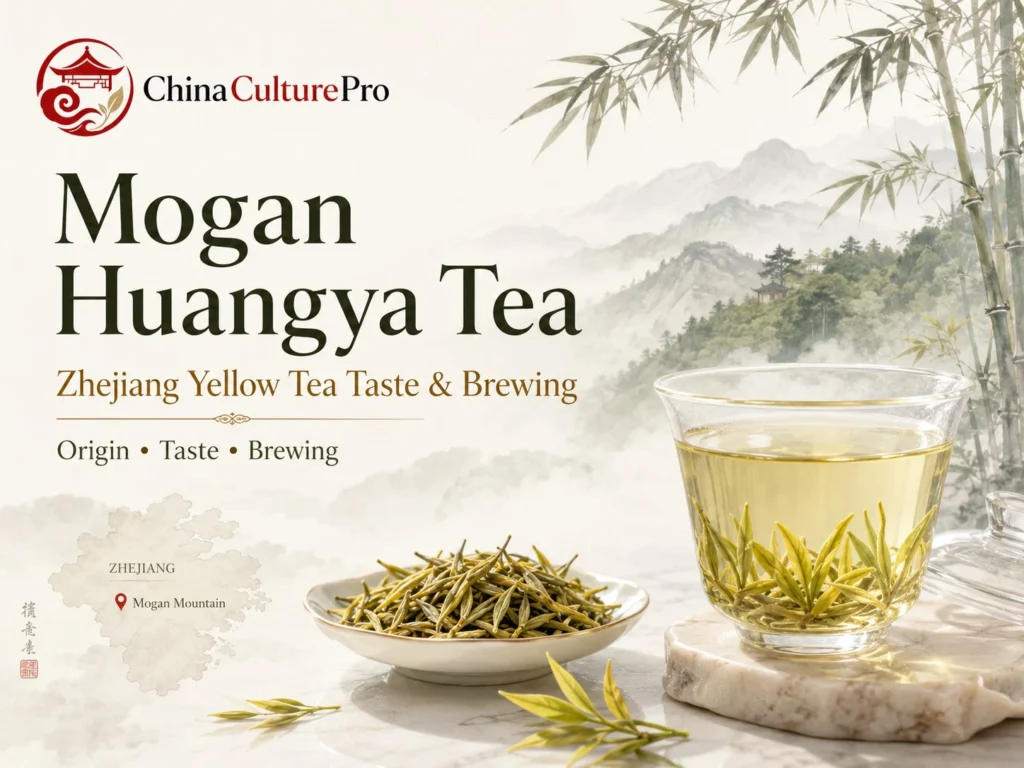
Mogan Huangya Tea, also written as Mo Gan Huang Ya, Mogan Huangya, or Mogan Yellow Buds, is a Chinese yellow tea from Mogan Mountain in Deqing County, Huzhou, Zhejiang Province.
It is not green tea. It is not a general name for all “yellow bud” teas. Mogan Huangya is a specific Zhejiang yellow tea connected with the mountain environment of Mogan Mountain and the yellow tea process known as men huang (闷黄), or yellowing.
The basic identity is clear:
Tea Type: Chinese yellow tea.
Origin: Mogan Mountain, Deqing, Huzhou, Zhejiang, China.
Chinese Name: 莫干黄芽.
English Names: Mogan Huangya Tea, Mo Gan Huang Ya, Mogan Yellow Buds, Mogan Mountain Yellow Tea.
Leaf Style: usually made from tender spring buds and young leaves.
Processing Key: yellowing / men huang, which makes the tea softer and less grassy than green tea.
Taste: fresh, mellow, gentle, lightly sweet, clean, and less sharp than green tea.
Aroma: fresh floral notes, mountain freshness, bamboo forest impression, light honey, and sometimes gentle nuttiness.
Liquor: pale yellow, bright yellow, or yellow-green with good clarity.
Brewing: usually best with 75–85°C / 167–185°F water.
A good Mogan Huangya should not taste like a sharp green tea or a heavy roasted tea. Its charm is gentler: fresh mountain aroma, bright yellow liquor, mellow sweetness, soft mouthfeel, and clean returning sweetness.
To understand the broader category, read our [Chinese Yellow Tea] guide.
Name, Origin, and Tea Type
Mogan Huangya’s name tells you its identity: it is a yellow bud-style tea from Mogan Mountain.
| Aspect | Detail |
|---|---|
| Chinese Name | 莫干黄芽 |
| Pinyin | Mo Gan Huang Ya |
| Common English Names | Mogan Huangya Tea, Mogan Yellow Buds, Mogan Mountain Yellow Tea |
| “Mo Gan / Mogan” | refers to Mogan Mountain / Moganshan |
| “Huang Ya” | means “yellow buds,” a yellow tea style made with tender buds or young leaves |
| Origin | Mogan Mountain, Deqing County, Huzhou, Zhejiang Province |
| Tea Type | Chinese yellow tea |
| Not The Same As | green tea, white tea, or all teas called “Huang Ya” |
The word Huang Ya can confuse English readers. It does not mean that every yellow-looking bud tea is Mogan Huangya. Huo Shan Huang Ya, Meng Ding Huang Ya, and Mogan Huangya are all yellow bud teas, but they come from different regions and have different styles.
Mogan Huangya belongs to the yellow tea category. Yellow tea processing is close to green tea in some early steps, but it includes a yellowing stage that changes the aroma, liquor color, and taste. This is why Mogan Huangya often feels softer, rounder, and less grassy than many green teas.
Its origin matters because Mogan Huangya should carry a specific Mogan Mountain character, not just a generic yellow tea profile.
Why Mogan Mountain Matters
Mogan Mountain is in Deqing County, Huzhou, Zhejiang Province. For Mogan Huangya, its bamboo forests, mist, humidity, and cooler mountain climate are not just background scenery; they help shape the tea’s clean, fresh, and gentle style.
Mogan Mountain matters for several reasons:
- Mountain Environment: the slopes, elevation, and cooler air support a fresher spring growth style.
- Bamboo Forests: shaded, humid bamboo groves help create a softer mountain impression.
- Mist And Humidity: moist mountain conditions help preserve tenderness in spring leaves.
- Spring Harvest Timing: Mogan Huangya is often associated with the period around Qingming and Guyu, when tender buds and young leaves are at their best.
- Local Tea Character: good Mogan Huangya should carry clean mountain clarity, not only fire-roasted aroma or ordinary pan-fired green tea character.
Mogan Mountain is also a well-known summer retreat, but this article is not about travel. For tea, the important point is that Mogan Huangya comes from a specific Zhejiang mountain environment, not from a generic yellow tea region.
History and Cultural Background
Mogan Huangya is often introduced today as a Zhejiang yellow tea with deep local roots. The tea culture around Mogan Mountain and the Huzhou region has a long history, and local accounts often connect the area with nearly 2,000 years of tea-making tradition.
| Period | Cultural Background |
|---|---|
| Early Tea Culture | the Mogan Mountain and Huzhou region belong to a broader Jiangnan tea culture area |
| Tang Dynasty Context | Huzhou and western Zhejiang were important in early Chinese tea culture; Lu Yu’s Classic of Tea is closely associated with the wider region |
| Local Tea Tradition | Mogan Mountain developed its own spring tea identity through mountain growing conditions and local processing |
| Modern Recovery | Mogan Huangya has been restored, promoted, and recognized as a local famous tea in Zhejiang |
| Present Day | it remains a representative Zhejiang yellow tea and appears in local tea culture events and competitions |
The historical point should stay measured: Mogan Mountain tea culture has long roots, but the exact modern product name “Mogan Huangya Tea” should not be treated as unchanged for 2,000 years.
Today, its value comes from local mountain terroir, spring picking, yellow tea processing, and a taste profile that is fresh but not sharp, mellow but not heavy.
How Mogan Huangya Is Made
Mogan Huangya is made as a yellow tea, and the key step is men huang (闷黄), often translated as yellowing, smothering, or sealed yellowing.
Different producers may vary the details, so the process should not be treated as one fixed formula. The core goal is consistent: preserve spring freshness, reduce grassy sharpness, and create a mellow yellow tea character.
| Step | Chinese Term | What It Does | Key Point |
|---|---|---|---|
| Picking | 采摘 | selects tender spring buds and young leaves | freshness and tenderness form the quality base |
| Fixation | 杀青 | uses heat to stop strong enzymatic oxidation | keeps a fresh tea foundation |
| Rolling / Shaping | 揉捻 / 整形 | shapes the leaf and helps develop texture | varies by producer |
| Yellowing | 闷黄 / 烘闷 | uses warm, humid, lightly enclosed conditions to transform the leaf | the defining yellow tea step |
| Drying | 干燥 | removes moisture and stabilizes aroma and form | locks in the finished tea character |
The yellowing step is what separates Mogan Huangya from green tea. Green tea is fixed and dried to preserve a fresh, green character. Yellow tea adds a yellowing stage, which softens the liquor and reduces the grassy edge.
Not all Mogan Huangya tastes the same. Some batches are closer to green tea, with a fresher and greener profile. Others show a clearer yellow tea character, with softer liquor, rounder mouthfeel, and less sharpness.
What Mogan Huangya Tastes Like
Good Mogan Huangya should taste fresh, mellow, gentle, and clean. It should not be harsh, smoky, sour, stale, or heavily roasted.
| Tasting Point | Good Mogan Huangya |
|---|---|
| Aroma | fresh floral aroma, wildflower, light honey, mountain freshness, bamboo forest impression |
| Liquor Color | pale yellow, bright yellow, golden yellow, or clear yellow-green |
| Taste | fresh, mellow, gentle, lightly sweet, rounded |
| Mouthfeel | smooth, soft, sometimes slightly creamy |
| Bitterness | low when brewed properly |
| Grassy Edge | lower than many green teas |
| Aftertaste | clean, lightly sweet, refreshing |
| Overall Style | fresh mountain yellow tea with a soft and elegant character |
A well-made Mogan Huangya does not overwhelm the mouth. Its appeal is quiet: spring flowers, clean mountain air, bamboo shade, light honey, soft liquor, and a rounded finish.
Compared with green tea, Mogan Huangya is usually less sharp and less grassy. It is a good choice for drinkers who enjoy spring tea but want something softer than a brisk green tea.
Possible quality problems include:
| Problem | What It May Suggest |
|---|---|
| strong grassy taste | yellowing may be insufficient or the tea may be too green in style |
| sour or stuffy aroma | yellowing or storage may have gone wrong |
| muddy liquor | poor processing or storage issue |
| harsh bitterness | overly hot water, oversteeping, or coarse material |
| stale smell | old tea or poor storage |
| dull leaf base | poor freshness or weak material |
A good Mogan Huangya should feel clean, fresh, mellow, and naturally sweet enough to invite another sip.
How to Taste Mogan Huangya Like a Tea Drinker
Good Mogan Huangya leaves clear signs in the dry leaf, aroma, liquor, mouthfeel, aftertaste, and leaf base.
- Look At The Dry Leaf The dry leaves should look tender, fairly even, and naturally yellow-green. Too many broken pieces, dull color, or overly dark leaves may suggest lower quality or poor storage.
- Smell The Dry Aroma Look for fresh, floral, lightly sweet, or mountain-like aroma. Avoid tea with moldy, stale, sour, or heavy stuffy smells.
- Check The Liquor Color The tea liquor should be clear and bright. Pale yellow, bright yellow, golden yellow, or clear yellow-green are all possible. A cloudy or dull liquor is not ideal.
- Smell The Wet Leaf The wet aroma should open naturally. A good tea may show floral, sweet, fresh, or light honey notes after brewing.
- Take The First Sip The first impression should be gentle and fresh. Good Mogan Huangya should not hit the tongue with strong bitterness or rough astringency.
- Feel The Mouthfeel The liquor should feel soft, smooth, and rounded. If it feels thin like water or rough on the tongue, the quality may be average.
- Notice The Aftertaste A clean returning sweetness, or hui gan, is a good sign. The finish should feel fresh and comfortable, not sour, stale, or bitter.
- Look At The Leaf Base After brewing, the leaves should look tender, soft, and fairly even. A dull, dark, uneven, or lifeless leaf base is a warning sign.
A practical tea-drinker’s rule: good Mogan Huangya should look clean, smell fresh, taste mellow, and finish sweet.
For aroma, mouthfeel, hui gan, and aftertaste, read our Chinese Tea Tasting guide.
How to Brew Mogan Huangya Tea
Mogan Huangya is usually made from tender buds and young leaves, so avoid boiling water. Excessive heat can flatten the fresh aroma and pull out bitterness.
| Brewing Method | Teaware | Water Temperature | Leaf Amount | Steeping Time | Best For |
|---|---|---|---|---|---|
| Glass Cup | tall glass or clear cup | 75–85°C / 167–185°F | 2–3g / 200–250ml | 2–3 minutes | simple daily brewing and watching the leaves open |
| Gaiwan | 100–120ml gaiwan | 75–85°C / 167–185°F | 3–4g | 30–60 seconds for first infusion, then extend | better aroma control and multiple infusions |
| Porcelain Teapot | small porcelain pot | 75–85°C / 167–185°F | 3–4g / 200ml | 2–3 minutes | sharing with others |
Brewing tips:
- Use moderate water temperature: 75–85°C protects the fresh floral aroma and soft taste.
- Do not oversteep: long steeping can make the tea dull or bitter.
- Use clean, soft water if possible: hard water can hide the tea’s sweetness.
- Do not add milk or sugar: Mogan Huangya is best enjoyed plain.
- Usually do not rinse the tea: the first infusion carries the cleanest aroma, unless the tea has been stored for a long time or needs cleaning.
- Adjust by taste: if the tea feels too weak, use more leaf or slightly longer time; if it tastes bitter, lower the temperature or shorten the steep.
The main rule is simple: brew Mogan Huangya gently. Its value is freshness, softness, and clean sweetness, not heavy strength.
To learn more about brewing Chinese loose leaf tea, read our How to Brew Chinese Tea guide.
For glass cups, gaiwans, and teaware choices, read our Chinese Teaware guide.
Mogan Huangya vs Green Tea
Many people mistake Mogan Huangya for green tea because both can have a fresh spring character. The key difference is the yellowing process.
| Point | Mogan Huangya Tea | Green Tea |
|---|---|---|
| Tea Type | yellow tea | green tea |
| Core Process | fixation plus yellowing | fixation without yellowing |
| Liquor Color | pale yellow, bright yellow, or yellow-green | green, yellow-green, or pale green |
| Aroma | fresh floral, mountain-like, soft honey, bamboo impression | fresh, grassy, chestnut, bean-like, or vegetal |
| Taste | mellow, gentle, rounded, lightly sweet | brisk, fresh, sharper, sometimes grassy |
| Mouthfeel | softer and smoother | cleaner and more direct |
| Grassy Edge | usually lower | often more noticeable |
| Best For | drinkers who want fresh tea with less sharpness | drinkers who like crisp, bright freshness |
Mogan Huangya is not “better” than green tea. It is a different style. Chinese green tea suits drinkers who like brisk, clear, sharp freshness. Mogan Huangya suits drinkers who want a softer, rounder, less grassy cup.
To understand how this tea differs from green tea, read our Chinese Green Tea guide.
Mogan Huangya vs Other Yellow Teas
Mogan Huangya, Huo Shan Huang Ya, and Meng Ding Huang Ya can all be translated as yellow bud teas, but they are not the same tea. Their regions and flavor styles are different.
| Tea | Origin | Main Aroma | Taste Style | Best Description |
|---|---|---|---|---|
| Mogan Huangya | Mogan Mountain, Zhejiang | fresh floral, mountain freshness, bamboo forest impression | mellow, gentle, clean, lightly sweet | fresh and soft Zhejiang yellow tea |
| Huo Shan Huang Ya | Huo Shan, Anhui | chestnut, tender nutty aroma, fresh sweetness | mellow, sweet, brisk but rounded | nutty and fresh yellow bud tea |
| Meng Ding Huang Ya | Mengding Mountain, Sichuan | tender sweet aroma, soft floral notes | sweet, delicate, smooth | elegant Sichuan yellow bud tea |
The point is not to rank them, but to avoid mixing them together. Mogan Huangya is best understood through its Zhejiang mountain style: fresh, gentle, clean, softly sweet, with a bamboo-forest and mountain-air impression.
To compare another classic yellow bud tea, read our Huo Shan Huang Ya Tea guide. To explore a Sichuan yellow tea, read our Meng Ding Huang Ya Tea guide.
How to Choose Good Mogan Huangya
Good Mogan Huangya should show clear origin, fresh aroma, bright liquor, mellow taste, and a soft leaf base.
| Checkpoint | What To Look For | Warning Signs |
|---|---|---|
| Origin | Mogan Mountain, Deqing, Huzhou, Zhejiang | vague origin or no origin information |
| Tea Type | clearly sold as yellow tea | described only as green tea or generic buds |
| Dry Leaf | tender, fairly even, yellow-green, natural color | too many broken pieces, dull color, too green or too dark |
| Aroma | fresh, floral, lightly sweet, clean | stale, moldy, sour, smoky, or stuffy |
| Liquor | bright yellow, pale yellow, or clear yellow-green | cloudy, dark, dull, or muddy |
| Taste | fresh, mellow, gentle, lightly sweet | harsh bitterness, heavy grassiness, weak watery taste |
| Leaf Base | tender, soft, even, lively | dark, stiff, uneven, lifeless |
| Freshness | current or recent season, well stored | old tea with poor storage |
Three checks matter most: origin, process, and freshness. The origin should connect clearly with Mogan Mountain, Deqing, Huzhou, or Zhejiang. The tea should show yellow tea character, not only green tea sharpness. It should also smell fresh and clean.
If the dry leaf looks extremely green and the liquor tastes grassy, it may be processed closer to green tea. If the aroma is stuffy, sour, or stale, storage or processing may be the problem.
How to Store Mogan Huangya
Mogan Huangya is gentler than many green teas, but it is still a fresh-style tea. It should not be stored like aged pu-erh or dark tea.
Use these storage rules:
- Seal It Well: use a sealed pouch, tin, or jar to reduce air exposure.
- Keep It Dry: moisture can ruin the tea quickly.
- Avoid Light: strong light speeds up aroma loss and oxidation.
- Keep It Cool: short-term storage can be in a cool cabinet; longer storage can be refrigerated if sealed carefully.
- Avoid Odors: keep it away from coffee, spices, smoke, incense, scented tea, and strong-smelling foods.
- Let Cold Tea Return To Room Temperature Before Opening: this helps prevent condensation if stored in the refrigerator.
- Drink After Opening: for best freshness, finish opened tea within 6–12 months.
Mogan Huangya is valued for fresh aroma, soft liquor, and clean sweetness. These qualities fade over time, so it is better to drink it fresh rather than store it for years.
Benefits and Caffeine
Mogan Huangya contains common tea compounds such as tea polyphenols, amino acids, and caffeine. Many drinkers find it softer and less grassy than green tea, so it may suit people who enjoy fresh, light, mellow tea but dislike strong grassy notes.
Important cautions:
- Mogan Huangya contains caffeine.
- Avoid drinking large amounts before sleep.
- People sensitive to caffeine should drink moderately.
- Pregnant people, people taking medication, or people with medical concerns should ask a qualified professional.
- Do not treat Mogan Huangya as medicine.
Enjoy this tea for its taste and cultural value. Do not treat it as a weight-loss, disease-treatment, blood-pressure, or cancer-prevention product.
Final Thoughts
Mogan Huangya is not ordinary green tea, and it is not a general name for all yellow bud teas. It is a Chinese yellow tea from Mogan Mountain in Deqing, Huzhou, Zhejiang.
Its value comes from Mogan Mountain’s fresh mountain character, bamboo and mist environment, and the yellow tea process of men huang. A good Mogan Huangya should show fresh aroma, bright yellow liquor, mellow taste, light sweetness, less grassy sharpness than green tea, and clean returning sweetness.
If you enjoy Chinese green tea but want something softer, rounder, and less grassy, Mogan Huangya is a strong choice. It shows why yellow tea has its own place in Chinese tea culture.
FAQs About Mogan Huangya Tea
What is Mogan Huangya tea?
Mogan Huangya Tea is a Chinese yellow tea from Mogan Mountain in Deqing County, Huzhou, Zhejiang Province. It is also called Mo Gan Huang Ya or Mogan Yellow Buds.
Is Mogan Huangya green tea or yellow tea?
Mogan Huangya is yellow tea, not green tea. It has a yellowing step, or men huang, that green tea does not have. This makes the taste softer, rounder, and less grassy.
Where is Mogan Huangya tea from?
Mogan Huangya comes from Mogan Mountain in Deqing, Huzhou, Zhejiang, China. The region is known for bamboo forests, mist, humidity, and a cool mountain climate.
What does Mogan Huangya taste like?
Mogan Huangya usually tastes fresh, mellow, gentle, lightly sweet, and clean. It may show fresh floral aroma, mountain freshness, bamboo forest impression, light honey, soft mouthfeel, and clean returning sweetness.
How do you brew Mogan Huangya tea?
Use 75–85°C / 167–185°F water. For glass cup brewing, use about 2–3g of tea for 200–250ml water and steep for 2–3 minutes. For gaiwan brewing, use 3–4g for 100–120ml and steep briefly.
What makes Mogan Huangya different from green tea?
Mogan Huangya has a yellowing process that green tea does not have. This reduces grassy sharpness and gives the tea a softer, rounder, more mellow taste.
Is Mogan Huangya the same as Huo Shan Huang Ya?
No. Mogan Huangya comes from Zhejiang’s Mogan Mountain and is known for fresh, gentle, mountain-style character. Huo Shan Huang Ya comes from Anhui and often has a stronger chestnut or nutty sweetness.
Is Mogan Huangya rare?
Yellow tea is generally less common than green tea or black tea. Mogan Huangya is a regional Zhejiang yellow tea with limited production, but it is not impossible to find through specialized Chinese tea sellers.
Does Mogan Huangya have caffeine?
Yes. Mogan Huangya contains caffeine. It can be refreshing, but people sensitive to caffeine should drink it moderately and avoid large amounts before sleep.
How should I store Mogan Huangya tea?
Store Mogan Huangya in a sealed, dry, cool, dark place away from odors. After opening, it is best to drink it within 6–12 months to enjoy its fresh aroma and mellow taste.