
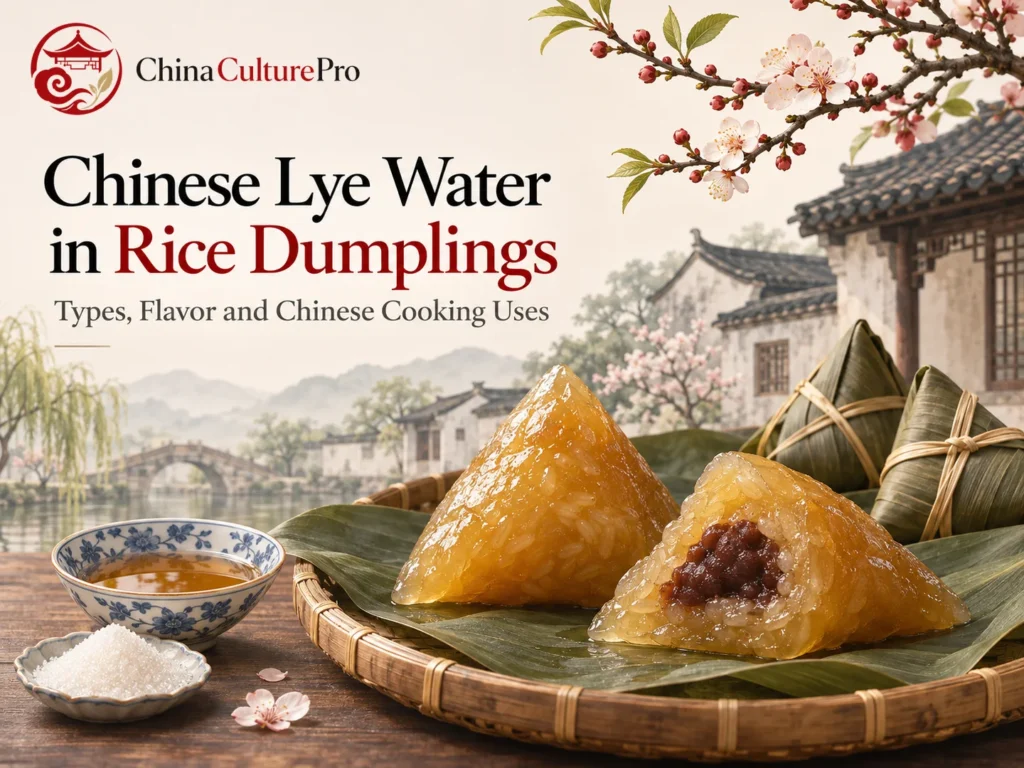

Quick Answer: What Does Lye Water Do in Rice Dumplings?
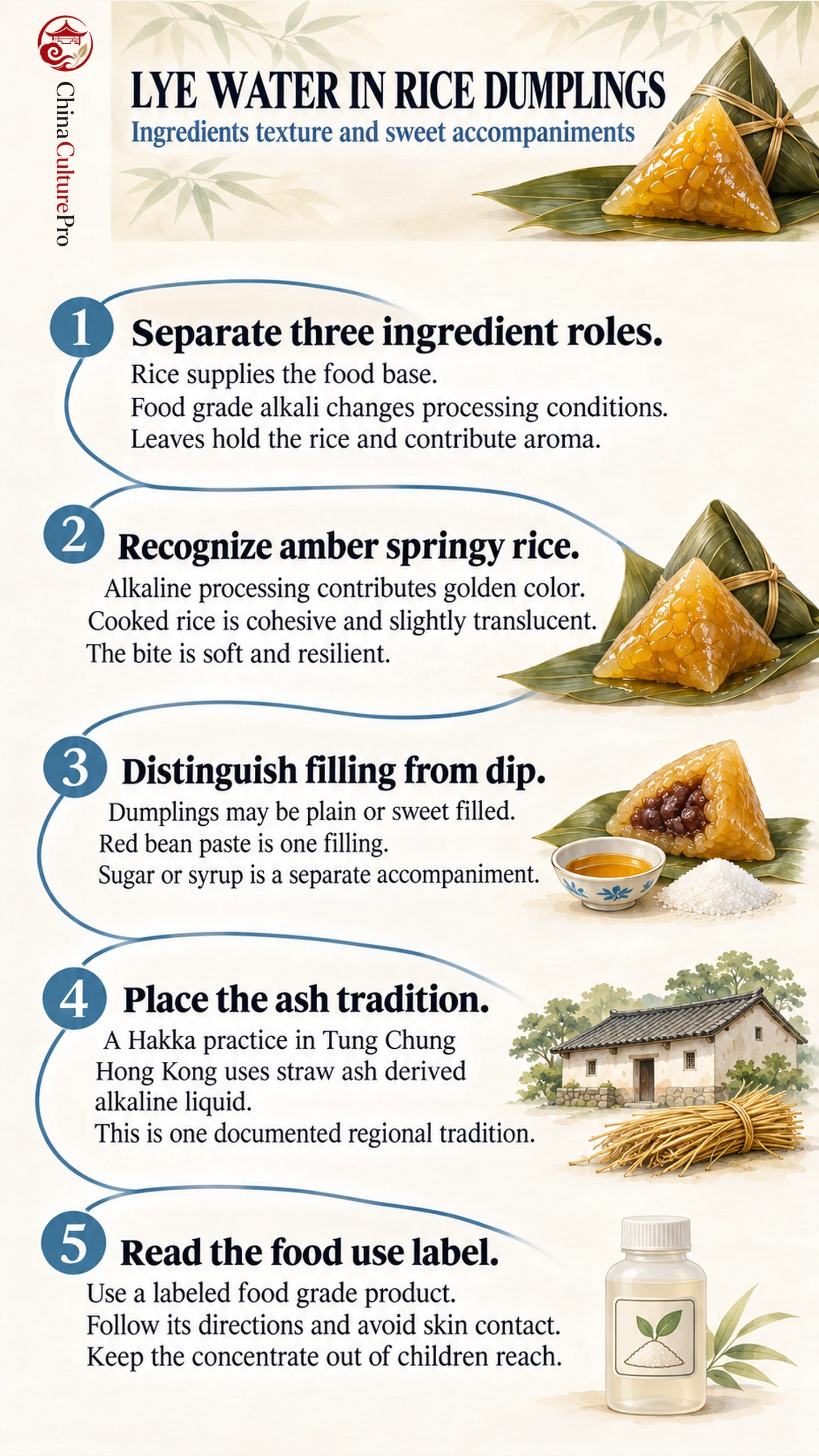
Chinese lye water (碱水, jiǎnshuǐ) is an alkaline cooking ingredient. In alkaline rice dumplings (碱水粽, jiǎnshuǐ zòng), it changes the rice’s processing conditions, helping produce an amber color and a soft, springy texture. It is part of the dumpling’s preparation, not the sweet syrup served alongside it.[1][3][4]
- Rice: The grain is the main food ingredient.
- Alkali: It contributes to the color and texture developed in processing.
- Flavoring: Fillings and sweet dips are separate choices.
The ingredient, wrapper and finishing sweetness each perform a different role.[4][7]
An amber, slightly translucent rice dumpling can look like a sweet jelly, yet its characteristic appearance begins with rice and alkaline processing. This guide explains that transformation, separates the cooking ingredient from its sweet accompaniments, and places the food in a documented regional tradition.
Food-Grade Lye Water, Rice and Wrapping Leaves
| Component | Role |
|---|---|
| Glutinous rice (糯米, nuòmǐ) | The grain base that forms the cooked rice body. |
| Food-grade lye water | Changes the alkaline conditions during processing. |
| Wrapping leaves (粽叶, zòngyè) | Hold the rice and contribute a leafy aroma. |
One commercial bottle lists water, potassium carbonate and sodium bicarbonate; formulations and strengths should be checked on the actual label. The jianshui ingredient guide covers the broader pantry category.[2]
The glutinous rice supplies the grain base. Bamboo wrapping leaves add a grassy, earthy aroma.[7]
Why the Rice Becomes Amber and Springy
Alkaline conditions change the chemical environment of the rice. Comparisons of plant-ash extract, potassium carbonate solution and water examine how this processing affects color and resilience. The characteristic appearance is golden-yellow to light brown.[1]
Cooking produces a cohesive, slightly translucent rice body. Alkaline treatment modifies its structure and contributes to a soft, resilient bite.[1][3]
The rice itself is mildly flavored; excessive alkali can produce bitterness. Sugar, syrup or a filling supplies a separate layer of sweetness.[4]
Plain Dumplings, Sweet Fillings and Dips
Within the wider zongzi family, these dumplings may be plain or filled. Cantonese menu names can include Gan Sui Jong; this is a Cantonese rendering, distinct from the Mandarin jiǎnshuǐ zòng. Plain versions are served with sugar or syrup, while a sweet bean filling can supply its own sweetness.[4]
Red bean paste is one familiar filling, connecting the dish with Chinese red bean sweets. A documented chef’s variation pairs chestnuts with a paste made from lotus seeds. This is one variation rather than a defining filling.[4][6]
A Documented Hakka Plant-Ash Tradition
Plant-ash water (草木灰水, cǎomùhuī shuǐ) appears in a documented Hakka practice in Tung Chung, Hong Kong. A local cultural account describes straw-ash-derived alkaline liquid used for leaf-wrapped rice dumplings during the Dragon Boat Festival. The rice yellows before cooking into a cohesive body.[5]
This documents one regional source of alkali, rather than a single origin for all alkaline rice dumplings.[3][5]
Reading Ingredient Labels and Handling the Concentrate
Choose a labeled food-use product and follow its directions. Powders and liquids are not automatically interchangeable.[2][3]
Avoid skin contact with the concentrate and store it out of children’s reach. Check fillings and sauces separately, and follow the finished product’s storage directions.[3]
FAQs About Lye Water in Rice Dumplings
Is lye water the sweet syrup served with the dumpling?
No. The alkali is used in preparing the rice; sugar or syrup is a separate accompaniment.
Does every zongzi contain lye water?
No. Alkaline dumplings are one style within the wider zongzi family.
Does the amber color mean the rice contains egg?
No. Alkaline processing can give the rice its golden or amber color without egg.
Can any alkaline product be used for these dumplings?
Use a labeled food-use product and its instructions. Household chemicals and unlabeled preparations are not substitutes.
Sources
[1] Chen Yuyu and colleagues, University Chemistry. Amber-Yellow Alkali-Infused Glutinous Rice
[2] Koon Chun Sauce Factory. Lye Water: Ingredient Label
[3] Taiwan Food and Drug Administration. Rice Dumpling Food Safety Guide, Weekly 1082
[4] Judy, The Woks of Life. Jianshui Zong: Cantonese Rice Dumpling Texture and Serving
[5] South Development and Sustainable Lantau Office, Hong Kong Government. Hakka Rice Dumplings and Straw-Ash Lye in Tung Chung
[6] Chef Li Chi Wai interview, Michelin Guide. Cantonese Alkaline Rice Dumplings: A Chef’s Fillings
[7] Maggie Zhu, Omnivore’s Cookbook. Alkaline Dumplings: Rice and Leaf Aroma