

Quick Answer: What Do Chinese People Eat for Breakfast?
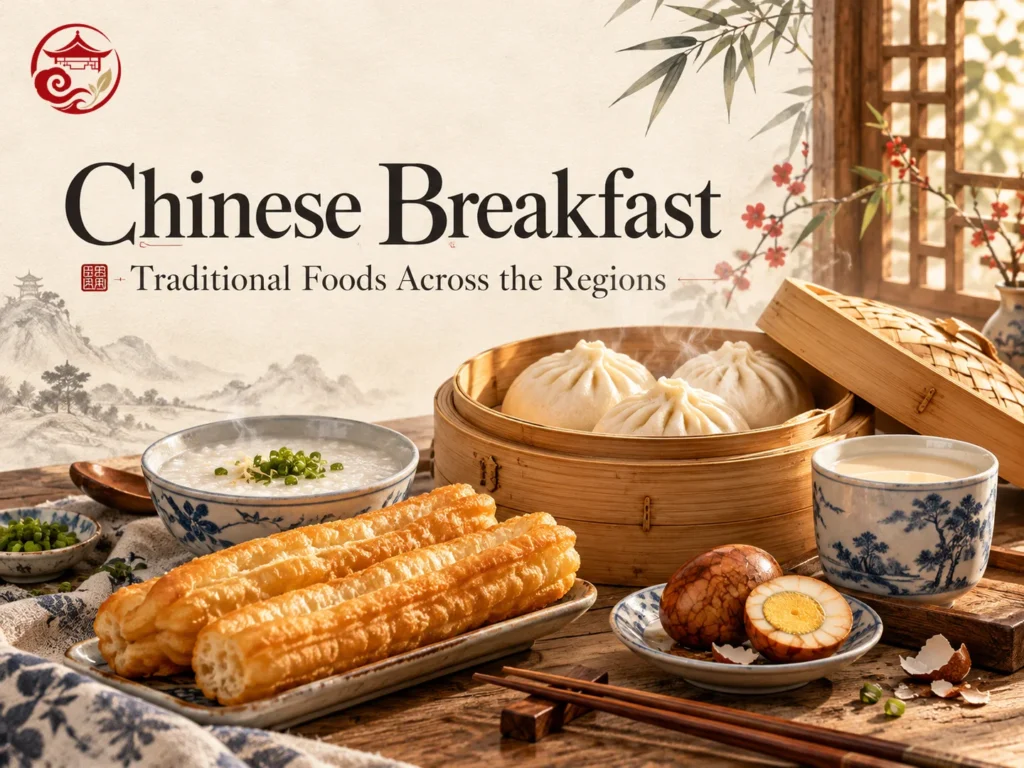
Chinese breakfast has no single national menu. Everyday choices range from steamed wheat foods and porridge to noodles, rice preparations, eggs and soybean foods.
- Foods: Grain-based staples often provide the center of the meal, with fillings, toppings or side dishes adding variety.
- Combinations: A portable staple and a drink can make breakfast, while a bowl of noodles may contain the whole meal.
- Regional variation: Local produce, family preferences and the pace of the morning shape what people choose.
Breakfast can be sweet or savory, hot or cold. A dry food paired with a drink is one familiar arrangement rather than a required formula.
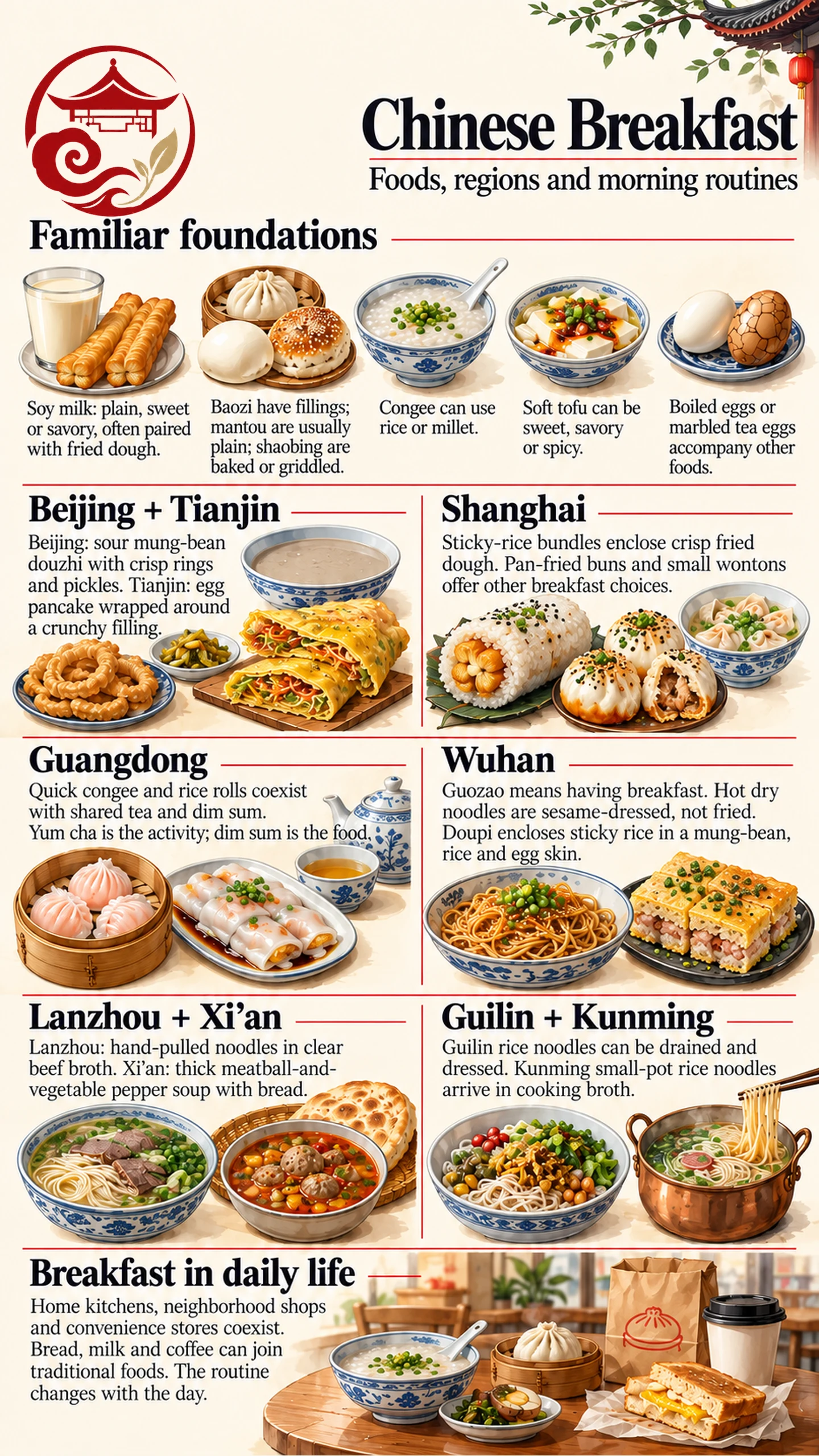
Breakfast in China might be something carried away from a neighborhood stall, a substantial bowl of noodles, or a leisurely meal shared over tea. Regional ingredients and working routines create very different mornings. This guide starts with familiar foods, then explores six regional breakfast scenes to show how ingredients, textures and serving styles fit together in everyday life.
Familiar Chinese Breakfast Foods and How They Are Served
- Soy milk and fried dough: Soy milk (豆浆, dòujiāng) is made from soybeans and water. It can be plain, sweetened, or savory with additions such as soy sauce, scallions and dried shrimp. Its familiar partner is youtiao (油条, yóutiáo): long pieces of leavened wheat dough, fried until airy inside and crisp outside. They are usually unsweetened and have no icing. Dunking the dough into the drink combines crispness with a softer, soaked texture.[1]
- Steamed buns and baked flatbreads: Baozi (包子, bāozi) have steamed dough enclosing meat, vegetables or sweet fillings such as bean paste. Mantou (馒头, mántou) are usually unfilled steamed wheat buns, often with a soft, springy crumb. Shaobing (烧饼, shāobǐng) are baked or griddle-cooked flatbreads, sometimes layered, sesame-coated or filled. Their drier, toasted surfaces distinguish them from the two steamed foods. These are different bread forms rather than interchangeable names for one bun.
- Congee: Congee (粥, zhōu) is grain simmered with plenty of water. White-rice versions can be eaten plain with pickles and other accompaniments, or cooked with meat and preserved egg. Millet porridge is another familiar choice. Consistency varies from loose and soupy to thick and creamy. Porridge belongs to northern as well as southern breakfasts; the grain and accompaniments help identify the local version.
- Soft tofu: Douhua (豆花, dòuhuā), also called doufunao (豆腐脑, dòufunǎo), is tender soybean curd served with regional toppings. Sweet versions may use sugar or ginger syrup. Savory versions can have soy-based gravy, wood-ear mushrooms and other toppings, while chili-seasoned forms also exist. The curd itself does not settle whether the bowl is sweet, salty or spicy; a simple north–south division misses local variation.[2]
- Eggs: Plain boiled eggs make an easy accompaniment to bread or porridge. Tea eggs (茶叶蛋, cháyèdàn) are cooked eggs whose shells are cracked before they steep or simmer in a tea, soy sauce and spice mixture. Peeling reveals brown marbling on the white. Eggs generally accompany another food, rather than defining one particular regional breakfast.[3]
Regional Breakfasts Across China
Across these six regional breakfast scenes, compare how a meal comes together: a handheld wrap, noodles dressed in sauce, a bowl of broth, or small dishes shared over tea. Each format creates a different morning routine.
Beijing and Tianjin: Jianbing and Local Morning Foods
One distinctive combination in Beijing cuisine pairs douzhi (豆汁, dòuzhī) with jiaoquan (焦圈, jiāoquān) and shredded pickles. Douzhi is a fermented mung-bean liquid with a pronounced sour flavor, quite different from the soybean drink described above. Jiaoquan are crisp rings of fried dough, often firmer than youtiao. Together, the sour drink, crunchy rings and salty vegetables create a recognizable local combination. It is a traditional specialty, rather than something every Beijing resident drinks each morning.[4]
In neighboring Tianjin, jianbing guozi (煎饼馃子, jiānbing guǒzi) offers a different breakfast format. A thin pancake made from mung-bean-based batter is cooked on a broad griddle, spread with egg and sauces, then folded around youtiao or a brittle fried cracker called guobier (馃箅儿, guǒbìr). The soft outer pancake and crunchy center are its defining contrast.[5]
The folded pancake is convenient to carry, with the filling enclosed rather than served as a separate side. Versions elsewhere may add lettuce, ham or other sauces. Those adaptations help explain why a jianbing bought in another city can taste different from Tianjin’s traditional version. Beijing’s fermented-drink pairing and Tianjin’s stuffed pancake show how neighboring cities can retain distinct breakfast identities.
Shanghai and Jiangnan: Rice Rolls, Buns and Wontons
Shanghai’s traditional breakfast “Four Great Warriors” are dabing (大饼, dàbǐng), a flatbread; youtiao; soy milk; and cifantuan (粢饭团, cífàntuán). The nickname identifies four classics, without requiring anyone to order all four at once. A cifantuan encloses its filling in a layer of cooked sticky rice, typically shaped into an oblong bundle that can be eaten by hand.[1]
A fried dough stick supplies crunch inside the rice. Sugar creates a sweet version, while preserved vegetables or pork floss give other versions a savory direction. The contrast between chewy rice and the enclosed crisp filling makes this more than a plain ball of rice. Filling combinations vary, so the name alone does not establish sweetness or vegetarian ingredients.
Shengjian (生煎, shēngjiān) takes breakfast toward the frying pan: filled buns have browned, crisp bottoms and softer upper skins. Many pork versions contain aspic that melts into juice during cooking. Small wontons (馄饨, húntun), with thin wrappers and a little pork filling in broth, offer a contrasting spoon-and-bowl meal.[6][7]
These examples belong especially to Shanghai’s food traditions. Other Jiangnan cities share some foods while maintaining their own fillings, seasonings and breakfast habits.
Guangdong: Congee, Rice Rolls and Morning Tea
In Guangzhou and other Cantonese-speaking parts of Guangdong, breakfast can be quick and individual or leisurely and shared. A neighborhood shop might serve congee with cheung fun, or rice noodle rolls (肠粉, chángfěn). Rice batter is steamed into thin sheets, then folded or rolled around fillings such as shrimp, pork or egg and finished with soy-based sauce.[8]
The slippery, tender sheets differ from Shanghai’s chewy sticky-rice bundles. The Chinese name refers to the rolled shape; it does not mean the dish contains intestines. Congee provides another texture alongside it, with ingredients cooked into the porridge according to the order. A bowl and a plate can make a straightforward breakfast without an extended gathering.
At a teahouse, yum cha (饮茶, yǐnchá in Mandarin) means drinking tea and describes the activity. Dim sum (点心, diǎnxin) names the small foods served with it. Friends or relatives might share har gow, shrimp dumplings (虾饺, xiājiǎo), and shumai, open-topped dumplings (烧卖, shāomài), while talking over tea.[9]
These are coexisting ways to spend the morning, and the foods can overlap. Someone who enjoys a long teahouse meal with relatives may choose a much quicker breakfast on a working day. Neither setting represents every Guangdong household.
Wuhan: Hot Dry Noodles and Guozao
In Wuhan, guozao (过早, guòzǎo) is the familiar expression for having breakfast. The word points to a substantial local morning-food culture, with shops selling dishes that can form a complete meal. Hot dry noodles (热干面, règānmiàn) are a particularly recognizable example: alkaline wheat noodles coated in sesame paste, often with pickled radish, sour long beans and scallions.[10]
The serving method explains their texture. The noodles are first cooked, cooled and mixed with oil; at service they are briefly reheated, drained and dressed. “Dry” refers to the absence of a bowlful of broth, while “hot” describes their serving temperature. They are tossed noodles, rather than stir-fried noodles, and chili can be added according to preference. Sesame richness is central even when no chili is used.
Another substantial choice is sanxian doupi (三鲜豆皮, sānxiān dòupí). Its thin outer layer is made from mung beans and rice, with egg, and encloses sticky rice with fillings such as diced pork, mushrooms and bamboo shoots. The outside is golden and crisp, while the rice remains soft and sticky.[11]
Despite its name, this is different from ordinary tofu skin. Fillings vary between makers, and guozao can be enjoyed sitting inside a shop or carrying breakfast away; eating while walking is not part of its definition.
Lanzhou and Xi’an: Beef Noodles and Peppery Soup
Lanzhou beef noodles (兰州牛肉面, Lánzhōu niúròu miàn) make a substantial morning meal in the Gansu capital. Hand-pulled wheat noodles sit in clear beef broth with ingredients such as sliced radish, beef, coriander and chili oil. The clear soup, pale radish and noodles, green herbs and red oil give the bowl its recognizable appearance.[12]
Diners can choose noodle thickness, so even a familiar broth comes with different textures. Thin strands and wider ribbons provide different mouthfuls, while the soup brings the components together. A bowl can be breakfast in itself, rather than a side added to steamed bread and a drink. This helps explain why breakfast in northern China cannot be reduced to one wheat bun combination.
Xi’an’s rouwan hulatang (肉丸胡辣汤, ròuwán húlàtāng) is a different kind of bowl: a thick, peppery soup with meatballs and vegetables. Plain wheat bread is a familiar accompaniment, and another pairing is cured-beef roujiamo (肉夹馍, ròujiāmó), a filled flatbread often described in English as a meat sandwich.[13]
This meatball version should be distinguished from Henan’s varied hulatang traditions. It also shows why a roujiamo cannot automatically be assumed to contain pork. The Lanzhou and Xi’an examples share a hearty breakfast role but differ in soup consistency, ingredients and the place of bread or noodles in the meal.
Guangxi and Yunnan: Rice Noodles in Different Forms
Guilin rice noodles (桂林米粉, Guìlín mǐfěn) include the familiar lucai mifen style (卤菜米粉, lǔcài mǐfěn). Cooked rice noodles are drained, dressed with seasoned braising liquid, and served with sliced meats and accompaniments. Pickled vegetables and peanuts or fried soybeans can add sourness and crunch, with the particular selection varying by stall.[14]
The braising liquid coats and seasons the noodles; it is different from filling the bowl with soup. This distinction matters when imagining the dish from an English description: a bowl of Guilin rice noodles need not arrive as noodle soup. The toppings make the finished meal more varied than the rice-based strands alone suggest.
In Kunming, small-pot rice noodles (小锅米线, xiǎoguō mǐxiàn) offer a soupy contrast. The dish is cooked to order in a small pot, traditionally copper, with ingredients such as minced pork, pickled greens and chives. The rice noodles arrive in the hot cooking broth, bringing the meat, vegetables and seasonings together in one bowl.[15]
These are two local expressions within the much wider food traditions of Guangxi and Yunnan. Rice noodles do not imply one standard broth, topping or serving method. Nor does their rice base establish that the complete dish is vegetarian: meat, stocks and sauces belong to the finished bowl too.
How Breakfast Fits into Everyday Life
Breakfast may begin in a home kitchen, with porridge, eggs and small side dishes prepared for the family. It can also come from frozen buns or wontons cooked at home. On the way to work or school, a neighborhood shop offers another rhythm: buy something portable, collect a bowl to take away, or sit down briefly before continuing the journey.
Convenience stores and supermarkets add bread, milk, coffee and packaged rice preparations to the possibilities. These can sit alongside traditional foods in the same person’s routine. Contemporary breakfast services include both dine-in and takeaway choices, so street stalls are one setting among several.[16]
The broader Chinese food culture includes this mixture of inherited habits and changing daily schedules. Street food remains part of ordinary life, while coffee or a convenience-store purchase is also a real contemporary choice. Breakfast has no single nationwide clock time, and the same household may eat differently on a rushed morning and a relaxed one.
FAQs About Chinese Breakfast
What is a typical Chinese breakfast?
There is no single standard. Soy milk with a filled bun is a familiar combination, while a bowl of noodles or rice noodles can be a complete breakfast elsewhere. What is typical depends on the region, household and morning routine.
Is Chinese breakfast always savory?
No. Sweetened soy milk, tofu pudding with syrup and sweet fillings in buns or rice rolls are all possible. Plain and savory versions also exist. The preparation and toppings tell you more than a simple north-versus-south rule about taste.
Can Chinese breakfast be vegetarian?
Yes, but check the whole dish. Plain porridge or an unfilled steamed bun can be a starting point. Fillings, tofu toppings, noodle broth and sauces may contain meat, seafood or animal fat, even when the main ingredient is a grain or soybean.
Are these foods only eaten for breakfast?
No. Buns, congee, noodles and rice noodles can also be lunch, dinner or a snack. Their breakfast identity comes from a familiar morning setting. Availability still depends on the shop; a food eaten throughout the day may have breakfast-only sellers.
Sources
[1] Shanghai Municipal Government. Classic Local Breakfast Staples
[2] Hong Kong Tourism Board. Traditional Hong Kong Desserts: Tofu Pudding
[3] Red House Spice. Chinese Tea Eggs
[4] Beijing Municipal Government. Beijing Breakfast Traditions
[5] China National Radio. Tianjin Jianbing Guozi Traditions
[6] Shanghai Municipal Government. Pan-Fried Pork Buns
[7] Shanghai Morning Post / Zhoudao. A Neighborhood Small-Wonton Shop and Its Craft
[8] Guangzhou City Culture Portal. Guangzhou Breakfast Foods
[9] Guangzhou Municipal Commerce Bureau. Guangzhou Morning Tea Culture
[10] Foreign Affairs Office of Hubei Province. Hot Dry Noodles
[11] Wuhan Municipal Government. The Craft and Flavor of Wuhan Doupi
[12] Gansu Provincial Government Belt and Road Portal. Lanzhou Beef Noodles
[13] Shaanxi Daily. Xi’an Meatball Hulatang
[14] China Intangible Cultural Heritage Network. Guilin Rice Noodle-Making Techniques
[15] InKunming. Kunming Breakfast: Noodles and More
[16] Shanghai Qingpu District Government. Contemporary Breakfast Choices