
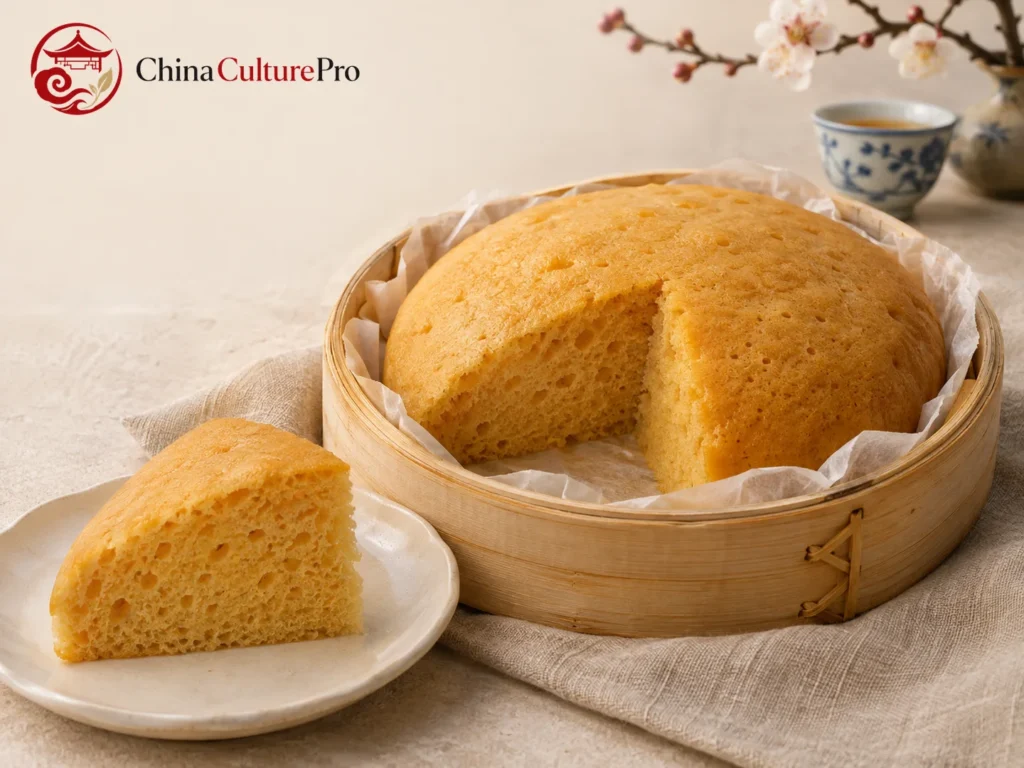

Quick Answer: What Is Ma Lai Go?
Ma lai go(马拉糕,mǎlāgāo)is a Cantonese steamed sponge cake served at dim sum. The menu spelling is Cantonese; the pinyin here is Mandarin.[1]
- Batter: Usually wheat flour, eggs, sugar and fat, with milk or custard powder in many versions.
- Rise: A fermented starter, chemical raising agents, or a combination creates the airy crumb.
- Texture: Soft and moist, rather than a sticky rice dough.
- Serving: Often cut into pieces and served warm.[2][3]
It is steamed cake, but not every version is fermented or made with brown sugar.
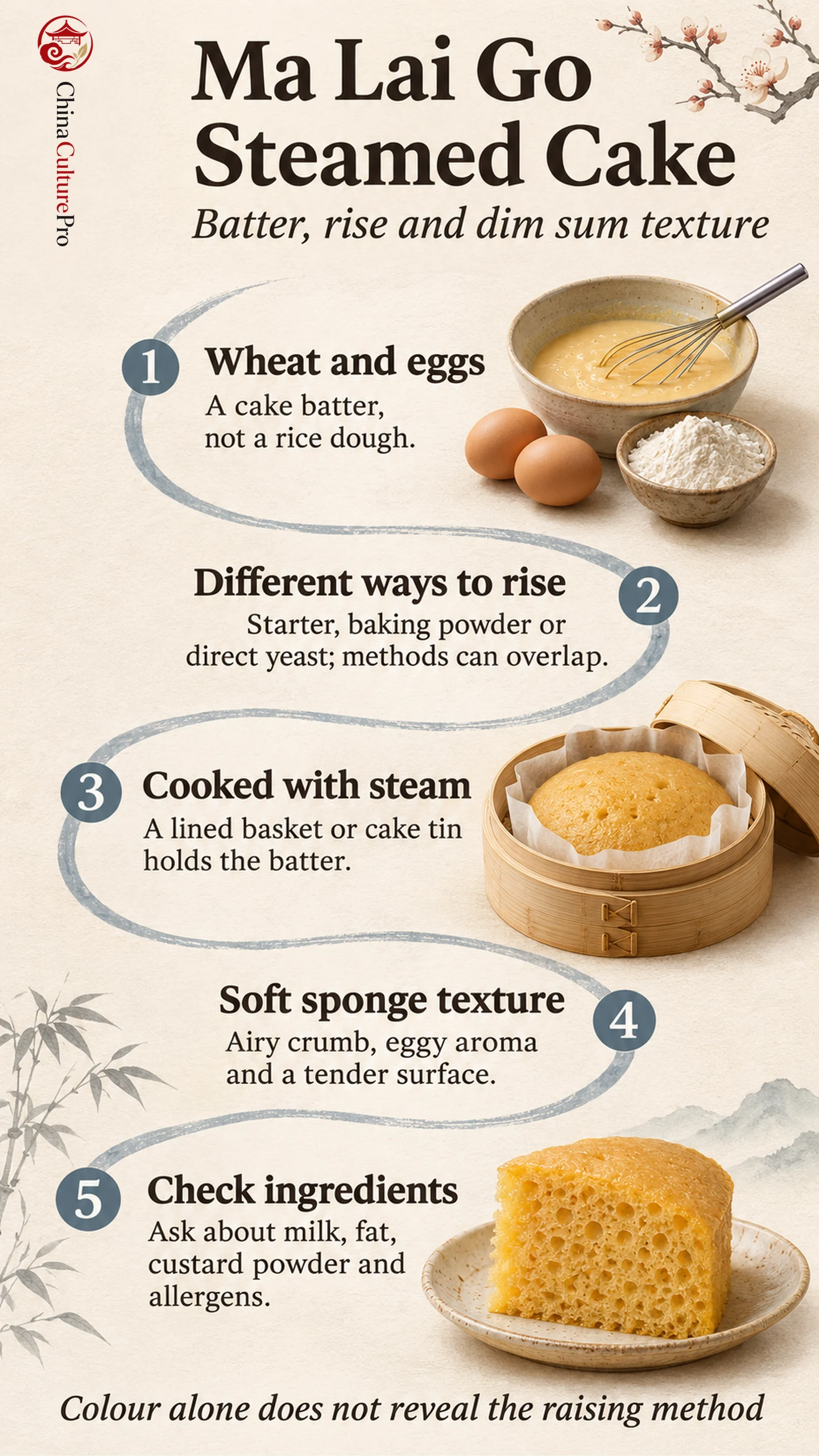
A golden slice can look plain beside dumplings. On a dim sum menu, its appeal is the tender sponge beneath the surface.
Ingredients and the Soft Sponge Texture
Wheat flour supplies structure; eggs contribute richness and an aerated batter. Sugar sweetens it, while fat softens the mouthfeel. Evaporated milk, milk powder and custard powder add milky or custard notes alongside the eggs.[3]
One Hong Kong formula combines butter and lard; others use vegetable oil. The fat is a separate ingredient choice, not something established by steaming.[3][4]
The crumb is yielding and airy. Longer streaks of air pockets can occur in starter-based cakes, while a shortcut can have a more even sponge. Pores offer clues, not proof of a kitchen’s method.[1][2]
Compare the ingredient list, rather than grouping every steamed sweet under the same name; bai tang gao is a separate cake.
Fermented, Quick and Combined Versions
The useful distinction is how the batter rises. Fermentation and chemical raising are separate processes that may be used together.
| Approach | What changes | What it means for the cake |
|---|---|---|
| Fermented starter | A prepared flour starter is incorporated into the batter. | Fermentation contributes aroma and crumb; the final formula may still include baking powder.[2] |
| Quick batter | Baking powder supplies the rise without a fermented starter. | A soft sponge is possible without the starter’s development.[1] |
| Direct yeast batter | Yeast goes into the cake batter rather than a separately maintained starter. | It can be combined with baking powder or soda.[3][4] |
Ask about the batter if fermentation matters to your choice; these methods need not be ranked by appearance.
How Ma Lai Go Is Steamed
- Mix: Eggs, sugar, flour and the chosen liquid and fat become a cake batter.
- Develop the rise: The kitchen follows its starter, direct-yeast or chemical-raising method.
- Steam: Batter goes into a lined basket or suitable cake tin, where steam cooks it into a sponge.
- Portion: The finished cake is cut for serving.[1][3][4]
The finished surface is soft; an oven-baked crust is not the defining texture.
Ordering and Eating Ma Lai Go
When ordering, check milk, butter, custard powder and cooking fat rather than asking only whether the cake has a filling.[3][4]
Wheat and eggs are central in the documented versions. A packaged example additionally declares soy and shared-factory contact with other allergens. Check the actual product or restaurant formula: a pale, unfilled cake is neither automatically gluten-free nor vegan.[5]
Eat a portion pleasantly warm to appreciate the soft crumb and aroma. Remove any paper liner before biting; the familiar plain style needs no icing.[3]
Ma Lai Go in Dim Sum Culture
Within Cantonese cuisine, this is a sweet cake served alongside savory dim sum. A large round cake can be divided for the table. Some diners prefer edge pieces, although the centre and edge of the same cake can differ in thickness and texture.[2]
A warm slice with tea can be a sweet part of Chinese breakfast. Stories connect the cake with Malaya and British sponge cake, but the origins are disputed; no verified inventor or date follows from those stories.[2][3]
FAQs About Ma Lai Go
Is Ma Lai Go a Rice Cake?
The familiar Cantonese sponge uses wheat flour and eggs. Steaming describes the cooking method, not the grain. Do not assume that a steamed Chinese cake is rice-based.[3][5]
Does Ma Lai Go Always Use a Fermented Starter?
No. Starter-based cakes coexist with baking-powder versions and direct-yeast batters. A starter recipe can also contain baking powder, so the categories overlap.[1][2][4]
Why Are Some Cakes Darker Than Others?
Sugar choice is one reason. Brown-sugar formulas and white-sugar formulas both exist; darkness alone does not prove longer fermentation or better quality.[1][5]
Can Ma Lai Go Be Vegetarian or Vegan?
Some versions contain lard, and familiar formulas contain eggs, often with dairy. Confirm the complete recipe; the absence of a meat filling does not settle the question.[3][4]
Sources
[1] Bill / The Woks of Life. Ma Lai Go Chinese Steamed Cake
[2] Wong Yiu-Por / MICHELIN Guide. Dim Sum Recipe: Traditional Ma Lai Gao
[3] ArChan Chan / SBS Food. Malay Sponge Cake (Ma Lai Go)
[4] 周振華 / am730. 馬拉糕
[5] Winner Food Products. 馬拉糕: Ingredients and Allergen Declaration