
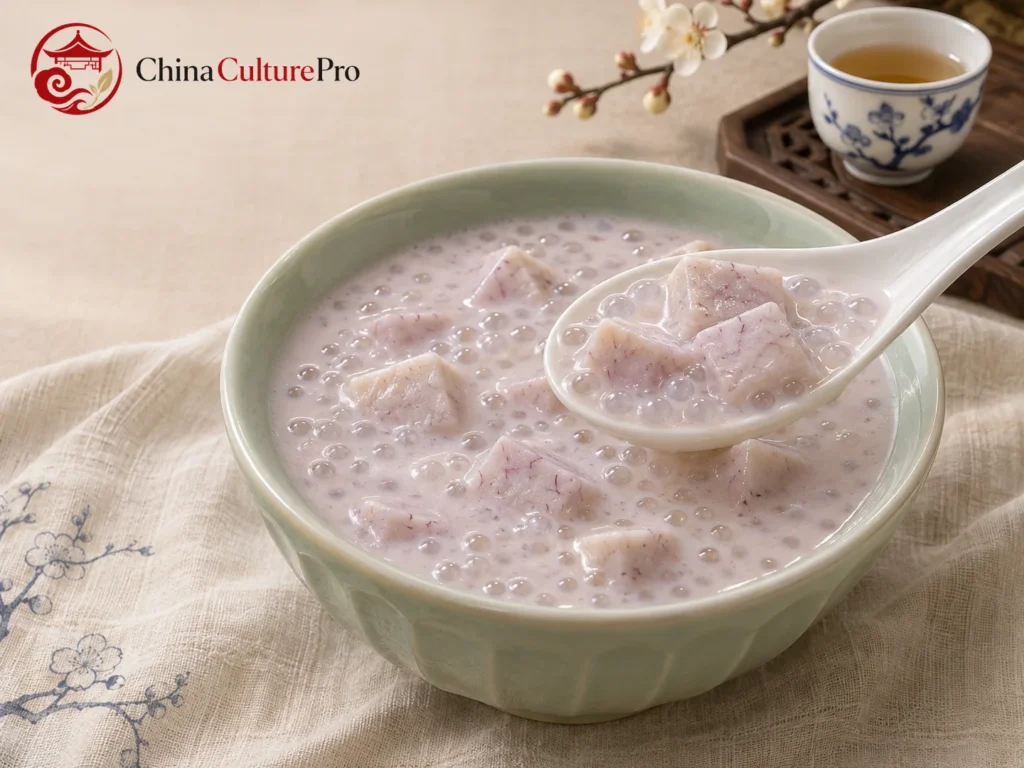

Quick Answer: What Is Taro Sago Soup?
Taro sago soup(芋头西米露,yùtou xīmǐlù)combines cooked taro and small starch pearls in a sweet, often coconut-based liquid. It belongs to the Cantonese sweet-soup family, with variations in richness and texture.[1][3]
- Taro: Soft pieces or mash provide the main flavor and body.
- Pearls: Tiny cooked pearls add a springy contrast.
- Base: Coconut milk, sugar and liquid form one familiar version.
- Serving: Warm and chilled bowls both exist.
Coconut milk does not guarantee a dairy-free bowl: some versions also contain milk or condensed milk.

The best way to understand the bowl is to separate its soft taro, slippery pearls and creamy liquid.
Taro, Tiny Pearls and the Sweet Soup Base
Cooked taro supplies a mild, starchy, nutty flavor and a soft texture. It can remain in bite-sized pieces or be mashed into the liquid. These are different uses of the same ingredient, rather than two unrelated kinds of soup.[2]
The small pearls are separate from the taro. Recipes commonly use mini tapioca pearls under the name “sago,” although true sago comes from palm starch. They are not grains of rice. The broader Chinese sago dessert guide explains that ingredient distinction.[1]
Coconut milk gives the liquid its characteristic aroma in many versions. Some preparations add fresh milk, evaporated milk or condensed milk as well. A coconut flavor can therefore coexist with dairy ingredients rather than replacing them.[1][2][4]
How the Components Come Together
A common method prepares the components separately so their different textures survive assembly:[2]
- Cook the small pearls until translucent, then drain and separate them.
- Cook the prepared taro until soft.
- Blend or mash some taro into the chosen coconut or milk base.
- Combine the sweet liquid with the remaining taro pieces.
- Add the cooked pearls and serve in the intended warm or chilled style.
The order is not universal. Another home version combines cooled sugar water, cooked pearls, taro mash, taro cubes, fresh milk and coconut milk. Both approaches keep the pearl preparation distinct from the taro component.[4]
Chunks, Mash and Optional Taro Balls
| Form | Role in the bowl | Texture |
|---|---|---|
| Taro cubes | Recognizable pieces of the cooked vegetable | Soft and starchy |
| Taro mash | Disperses taro through the soup base | A fuller, smoother body |
| Small pearls | A separate starch component | Slippery and springy |
| Optional taro balls | Mashed taro reworked with added starches | A distinct chewy topping |
A Taiwanese cooking demonstration makes both a taro-coconut base and shaped taro balls. The balls use mash and added starches; they are not simply diced taro. A menu offering both cubes and balls is therefore describing two different preparations.[5]
Other versions add sweet potato pieces. These supplement the taro rather than turning every orange piece into another kind of taro. For another use of sweet potato, compare sweet potato buns.[1]
A Sweet Soup at Home and After a Meal
Tong sui(糖水,tángshuǐ)is the sweet-soup category that gives this dish its place in Cantonese food culture. Taro sago can appear after a restaurant dinner or banquet, alongside a wider repertoire of spoonable desserts.[3]
One firsthand restaurant account describes a hot bowl served after dinner in New York’s Chinatown. Home recipes also show the dish assembled for family eating. These examples document restaurant and household settings without requiring one fixed festival or an invented origin story.[1][4]
Compare black sesame soup for a different sweet-soup structure: sesame supplies the central flavor there, while taro and tiny pearls define this bowl.
Ordering and Eating Taro Sago Soup
Ask whether the bowl is warm or chilled and whether it contains taro pieces, mash or additional balls. These choices affect the bite more directly than the English word “creamy.” A blended base and a cube-heavy bowl can both carry the same dessert name.[3][4][5]
If avoiding dairy, ask specifically about fresh milk, evaporated milk and condensed milk. A published coconut-only ingredient list exists, but other recipes combine coconut and dairy. Check the whole bowl rather than relying on the word “coconut.”[1][2][3][4]
FAQs About Taro Sago Soup
Are the Pearls Made from Rice?
No. The recipes here commonly use small tapioca pearls; true sago is a different palm-derived starch.[1]
Is Taro Sago Soup Always Dairy-Free?
No. Some versions use coconut milk alone, while others also add dairy milk or condensed milk.[3][4]
Are Taro Cubes and Taro Balls the Same?
No. Cubes are cut pieces of taro; shaped balls can combine mashed taro with added starches.[5]
Sources
[1] Sarah Leung. Taro Sago Dessert Soup
[2] Jeannette. Sago Soup with Taro
[3] Tracy O. Taro and Tapioca Pearl Dessert
[4] Xuan’s Kitchen. Taro Coconut Milk Sago
[5] Titan Chang / WeCook123. Taro Coconut Sago and Three Sweet-Soup Components