


Quick Answer: What Is Yunnan Mushroom Hot Pot?
Yunnan mushroom hot pot centers mushrooms in a shared heated broth. Wild mushroom hot pot(野生菌火锅,yěshēngjūn huǒguō)is a familiar seasonal expression, while cultivated and dried mushrooms also appear in restaurant and home versions.
- Ingredients: The selection depends on the season, sourcing and kitchen, rather than one compulsory assortment.
- Broth: Chicken stock is a familiar base, so a mushroom-led dish is not automatically vegetarian.
- Dining: Staff may manage the mushroom cooking before diners eat or add other foods.
Menu names help explain the dish but cannot identify edible wild fungi. Unknown mushrooms must not be treated as safe merely because they are boiled or sold beside familiar ingredients.
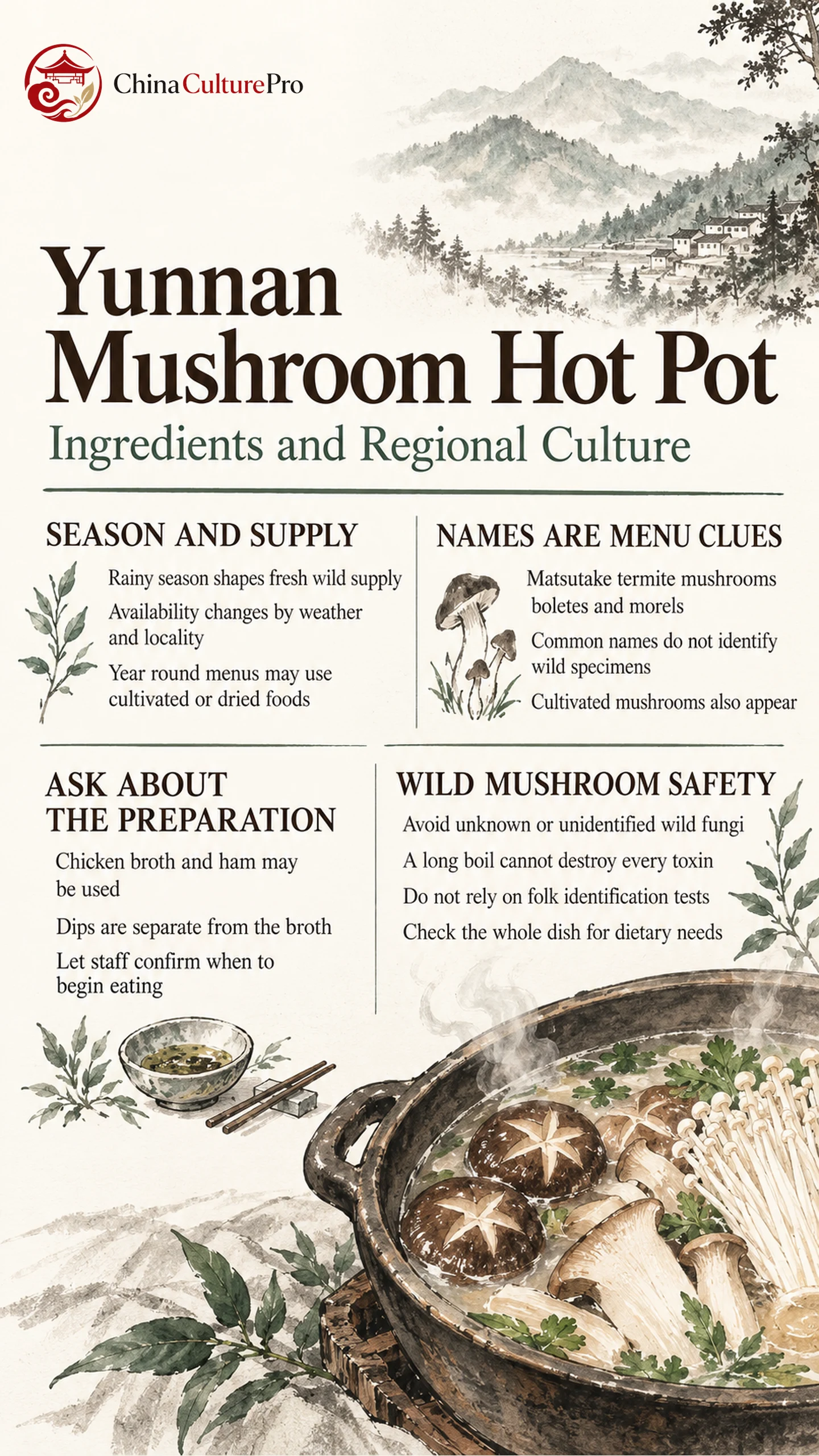
Mushroom plates arrive with different caps, stems and aromas, while the broth gradually takes on their savory character. In Yunnan cuisine, this meal connects seasonal ingredients with markets, household preferences and restaurant craft. Understanding that context is different from learning to identify mushrooms in the wild.
Mushroom Season and Regional Food Culture
Yunnan’s rainy-season mushroom supply is a major part of the meal’s regional identity. Fresh fungi move from growing areas through markets and restaurant kitchens, with availability shaped by weather and locality. One field report describes a broad growing period from around May into the end of the rainy season in October; it is not a guarantee that every species is available throughout that interval.[1]
The attraction includes anticipation: families discuss the returning seasonal ingredients, while restaurants adjust to market supply. A mushroom-centered table can mark the season without being attached to a single festival or one fixed recipe.
Fresh seasonal wild mushrooms, cultivated products and dried ingredients should be distinguished. A year-round restaurant offering does not establish that every mushroom was freshly gathered locally. Ask what is available now and how it has been sourced.
Nor should the province be reduced to one mushroom dish. Different parts of Yunnan have their own foods and ingredient traditions. Mushroom hot pot is one recognizable meal within that wider regional repertoire.
Mushrooms on the Menu
These examples explain names a diner may encounter. They are not a field-identification chart or a recommended mixed-wild-mushroom order.[2]
| Menu name | Place in the food conversation | Important boundary |
|---|---|---|
| Matsutake(松茸,sōngróng) | A strongly aromatic seasonal mushroom reference | The name alone does not verify the product’s species or source |
| Termite mushrooms(鸡枞菌,jīzōngjūn) | A familiar Yunnan ingredient associated with savory dishes | A common name is not a safe identification method |
| Boletes(牛肝菌,niúgānjūn) | A broad menu grouping often translated loosely as porcini | The wider group includes different species; do not assume all are edible |
| Morels(羊肚菌,yángdùjūn) | Fresh or dried mushrooms used in savory dishes and stock | A menu description does not establish wild versus cultivated origin |
Cultivated shiitake, king oyster, enoki and other known food mushrooms can also appear. These give cooks different textures and allow versions outside the freshest wild season. The Chinese mushrooms guide provides culinary context, rather than permission to identify a wild specimen from a photograph.
Ask which food products the kitchen has selected and prepared. Color, cap shape or a translated menu label cannot replace reliable identification and sourcing.
Broth, Dips and the Shared Meal
Chicken broth is a familiar partner to mushrooms, and dried mushrooms can contribute flavor to the base while other pieces are served separately. Some preparations add ham or other animal ingredients. These are documented culinary choices, not requirements for every Yunnan mushroom pot.[2]
The Chinese soup culture guide explains the role of stock beyond its visible color. A pale mushroom broth can still contain chicken or meat seasoning. Conversely, a genuinely plant-based version depends on the actual recipe, not the dish’s vegetable-forward appearance.
Dips can bring chili, herbs or other contrasting seasoning to an otherwise mild broth. Check the personal bowl separately using the hot pot dipping sauces guide. Chili in the dip does not mean the stock must be chili-hot.
Ask who manages the cooking before reaching into the pot. Some restaurants control when utensils are released or when diners may begin. A proposed soup-first tasting sequence applies only after the kitchen confirms the food is ready; it is not permission to sample mushroom broth early.
Ordering and Wild Mushroom Safety
Three checks belong before the meal:
- Source and identity: Ask which mushrooms are being served. Avoid unfamiliar, unidentifiable or unknown-source wild fungi; do not bring a self-picked collection for casual experimentation.
- Cooking responsibility: Let the kitchen explain and manage its preparation. Thorough cooking matters for identified edible products, but a long boil does not destroy every mushroom toxin. No universal timer makes unknown species safe.[3]
- Whole-dish ingredients: Confirm stock, ham, seasoning powders, oil and dips. Use the vegetarian food guide to check the complete meal.
Do not judge safety through bright or dull colors, insect marks, garlic, silver utensils or other folk tests. Regional health advice also cautions against mixed wild-mushroom preparations and alcohol with wild fungi. A large assortment should not be treated as a quality or safety goal.[3]
Keep raw ingredients and their tools separate from cooked food and eating utensils.[5] The hot pot eating guide covers general table handling, but mushroom-specific preparation still belongs to the responsible kitchen.
If someone becomes unwell after eating wild mushrooms, seek urgent medical care rather than relying on a folk remedy or waiting for symptoms to pass. Some mushroom toxins remain hazardous despite cooking.[4]
FAQs About Yunnan Mushroom Hot Pot
Is Yunnan mushroom hot pot vegetarian?
Not necessarily. Chicken broth, ham or animal seasoning may be present. Confirm the full stock, oil, additions and dip.
Are all mushrooms in the pot wild?
No. Restaurants can use cultivated, dried or other prepared mushroom products. Ask about the actual selection and sourcing.
Is mushroom hot pot only available in summer?
Fresh wild supply is seasonal and weather-dependent. Cultivated and dried ingredients make other versions possible beyond that period.
Can a long boil make an unknown mushroom safe?
No. Some toxins withstand cooking. Unknown wild mushrooms should not be eaten, regardless of a proposed cooking time.
Sources
[1] Jing Zhaoyan and Yan Yong for Xinhua. Yunnan’s Summer and Mushroom Food Culture
[2] Michelle Zhao. Yunnan Mushroom Hotpot
[3] Yunnan Health Commission. Edible Wild Mushroom Advice
[4] Yunnan Disease Control Administration. Wild Mushroom Myths and Safety
[5] Centre for Food Safety. Hot Pot Food Safety Advice