


Quick Answer: What Is Mala Tang?
Mala tang(麻辣烫,málàtàng), also written malatang, is a Chinese food format in which a vendor or kitchen cooks selected ingredients for the diner. A prepared bowl with broth is familiar today, but regional and shop variations exist.
- Ingredients: Meat, seafood, vegetables, soy foods and noodles can be combined in one order.
- Flavor: Mala(麻辣,málà)describes chili heat and peppercorn tingling; modern menus can offer milder alternatives.
- Service: Diners commonly choose foods from a display and receive a cooked meal, rather than cooking at the table.
The name does not guarantee one broth recipe, a particular price system or an identical serving style everywhere.
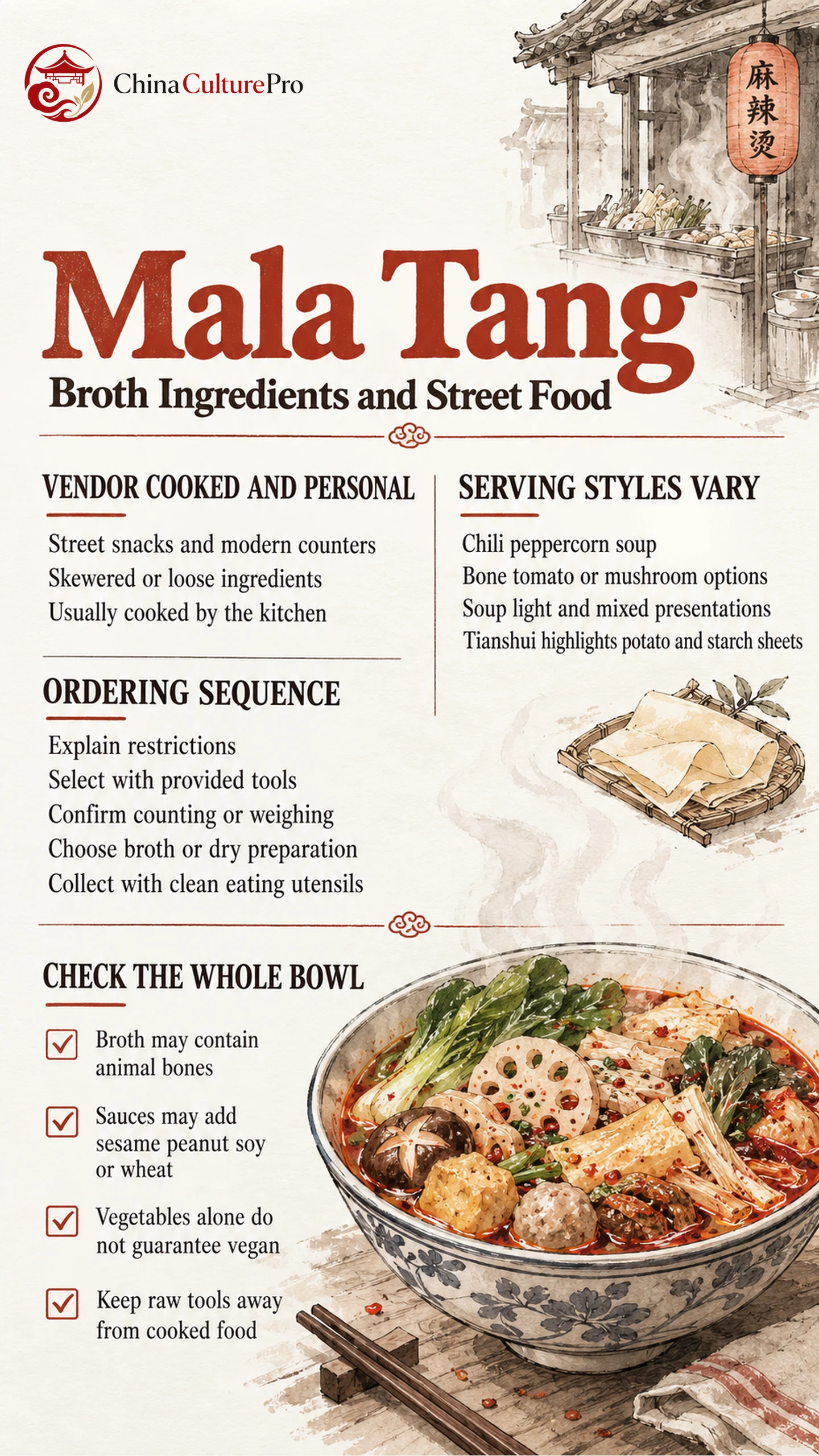
A display of vegetables, folded bean curd sheets and noodles lets each customer assemble a different meal. The kitchen then turns that selection into a cooked bowl. This flexibility connects mala tang’s place in Chinese street food with the self-selection counters found in many modern restaurants.
From Street Snacks to a Prepared Bowl
Mala tang is closely associated with the flavor world of Sichuan cuisine. Accounts of its beginnings often invoke riverside workers, but conclusive origin records are lacking. The present-day category includes several regional forms.[1]
Its enduring feature is choice within a vendor-cooked meal. Skewered snacks and loose ingredients can both appear in the wider tradition. Modern counters make that selection visible in refrigerated displays, and the kitchen handles cooking after the order is placed.
The final Chinese character is 烫, referring to heating or scalding, rather than 汤, the character for soup. A soup bowl is therefore a common presentation, not a literal ingredient formula encoded in the name.
Compared with communal hot pot, the practical distinction is who cooks and where. Mala tang usually arrives cooked for the customer. It can suit one person without requiring a group to maintain a shared table pot.
Broths and Regional Serving Styles
Do not assume that every shop serves a clear red soup or a creamy pale one. Current operators can offer contrasting broths and soup-free options within the same menu.[2]
| Serving tendency | What to expect | What to confirm |
|---|---|---|
| Chili-and-peppercorn broth | A savory soup carrying heat and tingling | Actual spice level, stock and added sauces |
| Richer or alternative broths | Bone broth, tomato or mushroom options, depending on the shop | A mild flavor or plant name does not establish all ingredients |
| Soup-light or mixed presentations | Cooked ingredients with a concentrated seasoning or sauce | Whether the dish is mixed after cooking or finished in a wok |
Tianshui in Gansu offers a useful regional example. Potato slices and broad potato-starch sheets are prominent, with local chili, peppercorn and aromatic oil contributing a distinctive coating. This regional version emphasizes the chili coating and distinctive starch ingredients.[3]
Mala ban(麻辣拌,málàbàn)commonly identifies a mixed, soup-free preparation. It should not automatically be equated with mala xiang guo, which is associated with a stir-fried finish. Ask the kitchen how the menu’s dry option is prepared; translated names can overlap.
Choosing Ingredients and Ordering Your Bowl
The hot pot ingredients guide helps identify the meat, seafood, soy foods and starches used at many selection counters. Adapt this sequence to the restaurant’s actual system.[4]
- Explain restrictions: Tell staff about allergies or dietary requirements before using a shared ingredient display.
- Select foods: Use the provided tools and choose a manageable variety of textures. Check unfamiliar processed balls, rolls or filled products.
- Confirm the order: Ask how ingredients are weighed or counted, including any minimum order or separately charged extras, before payment.
- Choose the preparation: Confirm broth or dry format, chili heat, peppercorn intensity and optional finishing sauces. The kitchen cooks the order.
- Collect the cooked bowl: Follow the shop’s number or table system. Use eating utensils rather than the tools used to select raw ingredients.
A display can make an order look smaller than the finished meal. Portion size depends on the foods and their preparation; there is no single weight that fits every appetite. Rice or another staple may be separate from the bowl.
Checking Broth, Sauces and Dietary Needs
Start with the cooking liquid. Some restaurant broths use animal bones, including a documented beef-and-pork-bone example.[5] Pale color, a mushroom label or the absence of visible meat cannot establish the recipe of another kitchen.
Then check finishing sauces. Sesame or peanut mixtures, soy sauce and compound seasonings can introduce allergens after the ingredients have been selected. A current restaurant example even identifies its dry sauce as peanut-based, illustrating why broth-free does not mean allergen-free.[4]
For a vegetarian or vegan bowl, confirm the base, cooking liquid, oil, sauce and compound foods together. The vegetarian food guide explains this whole-meal approach. Picking only vegetables does not settle what they are cooked in.
Finally, treat the ingredient-selection tools as raw-food tools. Keep them away from the cooked bowl and personal sauce. Separate raw and ready-to-eat food and utensils; a familiar fast-service format does not replace those basic safeguards.[6]
FAQs About Mala Tang
Is mala tang the same as hot pot?
They share ingredients and flavor associations. Mala tang is usually cooked by the vendor and served ready to eat; communal hot pot involves cooking in a heated pot at the table.
Does mala tang have to be spicy?
The name foregrounds mala flavor, but many contemporary menus offer adjustable heat or alternative broths. Ask about the actual choice available.
Is a pale broth vegetarian?
Not necessarily. Bone stock and animal seasonings can be pale. Confirm the ingredients rather than judging the color.
Is every soup-free mala bowl stir-fried?
No. Some preparations are mixed with sauce after cooking. A dry description alone does not establish a wok-fried finish.
Sources
[1] Tan Yunfei. Hot and Spicy: How Malatang Conquered China
[2] YANGGUOFU. Broth and Dry Mix Flavors
[3] Xinhua News Agency. Tianshui Malatang and Its Local Ingredients
[4] Pergh Malatang. What Is Malatang and How to Order
[5] Tony Lao. Malatang: An Explainer
[6] Centre for Food Safety. Hot Pot Food Safety Advice