
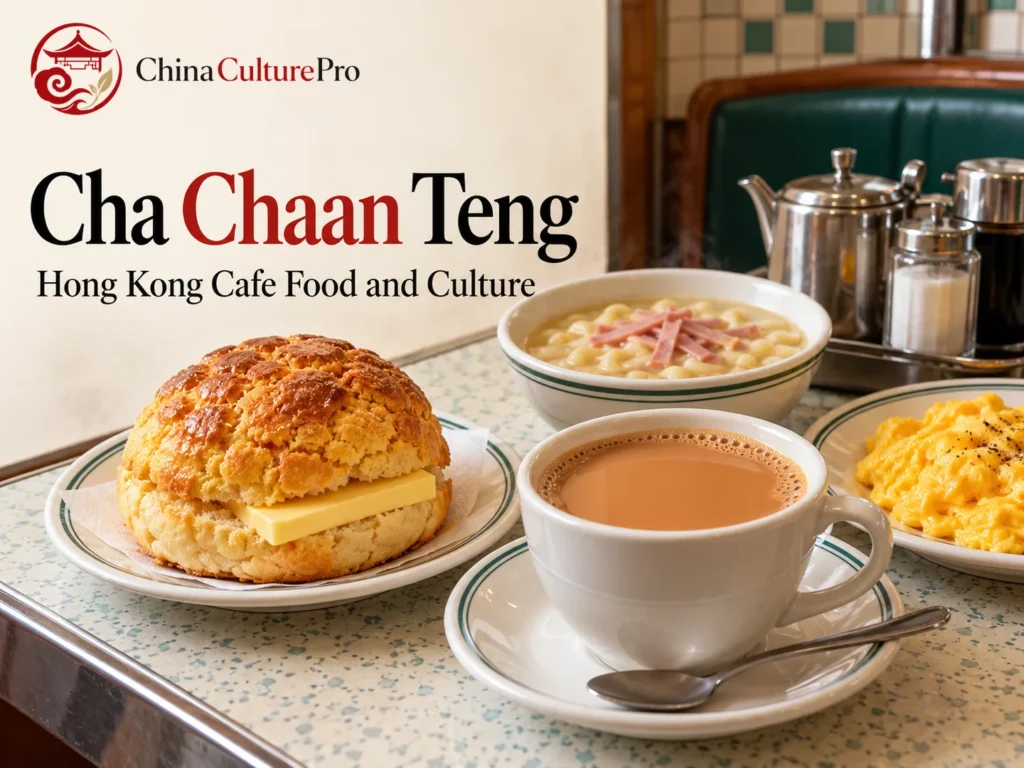

Quick Answer: What Is a Cha Chaan Teng?
A cha chaan teng(茶餐厅,chácāntīng)is a Hong Kong-style casual diner or tea restaurant, serving drinks, snacks and substantial meals. Its menu combines local Chinese tastes with adapted Western foods.
- Food: Noodles, rice dishes, sandwiches, eggs, buns and pastries can share one menu.
- Drinks: Strong milk tea, coffee, lemon tea and other house choices accompany the food.
- Service: Set meals and individual orders offer different ways to eat, with availability changing by shop and time.
Cha chaan teng is Cantonese menu spelling; chácāntīng is Mandarin pinyin. Tea restaurant names the establishment, not a rule that it serves only tea or dim sum.

A cup of strong tea can sit beside macaroni soup, scrambled eggs and a sweet-topped bun in the same meal. That combination is familiar within Hong Kong food culture. A cha chaan teng makes these local adaptations part of everyday dining rather than separating Chinese and Western foods into different restaurant categories.
How the Hong Kong Tea Restaurant Took Shape
The institution developed through changing urban tastes and everyday demand, especially in the postwar decades. Bing sutt(冰室,bīngshì), commonly translated as ice rooms or ice cafés, were an important predecessor associated with cold drinks and light refreshments.[2]
As menus expanded, local diners encountered familiar Western forms through Hong Kong ingredients and seasoning: macaroni in broth, pork chops with rice, toast and milk tea. These foods were adapted into casual meals rather than preserved as copies of a formal Western restaurant menu.[4]
The result is a recognizable local institution, but not one frozen menu or interior. Some cafés retain booths, tiled floors and older furnishings; others use contemporary designs. The food and service can connect them even when the décor differs.[1]
Menus and service continued to evolve. Today, a quick breakfast, a midday set or an afternoon snack can all belong to the same café’s service, depending on its menu.
Drinks, Buns and Everyday Cafe Dishes
Hong Kong-style milk tea(港式奶茶,gǎngshì nǎichá)uses a strong black-tea base with milk. Evaporated milk or filled milk appears in documented practice, with blends and technique differing between brewers.[3] The Chinese milk tea guide explains its place among other milk-tea styles.
The nickname silk-stocking milk tea refers to the appearance of a tea-stained cloth strainer. It is not an instruction to brew tea through clothing.[2]
Yuenyeung(鸳鸯,yuānyāng)combines coffee and milk tea. Pineapple bun(菠萝包,bōluó bāo)names a sweet bun with a cracked topping resembling pineapple skin. Egg tart(蛋挞,dàntà)names an egg-custard pastry. These names are useful menu clues, with fillings and house variations still worth checking.[4]
| Menu example | What to recognize | Useful distinction |
|---|---|---|
| Hong Kong-style milk tea | Strong tea flavor and a smooth milky body | Different from assuming a fresh-milk latte or pearl milk tea |
| Yuenyeung | Coffee and milk tea in one drink | Contains both beverages; proportions vary |
| Pineapple bun | Soft bread beneath a sweet, cracked top | The classic name refers to appearance, not required pineapple filling |
| Egg tart | Custard in a pastry shell | Crust and house style vary; not one fixed formula |
| Macaroni or noodle soup | Pasta or noodles with savory toppings and broth | Broth and toppings need checking separately |
| Rice plate or baked rice | A substantial rice-based meal with a topping or sauce | A meal category, not a single universal pork-chop recipe |
Hong Kong and Macau egg tarts deserve their own comparison. Likewise, Chinese rice dishes provide context for the rice-based meals. These examples illustrate a café menu’s possible range.
Reading Set Menus and Cafe Service
A set can combine a main dish with a drink or another item. Breakfast, lunch and afternoon menus may offer different bundles. Read what is actually included instead of assuming a photograph shows everything covered by the listed order.
- Dish choice: Confirm the noodle or rice base, toppings and any alternatives within the set.
- Drink choice: Specify hot or cold and ask which drinks are included, substituted or charged separately.
- Timing: Check whether the set is available now, rather than assuming all menu panels apply throughout the day.
- Service: Follow the shop’s seating and payment arrangements; ask staff if a shared table or counter procedure is unclear.
Fast service is familiar in many cafés, but pace and atmosphere vary. Plain descriptions and menu references work well for ordering. Pointing to a dish and confirming its contents is clearer than using an unfamiliar abbreviation without knowing what it changes.
A cha chaan teng is also distinct from a restaurant centered on dim sum. Both can involve tea and small foods, but a café’s toast, noodle and rice sets are a different menu structure from ordering successive baskets and shared plates.
Ingredient Checks Beyond the Menu Name
Check dairy and eggs in drinks, buns, pastry and toast; wheat in bread, noodles and some sauces; and peanuts or seafood where fillings and seasonings use them. One café’s published disclosure includes these ingredient and contact risks; another kitchen’s recipes still require separate confirmation.[5]
Then ask about the complete dish. A vegetable noodle soup may use animal stock. A sandwich can contain butter, egg or a spread in addition to its named filling. A drink described as less sweet can still contain milk; a plain-looking pastry can include ingredients invisible from the outside.
For vegetarian or vegan requirements, confirm broth, sauce, fat and fillings using the vegetarian food guide. Request changes before ordering, and check whether the kitchen can make them rather than assuming every set is fully customizable.
FAQs About Cha Chaan Teng
Is a cha chaan teng the same as a dim sum restaurant?
No. A cha chaan teng is a casual café or diner with drinks and varied meals. A dim sum restaurant centers its menu on small Cantonese dishes, often served with tea.
Does a pineapple bun contain pineapple?
The classic bun takes its name from the topping’s appearance. Special versions can add fruit or other fillings, so check the actual product.
Is Hong Kong milk tea dairy-free?
Traditional versions use milk. Ask whether a suitable alternative is available and whether the whole preparation meets your requirement.
Are all cha chaan tengs open all day?
No. Opening hours and kitchen service vary. Even an open café may offer particular sets only during specified periods.
Sources
[1] Hong Kong Tourism Board. Cha Chaan Teng Food and Dining Culture
[2] Hong Kong Memory. The History of Hong Kong-style Milk Tea
[3] Hong Kong Memory. Ingredients Utensils and Brewing Process
[4] MICHELIN Guide. The Evolution of Cha Chaan Teng
[5] Four’s CCT. Cafe Menu and Allergen Information