


Quick Answer: What Is Chinese Milk Tea?
Milk tea (奶茶, nǎichá) is a broad drink description rather than one fixed Chinese recipe. Regional traditions and modern shops combine tea and a milk component in different ways, sometimes adding chewy toppings, flavored mixtures or foam.
- Regional style matters: A strong brewed cup and a pearl-filled takeaway have different histories and preparation methods.
- Ingredients vary: Fresh milk, evaporated milk, creamer or an offered plant-based alternative can produce different drinks.
- Names need checking: A tea latte need not contain coffee, while a milk specialty may contain no tea.
Identify the tea base, milk component and additions before treating two menu names as the same drink.
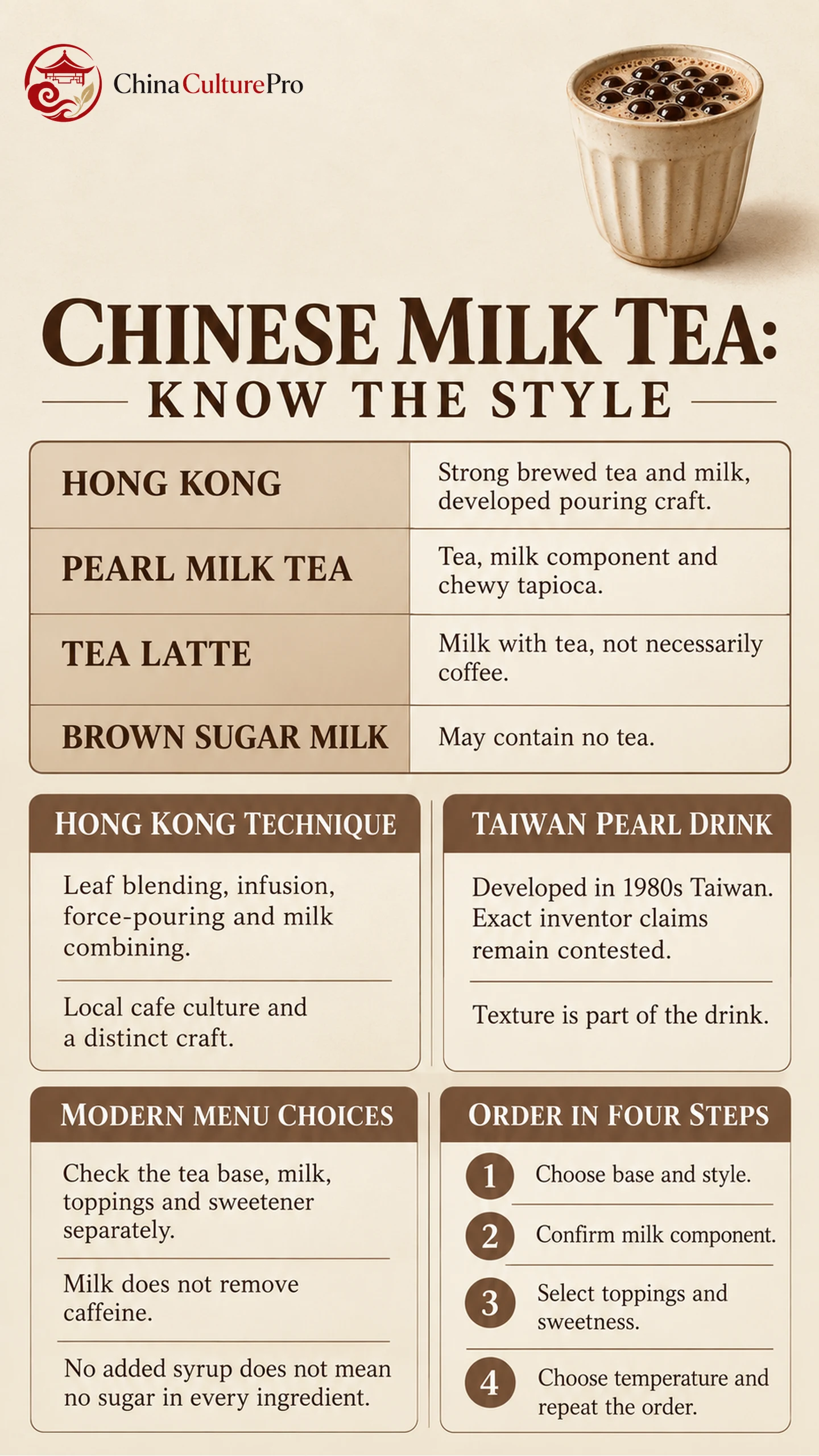
Milk changes the texture and balance of tea, but it does not erase the tea’s own character. Brewing strength, leaf choice, milk formulation and sweetening all affect the cup. Understanding those separate choices makes regional styles easier to compare and a modern menu easier to read.
The Main Styles and Their Differences
These examples cover distinct regional traditions and familiar modern menu directions. They do not exhaust every milk-and-tea preparation.
| Style or menu name | What distinguishes it |
|---|---|
| Hong Kong-style milk tea (港式奶茶, gǎngshì nǎichá) | Strong brewed tea and a milk component, with a developed craft of leaf blending, infusion and pouring. |
| Taiwanese pearl milk tea (珍珠奶茶, zhēnzhū nǎichá) | Tea and a milk component combined with chewy tapioca pearls; the topping makes texture part of the drink. |
| Fresh-milk tea or tea latte | A menu direction emphasizing milk with tea; the word latte does not necessarily add coffee. |
| Brown sugar milk with pearls | A milk-and-topping specialty that may omit tea, despite being sold beside tea drinks. |
The comparison separates Hong Kong’s tea-making craft from Taiwanese pearl drinks and milk-focused menu variations.[1][2] They are useful for identifying a likely preparation, but the exact shop recipe still matters.
The wider category also reaches beyond these urban examples. Tibetan butter tea offers a separate regional tradition to explore. Avoid using one familiar takeaway cup as a definition of every drink that combines tea with dairy ingredients.
Hong Kong Milk Tea: Technique Behind the Cup
Silk-stocking milk tea (丝袜奶茶, sīwà nǎichá) is another name associated with Hong Kong’s style. The heritage account describes a long evolution from English milk tea into a distinctive local beverage and identifies several stages: blending leaves, boiling and infusing, force-pouring, brewing and combining with milk.[1]
The nickname describes the style; it is not an instruction to use clothing as equipment. What matters culturally is the developed tea-making practice and the balance of the finished cup, rather than treating the drink as merely a splash of milk in any weak infusion.
The cha chaan teng (茶餐厅, chácāntīng), or Hong Kong-style cafe, provides a familiar food setting for this style. Tea preparation sits alongside an everyday meal rather than requiring a formal tasting ceremony. This is a different social and culinary setting from the leaf-focused gatherings discussed in Chinese tea culture.
Yuenyeung (鸳鸯, yuānyāng) is a related coffee-and-milk-tea mixture, not simply another name for ordinary milk tea.[5] Its presence on a menu is one reason to check the base drink rather than assuming every milky tea-colored cup contains the same combination.
Taiwanese Milk Tea and the Pearl Drink
Taiwan’s pearl drink developed in the 1980s, with competing accounts of the precise invention. The Taiwanese origin is a firmer starting point than choosing one disputed person and date as the definitive answer.[3]
Pearls introduce a second texture: the customer drinks the tea while also chewing the topping. Taiwanese menus also show variation in pearl size, tea choice and milk emphasis, with fresh-milk versions alongside other preparations.[2] The bubble tea guide follows the origin accounts and toppings in more detail.
Pearl milk tea is therefore one branch of milk tea rather than its definition. A cup without pearls can still be milk tea, and a bubble-tea shop may sell drinks with no milk. Read the named recipe instead of using the shop category as a full ingredient list.
What Modern Menus Change
Modern menus separate and recombine the base, milk, sweetener and topping. Surveys of tea-based beverages include pearl drinks, taro milk tea, tea lattes and milk-foam preparations, showing how much variety can sit within neighboring menu categories.[4]
The tea base is a meaningful first choice. Chinese black tea and oolong tea offer different directions, while the actual brewing strength and remaining ingredients influence how clearly the tea comes through. A named leaf is informative, but it does not fix the whole recipe.
The milk component is a separate question. Fresh milk and creamer are not identical formulations, and an available plant-based alternative does not establish the ingredients of a foam or topping. Ask about the complete drink when a particular ingredient matters to you.
Sweetness settings also need interpretation. A no-added-sugar order can retain sugars from prepared mixtures or toppings, and tea-based drinks can still contain caffeine.[4] For more on the latter, see Chinese tea caffeine. Milk, ice and a pale color do not by themselves establish a caffeine-free drink.
How to Order the Drink You Mean
Use the menu’s actual options to assemble a clear order rather than relying on one broad style name.
- Choose the base and style. Specify whether you want a regional brewed milk tea, a pearl drink or a milk specialty, and ask whether tea or coffee is included if unclear.
- Confirm the milk component. Ask which milk, creamer or alternative is used and whether it can be changed for that drink.
- Select toppings and sweetness. Check what is already included, then clarify whether a sweetness setting changes only added syrup or also other components.
- Choose temperature and repeat the order. Confirm the available hot, chilled or ice settings, then restate the complete drink before paying.
A request such as oolong milk tea with tapioca pearls, less added syrup and regular ice identifies several independent choices. At a cafe serving a more fixed regional preparation, the useful questions may instead concern hot or cold service and how sweetening is handled.
A clear order connects the named style with the ingredients and serving choices you want. The Chinese drinks guide offers the wider comparison if you would like leaf tea, soy milk or another drink alongside the milk-tea family.
FAQs About Chinese Milk Tea
Is all Chinese milk tea bubble tea?
No. Bubble or pearl milk tea is one branch. Other regional and modern milk teas can contain no tapioca topping.
Does milk tea contain caffeine?
A drink made with caffeinated tea can contain caffeine even after milk is added. Check the actual base and formulation rather than assuming that milk or ice removes it.
Is a tea latte always made with coffee?
No. On a tea menu, latte can describe tea combined with milk. A coffee-and-tea mixture is a different recipe, so ask which base is included.
Does no added sugar mean the whole drink is sugar-free?
Not necessarily. Prepared toppings and other ingredients may contain sugar even if extra syrup is omitted. Ask what the shop’s setting changes.
Sources
[1] Hong Kong Intangible Cultural Heritage Office. Hong Kong-Style Milk Tea Making Technique
[2] Taipei City Department of Information and Tourism. Drinkipedia: The Lowdown on Taiwanese Drinks
[3] Taiwan Immigrants Global News Network. The Origins of Bubble Tea, One of Taiwan’s Most Beloved Beverages
[4] Centre for Food Safety. Sugar and Energy Contents of Common Non-Indigenous Tea-Based Beverages in Hong Kong
[5] Centre for Food Safety. Nutrients of Common Non-Prepackaged Beverages in the Local Market