


Quick Answer: What Is Hubei Doupi Breakfast?
In Wuhan, doupi(豆皮,dòupí)is a savory breakfast preparation with a thin bean-and-rice skin, egg, sticky rice and a diced filling.
- Outside: A golden pan-cooked layer gives the serving its recognizable appearance.
- Inside: Glutinous rice supports the savory ingredients.
- Presentation: The layered preparation is divided into manageable pieces.[1]
This guide focuses on Wuhan’s breakfast form. Elsewhere in Hubei, the same word can identify a different grain-based food.
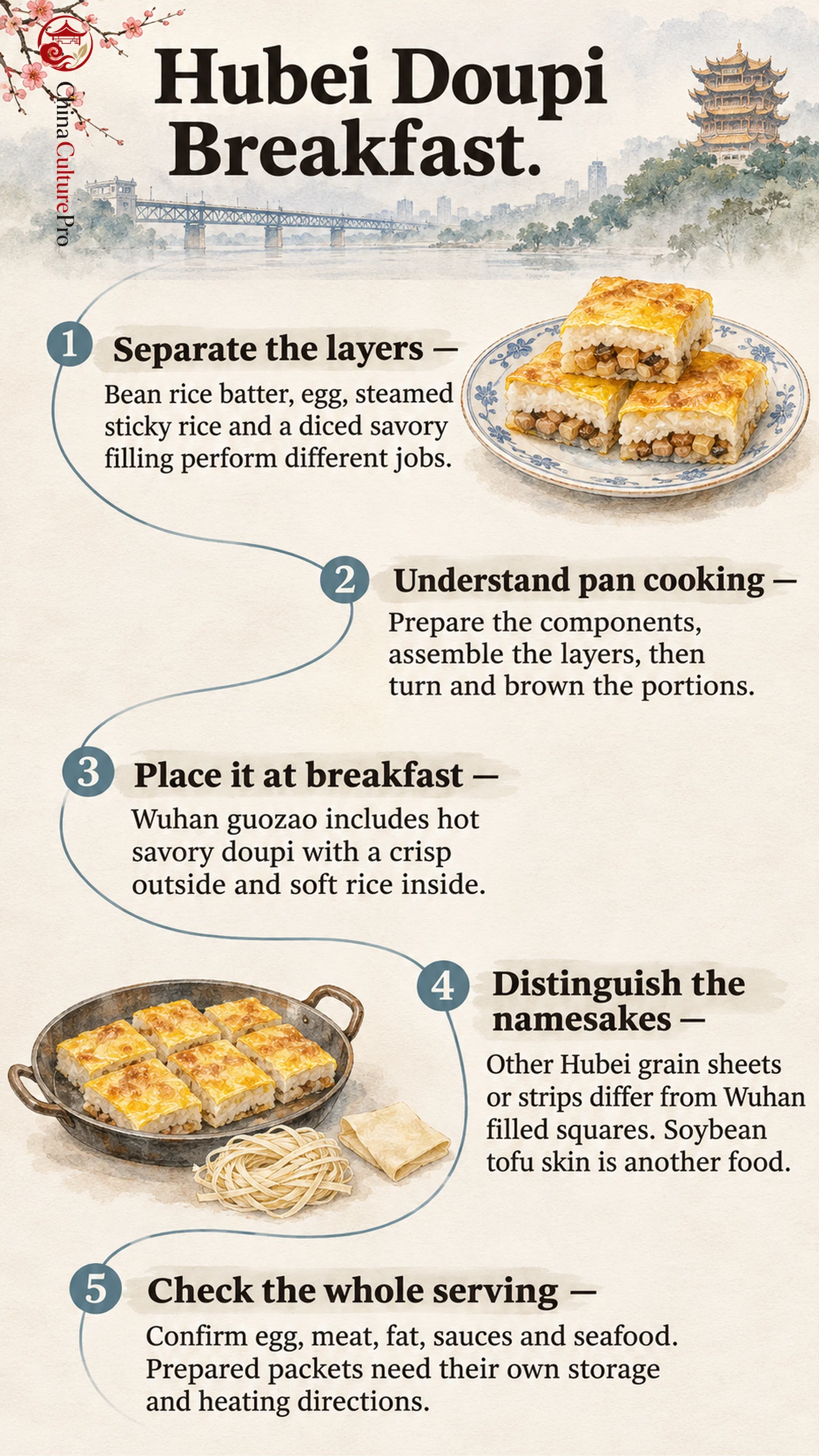
Golden squares reveal a soft layer of sticky rice beneath a thin, egg-colored skin. Diced meat, mushrooms and bamboo shoots add a savory center. This Hubei specialty rewards a closer look because the wrapper, rice and filling are prepared differently, while similar names elsewhere can lead to a very different order.
The Wrapper, Egg, Sticky Rice and Filling
Sanxian doupi(三鲜豆皮,sānxiān dòupí), often translated as three-delicacy doupi, has four useful components to recognize.
- Wrapper: Rice and hulled mung beans are ground with water into a batter.
- Egg: An egg layer gives the skin its golden appearance.
- Rice: Separately steamed glutinous rice forms the soft, cohesive middle.
- Filling: Diced savory ingredients are spread across the rice.[2]
One contemporary account identifies the three delicacies as pork, winter bamboo shoots and shiitake mushrooms. Other documented versions contain different fillings, so the name is not a promise of one universal trio. Read the actual description when choosing between meat, shrimp or other preparations.[3]
Whole glutinous rice creates the sticky interior, while ground rice contributes to the thin wrapper.
How Pan Cooking Builds the Layers
Before assembly, the rice is steamed, the savory filling prepared and the bean-rice batter spread into a thin skin. The skin is turned with its egg-coated side facing the pan, then rice and filling are distributed over it. Further turning and pan cooking bring the layers together.[2]
A documented traditional shop preparation uses rendered pork fat and turns the cut pieces to cook the other side. This explains why the cooking fat deserves a separate ingredient check, and why a plate can have a crisp exterior around a softer rice layer.[4]
Steaming, batter spreading and pan cooking contribute different results within these Chinese cooking methods.
Doupi in Wuhan’s Guozao Breakfast Culture
Guozao(过早,guòzǎo)is Wuhan’s familiar term for eating breakfast. Doupi fits this setting as a hot, savory staple with contrasting textures: the browned skin gives way to chewy rice and a moist filling. Sweet rice-based drinks can accompany it at the breakfast table.[1]
For an introduction to the wider Chinese breakfast repertoire, doupi offers a rice-centered counterpart to Wuhan hot dry noodles. Both belong to the city’s varied morning meal.
The street-food setting also makes the serving form useful. Cut portions can be shared or eaten as an individual order. Ask how a shop divides its pan rather than assuming every place sells the same number of squares.
Doupi, Dousi and Tofu Skin Are Different Foods
Across Hubei, grain-based sheets may also be called doupi or dousi(豆丝,dòusī). Regional examples use rice with ingredients such as mung beans or corn, make sheets or strands, and dry them for later cooking. They may be boiled or stir-fried rather than assembled around a sticky-rice filling.[5]
| Food | Structure to look for |
|---|---|
| Wuhan breakfast doupi | A pan-cooked skin with egg, sticky rice and a savory filling.[3] |
| Other Hubei grain sheets or dousi | Sheets or strands cooked as a staple, with regional ingredient differences.[5] |
| Soybean tofu skin | A different soybean product, rather than the Wuhan layered breakfast.[4] |
The separate guide to Chinese tofu types helps with the soybean-food vocabulary. A literal translation of “bean skin” is not enough to identify the food on a menu.
Ordering, Packaged Portions and Ingredient Checks
Confirm the filling, egg and cooking fat before ordering. A mushroom-containing version can still have pork or animal fat. Check soy sauce, sesame seasoning, wheat-containing condiments and seafood where present, together with allergen cross-contact from shared equipment. Rice and mung beans alone do not establish that the complete serving is gluten-free.[6]
A plant-based order needs changes to egg, filling, fat and seasonings, not just removal of visible meat. Our vegetarian food guide explains that broader ingredient check.
Commercial prepared portions also exist. Their storage and heating requirements belong to the actual product label; a description of freshly cooked street-side doupi does not supply instructions for every chilled or frozen packet.[3]
FAQs About Hubei Doupi Breakfast
Is Wuhan doupi made from tofu skin?
The characteristic wrapper is a bean-and-rice batter skin with egg, rather than a ready-made soybean tofu sheet.
What does three delicacies mean?
It describes the savory filling. Pork, mushroom and bamboo shoot are one documented trio; other versions differ.
Is doupi vegetarian or gluten-free?
Neither follows from the name. Check egg, meat, fat, sauces and shared preparation equipment.
Sources
[1] Marco Polo Wuhan. Wuhan doupi and guozao
[2] Wuchang District Culture and Tourism Bureau. Doupi: Wuhan breakfast
[3] Changjiang Daily, archived by Wuhan Municipal Government. Wuhan three-delicacy doupi and prepared products
[4] Changjiang Daily, archived by Wuhan Municipal Government. Traditional doupi preparation and a chef’s account
[5] Li Xueru and Hubei Daily county reporting teams. Different Hubei foods called doupi
[6] US Food and Drug Administration. Food Allergies: What You Need to Know