

Quick Answer: Is Chinese Red Sugar the Same as Brown Sugar?
Chinese red sugar, hongtang (红糖, hóngtáng), usually refers to cane sugar made without separating out the molasses. “Brown sugar” is also an English name used for hongtang, as well as a broader sugar category. The two names are therefore not a reliable way to divide every product into separate categories.[1][3]
- Production: Check whether the sugar retains cane-juice molasses or is a different brown-sugar preparation.
- Flavor: Molasses contributes color and flavor beyond plain sweetness.
- Use: Match the sugar’s form and flavor to the dish, especially for cakes and desserts.
A Chinese product name, ingredient list and preparation description tell you more than the English color word alone. Brown-colored sugars can come from different processes.

A Chinese recipe may ask for red sugar while the shop packet says brown sugar. Another product may look just as dark yet have a different manufacturing process. Understanding the names, molasses and physical form makes the choice much clearer.
Names, Molasses and Production Differences
Hongtang is made by concentrating clarified sugarcane juice without the molasses-separation step used in producing more refined sugar crystals. The retained cane components give the sugar its characteristic color and flavor. This describes a processing category, rather than a requirement for one shade of red.[1][4]
Common light and dark brown sugars in English-language baking are not all manufactured in one way. They can be made by boiling brown sugar syrup or by combining white sugar with molasses. Dark brown sugar has a stronger molasses flavor than the corresponding light type.[2]
Chishatang (赤砂糖, chìshātáng) is another Chinese product name worth recognizing. It is a molasses-bearing granulated sugar associated with sugar refining and separation, rather than the same production category as hongtang. Similar color does not make the names interchangeable.[4]
| Label or name | What it tells you | What still needs checking |
|---|---|---|
| Hongtang / Chinese red sugar | Cane sugar made without molasses separation | Its physical form and any added ingredients. |
| Light or dark brown sugar | An English brown-sugar category with molasses character | The particular product and manufacturing method. |
| Chishatang | A distinct Chinese granulated sugar category | Do not identify it as hongtang by color alone. |
Heitang (黑糖, hēitáng), literally black sugar, overlaps with red-sugar terminology in some markets. Taiwan’s sugar-industry records use the two names for related sugars before molasses separation. The terms are regional usage, not a guarantee of identical flavor across brands.[5]
Blocks, Granules and Flavor
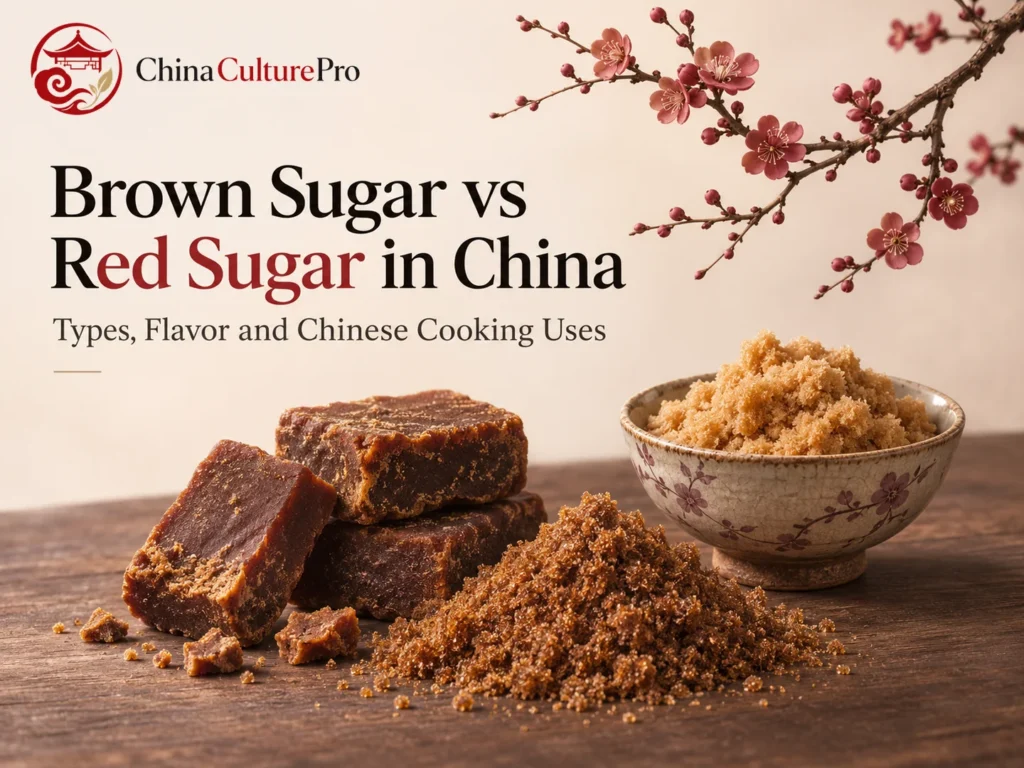
Hongtang can be sold in hard blocks, soft moist form or a drier sandy powder. Blocks need breaking down or dissolving. These physical forms do not identify the manufacturing process.[6]
Caramel-like sweetness and a faint smoky note can be noticeable, but their intensity varies by product.[6]
A moist sugar also brings water into a batter; a drier powder contributes less. This matters when choosing a cake ingredient.[2]
Chinese Cakes, Desserts and Savory Uses
Among Chinese desserts, nian gao (年糕, niángāo) shows how brown sugar contributes to a sweet rice cake. One published version allows dark brown sugar, muscovado or Chinese slab sugar, illustrating that a particular cake can accommodate several named sugar products.[7]
Ma lai go is the Cantonese name for a steamed sponge cake (马拉糕, mǎlāgāo in Mandarin) associated with dim sum. A home version uses dark brown sugar for its sweetness and brown-sugar character. Its airy sponge texture comes from the cake preparation, not simply from choosing a dark sugar.[8]
Red sugar can also contribute sweetness, color and flavor to hong shao rou (红烧肉, hóngshāoròu), red-braised pork. It is one sugar option for a braise.[6]
Choosing, Substituting and Storing Sugar
Look in the baking or sweetener section of Chinese and other Asian grocers. Use the Chinese name alongside the English label, then read the ingredients. Check whether it is plain sugar or a flavored blend.[6]
For example, one Hong Kong manufacturer’s red-date sugar product is based on chishatang and includes red-date and pepper flavors. This is a prepared blend. Compare the full product description alongside bilingual Chinese food names.[9]
A substitute can change the molasses flavor, color and moisture of the finished dish. Follow the sugar specified for a cake when its batter depends on a particular form; a sauce or sweet liquid may allow more flexibility. Match the recipe’s intended flavor and texture.[2][7]
Keep sugar tightly closed and follow its packet’s storage directions. Soft brown sugar can harden as it loses moisture; an airtight container helps retain that moisture. A hard block intended for dissolving and a soft sugar that has dried out are different situations.[10]
FAQs About Brown Sugar vs Red Sugar in China
Is hongtang always sold in blocks?
No. It can be sold in blocks, soft moist form or a drier powder. Shape alone does not establish the manufacturing process.
Is Chinese black sugar a completely different ingredient?
Not necessarily. Black- and red-sugar terminology overlaps in some markets; read the particular product description instead of relying on color alone.
Can regular brown sugar replace Chinese red sugar?
Some recipes allow it; check the specified sugar or listed alternatives. A workable substitution need not produce an identical flavor.
Does the darkest sugar always have the same flavor?
No. Color alone does not establish how sugar was made. Read the product name and ingredients.
Sources
[1] Office of Food Safety, Executive Yuan, Taiwan. Understanding Sugar: Cane Juice, Crystals and Molasses
[2] The Sugar Association. Types of Sugar: Brown Sugars and Molasses
[3] State Administration for Market Regulation, National Public Service Platform for Standards Information. Hongtang: GB/T 35885-2018, English Title Brown Sugar
[4] Shenzhen Administration for Market Regulation. Consumer Information: Hongtang and Chishatang
[5] National Archives Administration, Taiwan. Sugar Industry Products: Molasses and Red or Black Sugar
[6] The Woks of Life. Chinese Red Sugar: Forms, Flavor and Kitchen Uses
[7] Wei Guo, Red House Spice. Nian Gao: Dark Brown Sugar, Muscovado and Slab Sugar Options
[8] Bill Leung, The Woks of Life. Ma Lai Go: Brown Sugar Steamed Sponge Cake
[9] Taikoo Sugar. Red Date Sugar: A Prepared Blend
[10] The Sugar Association. Sugar FAQs: Moisture and Brown Sugar Storage