
Quick Answer: What Is Chongyang Festival 2027?
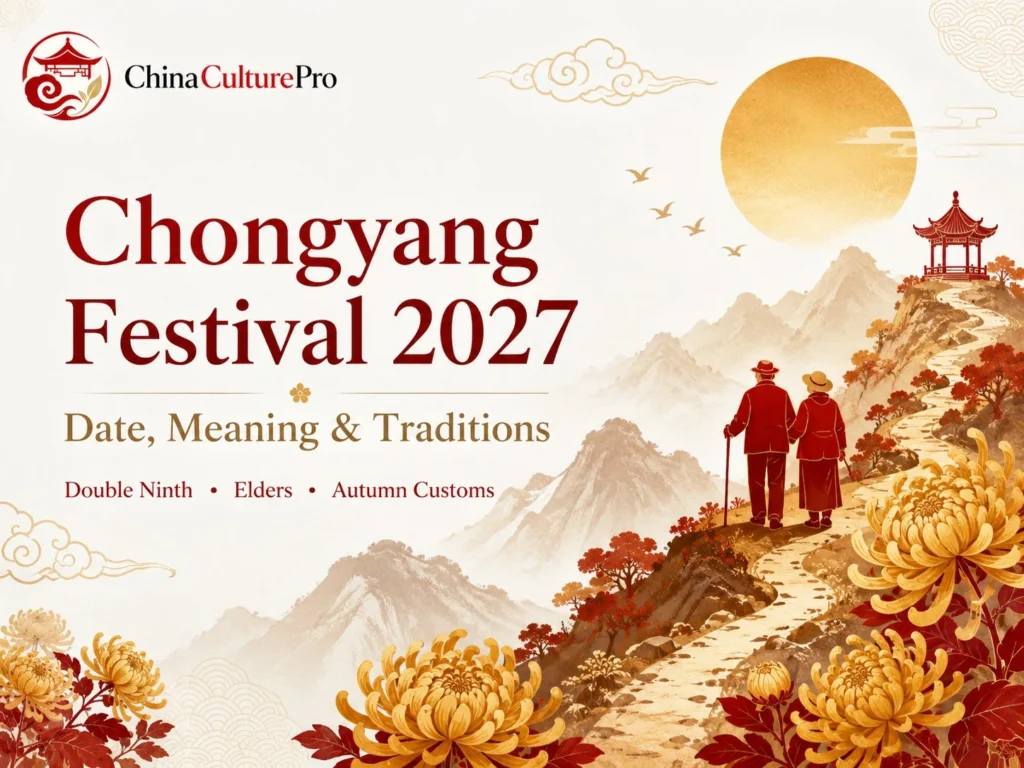
Chongyang Festival 2027 falls on Friday, October 8, 2027. It is celebrated on the 9th day of the 9th lunar month.
In Chinese, the festival is called Chongyang Jie (重阳节). It is also known as the Double Ninth Festival, Double Yang Festival, or Chung Yeung Festival in Cantonese-speaking regions. “Chong” means repeated or doubled, while “yang” is connected with the number nine, a traditional yang number. The ninth day of the ninth lunar month is therefore “double yang.”
Main customs include climbing mountains, appreciating chrysanthemums, drinking chrysanthemum wine or tea, eating Chongyang cake, wearing zhuyu, honoring elders, and ancestor remembrance in some regions.
The core meaning of Chongyang Festival is protection, longevity, clear autumn energy, climbing high, respecting elders, and thinking about the later stage of life with dignity.
| Item | Detail |
|---|---|
| 2027 Date | October 8, 2027 |
| Day of Week | Friday |
| Chinese Name | Chongyang Jie / 重阳节 |
| Also Called | Double Ninth Festival, Chung Yeung Festival |
| Lunar Date | 9th day of the 9th lunar month |
| Main Customs | Climbing, chrysanthemums, Chongyang cake, honoring elders |
| Main Meaning | Protection, longevity, autumn clarity, respect for elders |
What Is Chongyang Festival?
Chongyang Festival is not only Seniors’ Day, and it is not just a hiking festival. It is a traditional Chinese festival that brings together the ninth day of the ninth lunar month, clear autumn air, climbing high, chrysanthemums, zhuyu, longevity wishes, ancestor remembrance, and respect for elders.
The word Chongyang means repeated yang. In traditional Chinese number symbolism, nine is a yang number. It is also the largest single-digit number, so it can suggest height, fullness, strength, and an extreme point. On the ninth day of the ninth lunar month, two nines meet. That is Chongyang: double ninth, double yang.
This double-yang moment was not only treated as lucky. In older thinking, when yang energy becomes too strong, people should also be careful. This is one reason Chongyang customs include climbing high, wearing zhuyu, and drinking chrysanthemum wine: these actions carry ideas of protection, cleansing, and avoiding misfortune.
At the same time, nine, jiu, sounds like the Chinese word for long-lasting, also pronounced jiu. This sound connection helped Chongyang grow into a festival of longevity, long life, and respect for elders.
Chongyang has a clear autumn feeling. It is not as noisy as Chinese New Year, not as tender as Mid-Autumn Festival, and not as solemn as Zhongyuan Festival. Its spirit is clarity. People climb higher not only to enjoy the view, but to leave low, heavy air behind, look farther, and think about where life has arrived.
It is not a festival that asks you to celebrate loudly. It asks you to stop, lift your eyes, and see more clearly.
When Is Chongyang Festival? Date Rule and Upcoming Dates
Chongyang Festival is always celebrated on the 9th day of the 9th lunar month. Because it follows the Chinese lunar calendar, its Gregorian date changes every year.
It usually falls in October, though some years may place it in late September. In 2027, Chongyang Festival falls on Friday, October 8.
| Year | Chongyang Festival Date | Day of Week | Zodiac Year |
|---|---|---|---|
| 2026 | October 18, 2026 | Sunday | Fire Horse |
| 2027 | October 8, 2027 | Friday | Fire Goat |
| 2028 | October 26, 2028 | Thursday | Earth Monkey |
| 2029 | October 16, 2029 | Tuesday | Earth Rooster |
| 2030 | October 5, 2030 | Saturday | Metal Dog |
Date note: Chongyang Festival is not fixed on the Gregorian calendar. If you are checking climbing events, elder-care activities, ancestor rites, or Chung Yeung holiday arrangements, check the exact year and region.
In Mainland China, Chongyang Festival is usually not a public holiday. It is a working day for most people. In Hong Kong and Macau, however, Chung Yeung Festival is a public holiday, and many families visit graves or go climbing during the holiday.
Why Is It Called Double Ninth Festival?
The English name Double Ninth Festival comes directly from the date: the ninth day of the ninth lunar month. But in Chinese culture, nine is not just a number.
In traditional yin-yang number symbolism, odd numbers are yang numbers, and nine is the highest single-digit yang number. Two nines together create Chongyang, or “double yang.” This is why the festival is also called Double Yang Festival.
This double-yang idea has two sides. On one hand, it suggests height, fullness, strength, and upward force. On the other hand, traditional people believed that any force at its extreme should be steadied. That is why old Chongyang customs often include protective actions: climbing high to avoid danger, wearing zhuyu to ward off harm, and drinking chrysanthemum wine for seasonal health.
The sound of nine also matters. In Chinese, nine is jiu (九), which sounds like jiu (久), meaning long-lasting. This sound connection helped the festival become associated with longevity and respect for elders.
| Term / Number | Cultural Meaning |
|---|---|
| Nine / 九 | Yang number, height, fullness |
| Double Nine | Two nines together, Chongyang |
| Jiu / 久 | Long-lasting, longevity |
| Ninth Lunar Month | Late autumn, seasonal transition |
| Chongyang | Double yang, double ninth, long-life wishes |
Chongyang’s name therefore carries several layers at once. It is a date, a number symbol, a seasonal signal, and a long-life wish.
Chongyang Festival Traditions and Customs
Chongyang customs vary by region, family, and generation. Some customs are still common, such as honoring elders or going for an autumn outing. Others, such as wearing zhuyu, are now more symbolic than everyday practice.
| Custom | What People Do | Meaning |
|---|---|---|
| Climbing Mountains | Go to hills, towers, parks, or high places | Avoid misfortune, gain a wider view |
| Chrysanthemums | Admire flowers, drink tea or wine | Longevity, purity, late-autumn vitality |
| Chongyang Cake | Eat layered rice cake | Rising higher, good wishes |
| Wearing Zhuyu | Carry or wear cornel / dogwood | Protection, cleansing, warding off harm |
| Honoring Elders | Visit or care for older family members | Longevity and filial respect |
| Ancestor Remembrance | Visit graves in some regions | Family continuity |
Climbing high is one of the oldest Chongyang customs. In ancient belief, it helped people avoid misfortune and leave harmful low air behind. In modern life, it can be a mountain hike, a walk to a hilltop, a park outing, or simply spending time outdoors in crisp autumn weather.
Chrysanthemums are the festival’s most important flower. They bloom in late autumn, when many flowers have already faded. This gives them a natural connection with endurance, purity, and long life.
Chongyang cake carries the idea of rising higher because cake, gao, sounds like high, also gao. The food and the climbing custom echo each other.
Wearing zhuyu, often translated as cornel or dogwood, was once a protective custom. People believed its strong scent could ward off harmful influences, insects, illness, or polluted air.
Honoring elders is now one of the most visible meanings of Chongyang Festival. This modern meaning fits the older long-life symbolism, but it should not erase the older layers of climbing, protection, chrysanthemums, and autumn clarity.
Climbing High: The Oldest Chongyang Image
Climbing high is the most iconic image of Chongyang Festival. Its roots are older than the modern Seniors’ Day meaning.
One well-known legend tells of Huan Jing, a man who studied with the Daoist figure Fei Changfang. Fei warned him that disaster would strike his household on the ninth day of the ninth lunar month. To avoid it, Huan Jing was told to take his family to a high place, wear zhuyu, and drink chrysanthemum wine. When they returned home, their livestock had died, but the family had survived.
The historical truth of this story is not the main point. The story shows how ancient people understood Chongyang: the ninth day of the ninth lunar month was a day when people should leave low places, protect themselves, and seek cleaner air and wider vision.
In seasonal terms, this makes sense. By the ninth lunar month, summer heat and dampness have faded. The sky is high, the air is clear, and the hills feel more open. Climbing becomes both a physical act and a mental one.
| Climbing Image | Cultural Meaning |
|---|---|
| High Mountain | Distance from danger, wider view |
| Clear Autumn Air | Clean breath, clear mind |
| Looking Far | Reflection and life perspective |
| Family Outing | Health and companionship |
| Rising Higher | Good wishes and upward movement |
Chongyang climbing is not only exercise. It is a ritual of leaving the low place. When people stand higher, the autumn wind is above them, the stale air is below them, and the mind opens with the view. From a high place, many troubles suddenly look smaller.
Chrysanthemums, Zhuyu, and Autumn Protection
Chrysanthemum is the soul flower of Chongyang Festival.
Most flowers bloom in spring or summer and fade when autumn deepens. Chrysanthemums do the opposite. They open in late autumn, when the air is cooler and the season is turning toward decline. This is why Chinese culture links chrysanthemums with endurance, purity, long life, and quiet strength.
The poet Tao Yuanming famously loved chrysanthemums, and later Chinese readers often connected the flower with a refined, independent spirit. On Chongyang, appreciating chrysanthemums is not only flower viewing. It is a way to notice a kind of life that can still bloom when the year is growing old.
Chrysanthemum wine and chrysanthemum tea bring this flower into the body. In traditional seasonal thinking, chrysanthemum was associated with clearing heat, brightening the eyes, and protecting health. Drinking chrysanthemum wine or tea on the Double Ninth Festival combines autumn taste, seasonal care, and ritual meaning.
Zhuyu, often translated as cornel or dogwood, is another important Chongyang plant. It has a strong scent, and ancient people believed it could ward off harmful influences, repel insects, cleanse the air, and protect the body. People might wear it, carry it, or place it at the door.
| Autumn Object | Meaning |
|---|---|
| Chrysanthemum | Longevity, purity, late-autumn vitality |
| Chrysanthemum Wine / Tea | Health, seasonal fragrance |
| Zhuyu / Cornel | Protection, cleansing, warding off harm |
| Autumn Wind | Clarity and seasonal change |
| Late-Blooming Flower | Strength in later life |
Chrysanthemum is the flower that can still open in autumn. That is why it naturally connects with longevity, resilience, and the strength of later life. Drinking chrysanthemum tea is not only drinking a flower. It is a small reminder that life can still bloom in a later season.
Chongyang Cake and Festival Food
Chongyang cake is the most representative food of Chongyang Festival.
Its meaning comes from sound. In Chinese, cake is gao (糕), which sounds like gao (高), meaning high. Climbing high is the body’s version of “high.” Eating cake is the food version. If someone cannot climb a mountain, eating Chongyang cake still carries the wish to rise higher.
Chongyang cake varies by region, but several features are common. It is often layered, suggesting step-by-step progress. Some versions are made with rice flour or glutinous rice flour. Fillings or toppings may include jujubes, chestnuts, red bean paste, nuts, sesame, or other autumn ingredients. Some cakes may be decorated with small flags, turning the cake into a symbolic mountain.
| Food / Drink | Meaning |
|---|---|
| Chongyang Cake | Rising higher, good fortune |
| Layered Cake | Step-by-step progress |
| Jujube / Chestnut / Nuts | Autumn richness and blessing |
| Chrysanthemum Tea | Clear autumn fragrance |
| Chrysanthemum Wine | Health and protection |
Chrysanthemum wine and chrysanthemum tea are also important seasonal drinks. They connect the festival with late-autumn fragrance, health, and protection.
Chongyang cake is not mainly about sweetness. It is about height. When people eat the cake, they are also eating a wish: rise higher, live better, and let the days move upward.
Respecting Elders and the Modern Seniors’ Day Meaning
The modern meaning of Chongyang Festival is closely connected with respecting elders.
This meaning grows naturally from the sound link between nine and long-lasting. Because Chongyang is tied to long life, it became a fitting day to honor older people and wish them health and longevity. In modern China, the ninth day of the ninth lunar month has also been given a clear social meaning as Seniors’ Day, or a day for respecting older adults.
This modern framing became clearer in 1989, when the lunar ninth day of the ninth month was designated as a day for respecting elders. Later legal and social discussions around older people’s welfare gave the festival even stronger public meaning.
Schools, communities, workplaces, volunteer groups, and local organizations may hold elder-care activities around Chongyang. These can include visits to nursing homes, public performances, health services, community meals, or holiday greetings.
At the family level, the meaning is more practical. Chongyang can be a day to:
- Visit parents or grandparents.
- Eat a meal with older relatives.
- Take elders for a safe walk or gentle climb.
- Arrange a medical checkup.
- Help with phone settings or video calls.
- Listen to old stories without rushing them.
- Send a gift that is useful, not only decorative.
Respecting elders on Chongyang is not finished by sending one holiday message. Real respect means noticing that they walk more slowly, eat less, repeat stories more often, and still deserve someone who sits down and listens.
This is why Chongyang should not be reduced to a formal “elderly festival.” Its best modern meaning is not one day of ceremony. It is a reminder that long life should be accompanied by care, dignity, companionship, and patience.
Is Chongyang Festival the Same as Qingming Festival?
No. Chongyang Festival and Qingming Festival are not the same, though both may involve ancestor remembrance in some regions.
Qingming Festival is in spring, around April 4 or 5. Its core custom is tomb sweeping: families visit graves, clean tombs, make offerings, and remember family roots. It is China’s most important tomb-sweeping festival.
Chongyang Festival is in autumn, on the 9th day of the 9th lunar month. Its core customs are climbing high, appreciating chrysanthemums, eating Chongyang cake, wearing zhuyu, honoring elders, and wishing for longevity. Ancestor remembrance is important in some regions, especially in Hong Kong, Macau, and some overseas Chinese communities, but it is not the only center of the festival.
| Festival | Date | Main Season | Core Meaning | Ancestor Role |
|---|---|---|---|---|
| Qingming Festival | Around April 4–5 | Spring | Tomb sweeping, family roots | Central |
| Chongyang Festival | 9th day of 9th lunar month | Autumn | Climbing, longevity, elders | Important in some regions |
A simple way to remember the difference is this: Qingming walks toward the ancestral grave in spring; Chongyang climbs to a high place in autumn. Both can involve remembrance, but they do not carry the same emotional tone.
How Chongyang Festival Is Celebrated Today
Chongyang Festival is still observed today, but its form depends heavily on region.
In Mainland China, Chongyang is usually not a public holiday. Schools, communities, parks, elder-care organizations, and families may organize activities for older adults. Some people climb hills, visit parks, drink chrysanthemum tea, eat Chongyang cake, or call their parents and grandparents.
In Hong Kong and Macau, Chung Yeung Festival is a public holiday. Many families visit graves, make offerings, and go climbing. Cemeteries and mountain roads can become crowded, so planning and safety matter.
In overseas Chinese communities, Chongyang may be observed through grave visits, autumn outings, elder banquets, community events, or cultural programs. Places with strong Hong Kong or Cantonese communities may recognize the Chung Yeung name more readily.
Modern younger people may not know much about zhuyu or old disaster-avoidance stories, but many understand that Chongyang is linked with elders, longevity, and autumn outings. Social media posts around the festival often focus on visiting grandparents, eating with family, or sending wishes for health and long life.
Chongyang today can be a family visit, a quiet cup of chrysanthemum tea, a walk with an older relative, a cemetery trip, or a climb into clear autumn air. Its forms differ, but the feeling remains: rise higher, see farther, and honor those who have walked longer.
How to Celebrate Chongyang Festival Respectfully
Chongyang is easy to join, but it helps to understand more than the modern Seniors’ Day label. It also carries older meanings of climbing high, protection, autumn plants, longevity, and family continuity.
- Walk or climb with elders if possible, but choose safe, gentle routes.
- Try Chongyang cake if you can find it in a Chinese bakery or market.
- Drink chrysanthemum tea as a simple seasonal ritual.
- Visit or call older relatives.
- Offer practical help: a meal, medical appointment, errands, or phone support.
- Respect zhuyu, chrysanthemum wine, and disaster-avoidance stories as seasonal folk wisdom.
- If joining grave visits in Hong Kong, Macau, or a family setting, follow local family and cemetery rules.
- Avoid treating elder-respect activities as a photo opportunity only.
For general greetings, “Happy Chongyang Festival” is acceptable. For older people, a better phrase is “Wishing you health and longevity,” or in Chinese, Zhu nin jiankang changshou (祝您健康长寿).
How This Guide Connects to Chinese Festivals and Zodiac Content
Chongyang Festival is a clear autumn festival in the larger Chinese festival year. It belongs to the world of number symbolism, seasonal customs, climbing, chrysanthemums, elder respect, folk protection, and ancestor remembrance in some regions.
For the full festival calendar, start with our Chinese Festivals and Holidays guide.
Chongyang and Qingming Festival can both involve ancestors, but their seasons and meanings are different. Qingming is a spring festival of tomb sweeping and family roots. Chongyang is an autumn festival of climbing, longevity, and elders. To understand the spring festival of tomb sweeping and family roots, read our Qingming Festival guide.
Chongyang and Mid-Autumn Festival are both autumn festivals, but their emotional tones are different. Mid-Autumn centers on the moon, reunion, and longing. Chongyang centers on height, chrysanthemums, long life, and clear autumn reflection. To compare Chongyang with another major autumn festival, read our Mid-Autumn Festival guide.
Chongyang is also different from Chinese New Year. It is not a zodiac-year transition point or the largest family reunion festival. To compare Chongyang with China’s largest family festival, read our Chinese New Year guide.
If you came from zodiac content, note that Chongyang belongs to number symbolism, autumn customs, and folk tradition, not the Chinese Zodiac system. In 2027, it falls in the Fire Goat year, but the festival itself is not a zodiac festival.
FAQs About Chongyang Festival
When is Chongyang Festival 2027?
Chongyang Festival 2027 is on Friday, October 8, 2027. It falls on the 9th day of the 9th lunar month, so its Gregorian date changes every year.
What is Chongyang Festival?
Chongyang Festival, also called Double Ninth Festival, is a traditional Chinese festival on the 9th day of the 9th lunar month. Its customs include climbing high, appreciating chrysanthemums, drinking chrysanthemum wine or tea, eating Chongyang cake, wearing zhuyu, honoring elders, and ancestor remembrance in some regions.
Why is it called Double Ninth Festival?
It is called Double Ninth Festival because it falls on the ninth day of the ninth lunar month. In traditional number symbolism, nine is a yang number. Two nines together create Chongyang, or double yang.
What does Chongyang mean?
Chongyang means repeated yang or double yang. “Chong” means repeated, and “yang” is connected with the number nine. The name points to the double ninth date and the strong yang symbolism of the festival.
Why do people climb mountains on Chongyang Festival?
People climb mountains on Chongyang Festival because climbing high was traditionally linked with avoiding misfortune and leaving low, unhealthy air behind. Today, it also means autumn outing, exercise, family companionship, and seeing life from a wider view.
What food is eaten during Chongyang Festival?
The most representative food is Chongyang cake. The word cake, gao, sounds like high, so it carries the wish to rise higher. People may also drink chrysanthemum tea or chrysanthemum wine and eat autumn foods such as jujubes, chestnuts, nuts, or seasonal fruit.
Why are chrysanthemums important on Chongyang Festival?
Chrysanthemums bloom in late autumn, when many other flowers have faded. They symbolize endurance, purity, longevity, and late-life vitality. Appreciating chrysanthemums and drinking chrysanthemum tea or wine are important Chongyang customs.
Is Chongyang Festival the same as Qingming Festival?
No. Qingming Festival is in spring and centers on tomb sweeping and family roots. Chongyang Festival is in autumn and centers on climbing high, longevity, chrysanthemums, and honoring elders. Some regions also visit graves during Chongyang, but the festivals are not the same.
Is Chongyang Festival a public holiday in China?
In Mainland China, Chongyang Festival is usually not a public holiday. In Hong Kong and Macau, Chung Yeung Festival is a public holiday, and many families use the day for grave visits, climbing, or ancestor remembrance.
What should I say during Chongyang Festival?
For general use, you can say “Happy Chongyang Festival.” For elders, a more suitable greeting is “Wishing you health and longevity.” In Chinese, you can say Zhu nin jiankang changshou, written as 祝您健康长寿.