
Quick Answer: What Is the Chinese Lantern Festival 2027?
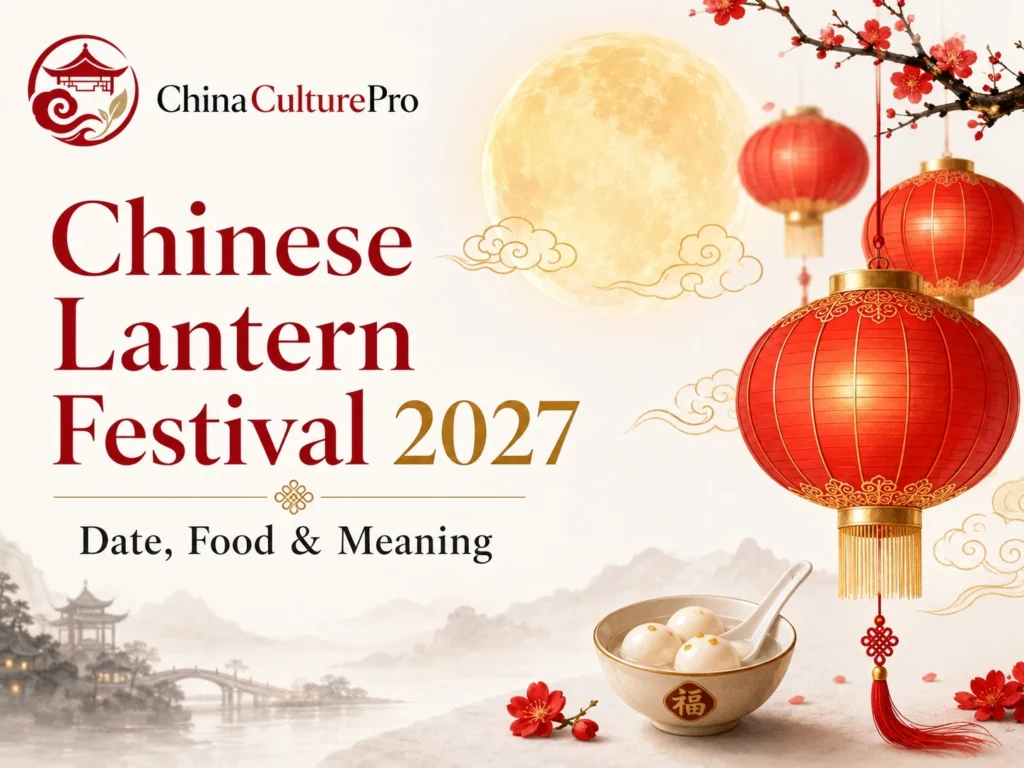
The Chinese Lantern Festival 2027 falls on Saturday, February 20, 2027. It is celebrated on the 15th day of the first lunar month and marks the first full moon night of the Chinese New Year season.
In Chinese, the festival is called Yuan Xiao Jie (元宵节). It is also known as Shangyuan Festival or simply the Chinese Lantern Festival. Main customs include viewing lanterns, guessing lantern riddles, eating yuanxiao or tangyuan, and watching dragon and lion dances.
The Lantern Festival is the closing night of the traditional Chinese New Year period. If Chinese New Year starts behind a family door, the Lantern Festival walks it out onto the street.
| Item | Detail |
|---|---|
| 2027 Date | February 20, 2027 |
| Day of Week | Saturday |
| Lunar Date | 15th day of the 1st lunar month |
| Chinese Name | Yuan Xiao Jie / 元宵节 |
| Also Called | Shangyuan Festival, Chinese Lantern Festival |
| Main Food | Yuanxiao or tangyuan |
| Main Customs | Lanterns, riddles, dragon dances, lion dances |
| Main Meaning | Light, reunion, completion, blessing |
What Is the Chinese Lantern Festival?
The Chinese Lantern Festival is the festival of the first full moon in the lunar year. It comes after the main days of Chinese New Year and gives the New Year season a clear ending.
New Year’s Eve and New Year’s Day belong mainly to the family. People gather at home, eat reunion dinner, greet elders, give red envelopes, and protect the fresh start of the year with careful words and actions.
By the 15th night, that careful feeling begins to loosen. Lanterns are lit. Riddles are hung. Dragon and lion dances move through streets and public spaces. Families eat hot glutinous rice balls together, and the celebration moves from the family table into the community.
This is why the Lantern Festival should not be treated as a small decoration added to Chinese New Year. New Year’s Eve gathers the family around one table; the Lantern Festival lights up the whole city like one lantern.
The festival’s central idea is roundness. The moon is round. Tangyuan and yuanxiao are round. The family hopes to be round and complete. The year’s first breath, which began at Chinese New Year, feels complete on this night.
When Is the Lantern Festival? Date Rules and Upcoming Dates
The Lantern Festival always falls on the 15th day of the first lunar month. Because it follows the Chinese lunar calendar, its Gregorian date changes every year.
It usually falls in February or early March. It is 14 days after Chinese New Year’s Day if New Year’s Day is counted as day one. More importantly, it is the first full moon night of the lunar year.
| Year | Lantern Festival Date | Day of Week | Zodiac Year |
|---|---|---|---|
| 2026 | March 3, 2026 | Tuesday | Fire Horse |
| 2027 | February 20, 2027 | Saturday | Fire Goat |
| 2028 | February 9, 2028 | Wednesday | Earth Monkey |
| 2029 | February 27, 2029 | Tuesday | Earth Rooster |
| 2030 | February 17, 2030 | Sunday | Metal Dog |
Date note: Lantern Festival is the 15th day of the 1st lunar month, not the 15th day after the Gregorian New Year. Always check the exact year if you are planning travel, greetings, food, or event content.
The zodiac year shown in the table follows the Chinese New Year season. For everyday readers, the zodiac year has already changed by the time Lantern Festival arrives. If you were born near Chinese New Year, exact zodiac boundaries can still matter.
Why the Lantern Festival Matters in Chinese New Year
Chinese New Year is not only one day. In Chinese culture, it is a season that begins before New Year’s Day and closes with the Lantern Festival.
The Lantern Festival matters because it completes the New Year rhythm. The family has returned, the greetings have been given, relatives have been visited, and the first full moon has arrived. Now the year can move back into ordinary life.
| Time in New Year Season | Main Focus | What It Means |
|---|---|---|
| New Year’s Eve | Reunion dinner, staying up | Family returns home |
| New Year’s Day | Greetings, blessings | The new year begins |
| First Lunar Days | Visits, fairs, relatives | Social ties restart |
| Lantern Festival | Lights, riddles, tangyuan, dances | The New Year season closes |
After the Lantern Festival, many New Year restrictions fade. In older practice, taboos about sweeping, breaking things, or saying unlucky words became less intense. Decorations might stay up in some homes, but the special New Year state begins to end. Workers leave home again. Students prepare for school. Daily order returns.
The Lantern Festival does not merely happen after Chinese New Year. It closes the New Year season. The family table of New Year’s Eve becomes the streetlights of the fifteenth.
To understand the whole New Year season, read our Chinese New Year guide.
Lantern Festival Traditions and Customs
Lantern Festival customs are lively, public, and easy to enjoy. But they are not random entertainment. Each custom carries a meaning tied to light, reunion, wit, protection, or community.
| Custom | What People Do | Meaning |
|---|---|---|
| Viewing Lanterns | Visit lantern displays in parks, old streets, temples, or public squares | Light, blessing, and public celebration |
| Carrying Lanterns | Children carry paper, rabbit, animal, or zodiac lanterns | Passing the festival feeling to children |
| Guessing Lantern Riddles | Solve riddles attached to lanterns | Wit, learning, and social fun |
| Eating Yuanxiao / Tangyuan | Eat round glutinous rice balls with family | Reunion and completeness |
| Dragon and Lion Dances | Watch street performances with drums and cymbals | Good fortune, protection, and festive energy |
| Temple Fairs / Lantern Markets | Visit markets, snacks, shows, and folk performances | Community celebration |
| Walking Away Illness | In some northern customs, women walk outdoors at night | Health, safety, and folk blessing |
Lantern viewing is the most visible custom. Traditional lanterns could be red paper lanterns, palace lanterns, revolving lanterns, rabbit lanterns, or animal-shaped lanterns. Today, lantern shows can include giant electric displays, zodiac-themed installations, mythological scenes, and modern cartoon figures.
Lantern riddles make the festival more than a visual event. A riddle is written on a strip of paper and attached to a lantern. People try to solve it, then check the answer or claim a small prize from the lantern owner. It brings the refined pleasure of wordplay into the street.
Dragon and lion dances add movement and sound. The drums, cymbals, and bright costumes carry wishes for good fortune, protection, and a strong beginning to the year.
Walking Away Illness, or zou bai bing, is more regional. In some northern areas, women would go out together at night, cross bridges, or walk in groups to pray for health and safety. It should not be described as a national custom, but it shows how the festival also carries wishes for physical well-being.
Yuanxiao, Tangyuan, and Lantern Festival Food
The main food of the Lantern Festival is yuanxiao or tangyuan. In English, both are often translated as glutinous rice balls. That translation is useful, but it hides a real difference in Chinese food culture.
Yuanxiao is more common in northern China. It is made by rolling. The filling is cut into small pieces, often black sesame, peanut, red bean, or jujube paste. The filling pieces are dipped in water and rolled in dry glutinous rice flour. A little water is added, then the pieces are rolled again. Layer by layer, they become round balls.
Tangyuan is more common in southern China. It is made by wrapping. Glutinous rice flour is mixed with warm water into a dough. The dough is shaped around the filling, closed, and rolled smooth by hand. The result is softer and smoother.
| Food | More Common In | How It Is Made | Texture / Feature |
|---|---|---|---|
| Yuanxiao | Northern China | Filling pieces are rolled in dry glutinous rice flour | Firmer, often sweet, soup may be cloudier |
| Tangyuan | Southern China | Filling is wrapped in glutinous rice dough | Softer, smoother, can be sweet or savory |
Common fillings include black sesame, peanut, red bean paste, and jujube paste. Black sesame is the classic version many people think of first: sweet, warm, and slightly flowing when bitten open. In some southern regions, savory tangyuan may also appear, with fillings such as pork or vegetables. For Lantern Festival, sweet versions remain the most representative.
The reason these foods matter is not only taste. Their round shape is the point. Roundness means reunion, completeness, and a year that has properly closed its first festival cycle.
On Lantern Festival, people are not only eating a sweet rice ball. They are eating roundness. That roundness carries the reunion that began on New Year’s Eve to completion.
The Meaning of Lanterns, Light, and the First Full Moon
Lantern Festival is a festival of light, but its meaning is deeper than decoration.
The first layer is the full moon. The 15th day of the first lunar month is the first full moon night of the new year. In a traditional farming society, the full moon was a natural sign of completion. The new year had opened, the moon had become full, and the season felt whole.
The second layer is the lantern. The moon is the round light in the sky. The lantern is the light made by people. In older times, lanterns held candles or oil lamps. A paper lantern had to be protected from wind. That small act of guarding light gave the festival a gentle feeling. Today, many lanterns are electric, enormous, or built into long dragon-shaped installations, but the older idea remains: light carries a wish.
The third layer is the street. During the first part of Chinese New Year, much of the light belongs inside the home: candles, hall lights, ancestral lamps, and the warm glow around the family table. On Lantern Festival, the light moves outside. Neighbors, visitors, children, and strangers stand under the same lanterns and share the same festival night.
| Symbol | Meaning |
|---|---|
| Full Moon | Completion, reunion, wholeness |
| Lanterns | Light, hope, blessing, public joy |
| Glutinous Rice Balls | Family unity and completeness |
| Lantern Riddles | Wit, learning, playful social connection |
| Dragon / Lion Dances | Good fortune, protection, energy |
When the lanterns are lit, they tell people the New Year has come full circle. Now they can carry the blessing back into daily life.
History and Origin of the Lantern Festival
The Lantern Festival has a long history, often traced back about 2,000 years. Like many old Chinese festivals, it does not have only one origin story. Several layers developed over time and became part of the festival people know today.
| Origin Layer | What It Explains |
|---|---|
| Han Dynasty Court | Early historical background and palace observance |
| Buddhist Lantern Offering | Lighting lamps as religious devotion |
| Daoist Shangyuan Festival | Heavenly blessing and the Three Yuan system |
| Folk Legend of Yuanxiao | Palace story linking a girl, rice balls, and lanterns |
| Later Public Festivals | Lantern fairs, riddles, dragon and lion dances, city celebrations |
One historical layer connects the festival with the Han dynasty. Lantern viewing and court observances on the 15th night of the first lunar month became more visible over time, then spread into wider society.
Another layer comes from Buddhist practice. One explanation says lanterns were lit to honor the Buddha on the 15th day. In this reading, light is a sign of devotion and wisdom.
A Daoist layer connects the day with Shangyuan Festival. In the Three Yuan system, Shangyuan is linked with blessing from the heavenly official. This adds the idea of fortune, pardon, and release from misfortune.
There are also folk legends. One popular story tells of a palace maid named Yuanxiao who missed her family so much that she wanted to die. Dongfang Shuo, a clever official, created a plan involving lanterns, rice balls, and public performance so she could reunite with her family. This story is not treated as hard history, but it beautifully connects the name Yuanxiao, the food, and the theme of reunion.
Over later centuries, the festival became more public. Lantern fairs, riddles, markets, dragon and lion dances, and citywide celebrations gave the festival the lively shape it has today.
How the Lantern Festival Is Celebrated Today
Today, the Lantern Festival can be quiet at home, bright in a city park, lively in a Chinatown parade, or educational in a school or cultural center.
In China, city lantern shows are common in parks, ancient towns, cultural streets, shopping areas, public squares, and temple fair spaces. Modern lantern displays can be very large. They may feature zodiac animals, palace scenes, mythological figures, flowers, dragons, animated characters, or local cultural symbols. In 2027, because the year is the Fire Goat year, goat and zodiac themes may appear in some lantern displays.
At home, many families still eat yuanxiao or tangyuan. Some buy frozen versions from supermarkets. Others make them by hand. Children may carry small lanterns, often safer LED versions today. Older people may still remember the warmth and fragility of paper lanterns.
Community activities often include dragon dances, lion dances, lantern riddles, folk performances, and snack markets. In some places, libraries, bookstores, schools, and neighborhood centers hold simple lantern riddle events.
Overseas Chinese communities also celebrate the festival through Chinatown events, Chinese school programs, library workshops, cultural center activities, and lantern DIY programs.
Fireworks, sky lanterns, candles, and open flames depend on local law and safety rules. Many places now use electric lanterns and controlled public displays instead.
How to Celebrate the Lantern Festival Respectfully
You do not need to be Chinese to enjoy the Lantern Festival. Public lantern shows, Chinatown events, community fairs, and cultural workshops are meant to be shared. The key is to understand what you are joining.
- Know its place in the New Year season. It is the closing night of Chinese New Year, not just an independent “lantern day.”
- Try tangyuan or yuanxiao and understand the meaning of roundness.
- Join public lantern shows, community fairs, school programs, or cultural center events.
- Ask before photographing private family meals, temple rituals, ancestral spaces, or people in prayer.
- Do not confuse Lantern Festival with Mid-Autumn Festival. Both may involve lanterns, but their dates and meanings are different.
- Use a simple greeting: Yuan Xiao Jie Kuai Le, meaning Happy Lantern Festival.
- Follow local rules on fireworks, sky lanterns, candles, and open flames.
- If you are invited to eat tangyuan at someone’s home, treat it as a sign of trust. Arrive on time and bring a small gift, such as fruit or tea.
Respect means understanding that the Lantern Festival is not just a photo opportunity. It is the closing light of the Chinese New Year season.
How This Guide Connects to Chinese New Year, Festivals, and Zodiac
The Lantern Festival belongs under the larger map of Chinese festivals, and it also completes the New Year season.
For the full festival calendar, start with our Chinese Festivals and Holidays guide.
The 2027 Lantern Festival falls in the Fire Goat year. This page does not explain Goat personality or zodiac compatibility, because that would pull the article away from its main topic. Still, readers who reach this page through New Year content may also want to check the zodiac year.
If you are checking the zodiac year around Lantern Festival, use our Chinese Zodiac & Lunar Birthday Calculator. For the full animal-year system, see our Chinese Zodiac guide. To understand why 2027 is a Fire Goat year, read our Five Elements Chinese Zodiac guide.
FAQs About the Chinese Lantern Festival
When is the Chinese Lantern Festival 2027?
The Chinese Lantern Festival 2027 is on Saturday, February 20, 2027. It falls on the 15th day of the first lunar month and marks the first full moon night of the Chinese New Year season.
What is the Chinese Lantern Festival?
The Chinese Lantern Festival, or Yuan Xiao Jie, is a traditional festival on the 15th day of the first lunar month. It is known for lanterns, lantern riddles, yuanxiao or tangyuan, dragon dances, lion dances, and public celebration.
Is the Lantern Festival part of Chinese New Year?
Yes. The Lantern Festival is traditionally part of the Chinese New Year season. It is the closing night of the New Year period, when the family-centered celebration moves into public lantern displays, street activity, and community joy.
Why do people eat tangyuan or yuanxiao?
People eat tangyuan or yuanxiao because their round shape symbolizes reunion, completeness, and family unity. On Lantern Festival, that roundness closes the New Year season and carries the family reunion of New Year’s Eve to completion.
What is the difference between yuanxiao and tangyuan?
Yuanxiao is more common in northern China and is made by rolling filling pieces in dry glutinous rice flour. Tangyuan is more common in southern China and is made by wrapping filling in soft glutinous rice dough. Both are round festival foods.
What are lantern riddles?
Lantern riddles are word puzzles written on strips of paper and attached to lanterns. People guess the answer during lantern fairs or community events. In the past, correct guesses could bring small prizes from the lantern owner.
Is Lantern Festival the same as Mid-Autumn Festival?
No. Lantern Festival falls on the 15th day of the first lunar month and closes Chinese New Year. Mid-Autumn Festival falls on the 15th day of the eighth lunar month and centers on the autumn full moon, harvest, mooncakes, and reunion.
What do lanterns symbolize?
Lanterns symbolize light, hope, blessing, and public joy. On Lantern Festival, they bring the New Year’s private family blessings into streets, parks, temples, and community spaces.
Is Lantern Festival a public holiday in China?
In Mainland China, Lantern Festival is usually not a national public holiday. It is culturally important, but most businesses and schools follow regular schedules unless local events or arrangements apply. Public holiday rules can differ in other Chinese communities.
How do you say Happy Lantern Festival in Chinese?
You can say Yuan Xiao Jie Kuai Le, written in Chinese as 元宵节快乐. A shorter greeting is Yuan Xiao Kuai Le, or 元宵快乐. Both mean Happy Lantern Festival.