

Quick Answer: What Is Tanghulu?
Tanghulu(糖葫芦,tánghúlu), also called bingtanghulu(冰糖葫芦,bīngtánghúlu), is fruit on a skewer covered with a hard sugar shell. Hawthorn(山楂,shānzhā)is the classic reference, balancing a sweet coating with tart flesh.
- Fruit: Hawthorn remains familiar, while strawberries, grapes and mixed-fruit versions also occur.
- Coating: A thin, brittle candy layer gives the characteristic glossy appearance and crunch.
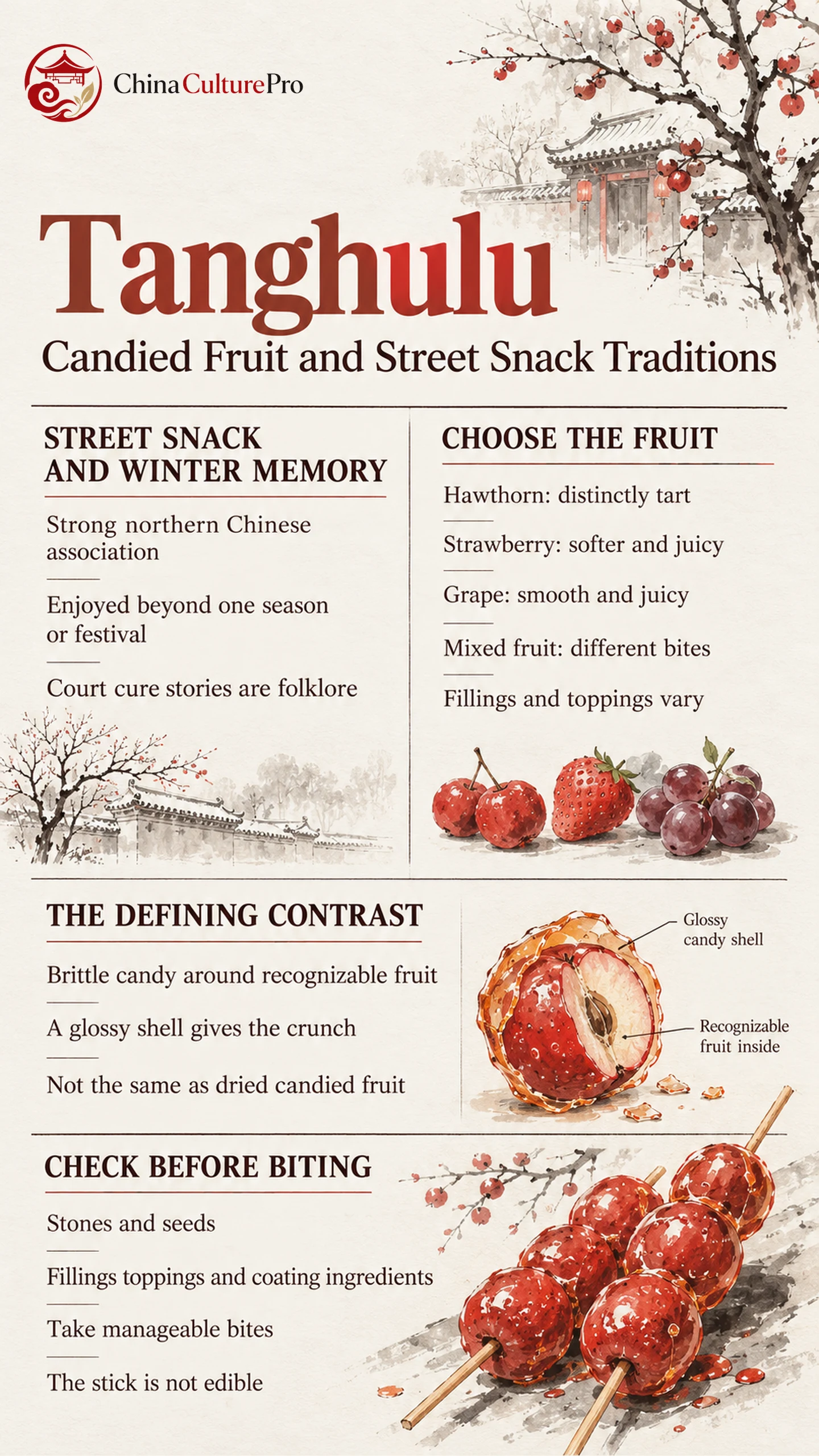
- Culture: It is strongly associated with northern Chinese street snacks and winter memories, but is enjoyed more widely.
The name does not require ice inside the snack, one exact sugar product or a fixed number of fruits per stick.
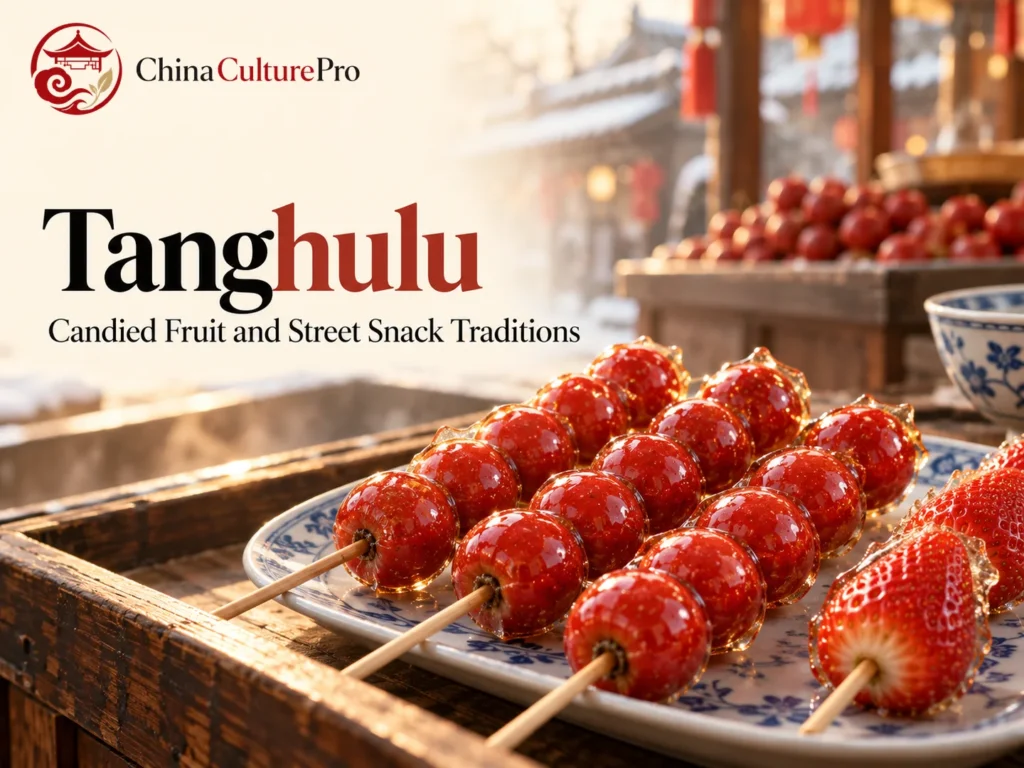
A row of glossy red fruit catches the light at a snack counter. The first bite cracks through sweetness into a much tarter center. Tanghulu is one recognizable part of Chinese street food, combining a simple presentation with a distinctive contrast between candy and fruit.
A Northern Street Snack with a Winter Association
Tanghulu has a strong place in northern winter food memories: bright skewers, cold weather and the sweet-sour flavor of hawthorn. Contemporary reporting from Changchun describes both vendors selling it and families making it as a seasonal pleasure.[1]
That association is cultural rather than an exclusive calendar rule. Modern fruit-skewer shops and stalls sell related versions in other places and seasons. A winter image does not mean the food must be frozen or available only during a festival.
Within traditional Chinese desserts, tanghulu is especially easy to recognize by its exposed fruit and transparent coating. Its identity differs from a pastry, a filled rice ball or a bowl of sweet soup.
Stories connecting the snack to a court cure circulate widely, but they should be treated as folklore rather than a verified founding event. The snack’s ingredients and street setting explain its everyday appeal.
Fruit, Fillings and Modern Variations
Hawthorn’s firm, tart character creates a pronounced sweet-sour contrast. Other fruits change both the flavor and the bite; they do not simply replace the color of the center.[2]
| Fruit presentation | Flavor and texture to expect | What to check |
|---|---|---|
| Hawthorn | A distinctly tart center against the sweet shell | Whether stones have been removed and whether fruit is whole or split |
| Strawberry | Juicy, softer flesh with sweetness and acidity that vary by ripeness | The actual fruit and any extra coating |
| Grape | A smooth-skinned, juicy center | Whether grapes contain seeds |
| Mixed fruit | Different textures and sweetness along one skewer | The contents of each piece rather than assuming all are identical |
Strawberry, grape and citrus examples show how the same candy format can carry different fruits. Their ripeness changes the balance: a sweeter center produces a different overall impression from tart hawthorn.[3]
Some hawthorn versions are split or flattened, and sesame may be added to the exterior. Modern filled or specially coated versions require their own ingredient checks.[1]
Why the Sugar Shell Matters
The defining layer is hard candy around fruit. Heated sugar syrup forms a coating that becomes brittle as it cools. The contrast comes from that fragile shell breaking against a firmer or juicier center; the fruit itself is not necessarily cooked into candy.[2]
The coating need not be made exclusively from rock sugar. A documented home preparation, for example, combines granulated sugar with corn syrup. That is one workable formula, not a universal requirement.[4]
The shell can be clear to lightly golden, allowing the fruit beneath to remain visible. A thin crisp coating gives a different bite from a soft, syrupy surface. Moisture can also make the surface tackier, so the glossy appearance alone does not establish how crisp a particular skewer will be.
Tanghulu is consequently different from fruit that has been dried or preserved through with sugar. Its identity depends on recognizable fruit surrounded by a separate hard coating, rather than a chewy piece of candied peel or a sugar-preserved fruit alone.
Choosing and Eating a Skewer
Choose by the fruit and coating you want, then clarify three details:
- Stones and seeds: Ask whether hawthorn has been pitted or grapes are seedless. A smooth coating can hide what is inside.
- Fillings and toppings: Check sesame, nuts, bean paste, chocolate or other additions actually present. The fruit name does not disclose the whole snack.
- Candy ingredients: Confirm special coatings or ingredients relevant to your diet. Use the vegetarian food guide when checking a compound sweet rather than assuming fruit settles every question.
Hold the stick as a handle and take manageable bites. The skewer is not edible, and the brittle shell can crack into sharp pieces. A larger fruit or unfamiliar stone deserves care rather than an attempt to bite through everything in one mouthful.
For the classic flavor contrast, hawthorn offers a clearer starting point than assuming every bright fruit version tastes alike. Choose a different fruit when its own texture and sweetness are what you prefer.
FAQs About Tanghulu
Does tanghulu always use hawthorn?
No. Hawthorn is the classic reference, but strawberries, grapes, citrus and mixed-fruit versions also exist.
Does bingtanghulu contain ice?
Ice is not a required ingredient. The familiar snack is fruit covered in hardened sugar, even though it has a strong winter association.
Is tanghulu the same as dried candied fruit?
No. Tanghulu has recognizable fruit inside a separate brittle sugar coating. Dried or preserved candied fruit has a different structure and texture.
Sources
[1] Tan Weiqi. Candied Fruit and Winter Memories
[2] Elaine. Tanghulu Candied Fruits
[3] Huy Vu. Tanghulu Candied Fruit Skewers
[4] Melissa Chen. Candied Hawthorn Tanghulu