


Quick Answer: What Is Manchu Liangbatou?
Manchu liangbatou (两把头, liǎngbǎtóu) is a Qing hairstyle built around two sections of hair arranged across the head. A flat bar called a bianfang (扁方, biǎnfāng) helps hold the arrangement together.[1][2]
- Hair-based form: A pair of photographs from 1871 shows the two bundles and how a bar supports them.[1]
- Later frame: Dalachi (大拉翅, dàlāchì) is a larger winged form that can use a separate shell or frame covered with dark fabric.[3][4]
- Portrait clue: The back and sides can show the base and the way the hair is held. A wide front outline is only one clue.[1][7]
Use the date and the method of support to decide which form you are looking at.
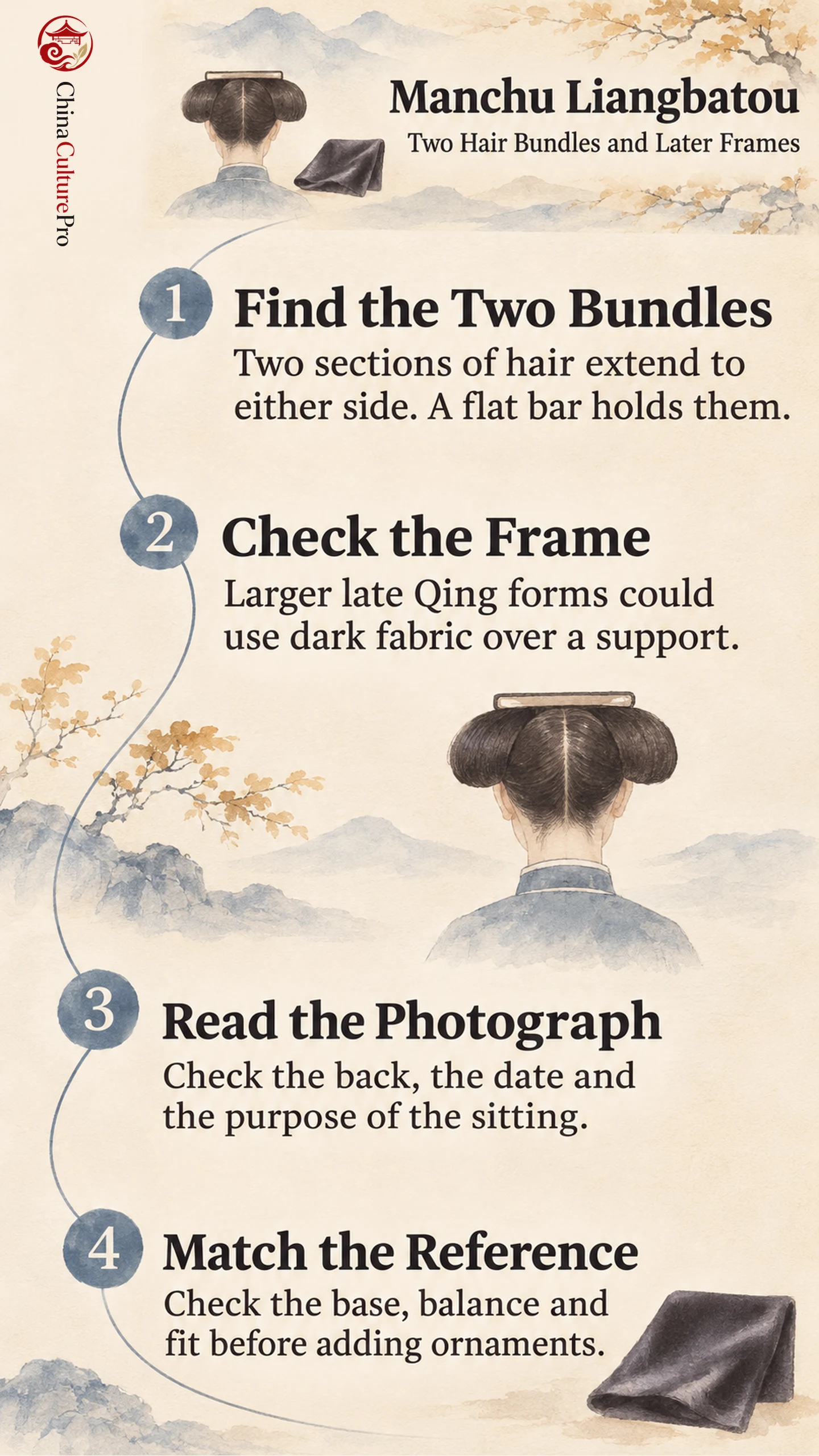
A front view can make two rolls of hair look like a single dark bar. From the back, the parts are easier to separate. Qing photographs, a surviving hair bar and a later satin headdress let you compare how the broad shape was made.
How the Two Bundles Are Held
In John Thomson’s photographs from 1871, the Hong Kong Museum of History identifies two hair bundles held across a flat bar with butterfly ornaments at its ends. The catalog explains that twisting the hair around the bar keeps the bundles in position. In a rear view, follow the hair back toward the center to see where the ornamented ends emerge.[1]
A bianfang could be decorative and still do structural work. One court example in Beijing is made of agarwood with gold-wire details, jade cloud motifs and pink tourmaline bats. Its long, flat body is the part that connects and holds the hair. The surface ornament shows how a fastening can also be a display piece.[2]
A study of Qing court dress describes a rear section called a yanwei (燕尾, yànwěi), or swallowtail, formed from hair below the top arrangement. That rear detail is worth looking for when a photograph cuts off the ends of the crossbar. Its presence alone leaves the size and material of the top form open.[3]
When a Winged Frame Takes Over
By the late Qing dynasty, taller arrangements could make use of added hair and supports. A Palace Museum study describes a dalachi with a hollow shell covered in dark fabric, a lower ring fitted to the head and a separate rear hairpiece. The tall surface allowed ornaments to sit well above the original hair rolls.[3]
The Metropolitan Museum of Art catalogs a surviving Guangxu-period headdress made from silk satin over a metal frame. Its width is about 44 cm. The catalog describes the addition of flowers, tassels and jewelry when worn. The surviving metal structure and the published description of a cloth shell are evidence of two ways to support a broad silhouette.[4]
The larger silhouette and a dark surface are visible from the front. Look for the support or a catalog description before deciding how that particular piece was assembled.
How to Read a Qing Portrait
Compare the viewpoint and context. The photographs of Empress Dowager Cixi made by Xunling in the early 1900s were deliberately staged, and some served diplomatic purposes. Read the hairstyle in the context of the particular sitting, especially if the image shows a formal arrangement of clothing and accessories.[6]
A study of those portraits distinguishes a compact style using the hair itself from taller versions involving fabric and false hair. The Penn Museum’s nineteenth-century silver pin is cataloged as one of a pair worn by Manchu women for liangbatou. The different kinds of evidence can help separate the way the hair was formed from the way it was decorated.[5][7]
For a headpiece with a rounded base that sits over a bun, compare the dianzi (钿子, diànzi). The court and informal robe guide and the history of Manchu platform shoes help interpret the rest of the outfit when a photograph shows it.[3][7]
How to Choose a Modern Version
First choose the silhouette for your reference. If it shows two compact rolls, ask how the hair or wig is held against the bar. If it shows a tall winged shape, check the weight and the position of the support. Compare a rear view before adding a swallowtail or decorative pieces.
Try the piece without the ornaments first. Then attach the items intended for the sides and see whether their weight changes the balance. For a long event, check that you can move your head and that the fit remains comfortable. Label the version by the particular photo, object or stage design you followed.
FAQs About Manchu Liangbatou
Is liangbatou a hairstyle or a headdress?
Liangbatou describes an arrangement of two hair bundles. Related later forms can use a constructed headdress, including the tall dalachi.[1][3]
What is the flat bar in liangbatou?
It is the bianfang. The flat bar helps secure the two bundles and can carry decorative carving or inlay.[1][2]
Did all liangbatou have a tall frame?
Compact styles using the wearer’s hair are documented as well as tall framed forms. Compare the date and the way the particular example is supported.[7]
Sources
[1] Hong Kong Museum of History. Images of Lifescape, John Thomson’s Liangbatou Photographs
[2] Palace Museum, Beijing. Agarwood and Tourmaline Bianfang
[3] Palace Museum Journal. Reading the Photographs of Empress Dowager Cixi
[4] Metropolitan Museum of Art. Woman’s Headdress, 45.108.1
[5] Penn Museum. Hair Ornament 20451B
[6] Smithsonian National Museum of Asian Art. Power and Play, China’s Empress Dowager
[7] Yu Shanpu, Palace Museum. Cixi’s Liangbatou and Platform Shoes