


Quick Answer: What Is Hezhen Fish-Skin Clothing?
Hezhen (赫哲族, Hèzhézú) fish-skin clothing (鱼皮衣, yúpíyī) is made from prepared fish skins sewn into garments. The craft is documented in Tongjiang (同江, Tóngjiāng), Heilongjiang, where it belongs to a wider history of fishing and material use.[1]
- Salmon is among the fish used for garments.[2][4]
- Skins are softened and joined to create pieces large enough for clothing.[1]
- Museum holdings include fish-skin clothes made by a mother and daughter in Tongjiang.[3]
The seams show how pieces of skin become a garment.
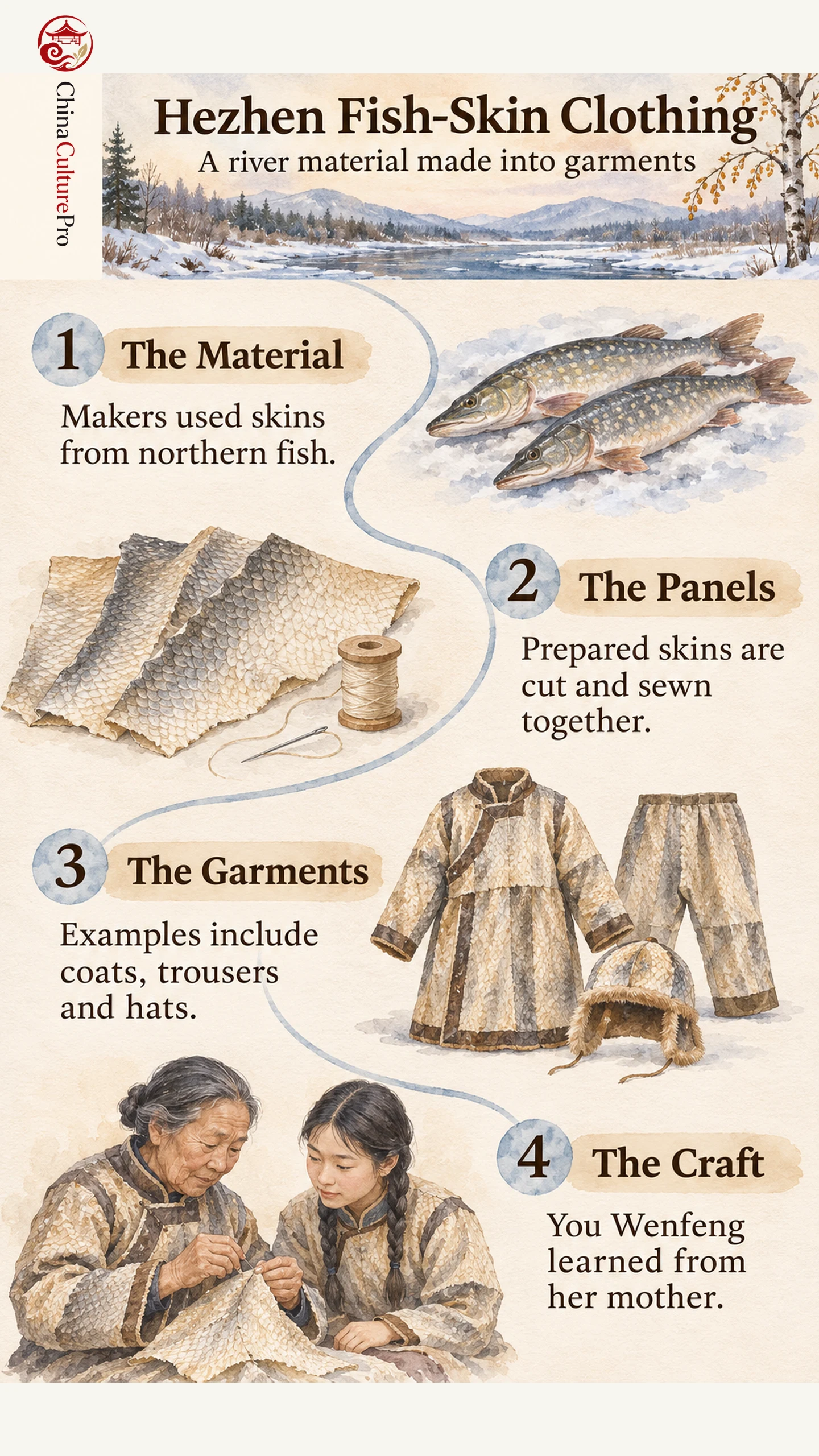
Look first at a garment’s panels. Differences in color or surface texture can reveal where one skin meets another.
What Makes the Skin Wearable
The heritage account describes drying and softening the skin before cutting and joining it. Makers sew the pieces together and can add decoration. Garments used skins from several northern fish, including salmon and carp. This way of using a material from fishing is one part of Hezhen river culture.[1][4]
What a Museum Garment Shows
Minzu University’s museum identifies a salmon-skin suit as an example of traditional men’s dress. A separate maker’s record names trousers, children’s hats and bags among the objects she learned to make. The same material can be joined into a large garment or used for a smaller object.[2][3]
How Makers Have Passed on the Craft
You Wenfeng (尤文凤, Yóu Wénfèng) started learning from her mother, You Cuiyu, at age twelve. Several outfits they made together entered a museum collection in Heilongjiang. China included Hezhen fish-skin making in the first national list of intangible cultural heritage in 2006.[1][3]
Artists also use cut pieces of the prepared material in Hezhen fish-skin painting. There the joined shapes form a picture.[1]
FAQs About Hezhen Fish-Skin Clothing
Is every garment made from salmon skin?
Salmon is one documented material. Makers also used fish such as carp.[4]
Where is the craft documented?
The national account names Jiejinkou in Tongjiang, Heilongjiang.[1]
Is fish skin used for smaller objects too?
Yes. You Wenfeng’s record includes children’s hats and bags.[3]
Sources
[1] China Intangible Cultural Heritage Digital Museum. Hezhen fish-skin making
[2] Minzu University of China Museum. Traditional dress of northern ethnic groups
[3] China Intangible Cultural Heritage Digital Museum. You Wenfeng
[4] China Youth Daily. Fish-skin clothing practitioner You Wenfeng