
Quick Answer: What Is Gongfu Cha?
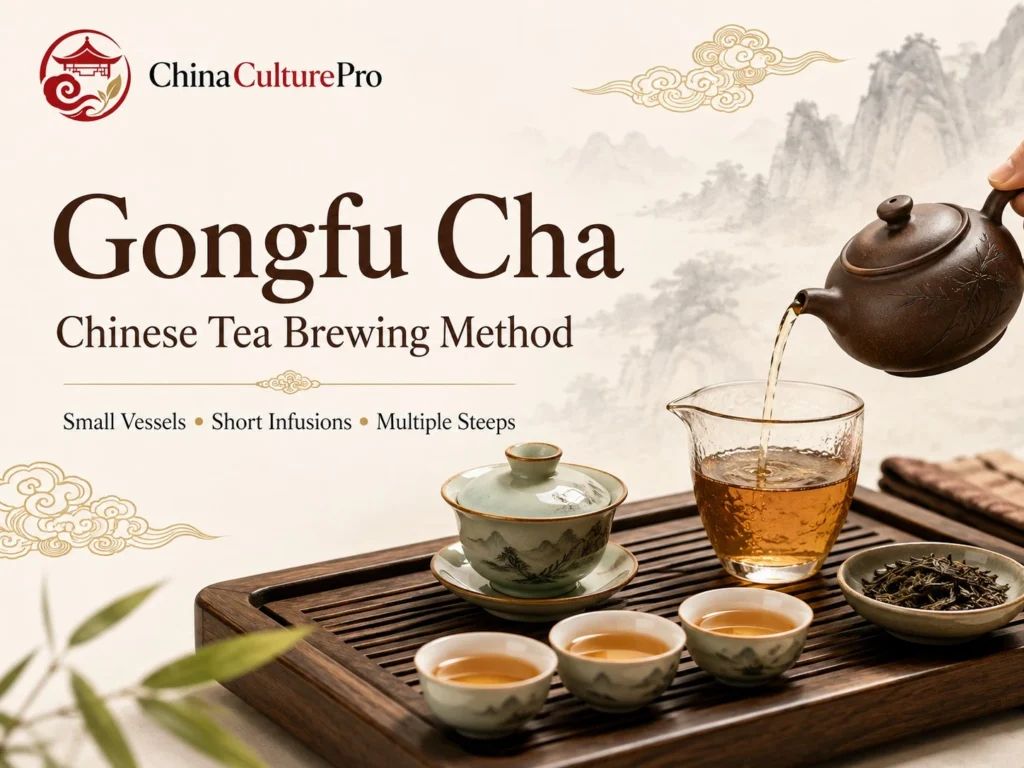
Gongfu Cha, also written as Gong Fu Cha (工夫茶), is a Chinese tea brewing method that uses small vessels, more tea leaves, short infusions, and repeated brews to reveal the full character of a tea. It is not the same as the Chinese wedding tea ceremony, and it is not mainly a performance.
The core method is simple:
Small Vessel: usually a gaiwan or small teapot.
Higher Leaf Ratio: more tea leaves than Western-style brewing.
Short Infusions: tea is poured out quickly instead of soaked for minutes.
Multiple Infusions: the same leaves are brewed many times.
Careful Adjustment: water temperature, timing, and pouring change with the tea.
Tasting Across Steeps: aroma, body, sweetness, aftertaste, and throat feeling develop over time.
Gongfu Cha works especially well with oolong tea, Pu-erh tea, dark tea, Chinese black tea, and aged white tea. Some green and yellow teas can be brewed this way with care, but they are not the most typical beginner choices.
Key Point: Gongfu Cha is not about making tea complicated. Real gongfu is in clear liquor, comfortable rhythm, and whether each infusion shows something different.
What Does “Gongfu” Mean in Tea?
In tea, gongfu means skill, effort, time, practice, and attention. It does not mean martial arts in this context, and it does not mean that brewing must look dramatic.
In Gongfu Cha, “gongfu” means:
- controlling water temperature instead of pouring blindly;
- using the right amount of leaves for the vessel;
- pouring out the tea at the right moment;
- adjusting later infusions by taste;
- noticing aroma, body, aftertaste, and changes across steeps.
The same oolong or Pu-erh can taste thin, bitter, smooth, fragrant, or layered depending on how it is brewed. Gongfu is not decoration. It is control.
Why Gongfu Cha Matters in Chinese Tea Culture
Gongfu Cha matters because it is one of the clearest ways to experience the depth of Chinese tea.
It is not the only way to drink tea. Many Chinese people drink tea casually in a glass, mug, thermos, or large teapot. But when someone wants to understand the fragrance, texture, strength, and later infusions of a good tea, Gongfu Cha is one of the most useful methods.
It connects several parts of Chinese tea culture:
- Tea Types: oolong, Pu-erh, dark tea, black tea, and aged white tea behave differently across repeated infusions.
- Teaware: gaiwan, Yixing teapot, fairness cup, small cups, and kettle all affect control.
- Brewing Skill: water temperature, leaf ratio, and steeping time change the liquor.
- Tea Tasting: each infusion may show aroma, body, aftertaste, Hui Gan, Sheng Jin, and throat feeling differently.
- Serving: tea is shared in small cups, usually with attention to rhythm and fairness.
Gongfu Cha is closely connected with tea traditions in regions such as Chaozhou, Minnan, Wuyi, and Taiwan. Chaozhou Gongfu tea, Wuyi rock tea brewing, Phoenix Dan Cong, and many oolong sessions are deeply tied to this method.
The point is not to make tea elitist. Anyone can learn Gongfu Cha. The method only asks for patience, attention, and a willingness to taste the tea as it changes.
To understand where this brewing method fits in the larger tradition, read our Chinese Tea Culture guide.
Basic Gongfu Cha Tools
Gongfu Cha does not require a full luxury tea set. Beginners can start with a few practical tools.
| Tool | Chinese Name | Purpose | Beginner Priority |
|---|---|---|---|
| Gaiwan | 盖碗 | the most flexible brewing vessel for oolong, Pu-erh, black tea, white tea, and tasting sessions | essential |
| Tea Kettle | 水壶 | heats water and keeps the session moving | essential |
| Small Tea Cups | 品茗杯 | small cups help preserve aroma, temperature, and tasting rhythm | recommended |
| Fairness Cup / Gong Dao Bei | 公道杯 | evens out tea strength before serving and helps show liquor color | recommended |
| Tea Tray | 茶盘 | catches water and keeps the table clean | optional |
| Yixing Teapot | 紫砂壶 | useful for oolong, Pu-erh, and dark tea after you know what you brew often | optional / later |
| Tea Scale | 茶秤 | helps measure leaves accurately while learning | optional |
| Tea Tongs | 茶夹 | handles hot cups and keeps fingers away from boiling water | optional |
| Tea Cloth | 茶巾 | wipes the table, tray, and cup base | optional |
A simple beginner setup can start with a gaiwan, small cups, and a kettle. A fairness cup is strongly recommended if you serve more than one person. A Yixing teapot is valuable, but it is better after the drinker understands which teas they brew most often.
For gaiwans, teapots, cups, and tea tools, read our Chinese Teaware guide.
Best Teas for Gongfu Cha
Gongfu Cha works best with teas that can show changes over many infusions. These teas usually have enough aroma, body, structure, or age to stay interesting.
| Tea Type | Suitability | Why It Works | Beginner Note |
|---|---|---|---|
| Oolong Tea | excellent | partial oxidation, aroma layers, roast, and texture change clearly across infusions | classic Gongfu Cha choice |
| Pu-erh Tea | excellent | Sheng and Shou Pu-erh can show body, storage, sweetness, Hui Gan, and later-infusion changes | best after learning basic pouring |
| Dark Tea / Hei Cha | very good | post-fermented teas can show aged aroma, smoothness, wood, and depth | use high heat; some can be boiled |
| Chinese Black Tea / Hong Cha | good | high-quality black tea can show sweetness, malt, fruit, and soft body | easier for beginners than Sheng Pu-erh |
| Aged White Tea | good | aged Shou Mei and older white teas can show sweetness, warmth, and soft body | better than very delicate fresh white tea |
| Green Tea | possible but less typical | often too delicate for high leaf ratio and hot water | use gentler water if trying |
| Yellow Tea | possible but less typical | delicate and mellow, usually better with gentle cup or gaiwan brewing | not the best first Gongfu tea |
Oolong tea is the classic Gongfu Cha choice. Pu-erh is another major category because it changes across many steeps. Green tea and yellow tea are not forbidden, but they are less typical for beginners because they need gentler handling.
For aromatic teas that work especially well with this method, read our Chinese Oolong Tea guide. For Sheng, Shou, and aged tea sessions, read our Chinese Pu-erh Tea guide. For post-fermented brick teas, read our Chinese Dark Tea guide.
Gongfu Cha Step-by-Step
Gongfu Cha has a clear process, but it should not become a rigid script. Timing, water temperature, and rinsing should change with the tea.
- Prepare the teaware Set up the gaiwan or teapot, fairness cup, small cups, kettle, and tea tray or towel.
- Warm the vessel and cups Pour hot water into the gaiwan or teapot and cups, then discard the water. This warms the vessel, improves heat stability, and cleans the surface.
- Add dry tea leaves Add tea according to vessel size and tea type. A common starting range is 5–8g per 100ml, but leaf shape matters.
- Smell the warm dry leaves Warm leaves release aroma more clearly. This step helps you notice roast, floral notes, aging, fruit, honey, wood, or storage character before brewing.
- Rinse the tea if needed Pu-erh, dark tea, aged tea, and compressed tea often benefit from a quick rinse. Green tea, yellow tea, and fresh delicate white tea usually do not need one.
- Make the first infusion Add hot water and pour out quickly. The first infusion may be short, especially for rolled oolong or loose-leaf tea.
- Pour fully into the fairness cup Do not leave tea sitting in the gaiwan or teapot. A complete pour helps prevent bitterness and keeps the next infusion clean.
- Serve small cups Pour from the fairness cup into small cups. Small cups help preserve aroma, temperature, and tasting rhythm.
- Taste and observe Notice aroma, liquor color, mouthfeel, sweetness, bitterness, aftertaste, and how the tea sits in the throat.
- Adjust later infusions If the tea is too strong, shorten the infusion or reduce heat next time. If it is too light, extend the time, use hotter water, or adjust leaf ratio in future sessions.
- Continue until the tea fades Good Gongfu Cha is not about one perfect cup. It is about following the tea until the flavor becomes thin, watery, or no longer satisfying.
The most important rule is adjustment. Gongfu Cha is not a stopwatch exercise. It is a conversation with the tea.
Leaf Ratio, Water Temperature, and Steeping Time
Gongfu Cha uses a higher leaf-to-water ratio than Western-style brewing. That is why the infusions are short.
| Parameter | Starting Point | Notes |
|---|---|---|
| Leaf Ratio | 5–8g per 100ml | adjust by leaf shape, tea strength, and personal taste |
| Water Temperature | depends on tea type | oolong, Pu-erh, and dark tea usually need high heat |
| First Infusion | often 5–15 seconds | shorter for loose or opened leaves, longer for tight or compressed tea |
| Later Infusions | gradually longer | increase by taste, not by a fixed rule |
| Number of Infusions | often 5–15 | depends on tea quality, style, and leaf amount |
General starting points:
- Oolong Tea: often 90–100°C, short infusions, many steeps.
- Pu-erh Tea: usually 95–100°C, rinse if needed, adjust by compression and age.
- Dark Tea: usually 95–100°C; some teas can also be boiled.
- Chinese Black Tea: often 90–95°C, shorter infusions to protect sweetness.
- Aged White Tea: usually higher heat; old Shou Mei can handle strong brewing.
- Green Tea and Yellow Tea: use gentler water if brewed Gongfu style.
Adjustment matters more than numbers:
- If the tea is too bitter or harsh, use less leaf, lower water temperature, or shorter infusions.
- If the tea is too thin, use more leaf, hotter water, or longer infusions.
- If the aroma disappears quickly, check water temperature, leaf quality, and pouring speed.
- If the liquor becomes muddy or heavy, shorten the infusion and pour more completely.
These parameters are starting points, not final rules. The real skill is learning how the tea responds.
For broader brewing temperatures and methods, read our How to Brew Chinese Tea guide.
Gongfu Cha vs Western-Style Tea Brewing
Western-style brewing and Gongfu Cha are both valid. They simply have different goals.
| Point | Western-Style Brewing | Gongfu Cha |
|---|---|---|
| Vessel Size | larger mug or teapot, often 300–500ml | small gaiwan or teapot, often 100–150ml |
| Leaf Amount | lower leaf ratio | higher leaf ratio |
| Steeping Time | longer, often several minutes | short, often seconds |
| Infusions | one or a few | many repeated infusions |
| Main Goal | convenience and a full cup | aroma, texture, and change across steeps |
| Best For | simple daily drinking | tasting layered tea |
Neither method is automatically better. If you want one quick cup, Western-style brewing is practical. If you want to understand an oolong, Pu-erh, or aged tea in detail, Gongfu Cha gives you more information.
The difference is not only size or timing. It is attention. Gongfu Cha asks the drinker to follow the tea from infusion to infusion.
How Each Infusion Changes
The value of Gongfu Cha is that tea does not taste the same from the first steep to the last. Each infusion can show a different part of the tea.
A common pattern:
- First Infusion: the tea opens; aroma begins to rise, and the leaves start to loosen.
- Early Infusions: fragrance and surface flavor are often strongest.
- Middle Infusions: body, sweetness, Hui Gan, Sheng Jin, and throat feeling become clearer.
- Late Infusions: the tea’s base shows. Good tea should still have sweetness, clarity, or comfort instead of turning flat immediately.
Different teas change differently:
- Oolong Tea: early infusions may show floral or roasted aroma; middle infusions often show body and texture.
- Sheng Pu-erh: early infusions may show bitterness or strength; later infusions may reveal returning sweetness and saliva production.
- Shou Pu-erh: early infusions may show thickness; middle infusions may show smoothness and aged aroma.
- Chinese Black Tea: early infusions show sweetness and aroma; later infusions usually soften more quickly.
- Dark Tea: later infusions may show aged sweetness, wood, or mellow body.
This is why Gongfu Cha is not only a brewing method. It is a way of reading tea. A strong first infusion is not enough. Good tea should have rhythm, endurance, and a finish that still feels clean.
Gongfu Cha Etiquette and Serving
Gongfu Cha has serving etiquette, but this page should not turn into a full etiquette guide. The basics are enough for most readers.
- Use the fairness cup when serving several people. It helps keep each cup similar in strength.
- Do not fill cups to the rim. Seven-tenths full is a common, comfortable standard.
- Use small cups slowly. Gongfu Cha is for tasting, not drinking in one large gulp.
- Serve with rhythm. The host should avoid letting tea sit too long in the vessel.
- Thank the host simply. A nod, a quiet thank you, or light finger tapping can be appropriate.
- Do not make the gestures bigger than the tea. Respect matters more than performance.
Finger tapping, or the common table-tapping gesture of thanks, can be mentioned, but it does not need to dominate the tea session. The spirit is simple: respect the tea, respect the host, and keep the rhythm comfortable.
For serving rules and guest behavior, read our Chinese Tea Etiquette guide.
Common Gongfu Cha Mistakes
Most Gongfu Cha mistakes have a direct correction, so a simple table works better than a long explanation.
| Mistake | Better Understanding |
|---|---|
| Thinking you need an expensive full tea set | A gaiwan, small cups, and kettle are enough to begin. |
| Thinking more gestures means more skill | The real test is the tea liquor, not the performance. |
| Using too little leaf | Gongfu Cha needs a higher leaf ratio to show layers. |
| Pouring too slowly | Slow pouring can make the tea bitter or heavy. |
| Using boiling water for every tea | Green, yellow, and fresh delicate teas need gentler water. |
| Rinsing every tea | Pu-erh, dark tea, and aged tea may need rinsing; delicate fresh teas often do not. |
| Following fixed seconds forever | Timing should change with the tea’s strength and taste. |
| Drinking from very large cups | Small cups help aroma, temperature, and rhythm. |
| Watching only the actions | Gongfu Cha is about the tea liquor, not the choreography. |
| Leaving tea in the vessel | The liquor can become bitter, muddy, or uneven. |
The most common beginner problem is copying the movements without learning to read the tea. Good Gongfu Cha depends on observing the liquor and adjusting each infusion.
Beginner Gongfu Cha Setup
A beginner setup should be simple. Start with control, not decoration.
| Setup Level | Tools | Notes |
|---|---|---|
| Minimal Setup | gaiwan, small cups, kettle | enough to learn short infusions and basic rhythm |
| Better Setup | gaiwan, fairness cup, small cups, tea tray, kettle | easier to share tea and control liquor strength |
| Full Setup | gaiwan or Yixing teapot, fairness cup, cups, tray, tongs, cloth, tea scoop, kettle | useful for serious practice, but not required at first |
The best beginner path is clear: learn pouring, timing, and tasting first. Add tools later when they solve real problems. Do not buy complexity before learning control.
How Gongfu Cha Connects to Chinese Tea Culture
Gongfu Cha is a method page under the Chinese Tea Culture cluster. It sits after the tea type guide because readers first need to know what kind of tea they are brewing.
To choose suitable teas first, read our Chinese Tea Types guide. For aroma, mouthfeel, aftertaste, and tasting judgment, read our Chinese Tea Tasting guide.
This page prepares readers for later guides on teaware, brewing, tasting, etiquette, oolong, Pu-erh, and dark tea. Its role is practical: it teaches the method that helps many Chinese teas show their real character.
Final Thoughts
Gongfu Cha is not about making tea look complicated. It is about using small vessels, more leaves, repeated short infusions, and careful adjustment to bring out aroma, body, aftertaste, throat feeling, and change.
The focus is not performance. The real gongfu is in attention: water, timing, vessel, leaf ratio, and each pour.
Good Gongfu Cha is not measured by how many tools are on the table. It is measured by clear liquor, comfortable rhythm, and whether each infusion reveals something about the tea.
FAQs About Gongfu Cha
What is Gongfu Cha?
Gongfu Cha is a Chinese tea brewing method that uses small vessels, more leaves, short infusions, and repeated brews. Its purpose is to reveal the tea’s aroma, body, aftertaste, throat feeling, and changes across infusions.
Is Gongfu Cha the same as Chinese tea ceremony?
Not exactly. In English, “Chinese tea ceremony” often points to wedding tea ceremony. Gongfu Cha is a practical tea brewing method used for tasting and serving tea. It can feel ceremonial, but its core is brewing skill.
What does Gongfu mean in tea?
In tea, gongfu means skill, effort, practice, and attention. It does not mean martial arts in this context. Gongfu Cha means brewing tea with care, control, and adjustment.
What tools do I need for Gongfu Cha?
The simplest setup is a gaiwan, small cups, and a kettle. A fairness cup is strongly recommended for sharing tea evenly. A tea tray, tongs, tea cloth, and Yixing teapot can be added later.
What teas are best for Gongfu Cha?
Oolong tea, Pu-erh tea, and dark tea are the most typical choices because they change across many infusions. Chinese black tea and aged white tea can also work well. Green tea and yellow tea need gentler handling.
How much tea leaf do you use for Gongfu Cha?
A common starting point is 5–8g per 100ml, but this changes by tea type, leaf shape, vessel size, and personal taste. Rolled oolong, strip oolong, Pu-erh, and black tea may all need different adjustment.
How long should Gongfu infusions be?
The first infusion is often short, sometimes 5–15 seconds, but timing should not be fixed. Later infusions usually become longer. The best guide is the tea liquor: if it is too strong, shorten; if too thin, lengthen.
Do you always rinse the tea?
No. Pu-erh, dark tea, aged tea, and compressed tea often benefit from rinsing. Green tea, yellow tea, and fresh delicate white tea usually do not need rinsing. Rinsing should depend on the tea, not on habit alone.
Is Gongfu Cha better than Western brewing?
No method is always better. Western-style brewing is convenient for one quick cup. Gongfu Cha is better when you want to understand aroma, texture, aftertaste, and how a tea changes across many infusions.
What is the purpose of the fairness cup?
The fairness cup, or Gong Dao Bei, evens out the tea liquor before serving. It helps each guest receive tea of the same strength and also makes it easier to observe liquor color and clarity.