
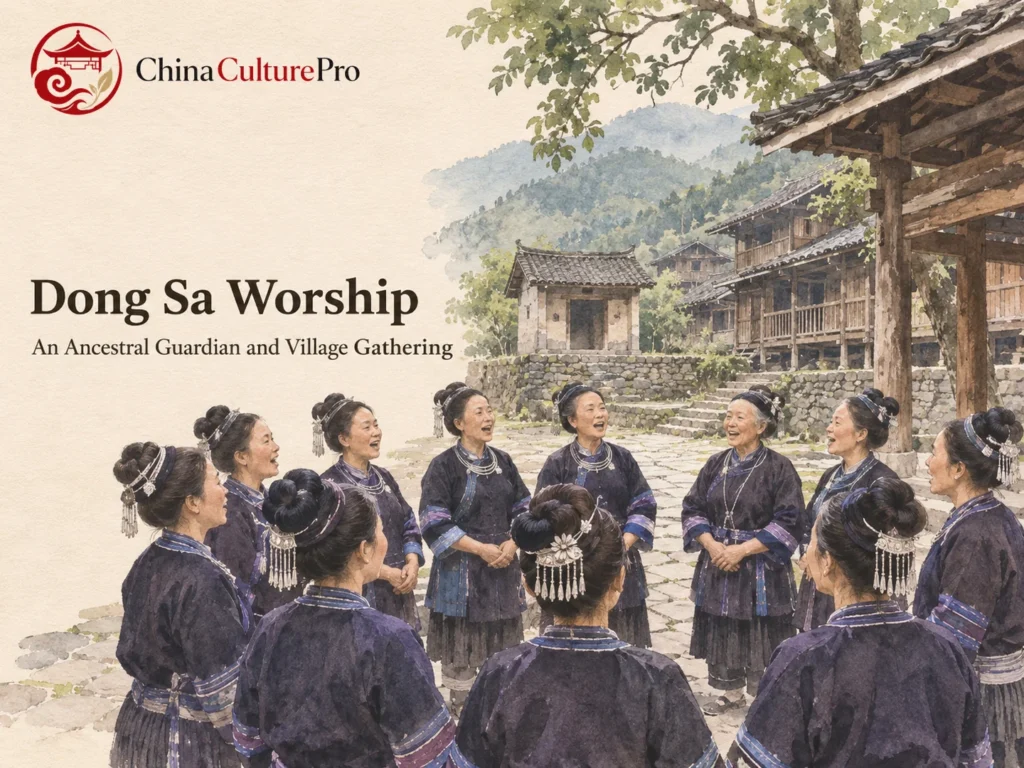

Quick Answer: What Is Dong Sa Worship?
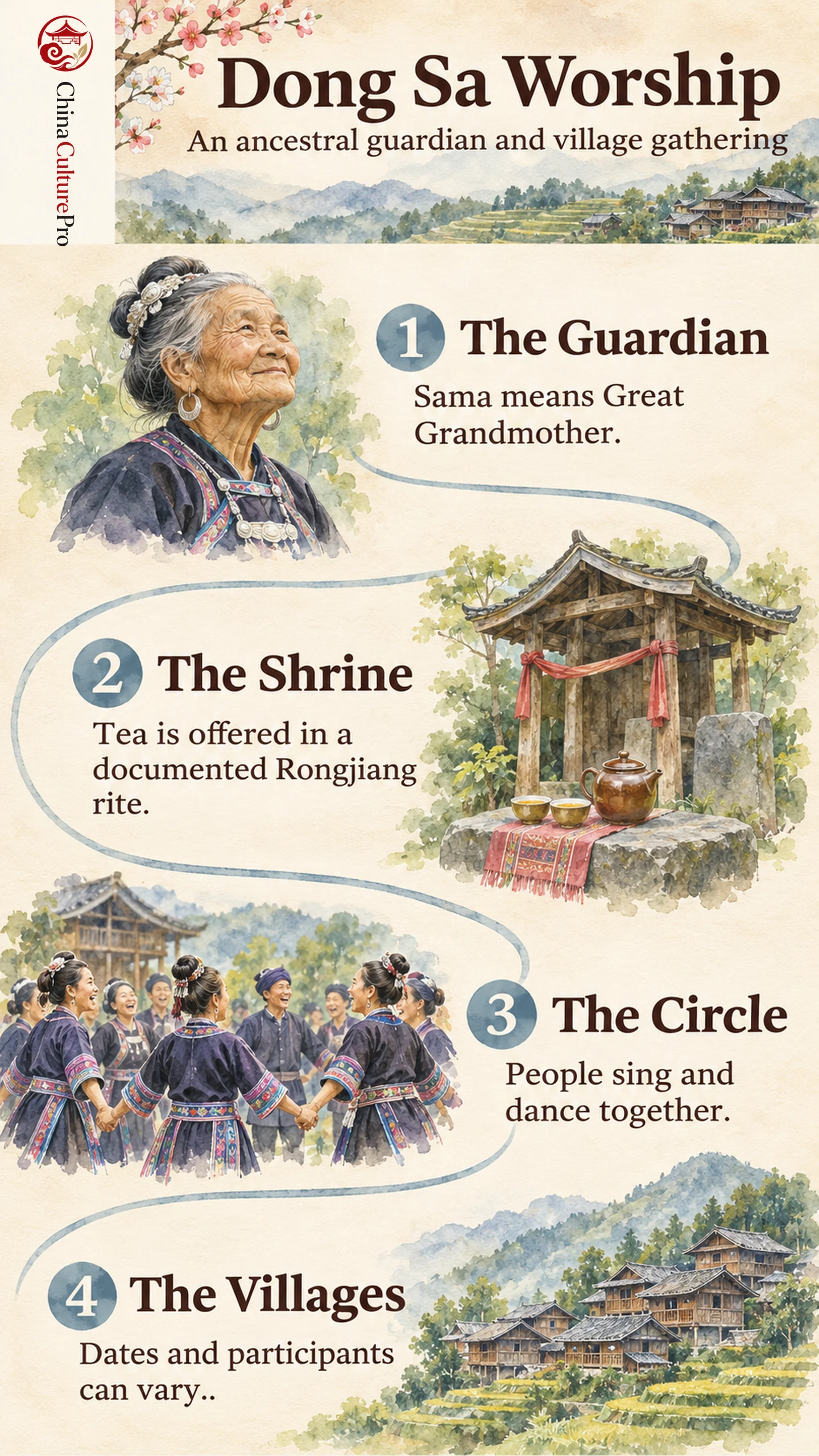
Among Dong (侗族, Dòngzú) communities in southeastern Guizhou and nearby areas, Sa (萨, Sà) is honored as an ancestral figure and village guardian. The names Sama (萨玛, Sàmǎ), meaning Great Grandmother, and Sa Sui (萨岁, Sàsuì) also appear in descriptions of the tradition.[1]
- Villages can have a shrine dedicated to the ancestral figure.[1]
- In the Sanbao area of Rongjiang (榕江, Róngjiāng), women are prominent in the festival.[2]
- A festival can include offerings, singing and dance.[2]
Names and practices can vary across communities.
A festival for Sa can move from a shrine to an open gathering place. The change of setting helps explain why reports describe both quiet offerings and a singing circle in the open.
Sa as Grandmother and Guardian
In the Rongjiang heritage account, the Great Grandmother embodies ancestral protection. Local narratives also remember her as a heroine. These meanings belong to the tradition as people tell and practice it. They help explain why a rite for Sa can be part of shared life in Dong communities.[1]
The Shrine and the Gathering
The documented Sanbao observance includes incense and an offering of tea. Women then gather for circle singing and dancing called duoye (多耶, duōyē). The shrine and the open space each have a role. Another familiar communal setting is the Dong drum tower.[2]
Why Practices Differ by Village
Some celebrations take place in the first or second lunar month. The timing, participants and scale can vary, including rites shared by more than one village.[1] A gathering of Dong Kuan communities in Liping can also include honoring Sa, within a different occasion for village agreements.[4] The Rongjiang festival appears on the national list of intangible cultural heritage.[3]
FAQs About Dong Sa Worship
What does Sama mean?
The name means Great Grandmother in the account of the Dong festival.[1]
Do all villages celebrate on the same date?
The national record describes variations tied to local circumstances.[1]
What is duoye?
In the documented gathering, it is a form of singing and dancing together in a circle.[2]
Sources
[1] China Intangible Cultural Heritage Digital Museum. Dong Sama Festival in Rongjiang
[2] China Intangible Cultural Heritage Digital Museum. Dong Sama Festival observances
[3] China Heritage Quarterly. First list of national intangible cultural heritage
[4] China Intangible Cultural Heritage Digital Museum. Dong covenant customs in Liping