


Quick Answer: What Is Chinese Rapeseed Oil?
Caiziyou (菜籽油, càizǐyóu) is Chinese rapeseed oil. The Chinese name covers several styles; English-language Sichuan cooking often means an aromatic roasted-seed version.[1][3]
- Source: Oil extracted from rapeseeds.
- Flavor: Ranges from mild refined oil to pronounced roasted, nutty and vegetal aromas.
- Use: Cooking oil and, in fragrant styles, an aromatic base for chili oil.
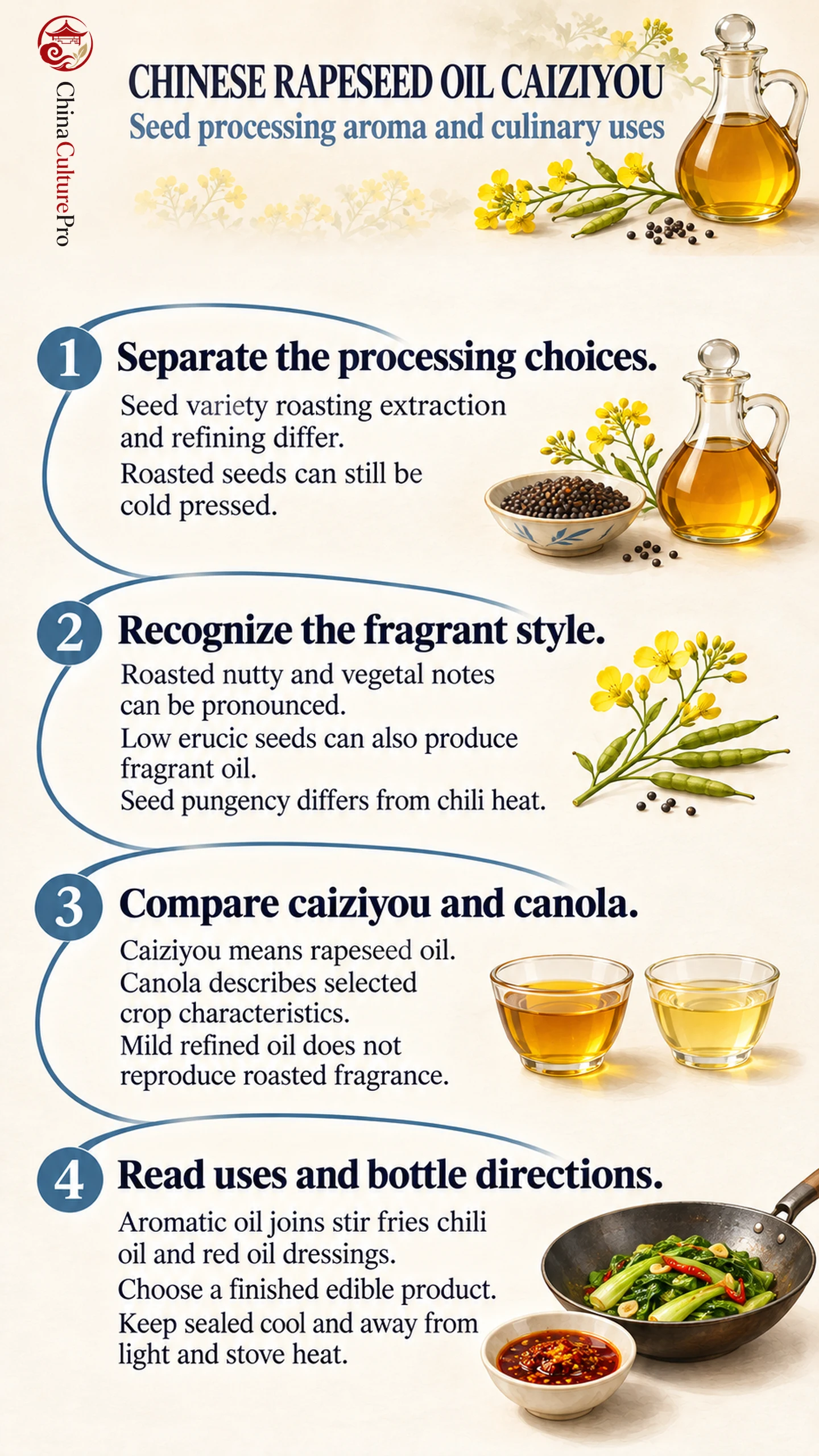
Seed variety and processing need checking separately.[1][3][5]
A golden oil can contribute its own aroma before chilies or other seasonings enter the dish. For readers comparing Chinese rapeseed oil with canola, the useful questions concern the seed, its treatment and the finished oil—not simply its color.
Roasting, Pressing and Refining Are Different Choices
Rapeseeds may be mechanically pressed or processed through solvent extraction. Roasting the seeds and refining the extracted oil are different stages. Further refining can produce a clearer, more neutral-tasting oil.[1][5]
Cold-pressed does not necessarily mean unroasted seeds. One Sichuan product combines roasted seeds with cold pressing. Another Chinese product combines low-erucic seeds, pressing and pronounced fragrance.[2][3]
Why Fragrant Rapeseed Oil Tastes Distinctive
Fragrant rapeseed oil (浓香菜籽油, nóngxiāng càizǐyóu) can bring roasted, nutty and grassy or vegetal notes. Roasting changes aroma compounds in low-erucic fragrant oils, including those responsible for roasted and pungent notes.[3][4]
That pungent character differs from the heat of added chilies. Peanut oil offers another seed-oil comparison, but its roasted peanut aroma is not the same flavor.[3]
Caiziyou, Canola and Substitutions
| Label or style | What it tells you |
|---|---|
| Caiziyou | Rapeseed oil; processing and flavor still need checking. |
| Low-erucic rapeseed oil | A seed-composition distinction, not a promise of neutral flavor. |
| Canola oil | Oil from selected low-erucic rapeseed crops; common refined versions taste mild. |
Canola describes selected crop characteristics, not a refining operation. Mild refined oil supplies cooking fat without reproducing the fragrance of roasted Sichuan-style oil.[2][3][5]
Chinese Cooking Uses and Bottle Labels
In Sichuan cooking, aromatic rapeseed oil appears in stir-fries, chili oil and red-oil dressings. The oil supplies fragrance; added seasonings build other flavors. Chili crisp and chili oil are finished condiments, rather than names for the plain oil.[3]
Read the finished edible product’s ingredients, processing and directions. Keep it sealed, cool and away from light and stove heat; follow its storage label.[1][2]
FAQs About Chinese Rapeseed Oil
Is caiziyou the same as canola oil?
They overlap in crop family, but the labels do not guarantee the same processing or aroma.
Is Chinese rapeseed oil spicy?
Not automatically. Roasted or pungent seed aromas differ from chili heat.
Does cold-pressed mean the seeds were never roasted?
No. A product can use roasted seeds and still describe its extraction as cold pressing.
Should every bottle be heated until it smokes?
Do not treat that as a universal rule. Follow the finished edible product’s directions.
Sources
[1] Chinese Institute of Food Science and Technology, published by SAMR. Rapeseed Oil: Processing, Labels and Storage
[2] Doli, Jiage Foods. Fragrant Small-Press Rapeseed Oil
[3] The Mala Market. Sichuan Roasted Rapeseed Oil
[4] Hu Bowen and colleagues, China Oils and Fats; original abstract indexed by FAO AGRIS. Effect of Roasting on the Flavor of Low-Erucic Fragrant Rapeseed Oil
[5] Canola Council of Canada. Canola Oil: Crop and Processing