
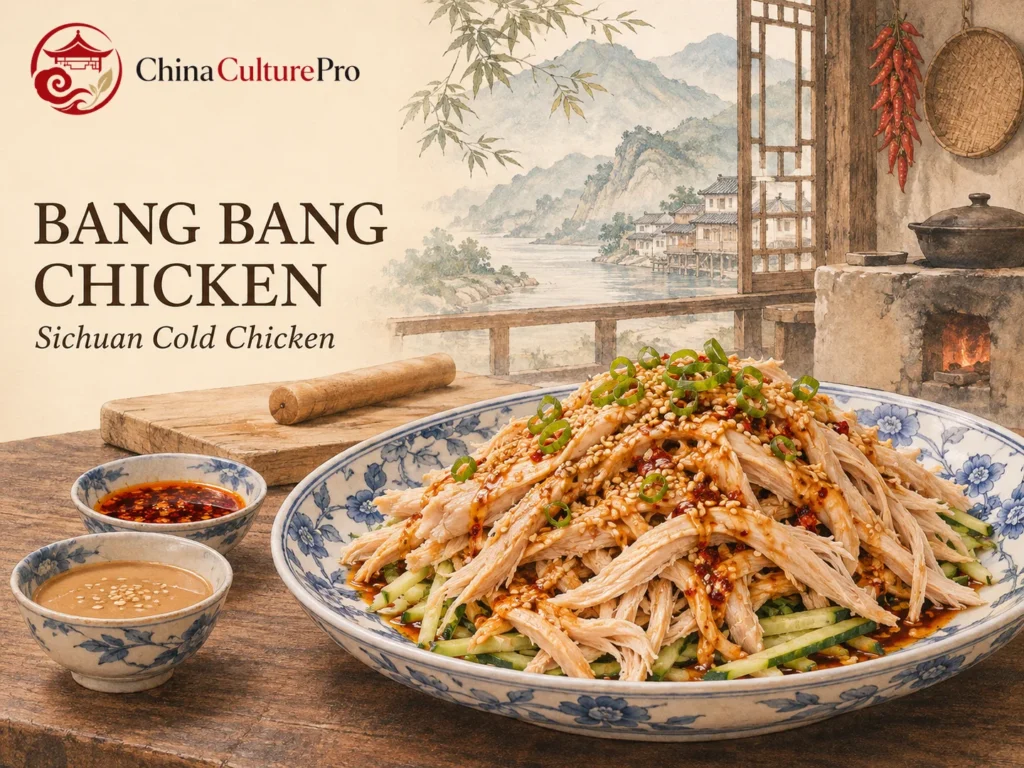

Quick Answer: What Is Bang Bang Chicken?
Bang bang chicken (棒棒鸡, bàngbàng jī) is a Sichuan cold chicken dish, commonly made by loosening cooked chicken into strips and dressing it with a richly seasoned sauce.[1][2]
- Chicken: Poached meat supplies tender strands rather than a crisp coating.
- Dressing: Sesame, chili oil and Sichuan pepper can bring nutty, spicy and tingling notes.
- Overseas usage: The same English name also appears on fried chicken with sweet-chili mayonnaise.[5]
The method below makes the cold, sesame-sauced version; it does not use breadcrumbs or mayonnaise.

Before choosing a recipe, check the chicken and the sauce. A plate of shredded meat under a dark sesame dressing and a bowl of crunchy bites in a creamy orange sauce offer different meals, even when their English menu names match.
Sichuan Roots and the Meaning of the Name
The dish is associated with Hanyang (汉阳, Hànyáng), now in Qingshen County, Meishan, Sichuan. Older descriptions also call it Leshan or Jiading bang bang chicken. Its name refers to the wooden stick used in preparing the cooked meat, although this does not establish a precise invention date.[1]
Within Sichuan cuisine, guai wei (怪味, guàiwèi), often translated as “strange flavor,” describes a combination of sweet, sour, salty, savory, aromatic, hot and numbing sensations. The point is the balance of seasonings, rather than maximum chili heat.[1]
Ingredients for a Sesame-Sauced Version
For about four shared portions, use the following home-style combination. Spoon measurements here are US measures: 1 tablespoon is 15 ml and 1 teaspoon is 5 ml. It is one sesame-paste version, not a fixed formula for every Sichuan kitchen.
- Chicken and base: 500 g boneless chicken breast or thigh, 3 ginger slices, 1 scallion for poaching, 1 small cucumber and 2 sliced scallions for serving.[4]
- Dressing: 3 tablespoons Chinese roasted sesame paste (芝麻酱, zhīmajiàng), 2 tablespoons light soy sauce, 1 tablespoon Chinese black vinegar, 2 teaspoons sugar, 1 teaspoon sesame oil and 2 tablespoons cooked chicken broth, adding more broth as needed.[2]
- Heat and aroma: Start with 1 tablespoon Chinese chili oil and ½ teaspoon ground Sichuan peppercorns (花椒, huājiāo). Adjust to taste.[2]
Roasted sesame paste gives the dressing body. Stir separated paste before measuring. Tahini can substitute, with a different flavor.[2]
How to Make Cold Bang Bang Chicken
Use a saucepan, a food thermometer, a clean board, two forks or a rolling pin, and a mixing bowl.
- Poach the chicken: Put ginger and the poaching scallion in enough water to cover the chicken. Bring the water to a boil, add the chicken and return to a gentle simmer. Cook until a thermometer in the thickest part reads 165°F/74°C; thickness changes the time. Keep raw-chicken utensils away from cucumber and cooked meat.[4][6]
- Loosen and shred: Transfer the cooked chicken to a clean plate. Once comfortable to handle, press or tap it lightly with a rolling pin, then pull it along the grain into strips. Stop before it becomes mashed. Reserve some cooked broth for the dressing.[2]
- Mix the dressing: Dissolve the sugar in the soy sauce and vinegar. Work in the sesame paste, sesame oil, chili oil and ground pepper. Add broth gradually until the dressing pours easily but still coats a strand of chicken.[3]
- Assemble: Cut the cucumber into thin strips and drain away excess moisture. Arrange it on a platter, add the chicken, spoon over the dressing and scatter the sliced scallions. Serve promptly or refrigerate for cold service.[3]
The temperature check matters more than clear juices or a fixed poaching time. Raw chicken does not need washing, and the board used for shredding must be clean.[6]
Sauce Variations and the Crispy Overseas Version
Not every cold version contains sesame paste. A dressing made with sesame seeds, sesame oil, broth, soy, vinegar, sugar, chili oil and ground pepper gives a looser result. Cucumber is a common base, and the dressed chicken can also top noodles.[4]
The crispy overseas version uses breaded, fried chicken and a sauce combining mayonnaise, sweet chili sauce and a hot chili sauce. Its creamy coating and crunchy surface are distinct from poached Sichuan chicken.[5] The broader history of Chinese chicken salad provides context for other overseas chicken-salad interpretations.
For another Chinese poaching tradition, explore white-cut chicken (白切鸡, báiqiē jī); do not assume that all poached chicken dishes use bang bang sauce.
Serving, Cooling and Storage
Serve the cold chicken with steamed rice and other shared dishes. For make-ahead service, refrigerate the chicken and dressing separately, then assemble near serving time so cucumber moisture does not thin the sauce.[3]
Divide cooked chicken into shallow containers for prompt chilling.[8] Refrigerate within two hours, or one hour when exposed to temperatures above 90°F/32°C. Keep the refrigerator at 40°F/4°C or below and use cooked chicken within three to four days; adding fresh sauce does not restart that storage period.[6][7]
FAQs About Bang Bang Chicken
Does bang bang chicken have to be spicy?
Chili intensity can be adjusted. Keep the sesame, sour, sweet and savory elements in balance rather than treating more chili as the only goal.[1][2]
Can I use tahini instead of Chinese sesame paste?
Yes, though its flavor differs.[2]
Do I need to pound the chicken?
For this boneless method, a light tap helps shredding; avoid crushing the meat.[2]
Can I prepare it ahead?
Yes, with prompt refrigeration. Keep components chilled separately, assemble near serving, and count the cooked chicken’s original three-to-four-day refrigerator window.[3][7]
Sources
[1] Sichuan Culture and Tourism Information Center. Sichuan specialty: Bang bang chicken
[2] Tony Tan / ABC. Bang bang chicken recipe
[3] Wendy Quisimbing / SBS Food. Bang bang chicken
[4] Judy / The Woks of Life. Bang bang chicken: The Sichuan version
[5] Patty Catalano / The Kitchn. Bang bang chicken: Crispy chicken with sweet and spicy sauce
[6] Centers for Disease Control and Prevention. Chicken and food poisoning
[7] USDA Food Safety and Inspection Service. Suggested refrigerator storage times for chicken
[8] USDA Food Safety and Inspection Service. How to handle leftovers safely