
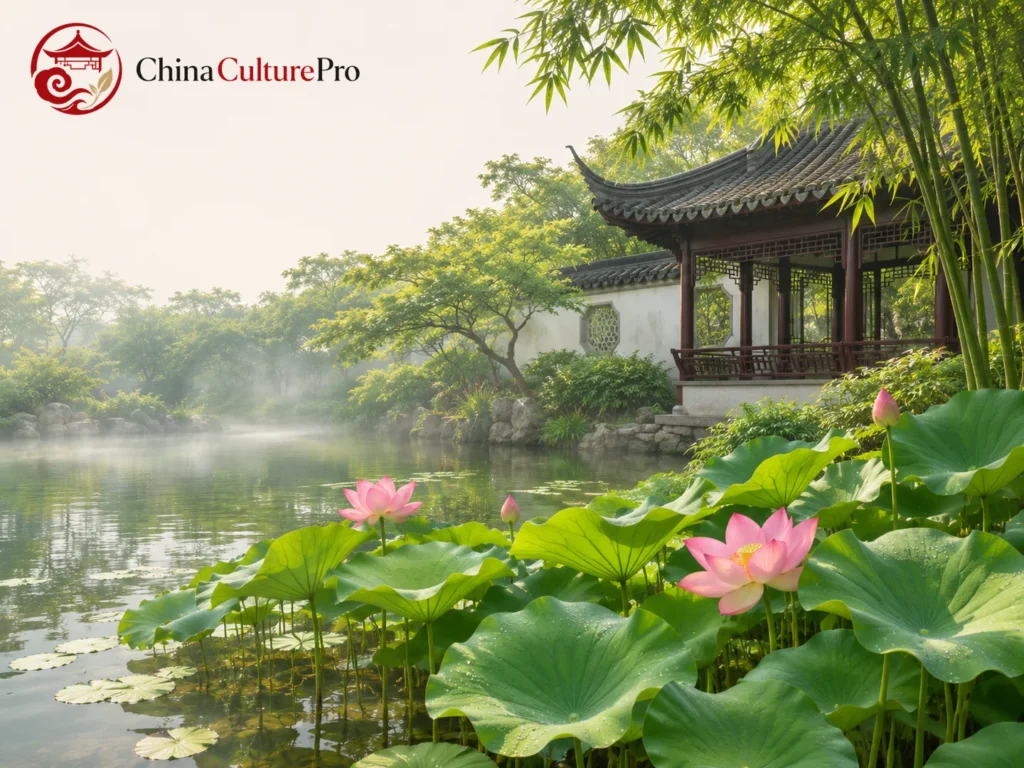

Quick Answer: What Do Plants Do in a Chinese Garden?
Chinese garden plants shape what you can see, mark changes in the seasons and bring literary associations into the landscape. In Suzhou, trees, bamboo and waterside plants can set the depth of a view. A pavilion name can also direct attention to a particular plant or its fragrance. [1][2][3]
- Plants can frame or screen a view. A band of foliage can hide a wall, while low planting beside a pond leaves room to look across it. [1]
- Flowers can mark a season. Peach blossom can recall spring, lotus summer, and fragrant osmanthus autumn. [2][3][4]
- A literary association can outlast the flowers. The Three Friends of Winter (岁寒三友, suìhán sānyǒu) appear in paintings and in garden architecture. [2][5]
Start with where the plant grows and what changes when you look at it from another spot.
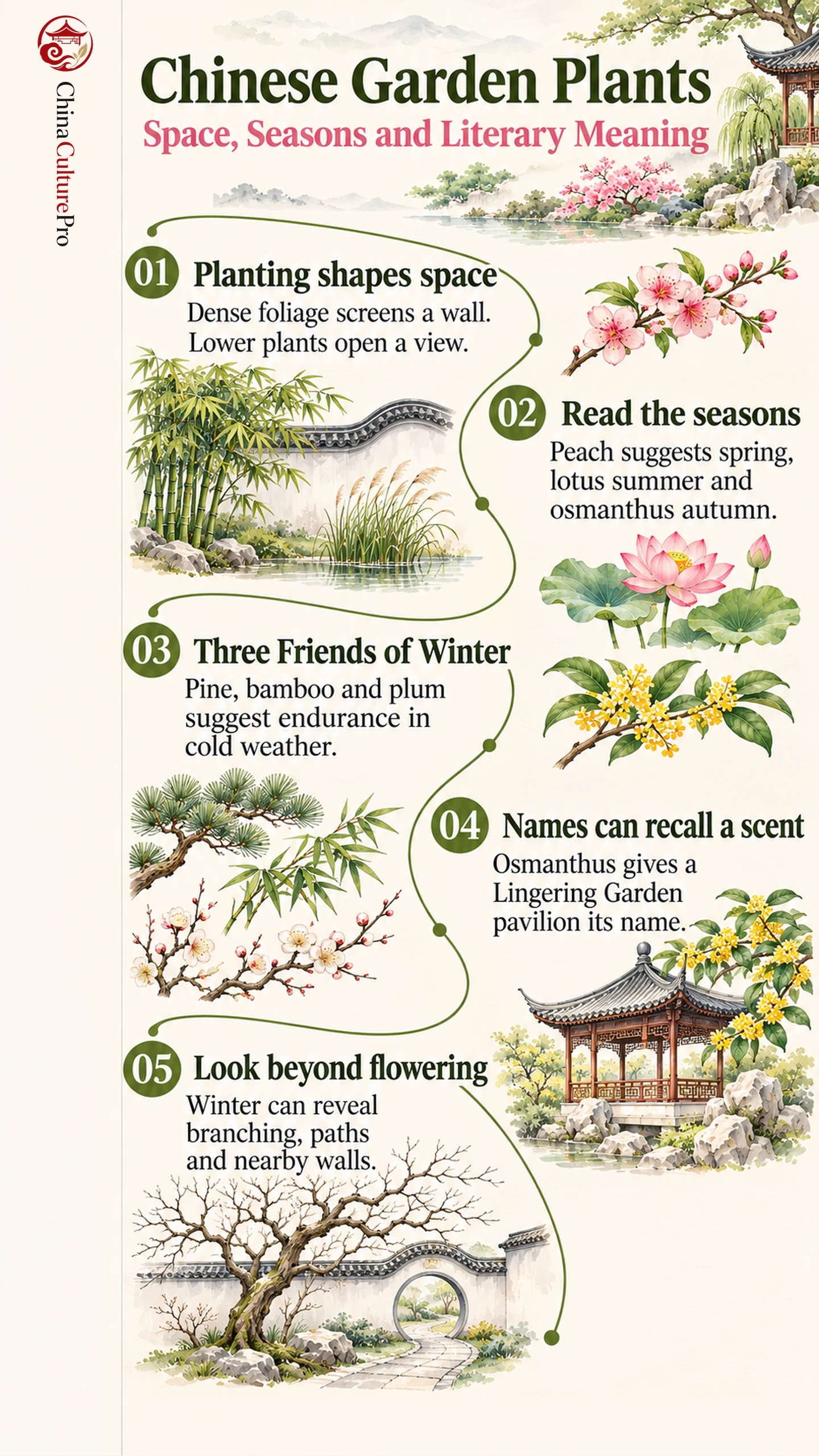
A plant can change a garden in more than one way. It can hide a wall, announce the season with a scent, or call to mind a painting. Sometimes you see the connection in a building’s name before you notice the plant itself.
How Planting Shapes Space
In classical Chinese garden design, vegetation can divide a scene without building another wall. Thick foliage can block a view from one angle, while a nearby branch can frame a glimpse of a roof. Different heights help separate what is close from what is across the water. [1][2]
The Suzhou garden bureau describes two islands in the central part of the Humble Administrator’s Garden. Deciduous and evergreen trees mix with bamboo on slopes and reeds at the pond edge. The tree canopy gives the islands height, and lower planting brings attention back to the water. Both layers can fit in a single view from an opposite bank. [1][6]
In other Suzhou gardens, foliage can help a wall become a backdrop. Light through leaves changes the brightness and texture of the plaster. As the sun moves, the wall can show the pattern of a nearby plant through its shadow. [1]
Seasonal Cues to Look For
Seasonal associations help a viewer notice changes that come and go. The examples below describe associations in particular gardens and cultural accounts. Flowering time varies with the plant, local weather and the year. [1][2][3][4]
| Season | Example cue | What to notice |
|---|---|---|
| Spring | Peach blossom | A brief wash of color on branches |
| Summer | Lotus | Flowers and raised leaves drawing attention to a pond |
| Autumn | Osmanthus or chrysanthemums | Scent around a pavilion or flowers lower in the planting |
| Winter and the cold season | Pine, bamboo and plum | Persistent green structure and plum blossoms in the appropriate season |
An evergreen group can hold part of a view together when deciduous trees lose their leaves. A flowering or scented plant may become the focus only briefly. Ji Cheng’s broader idea of borrowed scenery offers a related way to think about how the seasons change a scene. [1][2][7]
The Three Friends of Winter
Pine, bamboo and plum form a familiar group in Chinese art. Pine can keep its foliage through cold weather, bamboo remains recognizable by its stems and leaves, and plum can flower before most spring growth. Together the three can suggest endurance. The plants have individual associations as well, and the group is best understood in the context of the particular painting or garden. [2][5]
Princeton University Art Museum holds a late seventeenth-century ink-on-silk hanging scroll titled Three Friends of Winter. In The Huntington’s contemporary Chinese Garden, carvings of the same three plants appear in the ceiling of the Pavilion of the Three Friends. The motif can therefore remain visible even when the living plants are elsewhere in the garden or out of flower. [2][5]
When Plants Give a Building Its Name
The Lingering Garden has a pavilion named for the fragrance of osmanthus. Suzhou’s local gazetteers office describes the trees around the pavilion and connects their scent with autumn. An earlier visitor account pairs the same setting with a couplet that brings together rocks and the fragrance of the flowers. The name and verse preserve the connection with a scent even outside autumn. [3][8]
At the Humble Administrator’s Garden, lotus is part of a different experience, with its leaves and blooms set against open water. The garden bureau documents summer lotus displays and records a pavilion in the central garden named for lotus breezes from all sides. At The Huntington, the Love for the Lotus Pavilion draws attention to the flower in a contemporary garden inspired by Suzhou. [1][2][6][4]
Look for garden names and couplets on or near Chinese pavilions. A name may identify what grows nearby, recall a particular time of year or connect the place with a literary work. [1][2][3][8]
What Changes When Plants Are Out of Season
When a plant is out of flower, notice its silhouette and where it stands. A leafless branch can reveal another part of the garden. Evergreen growth can keep the outline of an enclosure. The details visible through paths and windows can change even when the route stays the same. [1][2]
If a name refers to a flower or scent you cannot see or smell at the moment, it can still tell you what a designer or later owner chose to celebrate. Look at where the plant grows in relation to the named pavilion. That position can help explain why the name belongs there. [1][2][3]
FAQs About Chinese Garden Plants
What are the Three Friends of Winter?
They are pine, bamboo and plum. Their association with enduring cold conditions appears in Chinese painting and in some garden decoration. [2][5]
Why is lotus common in Suzhou garden imagery?
Lotus grows in water and can give a pond a strong summer focus. It also carries literary and artistic associations, including purity in some settings. [1][2][4]
Do all classical Chinese gardens use the same plants?
Planting differs with the garden, its climate and its design. Similar associations may appear in plant choices, in a building’s name, or in its decoration. [1][2][3]
Sources
[1] Suzhou Bureau of Gardens and Landscaping. Plants in Suzhou Gardens
[2] The Huntington. Chinese Garden
[3] Suzhou Local Gazetteers Office. Stories Behind Suzhou Gardens
[4] Suzhou Bureau of Gardens and Landscaping. Lotus Cultural Program at the Humble Administrator’s Garden
[5] Princeton University Art Museum. Three Friends of Winter
[6] Suzhou Bureau of Gardens and Landscaping. The Humble Administrator’s Garden
[7] Chris Paton, The Textbook of Architecture. Borrowed Scenery
[8] Suzhou Bureau of Gardens and Landscaping. Suzhou Visitor Accounts: Lingering Garden