
Quick Answer: What Is Chinese Teaware?
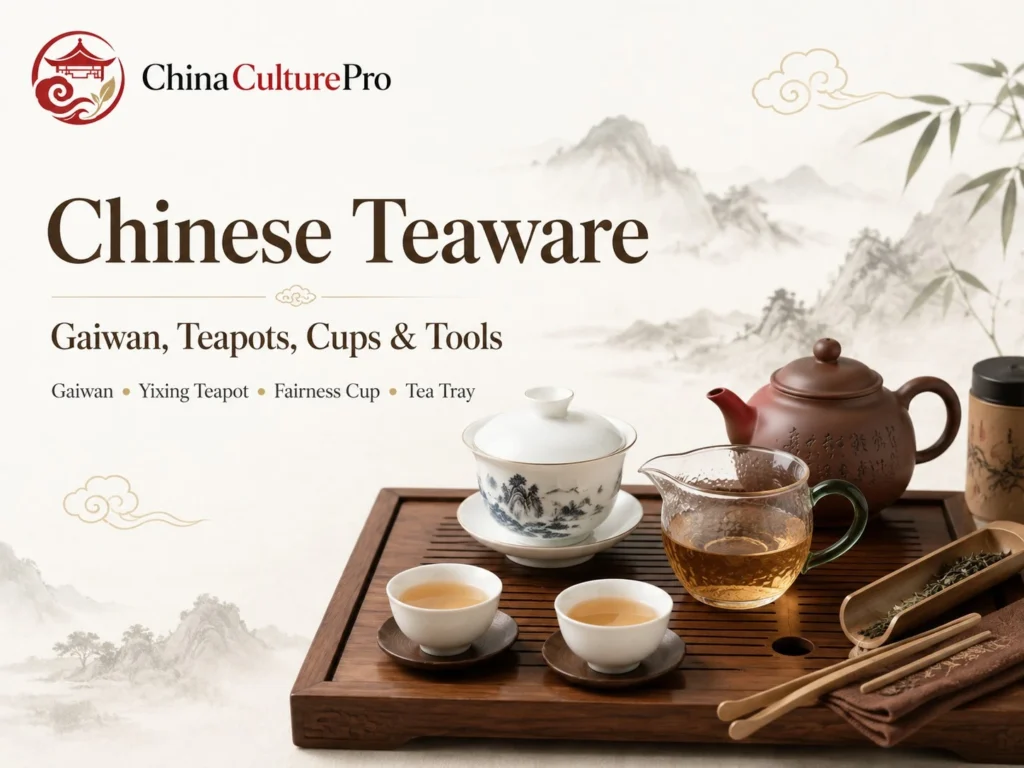
Chinese teaware refers to the tools used to brew, pour, serve, taste, and store Chinese tea. It includes brewing vessels such as gaiwans and teapots, serving tools such as the fairness cup, tasting cups, tea trays, kettles, small tools, cloths, and storage jars.
Chinese teaware is not decoration. Useful teaware helps solve real tea problems:
Brewing Control: a gaiwan or teapot controls water contact, heat, and pouring speed.
Liquor Clarity: a fairness cup helps show tea color, strength, and clarity.
Even Serving: a Gong Dao Bei makes sure each guest receives tea of similar strength.
Tasting Rhythm: small cups help the drinker slow down and taste while the tea is still warm and aromatic.
Clean Setup: a tea tray, cloth, and tools keep the tea table cleaner and easier to manage.
Tea Matching: different teas may work better with porcelain, glass, clay, or Yixing teaware.
A beginner does not need a full expensive Gongfu tea set. A gaiwan, small cups, and a kettle can already start a Chinese tea session. A fairness cup and simple tray can be added next.
Key Point: Chinese teaware is not about owning more tools. It is about understanding what each tool does, then adding teaware according to the teas you actually drink.
Why Teaware Matters in Chinese Tea Culture
Teaware matters because Chinese tea is not only about leaves and water. The vessel changes how the tea opens, how fast the liquor pours, how heat is held, how aroma rises, and how people share the tea.
Chinese tea people often say, “Water is the mother of tea, and teaware is the father of tea.” The meaning is practical: good leaves can still taste wrong if the water, vessel, heat, or pouring control is wrong.
Teaware affects Chinese tea in several ways:
- Extraction: a gaiwan pours quickly, while some teapots hold heat longer.
- Aroma: porcelain keeps aromas clear, while some clay pots can soften the liquor.
- Mouthfeel: Yixing or clay teapots may make some oolong, Pu-erh, and dark teas feel smoother.
- Fairness: a Gong Dao Bei helps everyone drink tea of the same strength.
- Rhythm: small cups slow the session down; large cups make drinking faster and more casual.
- Comfort: trays, cloths, and tools keep the table clean and make guests feel cared for.
Good teaware does not need to be expensive. It needs to match the tea, the brewing method, and the drinker’s habits.
To understand the larger cultural background, read our Chinese Tea Culture guide.
Chinese Teaware at a Glance
This table gives a quick map of the main Chinese teaware used for brewing, serving, tasting, and organizing tea.
| Teaware | Chinese Name | Main Use | Best For | Beginner Priority |
|---|---|---|---|---|
| Gaiwan | 盖碗 | flexible brewing vessel with bowl, lid, and saucer | almost all tea types, especially tasting and Gongfu Cha | highest |
| Yixing Teapot | 紫砂壶 | clay teapot with good heat retention and long-term use value | oolong, Pu-erh, dark tea | later |
| Porcelain Teapot | 瓷壶 | neutral teapot that does not absorb aroma strongly | black tea, white tea, scented tea, light tea | useful |
| Glass Teapot | 玻璃壶 | transparent brewing vessel for viewing leaves and liquor | green tea, white tea, flower tea | useful |
| Fairness Cup / Gong Dao Bei | 公道杯 | evens out tea liquor before serving | Gongfu Cha and tea for several people | highly recommended |
| Small Tea Cups | 品茗杯 | small tasting cups for aroma, warmth, and rhythm | Gongfu Cha and tasting sessions | highly recommended |
| Aroma Cup | 闻香杯 | tall narrow cup for smelling aroma | oolong tea, rock tea, high-aroma sessions | optional |
| Tea Tray | 茶盘 | catches water and keeps the tea table clean | Gongfu Cha and repeated pouring | useful |
| Tea Kettle | 水壶 | heats water for brewing | all tea types | essential |
| Tea Tools | 茶具小工具 | tongs, scoop, spoon, needle, knife, strainer | handling leaves, cups, and compressed tea | optional |
| Tea Cloth | 茶巾 | wipes the table, tray, and cup base | all tea sessions | useful |
| Tea Storage Jar | 茶叶罐 | protects tea from moisture, odor, and light | all tea types | useful |
This table is a map, not a shopping list. The most important beginner items are a gaiwan, kettle, small cups, and possibly a fairness cup. Other tools can be added when they solve a real problem.
Gaiwan: The Most Versatile Chinese Tea Tool
A gaiwan (盖碗) is one of the most useful Chinese tea tools. It has three parts: a bowl, a lid, and a saucer. It can brew almost every Chinese tea type and is especially good for tasting tea clearly.
A gaiwan is useful because:
- It works with many teas. Green tea, white tea, yellow tea, oolong tea, black tea, Pu-erh, and dark tea can all be brewed in a gaiwan.
- It does not absorb aroma strongly. A porcelain gaiwan keeps the tea’s original character clear.
- It pours quickly. This makes it useful for Gongfu Cha and short infusions.
- It shows the leaf. You can observe leaf shape, leaf color, opening speed, and spent leaves.
- It is good for comparison. If you want to test two teas fairly, a neutral gaiwan is one of the best tools.
The main drawback is heat. Beginners may burn their fingers if the gaiwan is too thin, too full, or held incorrectly. A slightly thicker porcelain gaiwan with a comfortable rim is easier to learn with.
If you can buy only one Chinese brewing vessel, choose a gaiwan first. It teaches pouring control, leaf observation, and timing better than many more expensive tools.
Chinese Teapots: Yixing, Porcelain, Glass, and Clay
Chinese teapots are not all the same. Material, size, wall thickness, and heat retention affect how the tea tastes.
| Teapot Type | Chinese Name | Material | Best For | Key Feature |
|---|---|---|---|---|
| Yixing Teapot | 紫砂壶 | Yixing purple clay | oolong, Pu-erh, dark tea | holds heat well and can round the liquor over time |
| Porcelain Teapot | 瓷壶 | porcelain or glazed ceramic | black tea, white tea, scented tea, light tea | neutral, clean, and less likely to absorb aroma |
| Glass Teapot | 玻璃壶 | heat-resistant glass | green tea, white tea, flower tea | lets you see liquor color and leaf movement |
| Clay Teapot | 陶壶 | regional clay or pottery | Pu-erh, dark tea, aged tea | good heat retention; often suits stronger teas |
A Yixing teapot is valuable, but it is not necessary for beginners. It is better for people who already know what tea they drink often. Because unglazed clay can absorb aroma, many tea drinkers dedicate one Yixing teapot to one broad tea family, such as roasted oolong, Sheng Pu-erh, Shou Pu-erh, or dark tea.
Porcelain and glass are safer starting points because they are neutral and easier to clean. The better question is not “Which teapot is best?” but “Which teapot fits this tea?”
Fairness Cup / Gong Dao Bei: Why It Matters
The fairness cup, or Gong Dao Bei (公道杯), is one of the most practical tools in Chinese tea. Its main job is to make tea strength even before serving.
Without a fairness cup, the host may pour directly from a gaiwan or teapot into several cups. The first cup may be lighter, while the last cup may be stronger because the tea continues extracting during the pour. A Gong Dao Bei solves this by collecting the full infusion first, mixing the liquor evenly, and then dividing it into cups.
A fairness cup is useful because it:
- makes each guest’s tea closer in strength;
- shows liquor color and clarity;
- helps small tea particles settle before serving;
- gives the host more control over serving rhythm;
- makes Gongfu Cha easier when serving several people.
The word “fairness” explains the tool’s purpose. Everyone at the table should receive tea that represents the same infusion.
Chinese Tea Cups: Small Cups, Aroma Cups, and Everyday Cups
Chinese tea cups are often small because many Chinese tea sessions focus on aroma, temperature, rhythm, and repeated infusions. Small cups are not used to make tea look formal. They help the drinker taste tea at the right moment.
| Cup Type | Chinese Name | Common Size | Best For | Key Feature |
|---|---|---|---|---|
| Small Tea Cup | 品茗杯 | 30–60ml | Gongfu Cha and tasting | encourages small sips and preserves drinking rhythm |
| Aroma Cup | 闻香杯 | 30–50ml | oolong tea and rock tea | tall narrow shape gathers aroma before drinking |
| Everyday Cup | 茶杯 | 100–200ml | casual daily drinking | convenient for green tea, black tea, or office tea |
| Tasting Cup | 试茶杯 | 30–50ml | comparing teas | standardized size helps compare aroma, liquor, and taste |
A small cup lets the drinker finish the tea while it is still warm and aromatic. It also keeps each infusion separate. Instead of drinking one large mug, the drinker tastes one small pour, then waits for the next infusion.
This rhythm is important in Gongfu Cha because the tea changes from steep to steep.
Tea Tray and Tea Table Setup
A tea tray (茶盘) is useful in Gongfu Cha because repeated warming, rinsing, pouring, and serving can create water on the table. The tray catches water and keeps the tea space cleaner.
A tea tray helps with:
- warming cups and vessels;
- catching rinse water;
- holding the gaiwan, teapot, fairness cup, and small cups;
- keeping the main table dry;
- organizing the tea session in one area.
A tea tray is useful, but it is not mandatory. Beginners can use a small tray, shallow bowl, absorbent mat, kitchen counter, or towel. The goal is not to create a perfect tea stage. The goal is to manage water, cups, and leaves cleanly.
Chinese Tea Tools: Tongs, Scoop, Needle, Knife, Strainer, and Cloth
Small tea tools are not the heart of Chinese tea, but each one solves a practical problem. Beginners do not need to buy every tool at once.
| Tool | Chinese Name | Purpose | When to Use |
|---|---|---|---|
| Tea Tongs | 茶夹 | hold hot cups without touching them directly | warming cups in Gongfu Cha |
| Tea Scoop | 茶则 | take dry tea from a jar or bag | measuring and presenting leaves |
| Tea Spoon | 茶匙 | move leaves into a gaiwan or teapot | when leaves are curled, long, or hard to pour |
| Tea Needle | 茶针 | clear a blocked teapot spout | for Yixing or clay teapot users |
| Tea Knife | 茶刀 | loosen compressed tea cakes, bricks, or tuocha | Pu-erh and dark tea |
| Tea Strainer | 茶滤 | filter broken leaves or small particles | broken tea, compressed tea, or cloudy liquor |
| Tea Cloth | 茶巾 | wipe spills, cup bases, and the tea table | every tea session |
The two most useful beginner tools are often a tea scoop and a tea cloth. A tea knife becomes important if you drink Pu-erh cakes, brick tea, or other compressed tea. Useful tools should make the session cleaner and easier. Tools that stay unused are only decoration.
Best Teaware for Different Chinese Tea Types
Different Chinese tea types can be brewed in different vessels. These recommendations are starting points, not fixed laws.
| Tea Type | Recommended Teaware | Why It Works |
|---|---|---|
| Green Tea | glass cup, porcelain gaiwan | glass shows leaf shape and liquor color; porcelain stays neutral |
| White Tea | gaiwan, glass cup, boiling kettle for aged white tea | fresh white tea suits gentle vessels; aged Shou Mei can be boiled |
| Yellow Tea | glass cup, white porcelain gaiwan | shows the yellow liquor and delicate buds clearly |
| Oolong Tea | gaiwan, Yixing teapot, Zhuni teapot | gaiwan is good for testing; clay pots can round aroma and texture |
| Chinese Black Tea / Hong Cha | porcelain teapot, gaiwan, glass cup | porcelain preserves sweetness and aroma; glass shows red-bright liquor |
| Dark Tea / Hei Cha | gaiwan, clay pot, boiling kettle | strong heat helps post-fermented teas release depth |
| Pu-erh Tea | gaiwan, Yixing teapot, boiling kettle | gaiwan is good for testing; clay pots suit aged or familiar teas |
For testing a tea, a gaiwan is usually the cleanest starting point because it is neutral and easy to control. For daily drinking, use the vessel that matches your tea and makes your session comfortable.
A tea master may test a tea in a gaiwan first, then decide whether it deserves a dedicated teapot. That is a practical habit, not a rule. The purpose is to know the tea before assigning it to a vessel.
To choose suitable vessels by tea category, read our Chinese Tea Types guide.
Beginner Chinese Teaware Setup
A beginner Chinese tea setup should be simple. Start with tools that teach control, not tools that only make the table look complete.
| Setup Level | Tools | Best For | Notes |
|---|---|---|---|
| Minimal Setup | gaiwan, small cups, kettle | learning basic Gongfu-style brewing | low cost and enough to begin |
| Better Setup | gaiwan, fairness cup, small cups, simple tray, kettle | sharing tea and seeing liquor clearly | best balance for most beginners |
| Full Gongfu Setup | gaiwan or teapot, fairness cup, cups, tray, tongs, cloth, scoop, kettle, storage jar | serious regular tea practice | useful after you know your habits |
The better setup is often the most practical: gaiwan, fairness cup, small cups, simple tray, and kettle. It gives enough control for brewing, serving, and tasting without forcing beginners to buy a full set.
Do not buy complexity before learning control. Learn how to pour fully, divide tea evenly, keep the table clean, and taste across infusions. Add tools only when you understand what problem they solve.
To see how these tools are used in practice, read our Gongfu Cha guide.
Common Mistakes When Choosing Chinese Teaware
Many beginners buy too much teaware too early, or choose tools based on appearance instead of use.
| Mistake | Better Choice |
|---|---|
| Thinking expensive teaware is always better | Choose tools that are functional, comfortable, safe, and easy to clean. |
| Thinking you need a full Gongfu tea set | Start with a gaiwan, small cups, and kettle. Add tools later. |
| Buying a Yixing teapot before understanding tea types | Learn with a gaiwan first, then choose a teapot for teas you drink often. |
| Using one Yixing teapot for every tea | Unglazed clay can absorb aroma. Use one pot for one broad tea family. |
| Choosing cups that are too large for Gongfu Cha | Small cups keep the rhythm and let each infusion be tasted clearly. |
| Choosing only by appearance | Check pouring speed, capacity, material, comfort, and cleaning needs. |
| Buying a tea tray that is too large or hard to clean | Use a simple tray or mat until you know what setup fits your space. |
| Buying many small tools that stay unused | Start with a scoop and cloth; add a tea knife if you drink compressed tea. |
| Ignoring the kettle | A reliable kettle, ideally with temperature control, matters more than many decorative tools. |
| Using strong-smelling or absorbent vessels for delicate teas | Use glass or porcelain for green tea, yellow tea, and delicate white tea. |
The first principle of choosing teaware is not price. It is usability. Good teaware should pour smoothly, fit the tea, feel comfortable in the hand, and be easy to clean.
How to Care for Chinese Teaware
Teaware care should be simple, clean, and consistent. Complicated rituals are less important than preventing odor, mold, and residue.
- Porcelain and Glass: wash normally, rinse well, and let dry fully.
- Yixing and Unglazed Clay: avoid dish soap because clay can absorb smell. Rinse with hot water and dry thoroughly.
- Gaiwan and Cups: remove tea residue after each session so old flavors do not build up.
- Tea Tray: empty waste water, rinse the tray, and prevent standing water from turning stale.
- Tea Cloth: wash and dry regularly; a dirty tea cloth can spread odor instead of cleaning.
- Tea Storage Jars: keep dry, sealed, and away from strong smells.
- Different Teas: store strongly aromatic teas away from delicate teas.
The core of teaware care is clean and dry. A Yixing teapot does not need mysterious treatment. Use it with suitable tea, rinse it clean, dry it well, and avoid soap or strong foreign odors.
Chinese Teaware vs Gongfu Tea Set
Chinese teaware and Gongfu tea set are related, but they are not the same thing.
| Concept | Scope | Includes |
|---|---|---|
| Chinese Teaware | broader category | gaiwan, teapots, fairness cup, cups, trays, tools, storage jars, kettles, everyday cups |
| Gongfu Tea Set | smaller category | tools used for Gongfu Cha, usually gaiwan or small teapot, fairness cup, small cups, tray, and small tools |
Every Gongfu tea set is Chinese teaware, but not all Chinese teaware is a Gongfu tea set. A glass cup for green tea, a porcelain mug for office tea, or a tea storage jar can all belong to Chinese teaware without being part of a Gongfu tea set.
This distinction matters because beginners often think they must buy a full Gongfu setup to drink Chinese tea. They do not. The right setup depends on the tea and the drinking style.
How Chinese Teaware Connects to Tea Culture
Chinese teaware is the practical side of Chinese tea culture. It connects the tea leaf, the brewing method, the host, the guest, and the tasting experience.
For water temperature, tea ratio, and brewing control, read our How to Brew Chinese Tea guide. For serving manners at the tea table, read our Chinese Tea Etiquette guide. For aroma, mouthfeel, and tasting judgment, read our Chinese Tea Tasting guide.
This page is a hub. Later, each major tool can be studied more deeply, including the gaiwan, Yixing teapot, Gong Dao Bei, Chinese tea cups, tea trays, and tea table setup. The foundation is the same: understand the function first, then choose the tool.
Final Thoughts
Chinese teaware is not decoration, and owning more tools does not make someone more professional. Useful teaware helps control pouring, observe liquor color, serve tea evenly, keep the tea table clean, and create a comfortable drinking rhythm.
A gaiwan is useful for tasting and fast pouring. A Yixing teapot is better for fixed tea types and long-term use. A fairness cup makes the tea liquor even for everyone. Small cups help the drinker slow down and notice aroma, body, and aftertaste.
Beginners do not need a full expensive set. They should first understand what problem each tool solves, then add teaware according to the teas they actually drink.
FAQs About Chinese Teaware
What is Chinese teaware?
Chinese teaware refers to the tools used to brew, pour, serve, taste, and store Chinese tea. It includes gaiwans, teapots, fairness cups, small cups, tea trays, kettles, tea tools, cloths, and storage jars.
What teaware do I need for Chinese tea?
The simplest setup is a gaiwan, small cups, and a kettle. A fairness cup is strongly recommended if you serve more than one person. You do not need a full Gongfu tea set to begin.
What is a gaiwan used for?
A gaiwan is a flexible Chinese brewing vessel used for many tea types. It is especially useful for tasting tea because it is neutral, pours quickly, shows the leaves clearly, and helps control short infusions.
Is a Yixing teapot necessary?
No. A Yixing teapot is useful but not necessary for beginners. It is better for people who already know they often drink oolong, Pu-erh, or dark tea. A gaiwan is usually the better first tool.
What is a fairness cup?
A fairness cup, or Gong Dao Bei, is used to even out tea strength before serving. The full infusion is poured into the fairness cup first, then divided into small cups so each person receives similar tea liquor.
Why are Chinese tea cups so small?
Small Chinese tea cups are used for tasting, aroma, and rhythm. They allow the drinker to finish each pour while it is still warm and fragrant, then notice how the next infusion changes.
What is the best teaware for beginners?
The best beginner setup is a porcelain gaiwan, fairness cup, small cups, and kettle. This setup is flexible, affordable, and useful for many Chinese tea types.
What teaware is best for oolong tea?
Oolong tea works well in a gaiwan or a suitable clay teapot. A gaiwan is better for testing aroma and roast level. A Yixing or Zhuni teapot may suit regular oolong drinkers after they know their preferred style.
How do you clean Chinese teaware?
Porcelain and glass can be washed normally and dried fully. Yixing and unglazed clay should be rinsed with hot water and dried without dish soap. Tea trays and cloths should be cleaned regularly to prevent odor.
Is Chinese teaware only for Gongfu Cha?
No. Gongfu tea tools are part of Chinese teaware, but Chinese teaware is broader. Everyday glass cups, porcelain cups, kettles, tea jars, and casual teapots also belong to Chinese teaware.