
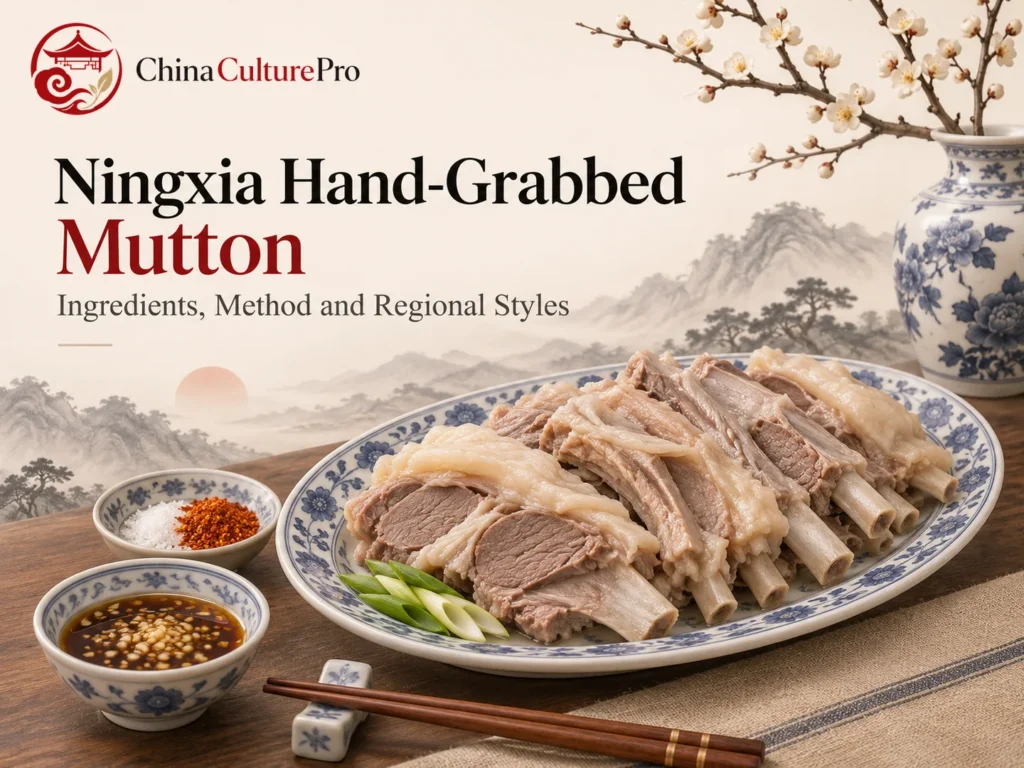

Quick Answer: What Is Ningxia Hand-Grabbed Mutton?
Ningxia hand-grabbed mutton (手抓羊肉, shǒuzhuā yángròu) is cooked sheep meat served in substantial, often bone-in portions. The name refers to picking up the cooked meat to eat it.[1]
- Method: The meat is boiled or simmered, then portioned for serving.
- Flavor: Meat and fat are prominent; seasoning and dips vary.
- Presentation: A plate of meat, often with separate salt or vinegar-based accompaniments.
It is distinct from stir-fried cumin lamb and grilled skewers.[1][2]

A pale platter of ribs can be more revealing than a heavily sauced dish: the cut, the tenderness and the dip each matter. Ningxia’s hand-grabbed mutton highlights these differences, while individual cooks vary their choice of sheep and their approach to seasoning.
The Sheep, Bone-In Cuts and Tender Texture
Yanchi Tan sheep (盐池滩羊, Yánchí tānyáng) are strongly associated with this dish. Chef Ma Guoqiang describes them as his preferred source. The characteristic serving combines lean meat, fat and bone, offering tender fibers alongside richer, softer fatty sections.[3]
Ribs are a documented choice, but the dish name does not identify one exact animal age or supplier. Ningxia’s agricultural center also describes hand-grabbed ribs from Jinshan in Helan County. Ask about sourcing if a particular regional sheep is important to your order.[5]
Cooking, Cutting and Dipping Are Separate Jobs
Cooking the meat in liquid develops its tender texture without producing a grilled crust. The meat is then divided into manageable portions. Cutting determines the serving shape after cooking.[1][3]
Salt and dipping accompaniments provide another layer of flavor. A Ningxia agricultural account describes salting after cooking and serving a garlic-and-vinegar dip. Other documented accompaniments include dry salt, cumin and chili powder. The seasoning on the side need not describe what went into the cooking pot.[2][3]
Ningxia Traditions and Restaurant Variations
The national heritage list recorded Ningxia’s hand-grabbed mutton craft in 2021, with Wuzhong as the submitting locality. This recognizes a living cooking tradition, not a dish invented that year or certification of every restaurant plate.[1]
The cooking liquid need not be entirely unseasoned. Ma Guoqiang describes an aromatic cooking mixture followed by salting. In a separate interview, Lao Mao restaurant manager Zhang Panlong describes his establishment’s unseasoned boiling approach. Neither is a rule for every cook.[3][4]
Jinshan’s salt-dipped ribs offer another local example. Sourcing and seasoning vary within Ningxia.[5]
How to Order and Eat It
Confirm the full dish name, bone-in cut and portion size, then ask which dips accompany it. Keep chili separate if you want to taste the meat without added heat. Use the utensils provided and follow the host’s lead.
For halal requirements, ask the establishment about meat sourcing, seasonings and preparation, rather than relying on a regional name. Our Chinese Muslim food guide explains the broader food context. Ningxia eight-treasure tea is another local dining tradition, with its own ingredients to confirm.
FAQs About Ningxia Hand-Grabbed Mutton
Is hand-grabbed mutton fried or roasted?
Its defining preparation uses cooking in water, not a fried or roasted crust.
Must every version use Yanchi Tan sheep?
No. It is a prominent source, but other local sheep also appear in documented preparations.
Is it always spicy?
No. Chili may be an optional accompaniment rather than part of the meat.
Do you have to eat it with your hands?
The name recalls that custom. You can use the utensils supplied.
Sources
[1] China Intangible Cultural Heritage Digital Museum. Ningxia Hand-Grabbed Mutton Craft
[2] Ningxia Agriculture and Rural Affairs Department. Ningxia Food Traditions
[3] Zhang Wenpan, Guangming Daily; Ma Guoqiang interviewed, via Qilu. Ningxia Hand-Grabbed Mutton: Plain Cooking and Meat Flavor
[4] Ha Ling, Ningxia Daily; Zhang Panlong interviewed. Traditional Restaurants and New Practices
[5] Ningxia Agricultural Publicity Education and Exhibition Center. Jinshan Sheep and Ningxia Mutton Preparations