


Quick Answer: What Is Kung Pao Shrimp?
Kung pao shrimp (宫保虾仁, gōngbǎo xiārén) applies kung pao seasoning to shrimp, combining dried-chili heat with savoury, sweet and sour flavours.[2][3]
- Peanuts supply crunch; roasted cashews are another culinary option.[2]
- Some recipes include bell peppers and chili paste.[3]
- Cook shrimp to 145°F/63°C; the flesh should become firm, pearly and opaque.[5]
Here is a complete measured recipe, with comparisons of peppers, nuts and sauces.
Start the rice before heating your stir-fry pan, so the main dish can be served as soon as it is ready.
Sichuan Roots and Different Recipe Styles
The seasoning builds on kung pao chicken (宫保鸡丁, gōngbǎo jīdīng), associated with Sichuan cooking. Shrimp is one adaptation of that flavour family.[2]
Shrimp versions also appear in China. A 2021 report on Mianyang’s regional dishes documented gongbao xiaqiu (宫保虾球, gōngbǎo xiāqiú), describing a crisp exterior and a sweet-sour chili flavour. That record supports the dish’s presence in Sichuan; it does not establish a sole inventor or date for every shrimp version.[4]
Two home-recipe approaches illustrate the variation:
- Scallion-and-peanut: Shrimp, scallions and peanuts in rice-vinegar sauce.[1]
- Bell-pepper version: Red and green peppers with doubanjiang (豆瓣酱, dòubànjiàng) and black vinegar (黑醋, hēicù).[3]
Ingredients for a Scallion-and-Peanut Version
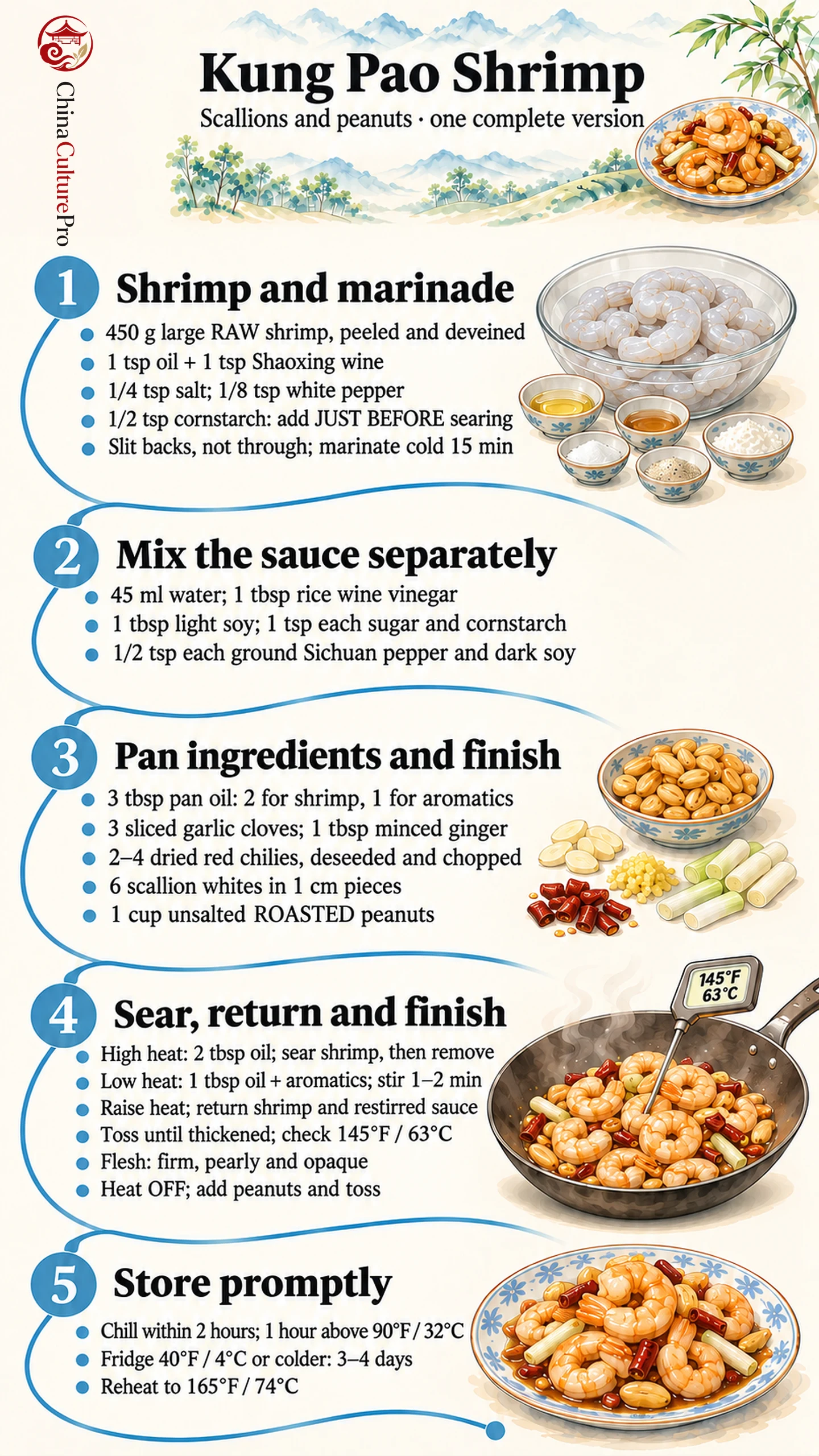
Serves four.[1]
- Shrimp and marinade: 450 g large raw shrimp, peeled and deveined; 1 teaspoon neutral oil; 1 teaspoon Shaoxing wine (绍兴酒, Shàoxīng jiǔ); ¼ teaspoon salt; ⅛ teaspoon white pepper; ½ teaspoon cornstarch.[1]
- Sauce: 45 ml water; 1 tablespoon rice wine vinegar; 1 tablespoon light soy sauce (生抽, shēngchōu); 1 teaspoon each sugar and cornstarch; ½ teaspoon ground Sichuan pepper (花椒, huājiāo); ½ teaspoon dark soy sauce (老抽, lǎochōu).[1]
- Pan: 3 tablespoons neutral oil; 3 sliced garlic cloves; 1 tablespoon minced ginger; 2–4 dried red chilies, deseeded and chopped; 6 scallion whites in 1 cm pieces; 1 cup unsalted roasted peanuts.[1]
How to Stir-Fry Kung Pao Shrimp
- Prepare the shrimp. Slit the back without cutting through. Mix with oil, wine, salt and pepper; refrigerate 15 minutes.[1]
- Mix the sauce. Combine sauce ingredients.[1]
- Sear the shrimp. Mix in coating starch. Heat 2 tablespoons oil over high heat; sear both sides, then remove.[1]
- Cook the aromatics. On low, stir remaining tablespoon oil with garlic, ginger, chilies and scallions 1–2 minutes. Raise heat; return shrimp and restirred sauce. Toss until thickened.[1]
- Finish with peanuts. Check 145°F/63°C with a thermometer; flesh should be firm, pearly and opaque. Turn off heat; add nuts and toss.[1][5]
The first sear is an intermediate stage; a pink exterior is not the final cooking check. If shrimp is not ready after the sauce coats it, continue cooking before adding nuts.[5]
Use the wok cooking guide for pan setup; keep aromatics over low heat.[1]
FAQs About Kung Pao Shrimp
Can I use frozen shrimp?
Yes. Thaw overnight in the refrigerator, or in a sealed bag in cold water before cooking promptly. Pat dry so excess water does not dilute the coating.[3][5]
How can I reduce the chili heat?
Use fewer dried chilies or leave them whole rather than breaking them open. The amount of chili can vary with your tolerance.[2]
Can I use cashews instead of peanuts?
Yes. Roasted cashews are a culinary alternative. Add them at the finish; changing the nuts does not require changing the shrimp or sauce quantities.[2]
How should I store and reheat leftovers?
Refrigerate in shallow containers within 2 hours, or 1 hour above 90°F/32°C. Keep at 40°F/4°C or colder for 3–4 days; reheat to 165°F/74°C.[6]
Sources
[1] Judy Leung. Kung Pao Shrimp
[2] Elaine. Kung Pao Shrimp (Kung Pao Prawn)
[3] Marc Matsumoto. Kung Pao Shrimp
[4] Chen Bihong. 寻味川菜连连看④丨绵阳:李白斗酒诗百篇,没想到最大功臣竟是这桌下酒好菜
[5] U.S. Food and Drug Administration. Selecting and Serving Fresh and Frozen Seafood Safely
[6] U.S. Department of Agriculture. How Do I Handle Leftovers Safely?