


Quick Answer: What Are the Huaiyang Three-Head Banquet Dishes?
The Yangzhou santou yan(三头宴,sāntóu yàn), or three-head banquet, centers on three well-known Huaiyang dishes.
- Pig’s head: A braised preparation with a recognizable whole outline.
- Carp head: A carefully boned fish-head dish.
- Lion’s head: A large meatball, represented here by the crab-and-pork version.[1]
“Three-head” names a banquet theme. One of the three heads is figurative, and the phrase does not specify every course on a restaurant’s menu.
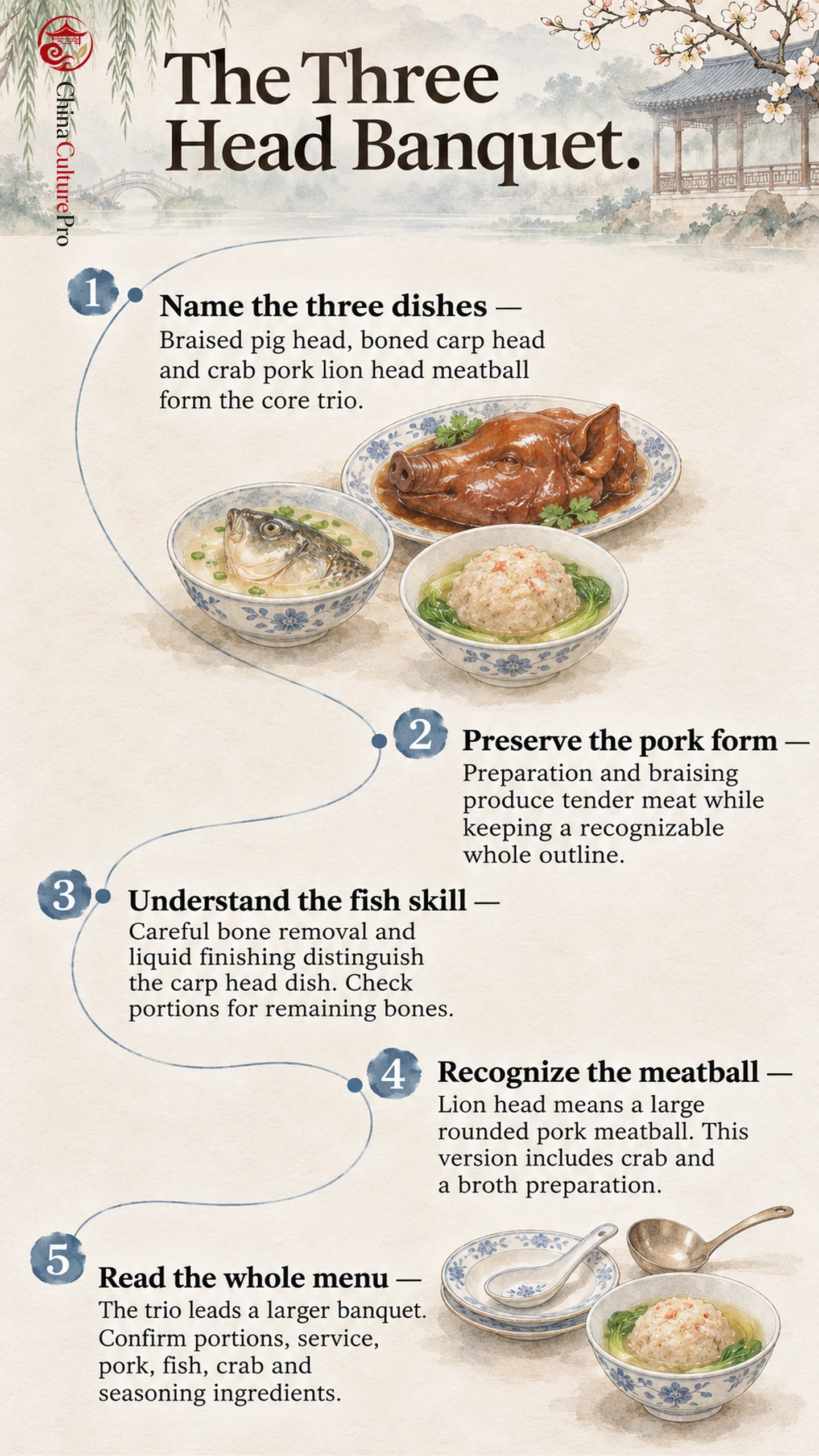
A glossy braised pork dish, a delicately prepared fish head and a soft meatball in broth can look like an unlikely trio. In Yangzhou, they share a banquet identity through their names and the skill behind their preparation. Understanding these Huaiyang dishes begins with knowing what each “head” actually means.
The Three Names on the Menu
These names help distinguish the dishes before considering their ingredients and methods in detail.
| Dish | What the name identifies |
|---|---|
| Braised whole pig’s head(扒烧整猪头,páshāo zhěng zhūtóu) | A shaped pork-head presentation. |
| Boned carp head(拆烩鲢鱼头,chāihuì liányútóu) | A fish-head dish involving careful bone removal. |
| Crab and pork lion’s head(清炖蟹粉狮子头,qīngdùn xièfěn shīzitóu) | A rounded meatball cooked in broth.[1][2][3][4] |
The set brings together animal-head ingredients and a metaphorical name. It is the relationship among the dishes, rather than one shared sauce or one cooking pot, that defines the theme.
Braised Whole Pig’s Head: Tenderness Without Losing the Form
The pork preparation emphasizes a recognizable outline despite extensive work behind the scenes. Cleaning and boning precede cooking; ginger, scallion, aromatic seasonings, soy sauce and rock sugar appear in a documented preparation. Covered cooking develops tender meat and a rich coating sauce.[2]
“Whole” refers to the preserved serving form after preparation and boning. The finished texture combines soft skin, fat and meat, with the shape preserved rather than reduced to a heap of shredded pork.[2]
This dish illustrates how Chinese braising techniques can develop tenderness while maintaining an elaborate serving form. Its dark, glossy appearance contrasts with the lighter broth presentation of the meatball course.
Boned Carp Head: The Work Behind the Shape
The fish-head preparation uses a different skill. One chef demonstration selects a large bighead carp head, cooks it initially and removes the bones carefully, working through the structure while trying to preserve its form. A subsequent liquid-cooking stage brings the prepared head together with its accompanying ingredients.[3]
The English translation may say “silver carp,” while the demonstrated preparation uses bighead carp. Confirm the actual fish with the kitchen.[3]
For diners, the aim of bone removal is easier sharing and a delicate finished texture. It still makes sense to check each portion for small remaining bones; a skillful preparation is not an absolute safety guarantee.
Crab and Pork Lion’s Head: A Meatball in Broth
The third dish uses chopped pork formed into a large round meatball, with crab meat adding another flavor. The “lion’s head” name describes the exaggerated rounded shape. No lion meat is involved.[4]
The clear-stewed version suits this particular banquet grouping, but the broader lion’s head meatball family includes other preparations, such as red-braising. A diner ordering an individual meatball dish should therefore look for the preparation named on the menu rather than expecting every version to match the banquet’s clear-stewed form.[4]
The soft meatball is structurally different from both animal-head dishes. Its identity comes from chopped meat, shaping and cooking in liquid, not from preserving the outline of an anatomical head.
A Banquet Theme, Serving Choices and Dietary Checks
A published banquet definition describes the three dishes as leading a larger meal. They are the anchors of the banquet, not a rule that the entire meal must contain exactly three courses. Confirm the full menu, portion sizes and serving arrangement when ordering.[5]
For a shared table, ask which dishes arrive whole, how they are portioned and whether serving utensils are provided. Familiarity with Chinese table manners helps with sharing, but it does not replace the host’s or restaurant’s actual arrangement.
The set contains pork and fish, while the crab version of the meatball also contains crustacean shellfish. Check broth, soy sauce, wheat-containing seasonings, cooking wine and shared preparation equipment. Picking out a visible ingredient does not remove it from the cooking juices or resolve allergen cross-contact.[6]
FAQs About the Huaiyang Three-Head Banquet
Does the banquet contain lion meat?
No. “Lion’s head” describes the shape of a pork meatball.
Does three-head mean only three dishes?
No. The three named dishes lead a banquet that can include additional courses.
Is the fish-head dish guaranteed boneless?
Careful boning is central to its preparation, but diners should still check portions for remaining small bones.
Sources
[1] Yangzhou Grand Canal Cultural Tourism Resort. Three-head banquet
[2] Zheng Chuyu, CNR. Yangzhou braised whole pig’s head
[3] Wang Shushu, CNR. Boning carp head while preserving its shape
[4] Jiangsu Provincial Taiwan Affairs Office. Crab and pork lion’s head
[5] Yangzhou Culinary Association. T/YZPX 001—2018: Three-head banquet techniques
[6] US Food and Drug Administration. Food Allergies: What You Need to Know