


Quick Answer: How Is Hawthorn Used in Chinese Snacks?
Shanzha (山楂, shān zhā), or Chinese hawthorn, brings a sharp, fruity sourness to Chinese sweets. The fruit can be coated in crisp sugar, processed into thin candy discs, dried into chewy fruit leather or cooked into a soft, set dessert.[1][3][5]
- For contrast, choose a fresh fruit skewer with a hard sugar shell.
- For a portable sweet, compare thin flakes with chewy rolled fruit leather.
- For a softer dessert, look for a set hawthorn cake rather than a baked sponge.
These are often sweetened snacks. Check the actual ingredients rather than assuming a fruit-based product contains only fruit.[4]
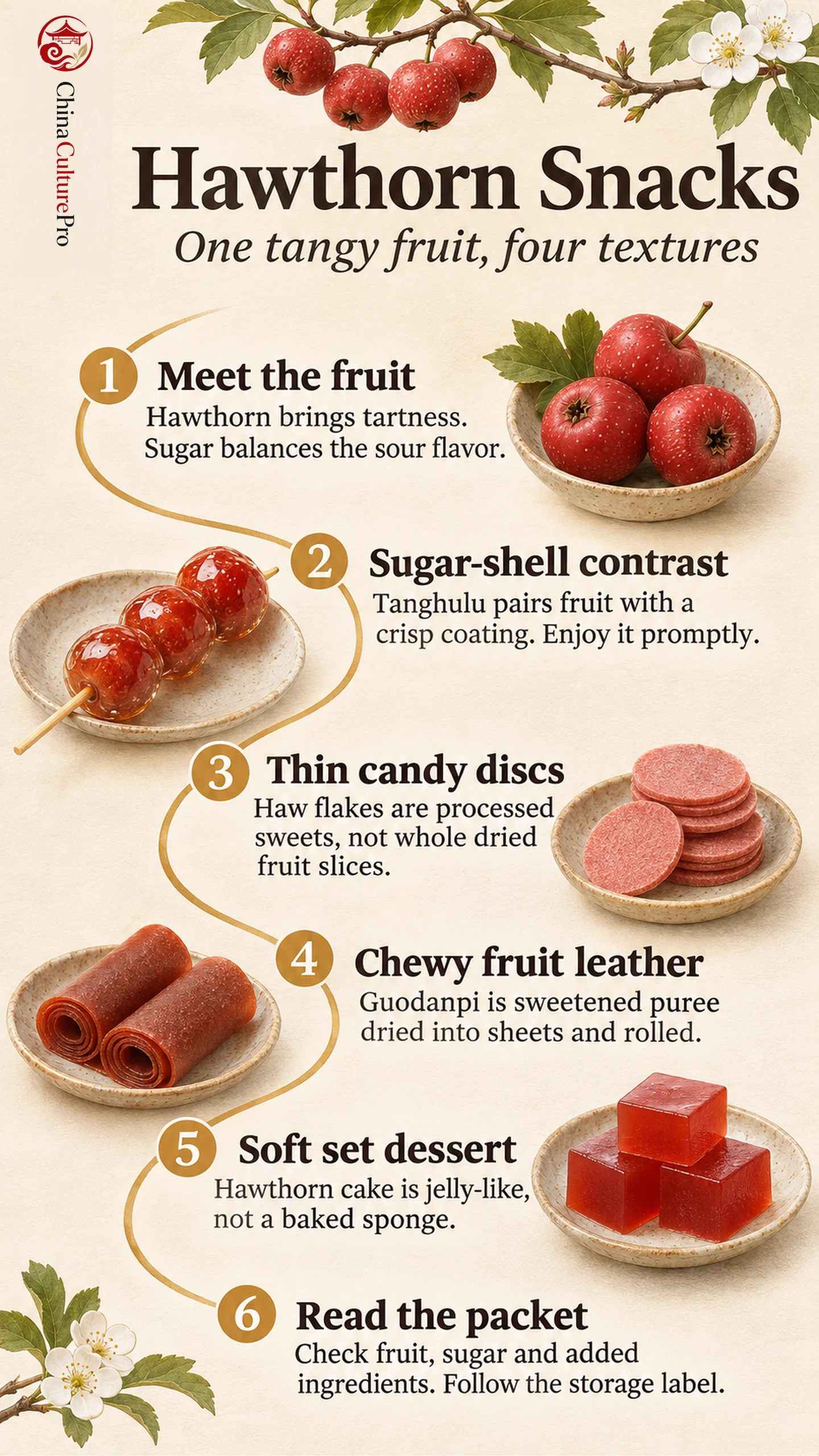
The same red fruit can give you a brittle coating, a thin disc or a yielding jelly-like bite. Processing explains why these snacks feel so different even when their sweet-and-sour flavor is familiar.
What the Fruit Contributes
Chinese hawthorn (Crataegus pinnatifida) produces edible fruit with an acidic taste and mealy flesh. Its tartness is the part that remains noticeable when it is paired with sugar.[1]
For cooking, the fresh fruit is quite different from a ready-made candy. It contains hard seeds that are removed when preparing a smooth purée or pitted fruit. A packet of processed flakes cannot be treated as the same ingredient as fresh haws.[3]
Four Snacks, Four Textures
| Snack | Recognizable form | Texture and flavor |
|---|---|---|
| Tanghulu (糖葫芦, táng húlu) | Fruit threaded onto a skewer and coated with hard sugar. | Crisp shell against tart fruit; traditionally made with hawthorn.[2][6] |
| Shanzhapian (山楂片, shān zhā piàn), or haw flakes | Small, thin discs, commonly packed in short stacks. | A drier, sweet-and-tart candy that differs from a whole dried fruit slice.[4][5] |
| Guodanpi (果丹皮, guǒ dān pí), or hawthorn fruit leather | Sweetened fruit purée dried into thin sheets and rolled. | Flexible and chewy, with a concentrated tangy fruit flavor.[3] |
| Shanzhagao (山楂糕, shān zhā gāo), or hawthorn cake | Cooked hawthorn mixture set into a block or cut pieces. | Soft and jelly-like; the name does not imply a flour-based sponge cake.[5] |
English names such as haw candy, haw cake and haw roll can be loose translations. Look at the shape and ingredient list when you want a particular texture.
Choosing a Snack to Suit the Occasion
- Freshly made contrast: choose a hawthorn tanghulu skewer when you want to taste the fruit inside its crisp coating. Enjoy it promptly, because fruit moisture can soften the shell.[6]
- A wrapped snack for later: flakes and fruit leather offer different kinds of bite. Compare a thin disc with a rolled sheet rather than expecting both packets to resemble fresh fruit.
- A soft dessert to portion: a set hawthorn cake can be sliced into small pieces when you prefer a yielding texture to a hard sugar shell.[5]
Tanghulu is closely associated with Beijing’s snack culture, although the format also appears with other fruits. Our guide to what to eat in Beijing places it alongside the city’s wider food traditions.[2]
Using Hawthorn at Home
Choose the starting ingredient for the result you want. Fresh, pitted hawthorn is suitable for fruit purée; cooked and sweetened purée can be spread and dried into leather. A smooth set cake uses a different recipe and final consistency from a thin dried roll.[3][5]
If you want a sugar-coated skewer, use a tested fruit-candy recipe. Dry the prepared fruit thoroughly and follow that recipe’s syrup method. Do not substitute packaged haw flakes for whole fruit or assume a fruit-leather recipe will produce a hard candy shell.[6]
Reading Labels and Keeping the Texture
Hawthorn snacks vary in formulation. Some flakes list hawthorn and sugar, while other products include added colouring. Fruit rolls may also contain other fruit. Read the specific packet when comparing sweetness, ingredients or dietary needs.[4][5][7]
Follow the storage and use-by instructions for that product. Keep wrapped snacks sealed as directed; a fresh skewer and a commercially packaged roll should not be given the same keeping time. For tanghulu, the crisp shell is best appreciated soon after coating rather than after prolonged storage.[6]
A sour taste does not tell you how much sugar was added. Compare the ingredient and nutrition labels if sugar content matters to your choice.
FAQs About Hawthorn Snacks
Does tanghulu always contain hawthorn?
No. Hawthorn is traditional, but strawberries, grapes and other fruits also appear on sugar-coated skewers. Ask which fruit is inside when you want the classic hawthorn flavor.[2][6]
Are haw flakes just dried hawthorn slices?
No. The familiar stacked discs are processed sweetened candies. They are different from slices that retain the structure of the original fruit.[4][5]
Is hawthorn cake a baked sponge cake?
Usually the name refers to a soft, set hawthorn confection. Expect a jelly-like block or slice rather than a crumbly flour-and-egg cake.[5]
Why do hawthorn snacks still taste sour?
The fruit naturally has an acidic taste. Sugar balances that tartness, but a sweetened product can still taste distinctly tangy.[1]
Sources
[1] North Carolina State University Extension. Chinese Hawthorn: Crataegus pinnatifida
[2] Beijing Municipal Culture and Tourism Bureau. Season for Hawthorn Berries
[3] Earth to Veg. Chinese Haw Leather
[4] NG Chee Lee. Haw Flakes Ingredient Listing
[5] Shanghai Information Office. As Winter Sets In, It’s Time to Turn to Haws
[6] Jen Lin-Liu. Bing Tanghulu: Candied Fruit Skewers
[7] NG Chee Lee. Haw Flakes, 160 g Product Ingredient Listing