


Quick Answer: What Is Fujian Meat Swallow?
Meat swallow, or rouyan (肉燕; ròuyàn), is a Fuzhou dumpling with a thin pork-and-starch wrapper. It is also called bianrouyan (扁肉燕; biǎn ròu yàn); the name refers to the parcel’s appearance.[2][5]
- Wrapper: Pounded lean pork and sweet potato starch form a delicate, elastic skin.[2]
- Filling: Pork, dried shrimp and water chestnuts appear in a government-published recipe.[1]
- Cooking: Prepared skins are moistened, filled and cooked through before serving in broth.
It resembles a wonton, but the wrapper makes it a distinct food. Local dumpling names do not all describe the same meat-wrapped parcel.
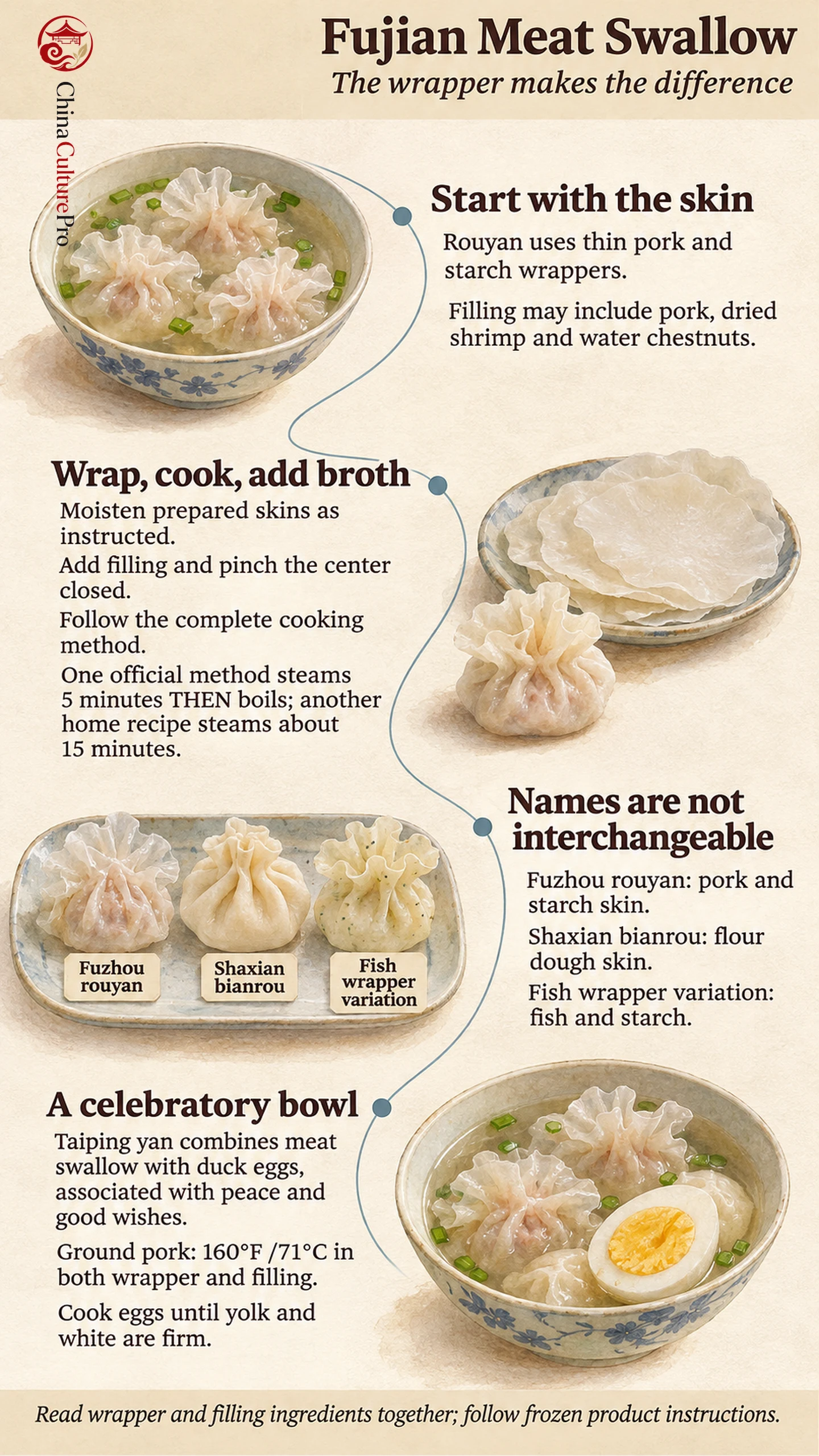
The important ingredient in meat swallow is easy to overlook: the wrapper itself contains meat. This guide explains what makes the skin distinctive, how to work with prepared wrappers, and how related names differ within Fujian cuisine.
The Meat Wrapper and Its Filling
Yanpi (燕皮; yànpí), the “swallow skin,” is made by working lean pork with starch into a very thin sheet. A maker’s demonstration describes hind-leg pork and sweet potato starch forming a thin, elastic casing.[2]
The filling is a separate mixture. One official recipe combines minced pork, dried shrimp and water chestnuts with stock, egg and seasonings. [1]
This distinction matters when buying wrappers or discussing ingredients: pork can be present outside as well as inside. Water chestnut in the filling does not make the finished parcel vegetarian. Read the full label when choosing a packaged product, including any wheat, seafood or egg ingredients listed by its maker.
For other combinations, see Chinese dumpling fillings. The filling can vary, but replacing the characteristic meat-based skin changes the defining feature of this dish.
Wrapping and Cooking with Prepared Yanpi
Using prepared skins lets a home cook focus on filling, shaping and cooking rather than reproducing the specialized pounding and rolling craft. Check whether your skins are fresh or dried, and follow their handling instructions.
The main stages for a dried-skin, steam-and-boil preparation are:
- Prepare the filling: Mince pork, dried shrimp and water chestnuts; mix with the chosen recipe’s seasonings, stock and egg, keeping the filling refrigerated until needed.
- Soften and fill: Moisten dried wrappers according to their instructions. Put a modest portion of filling in each and pinch the center closed, leaving the edges naturally curved.
- Steam and cook through: Follow the selected steam-and-boil method or the product’s directions, checking that the pork filling and wrapper are fully cooked.
- Finish the bowl: Put the cooked parcels in a bowl with scallion, pour over hot seasoned bone broth and finish with sesame oil if desired.
The official method steams the parcels for five minutes and then boils them.[1]
A home recipe instead steams for about fifteen minutes before adding the parcels to stock. Keep one method intact rather than borrowing the shortest stage from another.[7]
Because both skin and center may contain raw minced pork, check doneness with a food thermometer. The FDA minimum for ground meat is 160°F (71°C). Neither floating nor a translucent-looking wrapper proves that the center has reached it.[6]
Rouyan, Bianrou and Fish Wrapper Variations
Bianrou (扁肉; biǎn ròu) is a broader menu name whose local preparation needs checking. The official Shaxian recipe uses a thin flour dough around pounded pork filling, rather than pork-and-starch skin.[3]
| Preparation | Wrapper distinction |
|---|---|
| Fuzhou meat swallow | A thin pork-and-starch casing surrounds its filling.[2] |
| Shaxian bianrou | Flour, water and edible alkali form the dough; starch is used for dusting.[3] |
| Fuzhou fish-wrapper variation | Fish and sweet potato starch form the outer skin.[4] |
The fish-wrapper preparation is called yuyan (鱼燕; yúyàn). A documented maker uses eel flesh worked with sweet potato starch, then rolls the mixture into skins around a filling. It is a related technique, not a reason to call the standard pork wrapper fish-based.[4]
Our wonton guide places these differences in a wider dumpling context. Compare Fujian fish balls for another local food in which the exterior and hidden filling have distinct jobs.
Broth, Duck Eggs and Taiping Yan
Taiping yan (太平燕; tài píng yàn) is a celebratory preparation combining meat swallow with duck eggs. A Fuzhou local-history account explains the association through dialect wordplay linking duck eggs with the idea of calming disorder and wishing for peace. It describes the dish at festivals and wedding celebrations.[5]
That cultural setting adds meaning to the bowl without turning every everyday serving of rouyan into a mandatory ceremony. A plain broth bowl and a celebratory version with duck eggs can therefore share the same meat parcels while serving different occasions.
Keep the broth and garnish ready as the parcels finish cooking. Serve with a spoon so diners can lift the delicate skins and taste the broth together. If adding duck eggs, cook them thoroughly: the FDA advises cooking eggs until both yolk and white are firm.[6]
Refrigerate perishables within two hours, or one hour above 90°F (32°C), and reheat leftovers to 165°F (74°C). Follow the label for frozen prepared parcels rather than assuming every packet contains a fully cooked product.[6]
FAQs About Fujian Meat Swallow
Is meat swallow made from a bird?
No. The name describes the shaped parcel; the characteristic wrapper uses pork and starch.[2][5]
Is rouyan the same as Shaxian bianrou?
They differ in their wrappers. The documented Shaxian version uses flour dough, while Fuzhou rouyan uses meat-and-starch skin.[2][3]
Can ordinary wonton skins replace yanpi?
They can hold a filling, but they create a different dumpling. They do not reproduce the meat-based casing that distinguishes rouyan.[2]
Sources
[1] Fujian Department of Commerce, government recipe. 福建风味-小吃菜谱-福州肉燕
[2] ChinaCulture.org, original reporting. Bringing the history back to the homes
[3] Fujian Department of Commerce, government recipe. 三明风味-小吃菜谱-沙县扁肉
[4] Fujian Daily, original maker reporting. 福州鱼燕,你吃过吗?他有绝活!
[5] Fuzhou Municipal Government, local history account. 福州太平燕
[6] US Food and Drug Administration. Safe Food Handling
[7] Annie, original home recipe. 福州肉燕