


Quick Answer: What Is Chinese Historical Reenactment?
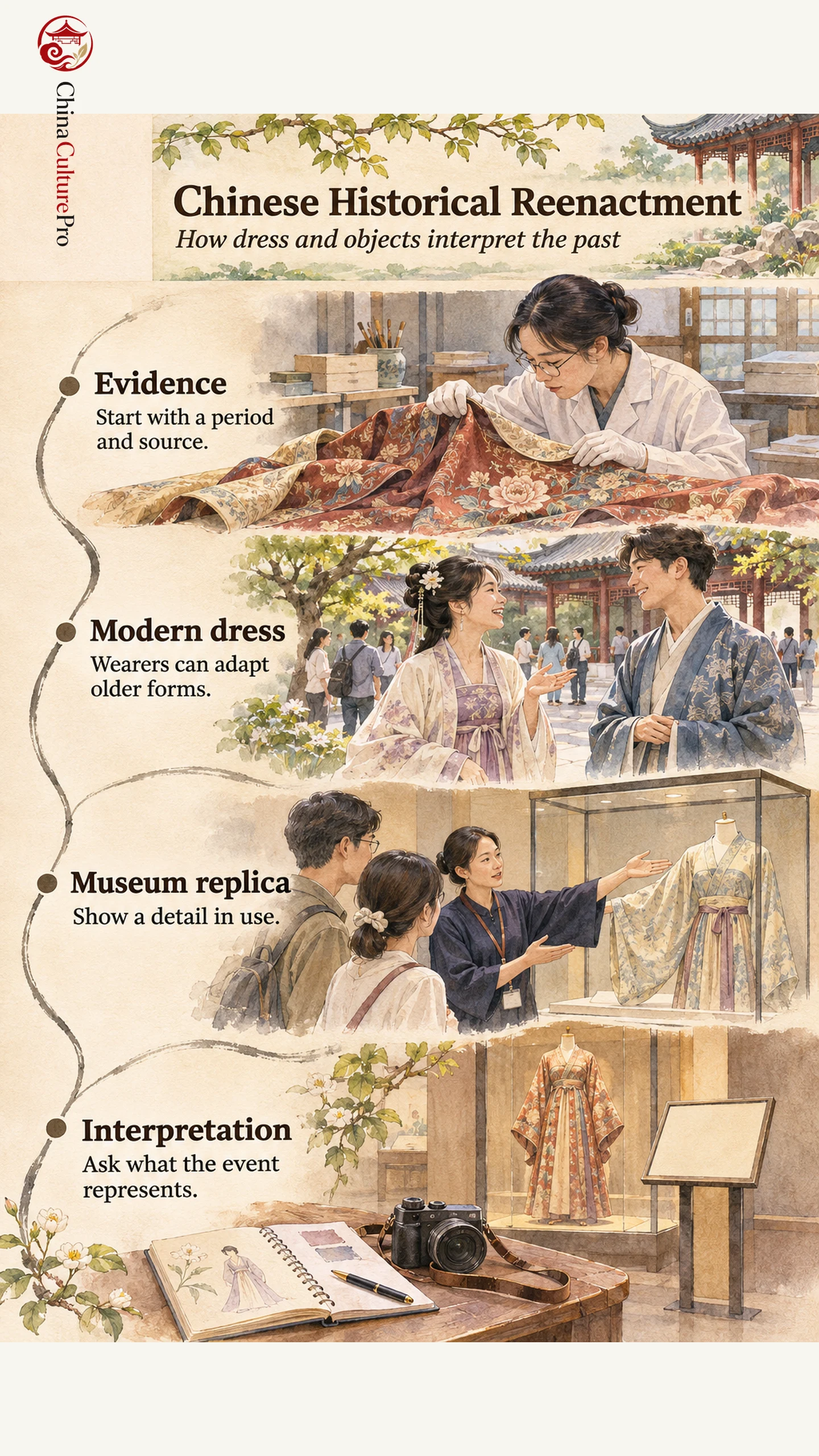
Chinese historical reenactment uses clothing, objects or performance to interpret a particular past setting. Some projects start with excavated garments, period images or written records. Gatherings involving hanfu (汉服, hànfú) can also be about fashion, photography or social life. The name of a garment alone tells you little about an event’s historical aims.[1][2][3]
- Reconstruction: A date and a source explain the maker’s choices.[1]
- Dress gathering: Participants may combine historical references with modern styling.[2][3]
- Interpretation: A demonstration can explain a detail that is hard to see on a display object.[4]
Ask what period the event represents and what evidence it uses.
A person in historical-style clothing can be modeling a replica, portraying a character or simply enjoying a garment. The same photograph might look similar in each case. The event’s purpose and sources make the difference.[2][3]
How a Reconstruction Starts With Evidence
A reconstruction usually begins by choosing a date, place and social setting. A surviving garment might establish how panels were cut and attached. A painting can offer a clue to how layers were worn. A written record can identify a dress convention for a particular occasion. Use each source for the detail it can actually establish.[1]
An exhibition that spans centuries can show how much variation a broad label such as ancient Chinese clothing conceals. A court garment tells you about a different setting from an everyday jacket. When evidence for part of a garment is missing, the maker can label a choice of fabric, fastening or underlayer as an interpretation.[1]
Hanfu Gatherings and Modern Dress
Research on hanfu wearers in Shanghai records people using urban spaces for activities that bring historical dress into contemporary life. Participants can have different priorities, including studying older styles, taking pictures and meeting others who share an interest. A gathering may mix people who seek close reconstructions with people wearing newly designed clothes.[2][3]
Modern hanfu can take inspiration from historical clothing while making choices for the wearer’s preferences and use. A role-play costume may instead follow a named fictional character. The organizer’s description can identify whether the reference is a period, a modern style or a particular character.[3]
How Museums Use Reconstructed Objects
A museum replica can make an object’s scale, layers or movement easier to understand. An original textile in a case can show the material and details that survive. A contemporary interpreter wearing a similar garment can demonstrate how its shape changes on a moving person. A filmed example at the China Silk Museum used a Ming-style jacket to put a form of dress in context.[1][4]
The presentation can connect the visitor to historical evidence by showing the reference object and naming the period. That distinction also matters in Chinese museum culture today, where galleries, demonstrations and video may give the same visitor several ways into a subject.[1][4]
Reading Historical Claims at an Event
Check what the event claims to show. Look for a named period, a setting and a source the organizer identifies. Then ask which choices follow that evidence and which are adjustments for performance or comfort. On screen, Chinese period drama hair and costume may give viewers a coherent look through designs that serve characters and story. An event based on a drama can reasonably look to the show for its references.[1][3]
FAQs About Chinese Historical Reenactment
Does Wearing Hanfu Count as Reenactment?
It can be part of reenactment when the wearer is interpreting a particular historical setting. People also wear hanfu as contemporary dress or for a social outing.[2][3]
How Is Reenactment Different From Cosplay?
A historical reenactment usually refers to a past setting. Cosplay often takes a particular character and a published design as its reference. A performance can borrow from both.[3]
Can a Replica Be Useful When Details Are Missing?
Yes. A well-labeled replica can illustrate a documented feature and identify where the maker had to interpret the evidence.[1]
Sources
[1] National Museum of China. Ancient Chinese Culture: Costume and Adornment
[2] Geographical Sciences. The Revival and Activities of Hanfu in Shanghai
[3] Fashion Practice. Modern Hanfu and Role-Play: Integration of Fashion Trends and Cultural Heritage
[4] Communication and the Public. Reinventing Fashion as an Affective Apparatus by China’s Youth