


Quick Answer: What Matters at a Business Meeting?
Arrive prepared, make roles clear, treat introductions attentively and leave with an agreed next step. The host organization’s working style matters more than an imagined national script.
- Preparation: Confirm the purpose, participants, language and practical arrangements.
- Respectful introductions: State your name, organization and role, and follow the host’s seating guidance.
- Clear communication: Allow for interpretation and distinguish discussion from agreement.
- Considerate hospitality: Check meal and gift expectations, including your own needs and company policy.
A formal reception, a factory discussion and a meeting with a start-up team may follow different patterns. Use the guidance below as preparation for the actual encounter.
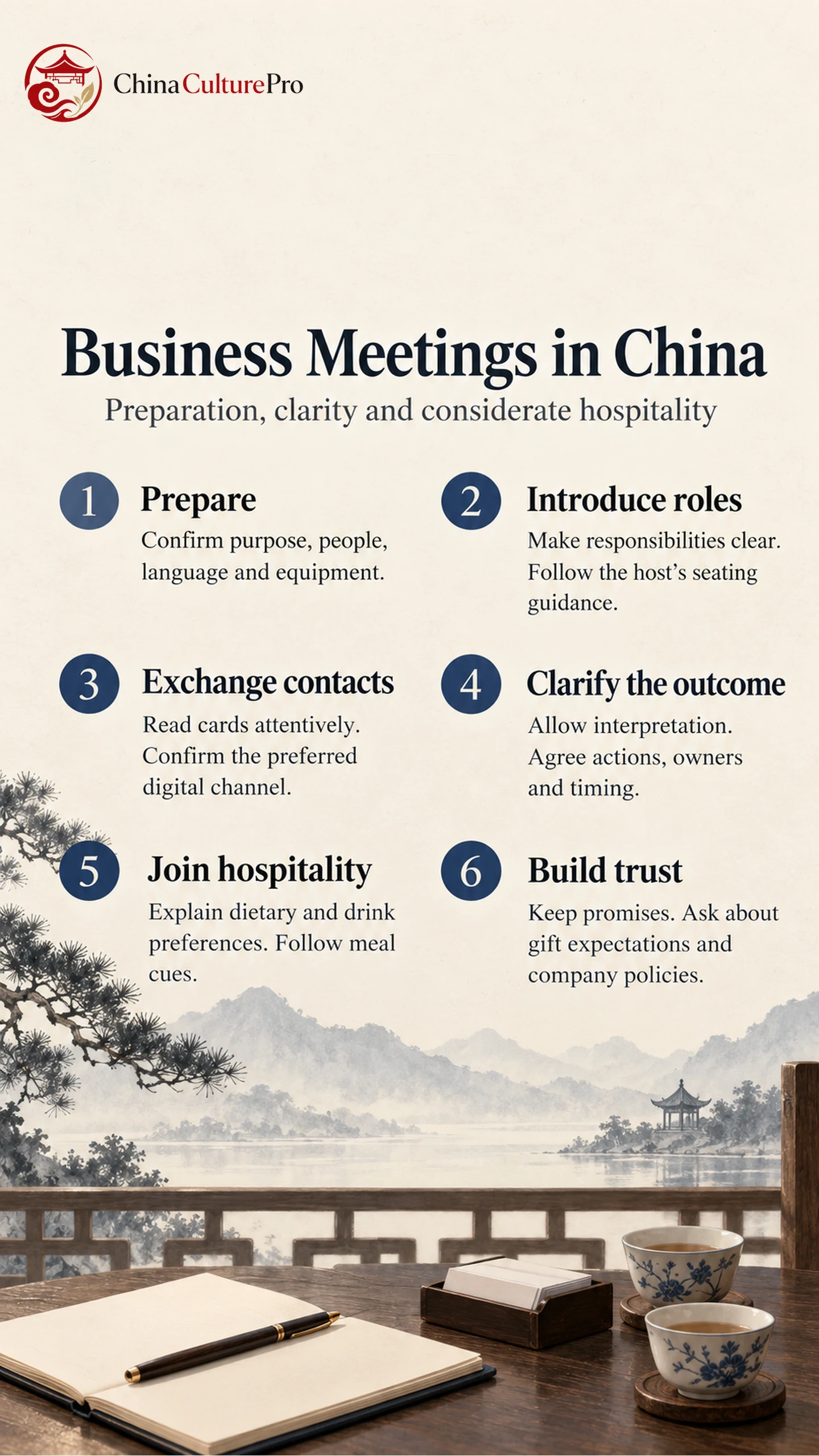
Chinese business etiquette is most useful when it helps people work together: introductions explain responsibilities, contact exchanges enable follow-up and hospitality creates time for conversation. A well-performed greeting cannot compensate for an unclear proposal or a promise you cannot keep.
This guide focuses on meetings with mainland Chinese organizations. For everyday openings, see Chinese greetings and introductions; for a private invitation, use the separate guide to visiting a Chinese home.
Prepare the Meeting Before You Arrive
Confirm the meeting’s purpose and desired outcome with your contact. Ask who will attend, which language will be used and whether you should bring translated materials. Arrive on time and check presentation equipment in advance rather than relying on an improvised setup.[1]
Prepare a short explanation of what your organization does and why this meeting is relevant. Replace a long corporate history with the facts the audience needs: your role, the problem under discussion and the decision or information you are seeking.
Share names and roles ahead of time when several colleagues are coming. If a colleague is the technical specialist but another person leads the delegation, make both functions explicit. This helps the host direct questions without guessing from age or seating position.
Dress for the actual event. Ask what “business attire” means if a formal reception is involved; a firsthand account of senior official meetings notes variation with setting, weather and seniority.[3] A site visit may also have practical clothing requirements, which should come from the organizer.
Handle Introductions and Seating
Give your name clearly, identify your organization and explain your responsibility. A title is useful because it tells others what you do; it should not be inflated to create a stronger impression. Check pronunciation and preferred address rather than assuming a name’s order.
At a formal hosted meeting, use nameplates or the host’s instructions to find your seat. In a senior-level reception, the host may lead a structured introduction and expect one person to speak for the visiting delegation. That pattern comes from a specific formal setting, not every office conversation.[3]
A practical opening might be: “I’m Alex Morgan, the project manager. Mei handles the technical questions, and Daniel will coordinate the next documents.” This makes it easier to direct questions to the right person.
Follow the host’s opening and avoid interrupting to rush through your pitch. When your turn comes, connect your remarks to the meeting’s purpose. The forms of address guide covers titles in detail, while Chinese modesty explores the balance between courtesy and accurate self-presentation.
Exchange Cards and Confirm Digital Contacts
Printed business cards remain useful, while digital contact exchanges are also common. Some counterparts may not have a paper card to offer. Present and receive a card attentively with both hands, take a moment to read it and confirm the name or role if necessary.[2]
Carry accurate information. If you use a bilingual card, have a competent speaker check the organization name and title. Do not adopt an impressive-sounding title whose meaning differs from your actual responsibility.
When exchanging WeChat or another contact method, ask before scanning or adding someone. Send a brief identifying message so your contact can connect the account with the meeting. Agree separately where proposals, specifications and other formal files should go; a chat connection alone does not establish a document workflow.
Keep cards and contact notes organized after the meeting. A useful note records who the person is, what you discussed and the follow-up they requested. Treat the details as working contact information rather than an invitation to send unrelated promotional messages.
Communicate Clearly and Close with Next Steps
When using an interpreter, speak to your counterpart. Use complete, manageable sentences, make one point at a time and pause for interpretation. Explain technical terms and allow clarification instead of treating a request to repeat something as a failure.[4]
Written numbers, units, dates and product names can help everyone check the same information. Put an important figure on the shared document rather than relying on memory of a spoken exchange. This is good meeting practice across languages.
Keep disagreement about the issue: “This delivery date needs review” is clearer than criticizing a person’s competence. If wording is uncertain, ask a concrete question: “Is this approved, or should we revise it after your internal discussion?” The guide to politeness and apologies offers more repair language.
Before closing:
- State the outcome: Summarize what was agreed and what still needs discussion.
- Assign the action: Confirm who will handle each next action.
- Agree the timing: Set a realistic date for the next response or deliverable.
- Confirm the channel: Agree where the written summary and follow-up files should be sent.
Warm expressions of future cooperation can be welcoming without settling a proposal. Formal meeting accounts also describe the need for internal consultation after an initial encounter.[3] A short written summary gives both sides a chance to correct misunderstandings.
Join Meals Without Guessing the Rules
At a hosted meal, follow the host’s cues about seating and when to begin. State dietary needs and whether you drink alcohol before the event when possible. Declining alcohol for personal or medical reasons is compatible with considerate participation.[1]
If a toast is offered, thank the host and use a drink that suits your preference. Avoid promising to finish every drink or assuming a colleague must do so. The Chinese drinking etiquette guide explains toasts and their context; table manners covers shared dishes.
Let the meal’s conversation develop. Do not treat every friendly exchange as a negotiation opportunity. If business does arise, distinguish a useful idea from a final commitment and return to the agreed follow-up channel afterward. When tea is served, attentive thanks and the host’s lead are enough; Chinese tea etiquette covers more specific guest customs.
Build Relationships and Clarify Gift Expectations
Guanxi (关系, guānxì) refers here to relationships and personal connections that can help sustain business trust. Meeting people and maintaining contact matter, but the term should not become a promise that knowing someone guarantees a commercial result.[2]
Reliability is a practical way to build the relationship. Send the information you promised, acknowledge a delay early and keep the right colleagues involved. The wider guanxi guide explores the concept; face in Chinese culture explains why public treatment can matter to a relationship.
Some formal visits include a gift exchange.[3] Ask your organizer what is expected and check both organizations’ gift policies before buying anything. A considerate explanation of a restriction is preferable to making a recipient uncomfortable with a gift they cannot accept.
The gift-giving guide and cultural taboos guide cover selection and associations. Keep the gift subordinate to the meeting: preparation, clarity and reliable follow-through remain the work you can control.
FAQs About Chinese Business Etiquette
Do I still need printed business cards?
They remain useful, but some people exchange only digital details. Carry accurate cards and be ready to confirm the other person’s preferred contact method.
Must I speak Mandarin at the meeting?
No. Confirm language arrangements beforehand. A capable interpreter and clearly prepared materials are more useful than pretending to understand a discussion you cannot follow.
Does a friendly response mean a proposal is approved?
No. Ask which points are agreed and which need review. Identify the next action, responsible person and response date before treating a welcoming conversation as a settled outcome.
Do I have to drink alcohol at a business meal?
No. State your preference courteously, preferably before the meal. You can participate in conversation and show appreciation without drinking alcohol.
Sources
[1] Canadian Trade Commissioner Service. Business etiquette in China
[2] U.S. International Trade Administration. China: Business Travel, Business Customs
[3] Australian Consulate-General, Chengdu. How to handle a formal meeting in China
[4] Centre for Culture, Equity & Health. Communicating via an interpreter