
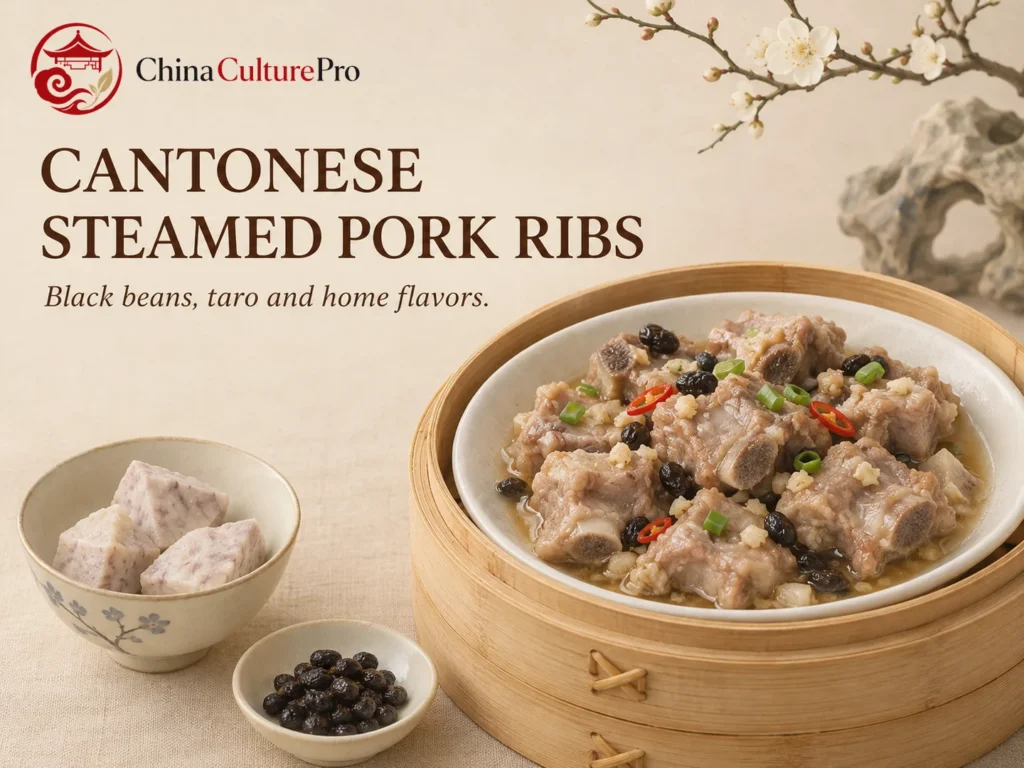

Quick Answer: What Are Cantonese Steamed Pork Ribs?
Cantonese steamed pork ribs (蒸排骨; zhēng pái gǔ) are short, bone-in rib pieces cooked on a plate with seasonings. The black-bean version is familiar at dim sum, but home preparations also use taro, pickled plum or red fermented bean curd.[1][3][4][5]
- Cut: Use small cross-cut pieces rather than a full rack of barbecue ribs.[1]
- Seasoning: Fermented black beans and aromatics distinguish the familiar savory version.[2]
- Cooking: Spread the ribs in one layer so steam can cook the dish evenly.[2]
These ribs can retain some chew; they need not have the falling-apart texture of long-cooked barbecue.[5]
The dish connects Cantonese cuisine with practical home steaming. Its small bones, savory cooking juices and short pieces make it a different eating experience from glazed whole ribs. Start with the cut and the chosen seasoning formula, then consider the plate and cooking time together.
The Rib Cut, Black Beans and Marinade
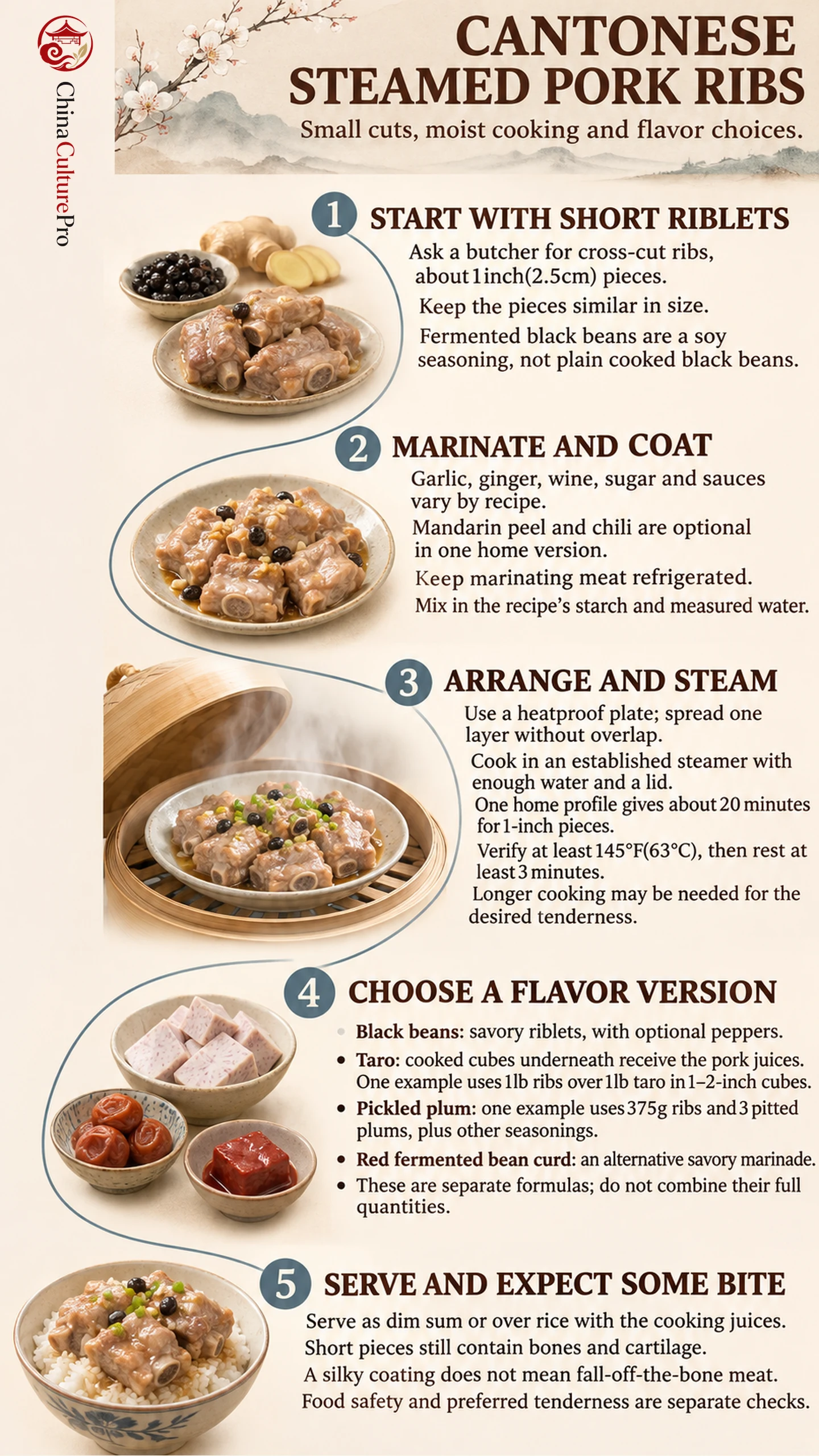
Ask a butcher for ribs cut across the bone into short strips, then separate the individual rib portions. One published dim-sum preparation specifies pieces about 1 inch (2.5 cm) long. Similar-size pieces are easier to cook evenly than a mixture of small scraps and thick chunks.[1]
Douchi (豆豉; dòu chǐ) are fermented soybeans, not plain cooked black beans. See douchi and its uses for this concentrated seasoning.[2]
Garlic, ginger, sugar, wine, soy or oyster sauce may accompany the beans. Dried mandarin peel and chili are optional; starch and water coat the ribs.[2]
One recipe marinates overnight or for a shorter 30 minutes, then adds starch and water. Keep marinating meat refrigerated.[1]
How the Steaming Method Works
Choose one complete preparation for its ingredient amounts. The following sequence explains how the shared technique fits together:
- Prepare similar-size pieces: Ask the butcher for short cross-cut ribs, then separate them into comparable bite-size portions.[1]
- Marinate evenly: Mix the ribs with the chosen seasonings and aromatics, keeping them refrigerated while marinating.[1]
- Coat and arrange: Distribute the recipe’s starch and water evenly, then spread the ribs on a heatproof plate in one layer without overlap.[2]
- Steam with the lid on: Put the plate into an established steamer, cover and cook, maintaining enough water to keep producing steam.[2]
- Verify doneness and texture: Check the meat with a food thermometer for at least 145°F (63°C), followed by a minimum three-minute rest; cook longer when the selected preparation needs more tenderness.[7][5]
One home recipe gives about 20 minutes for 1-inch pieces.[2] Larger or crowded portions need separate assessment. Use a thermometer rather than pale color to judge safe cooking.[7]
A plate resting on a rack also differs from ribs simmering directly in a pot of liquid. The equipment explanation in Chinese cooking methods helps place this preparation within steaming rather than braising.
Black-Bean, Taro, Plum and Red-Bean-Curd Versions
These are different documented preparations within the broader Cantonese repertoire. They are more useful as ingredient choices than as rigid labels for particular cities.
| Version | Main distinction |
|---|---|
| Black-bean ribs | Fermented beans season the small rib pieces, with peppers as an option.[1] |
| Ribs over taro | Taro forms the lower layer, receiving the juices from the ribs above.[3] |
| Pickled-plum ribs | Mashed, pitted pickled plums bring sourness to a seasoned rib mixture.[4] |
| Red-fermented-bean-curd ribs | Red fermented bean curd provides a different savory seasoning from the black-bean version.[5] |
One taro preparation uses 1 lb ribs over 1 lb taro cut into 1–2-inch cubes. Its instructions give about 20 minutes of steaming, with the taro cooked until easily pierced. Both the pork and the taro must finish; adding a root-vegetable layer changes the dish’s cooking requirements.[3]
A pickled-plum example pairs 375 g ribs with three plums, bean paste and chili bean paste, plus its other seasonings. Remove the plum pits before mixing. It is a sour-savory alternative, not simply black-bean ribs with a spoonful of sweet plum dipping sauce.[4]
Serving and Understanding the Texture
Serve among dim sum dishes or over rice with the cooking juices.[1] Small portions still contain bones and cartilage.
A silky starch coating and meat that still has some bite are consistent with the steamed preparation. If you prefer softer ribs, use a method that allows longer cooking instead of assuming that every dim-sum recipe promises a fall-off-the-bone result.[5]
FAQs About Cantonese Steamed Pork Ribs
Can I replace fermented beans with bottled black bean sauce?
Yes, by choosing a recipe written for the prepared sauce. One Hong Kong version uses 450 g ribs, 2 tablespoons starch and 2½ tablespoons black bean garlic sauce. Do not substitute spoon-for-spoon for dry beans without adjusting the formula.[6]
Why do steaming times differ between recipes?
Piece size, layering and additions change the task. Small ribs alone differ from ribs over taro; check doneness and texture.[2][3][7]
Is the mandarin peel essential?
No. One home preparation treats both mandarin peel and chili as optional.[2]
Sources
[1] Bill Leung, The Woks of Life, original recipe. Dim Sum Steamed Spare Ribs with Black Beans
[2] Chung Sun Lau and family, original recipe. Steamed Spare Ribs with Black Bean Sauce
[3] Chung Sun Lau and family, original recipe. Taro Steamed Spare Ribs
[4] Christine Ho, original recipe. Steamed Pork Ribs with Pickled Plums
[5] Bill Leung, The Woks of Life, original recipe. Steamed Pork Ribs with Red Fermented Bean Curd
[6] Lee Kum Kee Hong Kong, first-party recipe. Steamed Pork Ribs with Black Bean Garlic Sauce
[7] USDA Food Safety and Inspection Service. Safe Internal Temperatures for Meat and Poultry