

Quick Answer: What Is Chinese Wok Cooking?
Chinese wok cooking uses a deep, sloping-sided pan for several methods. Its best-known technique is stir-frying(炒,chǎo): cooking prepared pieces quickly in a little oil, adding ingredients in a planned sequence. The wok also works for steaming, braising, boiling and frying. [1][2]
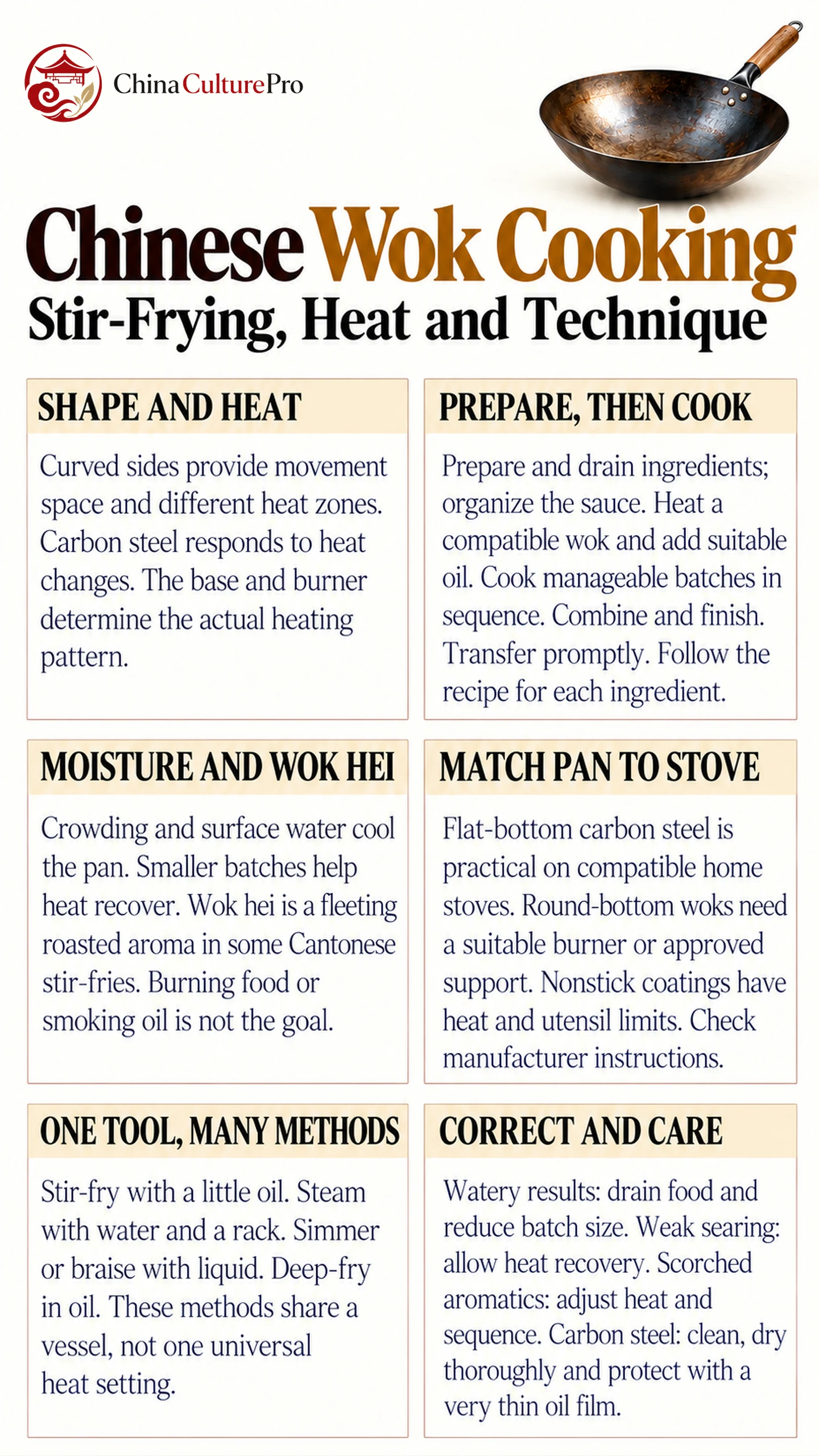
- Pan: Sloping walls provide room to move food and create different heat zones.
- Preparation: Cut and organize ingredients before cooking; the order matters.
- Control: Manage food quantity and surface moisture so the pan can recover heat.
- Finishing: Combine cooked components and seasonings without automatically flooding the pan with sauce.
A professional flame is not required for useful wok cooking. Match the pan, heat and method to your stove and the dish.
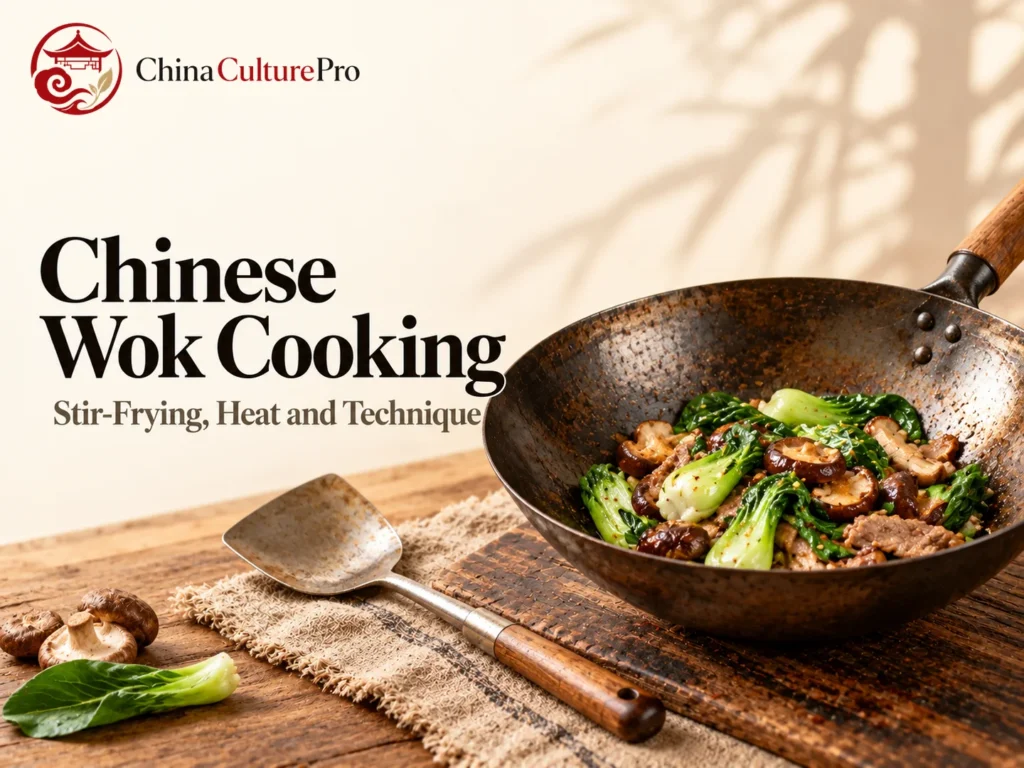
A wok cook may pause to sear meat, scoop vegetables up the curved sides, then combine everything with a light coating of sauce. The skill lies in controlling contact, moisture and timing. The dramatic toss is only one part of that work.
Why the Wok’s Shape Matters
The curved bowl concentrates heat near its base while the rising sides provide more room for food movement. A thin carbon-steel wok responds readily to changes in heat, letting the cook move between searing, stirring and finishing. The exact heat pattern depends on the wok’s base and the burner beneath it. [1][2]
The shape is useful beyond a single technique. Food can be gathered at the bottom or moved up the slope, and the high walls help contain a mixed dish. A wok is therefore a tool within Chinese cooking methods, not another name for stir-frying. [2]
Preparation Before the Heat Goes On
Cut each ingredient into pieces suited to its cooking speed. Uniformity within one ingredient helps it finish evenly, but tender leaves need not be cut like dense stems. Separate components that will enter the wok at different stages, and have seasonings and a serving plate ready. [1][4]
Drain washed vegetables and manage excess surface moisture. Prepare sauce before the fast cooking begins. If the recipe calls for marinating or velveting meat, do that preparation first; it cannot be replaced by stirring harder after the meat is already in the pan. [1][4]
Choose ingredients for a purpose. The stems and leaves of Chinese vegetables may need different treatment; noodles, mushrooms and meat also bring different amounts of moisture. A shorter, deliberate ingredient list is often easier to control than adding every vegetable available. [4]
A Practical Stir-Fry Sequence
The following is a general workflow for a mixed stir-fry, not a substitute for the ingredient-specific instructions in a tested recipe. Some dishes omit sauce, separate batches or particular aromatics. [1][4]
- Prepare the components and sauce. Arrange them in the order needed, with uncooked and cooked food kept on separate appropriate plates.
- Heat a suitable wok, then add cooking oil appropriate for the heat and the recipe. Avoid heating the oil to the point of smoking. [6]
- Cook components in manageable batches when necessary. Give meat a chance to contact the hot surface; cook slower ingredients before delicate ones.
- Return the components that need combining. Add the prepared seasonings and any recipe-specified liquid or thickener, stirring until the food is cooked and the sauce has its intended consistency.
- Transfer to a serving dish promptly. Serve while the textures and aroma are fresh.
Heat, Moisture and Wok Hei
Adding a large load of wet ingredients cools the wok. Moisture then collects faster than it evaporates, so the food stews or steams instead of developing the intended seared surface. Smaller batches and recovery between additions help a home stove manage that load. [2][3]
Wok hei(鑊氣,huòqì in Mandarin pinyin; wok hei is Cantonese)describes the fleeting roasted, slightly smoky aroma prized in some Cantonese stir-fries. Hot food-metal contact, rapid evaporation and, in flame-based cooking, heated oil droplets contribute to the result. It is not a sauce ingredient. [3][5]
A restaurant wok station and a home stove deliver heat differently. Aim first for properly cooked food with controlled moisture. Do not chase wok hei by burning ingredients or deliberately creating flames; avoid heating the cooking oil to smoke. [3][6]
Choosing a Wok for a Home Stove
Start with stable contact and the manufacturer’s compatibility instructions. A pan suited to a dedicated wok burner may behave differently on a flat electric or induction surface. [2][3]
| Choice | Practical implication |
|---|---|
| Flat-bottom carbon steel | A practical home option that sits on compatible flat surfaces and responds to heat changes. The steel needs care against rust. [2][3] |
| Round-bottom wok | Works well with a matching wok burner or an approved support arrangement; it does not sit securely on every stove. [3] |
| Nonstick-coated wok | Follow the coating’s heat and utensil limits. It is not the choice for extreme-heat searing, though gentler cooking is a different task. [3] |
Beyond Stir-Frying: Other Wok Methods
With water and a suitable rack or steamer, the wok supplies steam beneath covered food. With liquid and a lid, it can simmer or braise. It can also deep-fry: the cooking medium and depth distinguish that method from stir-frying in a little oil. [2][3]
These are separate techniques sharing one vessel. A gentle braise does not need the same heat behavior as stir-fried chow fun. Likewise, a sauce choice such as oyster sauce or hoisin determines flavor, not whether the dish qualifies as wok cooking. [2][4]
Common Problems and Wok Care
- Watery food: reduce the batch size and drain ingredients; adding more sauce does not solve a moisture problem. [2]
- Sticking or weak searing: consider surface moisture, crowding and whether the pan had time to recover before adding more food. [2]
- Scorched aromatics: adjust the heat and the order of additions; fast cooking still needs control. [1][6]
- Carbon-steel care: clean after cooking, dry thoroughly and apply a very thin protective oil film. Seasoning is a maintained surface, not a reason to leave old food in the wok. [2]
FAQs About Chinese Wok Cooking
Do You Need a Wok to Stir-Fry?
A large skillet can cook a stir-fried dish, but its shape and heat pattern differ. Use manageable quantities and adapt to the pan rather than assuming that the same batch behaves identically in both.
Must You Toss Food into the Air?
No. A spatula can lift and turn ingredients effectively. Keeping a stable pan on the heat is especially useful on an induction stove; a dramatic airborne toss is not a requirement for good home cooking.
Does Every Stir-Fry Need Wok Hei?
No. It is a prized aroma in particular dishes and restaurant traditions, not a universal pass-or-fail test. Tender meat, vegetables cooked to the intended texture and balanced seasoning remain worthwhile goals.
Can You Use a Wok on Induction?
Yes, if the pan is compatible and makes suitable contact with the cooktop. A flat-bottom model is usually more practical on a flat surface. Expect a different heating pattern from a gas flame.
Sources
[1] The Culinary Institute of America. Technique of the Quarter: Stir-Fry
[2] J. Kenji López-Alt. Updated Guide to Buying, Seasoning and Caring for a Wok
[3] J. Kenji López-Alt. All of Your Wok Questions Answered
[4] Judy Leung. How to Make Stir-Fry
[5] Michelin Guide. What Is Wok Hei?
[6] Hong Kong Centre for Food Safety. Comparing Home Cooking Methods