
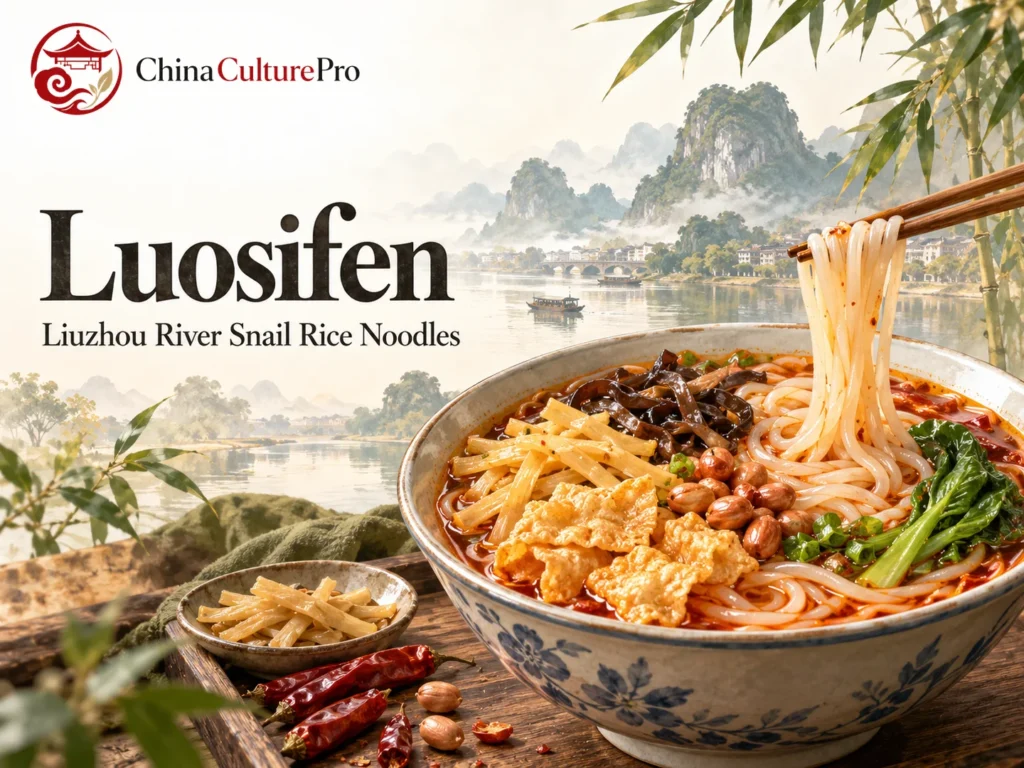

Quick Answer: What Is Luosifen?
Luosifen (螺蛳粉, luósīfěn) is a rice noodle dish from Liuzhou in Guangxi, southern China, known for its sour, spicy, savory broth and pungent fermented-bamboo aroma.
- Noodles: Round rice noodles provide a smooth, springy bite; they are not made from snail meat.
- Broth: Freshwater snails give the traditional stock its name and flavor, often alongside pork bones and spices. Visible snail meat is not essential to the finished bowl.
- Toppings: Fermented bamboo shoots, fried tofu skin, peanuts and preserved vegetables add aroma and contrasting textures.
Recipes and products vary. A bowl’s appearance cannot establish whether its broth is vegetarian, and rice noodles alone do not establish a gluten-free meal.

Round rice noodles sit in a red-tinged broth beneath crisp tofu skin, peanuts and bamboo shoots. Yet there may be no visible snail meat. Understanding this bowl starts with separating what flavors the stock from what lands on top, placing luosifen among China’s many regional noodle dishes.
The Rice Noodles, Snail Broth and Toppings
Rice Noodles and Their Texture
The familiar noodle is round, pale and rice-based, with a slippery surface and a resilient bite after cooking. Dried noodles are common in packaged products; shops may use noodles in a different state of preparation. Properly prepared Liuzhou dried rice noodles are valued for holding their shape in hot liquid.[1]
That texture differs from the gluten structure of wheat noodles and from many starch-based glass noodles. The distinction is about ingredients and processing, not a rule that rice noodles can never soften. Check the product label when comparing rice noodles and wheat noodles, especially if a blend matters to your diet.
Where Are the Snails?
The traditional soup uses small freshwater snails, commonly called river snails in English. They are cooked with seasonings; pork bones can add body to the stock. The broth, rather than a pile of snail meat, is the central connection between the animal and the dish’s name.[2]
A served bowl can therefore contain snail-derived flavor without visible pieces of snail. Some versions do include meat, so “there are never snails in luosifen” is equally misleading. When buying a packet, read the soup-base ingredients instead of judging only the photograph or searching the dried toppings for meat.
Classic Toppings and Optional Extras
The usual accompaniments create a deliberate contrast with smooth noodles and hot soup:
- Fermented bamboo shoots: Sourness, a recognizable aroma and a firm bite.
- Fried tofu skin: A light, crisp texture at first, becoming softer as it absorbs broth.
- Peanuts: Roasted or fried crunch and richness.
- Pickled long beans and wood ear mushrooms: Tangy or springy contrasts, depending on preparation.
- Greens and extra toppings: Vegetables, fried eggs, braised eggs or duck feet vary with the shop and order.[3]
These are common choices rather than a compulsory checklist. Adding an egg or more tofu skin changes the meal’s texture and size; it does not replace the broth’s defining role.
Why Does Luosifen Smell So Strong?
Fermented bamboo shoots, or suan sun (酸笋, suānsǔn), are a major source of luosifen’s distinctive pungent aroma. Fermentation changes the bamboo shoots’ flavor and produces volatile compounds that become especially noticeable around a hot bowl.[3]
The soup still contributes its own savory snail, spice and stock aromas. It is more accurate to distinguish those layers than to attribute every smell to the snails or to one bamboo ingredient alone. The amount of bamboo shoots, their preparation and the rest of the recipe also affect the overall impression.
For someone unfamiliar with Chinese fermented foods, the aroma may seem stronger than expected from the taste. At the table, the sour shoots work alongside chili, rich broth and crunchy toppings. People differ in how much they enjoy that combination.
A strong familiar aroma does not certify freshness, and a milder bowl is not automatically inferior. For packaged food, follow its storage directions and inspect the packaging rather than using smell intensity as a safety test.
Freshly Served Luosifen vs Packaged Versions
A restaurant finishes a bowl to order, bringing together prepared noodles, hot broth and selected toppings. Packaged luosifen separates those parts so that they can be assembled at home. The format changes the work required of the eater, not just the container.
There are three useful distinctions:
- Freshly served: The shop handles noodle preparation and broth, while you choose available flavor adjustments or extras.
- Boil-cooked packets: The noodles require cooking in a pot. A kettle of hot water is not a universal substitute for the stated method.
- Steeping products: These are specifically processed for preparation with hot water. Use the product’s directions for temperature, covering and preparation rather than borrowing instructions from a different bag.[4]
An ordinary packet may include noodles, soup base, chili oil, bamboo shoots, pickled vegetables, peanuts and tofu skin in separate sachets. The number and contents differ, so identify each component before opening everything.
For a packaged bowl, use this sequence:
- Read the preparation directions and identify whether the product requires boiling or steeping.
- Prepare the noodles using the stated method, including any draining or water change the instructions require.
- Prepare the soup base and cooked additions in the order shown on the package.
- Finish with the remaining toppings and adjust separately packed chili oil to preference.
Keeping these roles separate helps preserve a choice of textures: tofu skin added late can retain some crispness, while a longer soak makes it absorb more broth. The label controls the cooking method; personal preference controls only the adjustments it permits.
How to Order Luosifen and Check Ingredients
Adjusting Chili and Sour Bamboo Shoots
Ask for changes before the bowl is assembled. These phrases make a first order easier:
- One bowl of luosifen: 一碗螺蛳粉 — yì wǎn luósīfěn.
- Less chili: 少放辣椒 — shǎo fàng làjiāo.
- Less sour bamboo shoots: 少放酸笋 — shǎo fàng suānsǔn.
- Extra tofu skin: 加腐竹 — jiā fǔzhú.
Less chili mainly changes heat; less bamboo changes sourness, aroma and texture. They are separate requests. A pre-seasoned soup base may already contain chili, so asking for no added chili does not guarantee a completely mild bowl. Check what the shop can actually adjust before ordering.
Vegetarian, Gluten and Allergen Checks
Traditional snail-and-bone stock contains animal ingredients even when the toppings look plant-based. A vegan adaptation needs a plant-based broth and suitable oils, sauces and toppings. Removing a meat garnish does not change the stock.
Plain rice does not contain gluten, but the full meal may include wheat-containing seasonings or ingredients introduced through shared preparation. Check every sachet or ask about the complete recipe rather than relying on the rice-noodle label.
Snails are molluscs, a different group from crustaceans such as prawns and crabs. This distinction does not establish what is safe for an individual with an allergy. Peanuts and soy-based tofu skin are other ingredients to check. Some recipes add further allergens through their seasonings.[5]
If an allergy is serious, picking out visible pieces is insufficient: the ingredient may already be in the soup, and shared equipment can cause cross-contact. Ask about preparation as well as the ingredient list.
Luosifen vs Other Chinese Noodle Dishes
Sourness or chili alone cannot identify a noodle dish. Compare the noodle base with the seasoning and serving method. These are typical versions; individual shops vary.
| Dish | Region | Noodle base | Main distinction |
|---|---|---|---|
| Luosifen | Liuzhou, Guangxi | Rice noodles | Snail-flavored broth, fermented bamboo shoots, tofu skin and other toppings |
| Guilin rice noodles | Guilin, Guangxi | Rice noodles | Spiced braising sauce, often with braised beef or crisp pork; dry-dressed and soup versions exist |
| Crossing-the-bridge noodles | Mengzi, Yunnan | Rice noodles | Very hot broth, noodles and accompaniments are presented separately for assembly |
| Suanla fen | Sichuan and Chongqing traditions | Commonly sweet-potato-starch noodles | Vinegar-and-chili seasoning with starch noodles rather than the characteristic luosifen combination |
Guilin’s braising liquid is a defining flavor in its own right; not all Guangxi rice noodles share a snail soup.[6] Crossing-the-bridge noodles are distinguished partly by their separate serving and assembly, not a fixed noodle shape.[7] These comparisons help read a menu without assuming that every sour, spicy bowl is luosifen.
Liuzhou Food Culture and Luosifen’s Wider Popularity
Local Shops, Everyday Meals and Regional Identity
In Liuzhou, luosifen belongs to ordinary eating as well as visitor curiosity. Small shops and counters serve it as a practical meal; depending on the establishment, it can suit breakfast, lunch, dinner or a late-night stop. That does not mean every shop stays open all day.
The combination connects local rice-noodle traditions with freshwater snails, bamboo shoots and preserved vegetables. Within Guangxi cuisine, these ingredients explain a regional identity more clearly than a generic description of “spicy Chinese noodles.” A bowl customized with extra egg or duck feet remains part of everyday street-food culture, alongside the better-known packaged version.
Packaged Growth and National Heritage Recognition
Separate sachets and portable packaged formats helped move the dish beyond its home city. Retail and online sales made a Liuzhou specialty available to people who could not visit a local noodle counter. “Liuzhou Luosifen” also appears as a standardized English name in guidance for export packaging.[8]
Origin accounts emphasize different periods. One frequently repeated account links the modern street-food trade to late-1970s markets, while the national heritage description places the craft within a longer local tradition. Neither establishes one undisputed inventor or a single accidental invention.[2][4]
The verifiable designation is specific: rice noodle-making techniques, including Liuzhou luosifen-making techniques, entered China’s fifth national intangible cultural heritage list in 2021.[2] This heritage recognition concerns the craft tradition, not a UNESCO inscription or a blanket quality award for every packet.
FAQs About Luosifen
Does luosifen contain actual snails?
Traditional luosifen uses freshwater snails in its soup base, although the finished bowl may contain no visible snail meat. Some versions add meat separately. Check the broth ingredients rather than assuming that a vegetable-looking bowl contains none.
Can luosifen be vegetarian or vegan?
A traditional snail-and-pork-bone broth is not vegetarian. A vegan version needs a specifically plant-based stock, plus oils, sauces and toppings without animal ingredients. Omitting a meat topping alone does not make the dish vegan.
Is luosifen gluten-free?
Not automatically. Rice-based noodles may be suitable, but soup concentrates, sauces and other sachets still need checking for wheat and other gluten sources. Shared preparation also matters; the name of the noodle does not certify the whole meal.
Can you prepare packaged luosifen with boiling water only?
Only when the product is designed for steeping and its directions say so. Boil-cooked versions require a pot. Read the instructions for the actual packet rather than treating all convenience noodles as just-add-water products.
Are luosifen and snail noodles the same dish?
On many Chinese-food menus, “snail noodles” refers to luosifen. “Liuzhou luosifen” or “river snail rice noodles” identifies the dish more clearly. The noodles themselves are rice-based; the name does not mean pasta made from snails.
Sources
[1] China National Institute of Standardization. 我院技术支撑的柳州螺蛳粉系列团体标准发布实施
[2] China Intangible Cultural Heritage Network. 米粉制作技艺(柳州螺蛳粉制作技艺)
[3] Liuzhou Quality Inspection and Testing Research Center. 探究柳州螺蛳粉的灵魂配料——酸笋知多少
[4] Jing Chen et al. Analysis of the contribution of Liuzhou’s local specialty food (Liuzhou Luosifen) policy to regional economic development
[5] UK Government. Understanding food labelling: Allergen labelling
[6] China Intangible Cultural Heritage Network. 米粉制作技艺(桂林米粉制作技艺)
[7] China Intangible Cultural Heritage Network. 蒙自过桥米线制作技艺
[8] CCTV News. 广西螺蛳粉官宣英文名“Liuzhou Luosifen” 那“加臭加辣”怎么说?