


Quick Answer: How Are Phone Numbers Read in Mandarin?
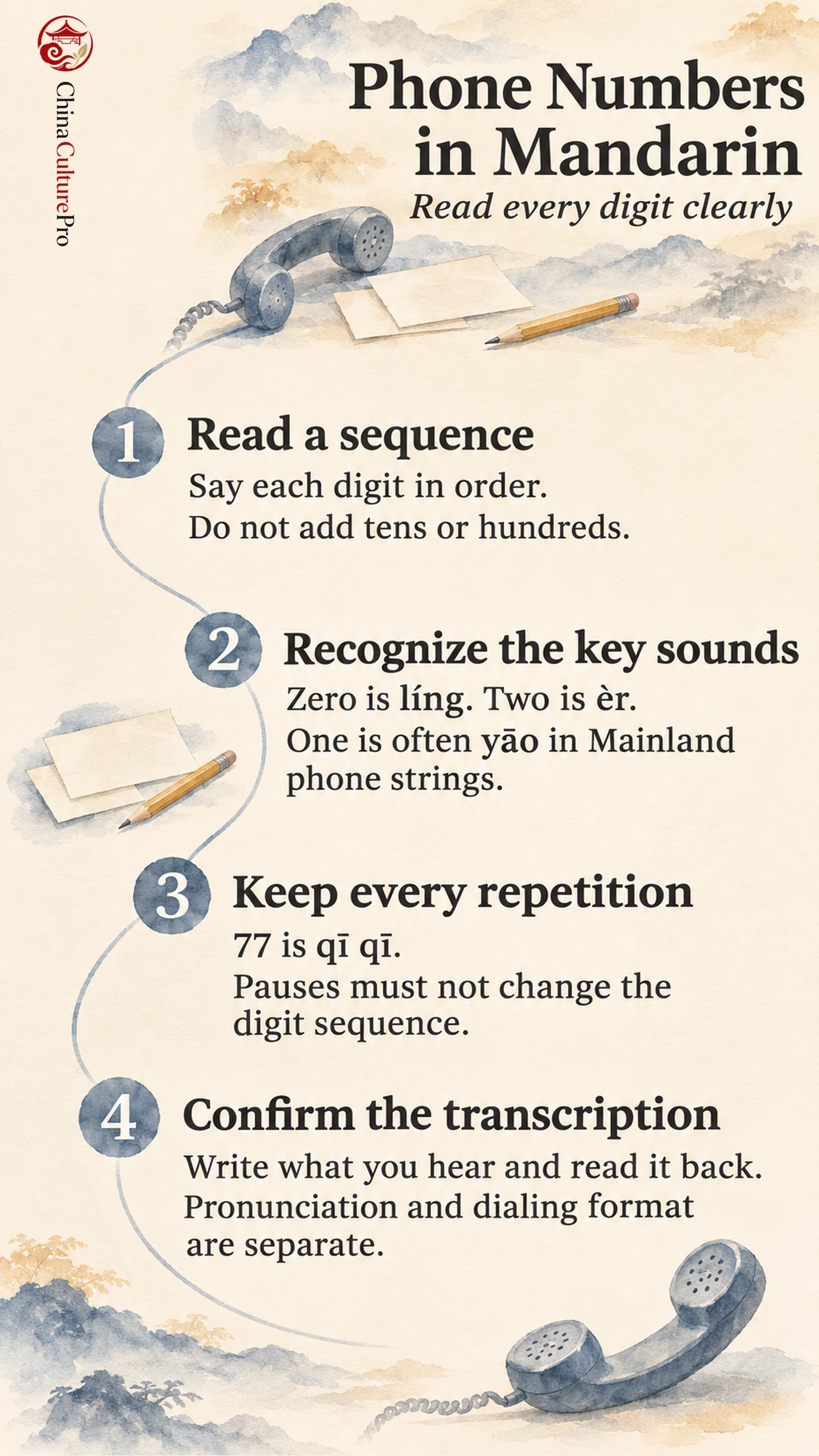
Read phone numbers one digit at a time. Keep every zero and repeated digit. You will often hear one pronounced yāo in Mainland Mandarin number strings. [1]
- Zero: líng.
- Two: èr in a digit string.
- One: Listen for yāo as well as yī.
- Repeats: Say the digit again rather than using English “double.”
The examples below are short practice fragments, not contact numbers or instructions for making a call.
The main challenge is switching from counting things to identifying a sequence. This identifying string preserves a series of digits; it does not tell you how many objects there are. Practise that distinction before trying to repeat a long number at conversational speed.
Read a Telephone Number as a Sequence
The Mandarin expression telephone number (电话号码, diàn huà hào mǎ) names the string you need to identify. Read each digit in its written order. Do not insert the units for tens, hundreds or thousands. [1]
For example, the practice fragment 24 is èr sì when read as digits. The quantity twenty-four is èr shí sì. The added shí, 十, means ten and belongs to the quantity reading. The Chinese number-reading guide explains that broader contrast.
This is why knowing how to count to a large number is a different skill from hearing a phone number accurately. Write the digits as you hear them. Do not try to calculate a value or translate the string into an English quantity first.
Use the Digit Readings, Including Yao
Use this compact Mandarin reference when practising. In a digit string, two is èr, 二. Zero is líng, 零. The table gives individual readings rather than the pronunciation of a compound quantity. [1]
| Digit | Mandarin reading |
|---|---|
| 0 | líng |
| 1 | yī; commonly yāo in Mainland telephone strings |
| 2 | èr |
| 3 | sān |
| 4 | sì |
| 5 | wǔ |
| 6 | liù |
| 7 | qī |
| 8 | bā |
| 9 | jiǔ |
The common Mainland telephone reading yāo helps distinguish one from seven, qī. It is a convention for reading identifiers, not a replacement for yī in every Chinese number. [2]
Keep the scope in mind: these are Mandarin readings. They are not a pronunciation chart for Cantonese or other Chinese languages. If the tone marks are unfamiliar, use the Pinyin guide alongside spoken practice instead of treating the Roman letters as English sounds.
Keep Repeated Digits and Pauses Clear
Read 77 as qī qī, not as an English-style “double seven.” Each repetition contributes one digit to the string. [1]
Try these deliberately short practice fragments. The spaces show a possible pause for the exercise, not part of a complete dialing format:
- 10 7: yāo líng | qī, using the Mainland reading for one.
- 22 8: èr èr | bā, retaining both twos.
- 90 0: jiǔ líng | líng, retaining both zeros.
The vertical bars in the pronunciation notes are practice pause markers. They are not characters to say aloud. Compare the number of spoken syllables with the number of digits: the three digits in each example should remain three individual units.
Changing where you breathe must not change the sequence. If you lose your place, return to the written fragment and restart slowly. Leave an uncertain position open until you can confirm it.
Confirm What You Heard before Using It
For practice, have a partner read a short fragment while you write it down. Read your transcription back, then compare it with the original. Mark the exact position of any error. This turns a vague feeling of confusion into something you can practise: a missing repeat, an omitted zero or a sound you misheard.
Keep spoken pronunciation separate from the dialing format. This guide does not determine country codes, area codes or which digits a particular call requires. Use the complete contact information supplied for that call.
Arabic digits and written Chinese numerals are also different display choices. Older exercises may print telephone sequences in characters; the digits still need to be identified in order. [2]
FAQs About Chinese Telephone Number Pronunciation
Can one be pronounced yī in a phone number?
Yes. The Open University’s sample includes yī, while its explanation notes yāo in some northern varieties. Be ready to recognize both. [1]
Is 22 read as twenty-two?
As a phone-number fragment, read the separate digits èr èr. A quantity reading answers a different question.
Does a pause mean a digit is missing?
No. Treat a pause as a listening boundary. Confirm the actual digits instead of inserting anything into the gap.
Sources
[1] The Open University. Getting started with Chinese 1: Numbers from0 to99
[2] Julian K. Wheatley, MIT OpenCourseWare. Learning Chinese: Character Lesson1, section1.6