

Quick Answer: What Are Chinese Clay Figurines?
Chinese clay figurines are small sculpted objects within a wider field of clay sculpture (泥塑, nísù). Makers can model an individual figure, use a mold to repeat a shape, or combine forming methods with painted details. Local traditions differ in how those choices are used.[1][2][3][4]
- Form: Look at the silhouette, expression and position of the body.
- Surface: Painted lines and patches can add details to a modeled shape.
- Workshop: A maker or locality can help place the figure in a specific tradition.
A shared subject such as an opera figure can appear in more than one tradition.

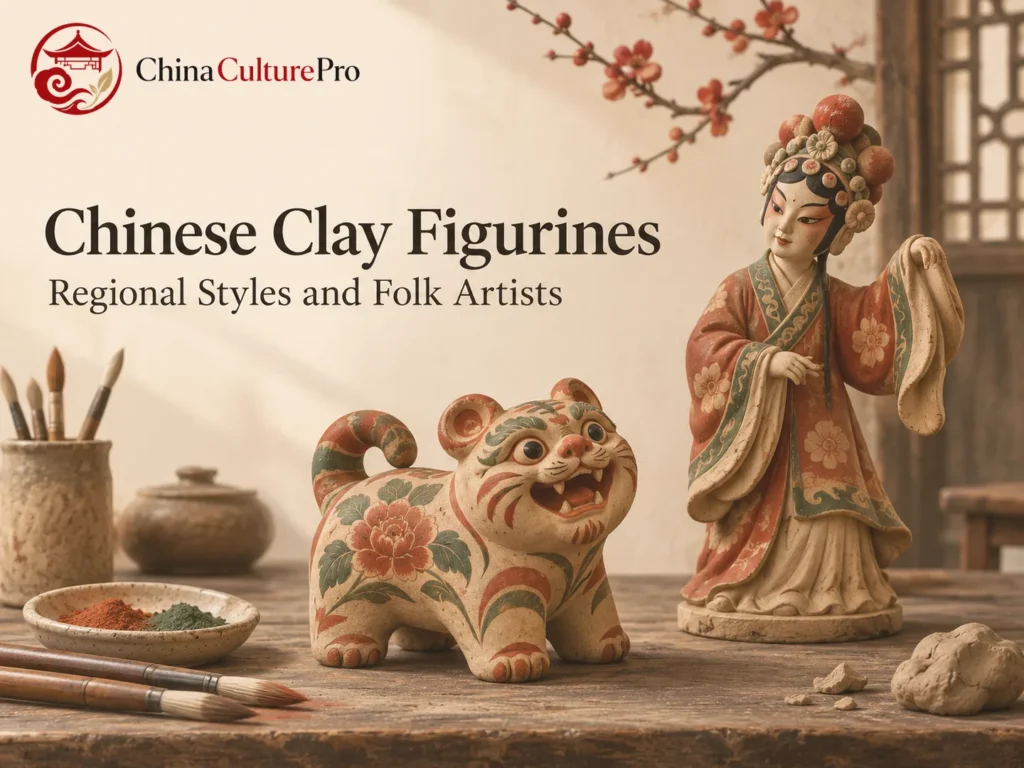
A painted sleeve can make a clay figure look as though it is moving. The pose comes partly from the modeled body and partly from details added on the surface. Look at both to see where the maker shaped the clay and where paint took over.
What Modeling, Molding and Painting Contribute
Hand modeling lets a maker shape the figure directly. The maker can change the tilt of a head or the position of a sleeve while the material is workable. A mold repeats a basic form, while work on individual casts can still give them different surfaces. Painting supplies another set of choices, such as the line of a brow or the colors of a costume.[1][2][3]
Compare the outline and the surface in that order. A raised fold changes the silhouette and casts a shadow. A painted fold suggests the same detail with line or color. Many Chinese traditional crafts combine structural work and surface decoration. In clay figurines, this distinction helps you see how a particular detail was made.
Tianjin and the Clay Figure Zhang Tradition
Clay Figure Zhang (泥人张, nírén Zhāng) names a Tianjin tradition associated with Zhang Mingshan (张明山, Zhāng Míngshān) and the family workshop. The heritage entry places its establishment in the Qing Daoguang reign. The workshop continued through later generations. The inventory lists a work depicting a woman engaged in textile work among Zhang’s pieces, an example of everyday activity rendered in clay. Later members also taught in formal settings.[1]
Start with the pose and expression when looking at a figure from this tradition. On a figure engaged in a task, the angle of the arms and the balance of the body can tell you as much as its painted clothing. The workshop name identifies a lineage. An attribution to a specific Zhang family member needs a more particular record.[1]
Huishan Clay Figures: Molds and Hand-Modeled Opera
In Wuxi, Jiangsu, Huishan (惠山, Huìshān) workshops are associated with two lines of work. One uses molds for figures with broad forms and bright paint. The round Da Afu (大阿福, Dà Āfú) figure is a well-known example. The Wuxi archives describe mold-based work as one of two traditional categories. Its rounded volumes and strongly painted areas make a different impression from the individually modeled figures.[2][3]
Another line models characters and scenes by hand. The archives record figures drawn from several forms of Chinese opera. For these pieces, compare the position of the body with details of face paint and dress. A gesture from a performance has to be captured in a still pose. Color and the modeled position can help identify which moment or role the figure depicts.[2][3]
Fengxiang Painted Clay Figures
Fengxiang (凤翔, Fèngxiáng) painted clay figures are associated with Liuying and nearby workshops in Shaanxi. The inventory describes mold-made and painted work sold at fairs and used in households. The repertoire includes animal figures as well as other auspicious subjects. The inventory connects some of the figures with wishes for well-being in the home. The intended occasion and subject matter give more context than the palette alone.[4]
The practitioner record for Hu Xinming (胡新明, Hú Xīnmíng) describes learning from his parents and making changes to materials and molds. The record describes his changes as responses to breakage and production problems. The mold may change while makers continue to work with familiar subjects and painting practices.[5]
How to Compare a Figure and Its Record
| Tradition | What its records describe |
|---|---|
| Tianjin Clay Figure Zhang | Named family lineage and modeled figures. |
| Huishan | Mold-made auspicious figures and hand-modeled opera subjects. |
| Fengxiang | Painted forms and local molds in workshops around Liuying. |
In museum collection records, look for the maker, material, production place and date separately. Painted clay and dough figurines can show similar subjects. The material and method distinguish them. The regional intangible cultural heritage entries likewise document particular skills, while evidence about an individual piece belongs to its own record.[1][2][4]
FAQs About Chinese Clay Figurines
Are Chinese clay figurines always shaped by hand?
Some are individually modeled and others are made with molds. A tradition such as Huishan can use both methods for different kinds of figures.
Does mold-made mean the figure was never worked by hand?
A mold shapes the clay. A maker may still work on joining, surface details and painting afterward.
Are Chinese clay figurines the same as dough figurines?
Both can represent figures or animals, but clay and dough are different modeling materials with different working and finishing practices.
Can paint color tell you where a clay figurine came from?
A palette can support a comparison. Check the maker, locality, material and other documentary evidence before assigning a region.
Sources
[1] China Intangible Cultural Heritage Digital Museum. Clay Sculpture: Tianjin Clay Figure Zhang
[2] China Intangible Cultural Heritage Digital Museum. Clay Sculpture: Huishan Clay Figures
[3] Wuxi Municipal Archives. The Huishan Da Afu Figure and Its Craft
[4] China Intangible Cultural Heritage Digital Museum. Clay Sculpture: Fengxiang Clay Sculpture
[5] China Intangible Cultural Heritage Digital Museum. Hu Xinming