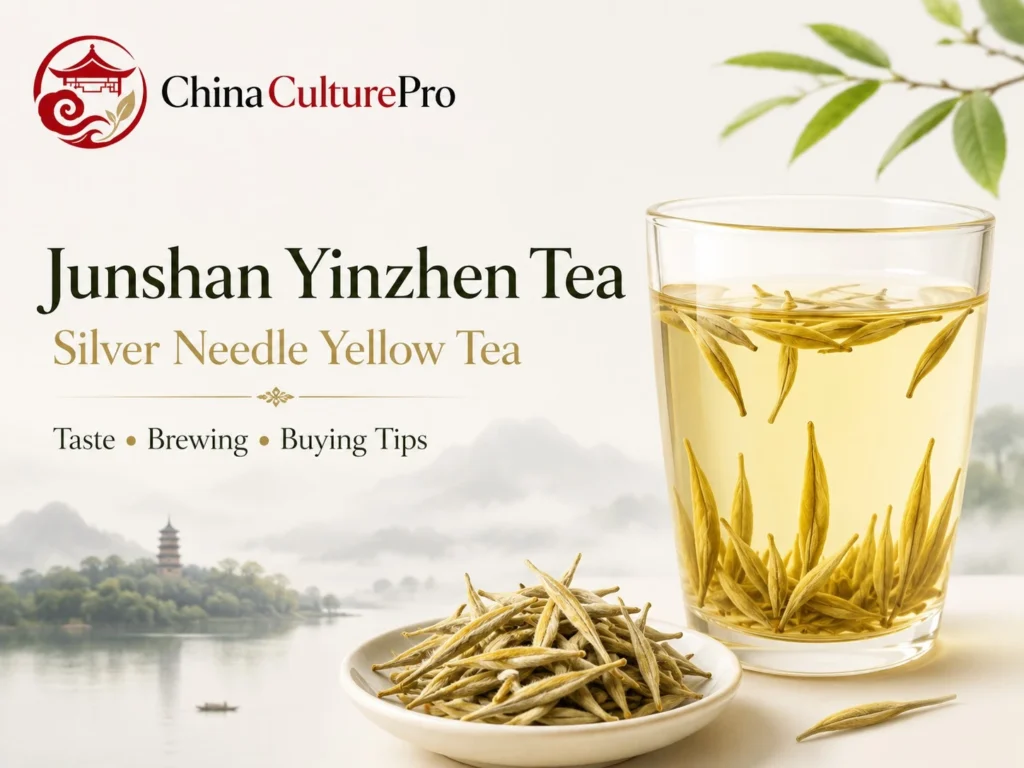

Quick Answer: What Is Junshan Yinzhen Tea?
Junshan Yinzhen Tea, also written as Jun Shan Yin Zhen and often translated as Junshan Silver Needle Tea, is a classic Chinese yellow tea from the Junshan Island context of Dongting Lake in Yueyang, Hunan Province. It is not green tea and it is not white tea. It belongs to Huang Cha, or Chinese yellow tea.
The name “Silver Needle” comes from the shape of the buds. It does not mean Junshan Yinzhen is the same as Baihao Yinzhen, the famous white tea known as White Silver Needle.
The basic points are:
Tea Type: Chinese yellow tea, or Huang Cha.
Core Origin: Junshan Island, Dongting Lake, Yueyang, Hunan.
English Names: Junshan Yinzhen Tea, Jun Shan Yin Zhen, Junshan Silver Needle Tea, Silver Needle Yellow Tea.
Tea Material: plump, even, needle-shaped buds.
Key Processing: Men Huang, or yellowing / smothering, which creates the yellow tea character.
Liquor: bright apricot-yellow or clear yellow liquor.
Aroma: clean sweetness, tender aroma, gentle cooked aroma, sweet corn, sugarcane, honey, or soft floral notes.
Taste: sweet, mellow, fresh, smooth, delicate, clean, and low in bitterness.
Visual Feature: in a glass cup, the buds may stand upright and move up and down, often described as “three rises and three falls.”
Brewing: usually 75–85°C, using a glass cup, gaiwan, or porcelain teapot.
Key Point: Good Junshan Yinzhen is not simply greener, and it is not judged only by whether the buds stand upright in the glass. It should be judged by Junshan origin, plump and even buds, naturally yellowish color, proper Men Huang yellowing, bright apricot-yellow liquor, clean sweet aroma with gentle cooked notes, sweet mellow freshness, low bitterness, and a tender yellow leaf base.
Junshan Yinzhen, Junshan Silver Needle, and Yellow Tea: Are They the Same?
Junshan Yinzhen Tea and Junshan Silver Needle Tea usually refer to the same tea. The main difference is spelling and translation. The more important point is classification: Junshan Yinzhen is a yellow tea, not a white tea or green tea.
| Term | Chinese | Meaning | Best Use |
|---|---|---|---|
| Junshan Yinzhen Tea | 君山银针 | common English pinyin name | clearest main keyword |
| Jun Shan Yin Zhen | 君山银针 | spaced pinyin spelling | useful for name explanation |
| Junshan Silver Needle Tea | 君山银针 | English translation | useful for English readers |
| Silver Needle Yellow Tea | 君山银针 | describes shape and tea type | helps avoid white tea confusion |
| Yellow Tea / Huang Cha | 黄茶 | Chinese yellow tea category | category explanation |
| Baihao Yinzhen | 白毫银针 | White Silver Needle, a white tea | not Junshan Yinzhen |
| Green Needle Tea | 绿茶银针 | needle-shaped green tea | not Junshan Yinzhen |
The word “Silver Needle” is a shape clue, not a tea category. It can appear in the names of white tea, yellow tea, or green tea products. Junshan Yinzhen is specific: it is a yellow tea connected with Junshan Island and the yellowing process.
To understand where Junshan Yinzhen fits among Chinese tea categories, read our Chinese Tea Types guide.
Why Junshan Yinzhen Tea Is So Famous
Junshan Yinzhen is famous because it combines rare tea type, distinctive origin, strict bud selection, yellow tea processing, and strong visual appeal.
Its reputation comes from several factors:
- Representative Yellow Tea: yellow tea is one of the least common Chinese tea categories, and Junshan Yinzhen is one of its best-known names.
- Junshan Island Origin: the tea is closely tied to Junshan Island in Dongting Lake, Hunan.
- Cultural Status: it has long been associated with famous-tea and tribute-tea culture.
- Small Production Context: the origin area is limited, bud selection is strict, and yellow tea processing is time-consuming.
- Men Huang Processing: the yellowing step separates it from green tea and gives it a sweeter, softer, more mellow profile.
- Standing Needles: the upright buds in a glass cup make it highly memorable in Chinese tea culture.
A Chinese tea drinker would not judge Junshan Yinzhen by rarity or visual performance alone. The cup still matters: the liquor should be bright, the aroma clean, the taste sweet and mellow, and the leaf base tender yellow and even.
To compare Junshan Yinzhen with other yellow teas, read our Chinese Yellow Tea guide.
Where Junshan Yinzhen Tea Comes From
Junshan Yinzhen is most closely linked with Junshan Island in Dongting Lake, Yueyang, Hunan. This origin matters because the tea is not just any needle-shaped bud tea. It belongs to a specific yellow tea and geographic context.
| Origin | Chinese Name | Location | General Style | Typical Price Position |
|---|---|---|---|---|
| Junshan Island | 君山岛 | Dongting Lake, Yueyang, Hunan | core origin; plump buds, proper yellowing, sweet mellow liquor | highest |
| Around Dongting Lake | 洞庭湖周边 | Yueyang and nearby Dongting Lake areas | related regional style, but quality and identity vary | medium to high |
| Hunan Yellow Tea | 湖南黄茶 | other parts of Hunan | may use yellow tea processing, but not necessarily Junshan Yinzhen | medium |
| Other “Junshan Yinzhen” Labels | 外地仿制 | outside the core Junshan / Hunan context | may look similar, but origin and processing may differ | medium to low |
Core Junshan Island identity is important, but origin alone is not enough. A good tea still needs plump and even buds, natural yellowish color, proper Men Huang processing, bright apricot-yellow liquor, sweet mellow freshness, low bitterness, and clean aftertaste.
A tea from outside the core area may be drinkable, but it should not be sold as true Junshan Yinzhen without clear origin and processing information.
Why Yellow Tea Processing Matters
Junshan Yinzhen is not yellow tea because it looks slightly yellow. It is yellow tea because of its processing. The key step is Men Huang, often translated as yellowing, sealed yellowing, or smothering.
| Processing Point | What It Means | Why It Matters |
|---|---|---|
| Yellow Tea Is A Category | Huang Cha is an independent Chinese tea category | it is not a marketing word for “yellow-looking tea” |
| Similar Base To Green Tea | yellow tea processing often begins with fixation, like green tea | this preserves a fresh foundation |
| Men Huang / Yellowing | leaves or buds are gently wrapped, piled, or held under warm moist conditions | this creates yellow tea’s softer taste and yellow liquor |
| Less Green Sharpness | yellowing reduces the raw grassy edge often found in some green teas | the cup becomes smoother and more mellow |
| Yellow Liquor And Yellow Leaf | proper yellowing helps create yellowish liquor and tender yellow leaf base | visual signs support tea-category identity |
| Under-Yellowing | the tea may taste too green, grassy, or sharp | it may feel like green tea rather than yellow tea |
| Over-Yellowing | the tea may become dull, sour, heavy, or stuffy | the fresh sweetness is damaged |
Men Huang should not be explained like the microbial fermentation of Pu’er tea. For Junshan Yinzhen, it is better to describe it as a warm, moist yellowing transformation. The result should be sweet, mellow, clean, and gently cooked, not sour or stale.
The value of Junshan Yinzhen is not only its needle-shaped buds. It is the combination of good buds and proper yellow tea processing.
Junshan Yinzhen vs Green Tea
Junshan Yinzhen is easy to confuse with green tea because yellow tea processing begins in a similar way. The difference is the Men Huang yellowing step.
| Point | Junshan Yinzhen Yellow Tea | Green Tea |
|---|---|---|
| Tea Category | yellow tea / Huang Cha | green tea / Lü Cha |
| Core Processing | fixation plus Men Huang yellowing | fixation without yellowing |
| Liquor Color | bright apricot-yellow or yellow | greenish, yellow-green, or pale green |
| Leaf Base | tender yellow or yellow-green | tender green or greenish |
| Aroma | clean sweet aroma, gentle cooked note, sweet corn, sugarcane, honey | fresh, grassy, bean-like, chestnut-like, or vegetal |
| Taste | sweet, mellow, fresh, soft, low bitterness | fresh, brisk, clean, sometimes more green or sharp |
| Quality Logic | yellow liquor, yellow leaf, sweet mellow freshness | green freshness, clean aroma, crisp taste |
Junshan Yinzhen is not better than green tea by default. It is different. Green tea values clear freshness and green vitality. Junshan Yinzhen values yellow tea softness, sweet mellow liquor, and a clean gentle cooked aroma.
If a tea sold as Junshan Yinzhen tastes very grassy, very green, or sharply bitter, the yellowing may be insufficient or the tea may not be true yellow tea processing.
Junshan Yinzhen vs Baihao Yinzhen White Tea
This comparison is essential because English readers often see “Silver Needle” and think of Baihao Yinzhen, the famous white tea. The two teas are completely different.
| Point | Junshan Yinzhen | Baihao Yinzhen |
|---|---|---|
| Chinese Name | 君山银针 | 白毫银针 |
| Common English Name | Junshan Silver Needle | White Silver Needle |
| Tea Category | yellow tea | white tea |
| Core Origin | Junshan Island, Hunan | Fujian white tea regions, especially Fuding and Zhenghe contexts |
| Processing | fixation plus Men Huang yellowing | withering and drying |
| Liquor | apricot-yellow, bright, mellow | pale yellow or light apricot, delicate |
| Aroma | clean sweet aroma, gentle cooked note, sweet corn, sugarcane, honey | downy aroma, fresh sweetness, light floral notes |
| Taste | sweet, mellow, fresh, smooth | fresh, sweet, light, delicate |
| Key Confusion | “Silver Needle” shape | “Silver Needle” shape |
Silver Needle is not a tea category. It is a name and shape clue. Junshan Yinzhen is yellow tea. Baihao Yinzhen is white tea. They should not be compared as if one were simply the better version of the other.
To avoid confusing it with white tea, read our Chinese White Tea guide.
What Does Junshan Yinzhen Tea Taste Like?
Good Junshan Yinzhen tastes sweet, mellow, fresh, smooth, delicate, and clean. It is not green tea’s sharp freshness, and it is not white tea’s very light softness. Its best cup has freshness inside sweetness, and sweetness inside mellow body.
| Tasting Point | Good Junshan Yinzhen | Weak Or Poor Junshan Yinzhen |
|---|---|---|
| Aroma | clean sweetness, tender aroma, gentle cooked note | grassy, sour, moldy, burnt, or flat |
| Liquor | bright apricot-yellow and clear | greenish, dark, cloudy, or dull |
| First Sip | sweet, mellow, fresh, and soft | bitter, thin, grassy, sour, or rough |
| Sweetness | sugarcane, honey, sweet corn, soft floral sweetness | weak, empty, or artificial |
| Mellow Character | soft yellow tea roundness | raw green sharpness or dull heaviness |
| Cooked Note | gentle and clean, never stuffy | sour, over-smothered, or stale |
| Nutty / Grain Note | light nutty or grain sweetness | roasted harshness or burnt flavor |
| Astringency | very low to low, able to fade | drying, sharp, or mouth-coating |
| Hui Gan | clean, refreshing returning sweetness | weak, messy, or absent |
| Leaf Base | tender yellow, even, plump | green, dark, uneven, or lifeless |
Good Junshan Yinzhen should be sweet and fresh, but also mellow and gentle. The aroma should be clean and naturally sweet, with no sour, moldy, or burnt note.
A tea that is too green and grassy may not have enough yellowing. A tea that is sour, dull, or cloudy may have processing or storage problems.
What Good Junshan Yinzhen Tea Looks Like
Dry leaf appearance can help buyers judge Junshan Yinzhen, but visual beauty is only the beginning. The tea must also taste clean and mellow.
| Good Signs | Warning Signs |
|---|---|
| plump, even, upright buds | thin, weak, curved, uneven buds |
| needle-shaped form | broken, dusty, or mixed leaf material |
| yellowish or yellow-green natural color | dead green, overly dark yellow, or dull brown |
| fine down on the buds, not messy | loose fuzz, dirty-looking surface, or heavy breakage |
| clean sweet dry aroma, tender aroma, gentle cooked note | sour, moldy, stale, burnt, or stuffy smell |
| bright apricot-yellow liquor | greenish, cloudy, dark, or dull liquor |
| tender yellow, plump, even leaf base | green, dark, hard, uneven, or lifeless leaf base |
Good Junshan Yinzhen should show plump and even buds, natural yellowish color, clean sweet aroma, bright apricot-yellow liquor, and tender yellow leaf base.
Do not judge only by whether the buds stand upright. If the aroma is sour or the liquor is muddy, visual performance cannot save the tea.
The Famous “Standing Needles” in the Glass
Junshan Yinzhen is famous for its visual performance in a glass cup. When brewed well, the buds may float, sink, stand upright, and move gently in the water. In Chinese tea culture, this is often described as “three rises and three falls.”
This visual effect comes from several factors:
- Bud Shape: plump needle-shaped buds can move more visibly in water.
- Bud Weight: as the buds absorb water, their balance changes.
- Water Movement: pouring water affects whether the buds rise, sink, or stand.
- Glass Cup Brewing: clear glass makes the movement easy to see.
- Bud Uniformity: even buds create a cleaner visual effect.
This is one of Junshan Yinzhen’s charms, but it is not the only quality standard. A beautiful glass performance does not automatically mean good tea. The tea still needs clean aroma, bright apricot-yellow liquor, sweet mellow freshness, low bitterness, and tender yellow leaf base.
On a Chinese tea table, watching the buds stand and fall can be part of the pleasure. But the final judgment is still in the cup.
How Junshan Yinzhen Tea Is Made
Junshan Yinzhen is a yellow tea. Its identity depends on both tender bud material and the Men Huang yellowing process.
| Step | Chinese Term | What Happens | Why It Matters |
|---|---|---|---|
| Picking | 采摘 | plump and tender buds are selected | bud quality sets the foundation |
| Fixation | 杀青 | heat stops strong enzymatic oxidation | keeps a fresh base |
| Cooling / Initial Drying | 摊凉 / 初烘 | buds cool and lose some moisture | prepares the buds for yellowing |
| Men Huang / Yellowing | 闷黄 | buds are gently wrapped, piled, or held under warm moist conditions | creates yellow tea’s sweet mellow character |
| Re-Drying / Final Drying | 复烘 / 干燥 | moisture is reduced and aroma is stabilized | protects shape, aroma, and storage stability |
| Sorting | 整理 | finished tea is cleaned and sorted | improves consistency |
The craft depends on control. Too little yellowing can leave the tea green, grassy, and sharp. Too much yellowing can make it dull, sour, or stuffy. Too much heat can create burnt notes.
The best processing keeps the bud fresh but not raw, sweet but not heavy, and mellow without losing clarity.
Harvest Time and Picking Standard of Junshan Yinzhen
Junshan Yinzhen is a bud tea, so picking standard is central to quality, rarity, and appearance. Spring buds are especially important.
| Harvest / Picking Context | Chinese Term | General Timing | General Character | Buying Note |
|---|---|---|---|---|
| Early Spring | 早春 / 明前 | before Qingming or around early spring | plump buds, clean sweetness, fine freshness | highest value |
| Mid Spring | 仲春 / 雨前 | before Guyu in many tea contexts | still tender, with stable aroma and taste | quality varies |
| Late Spring | 晚春 | after the early spring window | buds may be less even or less tender | lower value |
| Strict Bud Selection | 芽头采摘 | bud-focused picking | improves shape, visual effect, and refinement | key to Junshan Yinzhen identity |
Traditional picking experience often mentions strict exclusions, sometimes summarized as “nine not-pick” rules. In practical English terms, this means weak, curved, open, damaged, diseased, insect-bitten, uneven, hollow, or unsuitable buds should not be used for high-grade Junshan Yinzhen.
The point is not to memorize rules. The point is simple: good Junshan Yinzhen needs plump, even, tender buds. Early spring Mingqian material is picked before Qingming. Picking standard explains why the tea is rare and why uneven bud shape is a warning sign.
Junshan Yinzhen vs Huoshan Huangya vs Meng Ding Huangya
Junshan Yinzhen, Huoshan Huangya, and Meng Ding Huangya are all representative Chinese yellow bud teas, but they express different origins and styles.
| Point | Junshan Yinzhen | Huoshan Huangya | Meng Ding Huangya |
|---|---|---|---|
| Core Origin | Junshan Island, Dongting Lake, Hunan | Huoshan, Anhui | Mengding Mountain, Sichuan |
| Tea Type | yellow bud tea | yellow bud tea | yellow bud tea |
| Appearance | plump needle-shaped buds | tender buds and small leaves | tender buds and small leaves |
| Liquor | bright apricot-yellow | yellow-green or bright yellow | clear yellow-green or light yellow |
| Aroma | clean sweet aroma, gentle cooked note, sweet corn, sugarcane, honey | chestnut-like, mellow, gentle cooked aroma | tender, clean, sweet, soft aroma |
| Taste | sweet, mellow, fresh, delicate | mellow, sweet, rounded | clean, sweet, gentle |
| Best For | needle-bud visual beauty and refined yellow tea sweetness | mellow yellow tea with nutty depth | soft and tender Sichuan yellow tea character |
Do not rank them simply as better or worse. Junshan Yinzhen is famous for needle-shaped buds and visual beauty. Huoshan Huangya is more associated with mellow chestnut-like depth. Meng Ding Huangya is known for tender sweetness and historical tea culture.
Huoshan Huangya and Meng Ding Huangya offer useful comparisons within the broader Chinese yellow tea tradition.
Junshan Yinzhen vs Other Silver Needle Teas
“Silver Needle” can appear in several tea names. Buyers should check tea type, origin, and processing, not just the words on the label.
| Tea Name | Tea Type | Main Origin Context | Processing Logic | Not The Same Because |
|---|---|---|---|---|
| Junshan Yinzhen | yellow tea | Junshan Island, Hunan | fixation plus Men Huang yellowing | specific yellow tea |
| Baihao Yinzhen | white tea | Fujian white tea regions | withering and drying | white tea, not yellow tea |
| Green Needle Tea | green tea | varies | fixation without yellowing | green tea, not yellow tea |
| Generic Silver Needle | varies | varies | unclear | shape term may be used loosely |
If a tea only says “Silver Needle,” that is not enough. Look for Junshan Island / Dongting Lake / Hunan, yellow tea category, and Men Huang processing clues.
How to Brew Junshan Yinzhen Tea
Junshan Yinzhen is made from tender buds, so it should not be brewed with boiling water or heavy steeping. Gentle brewing protects the clean sweetness, apricot-yellow liquor, and soft mellow taste.
| Brewing Method | Teaware | Water Temperature | Leaf Amount | Steeping Time | Best For |
|---|---|---|---|---|---|
| Glass Cup Brewing | clear glass cup | 75–85°C | 2–3g / 200–250ml | 2–4 minutes | visual enjoyment and daily tasting |
| Gaiwan Brewing | porcelain gaiwan | 75–85°C | 3–4g / 100–120ml | 30–60 seconds first infusion, then extend | controlled tasting |
| Porcelain Teapot | porcelain teapot | 75–85°C | 3–4g / 200ml | 2–3 minutes | sharing with one or two people |
| Cooler Gentle Brewing | glass cup or gaiwan | around 75–80°C | moderate amount | slightly longer | softer, sweeter cup |
| Warmer Brewing | glass cup or gaiwan | around 80–85°C | moderate amount | controlled time | fuller aroma and taste |
Glass cup brewing is especially suitable because it lets you see the buds stand, sink, and move in the water. Gaiwan brewing is also possible, but avoid a heavy gongfu style that pushes bitterness or dullness.
Rinsing is usually unnecessary unless the tea is old, dusty, or stored poorly. Drink it plain. Milk and sugar will cover the delicate yellow tea character.
For water temperature and brewing control, read our How to Brew Chinese Tea guide. For glass cups, gaiwans, and teaware choices, read our Chinese Teaware guide.
How to Taste Junshan Yinzhen Tea
Tasting Junshan Yinzhen should focus on origin logic, bud quality, yellowing, aroma, liquor, mouthfeel, and leaf base. Do not judge it only by visual movement in the glass.
| Tasting Check | What To Look For |
|---|---|
| Dry Bud Shape | plump, even, upright, needle-shaped buds |
| Dry Leaf Color | natural yellowish or yellow-green tone |
| Dry Aroma | clean sweetness, tender aroma, gentle cooked note |
| Brewing Visual | buds open slowly; some may stand or move in the glass |
| Liquor Color | bright apricot-yellow and clear |
| Hot Aroma | clean sweet aroma rising from the cup |
| First Sip | sweet, mellow, fresh, soft, and not sharp |
| Mouthfeel | smooth and delicate, not watery or rough |
| Flavor Notes | sweet corn, sugarcane, honey, light nutty note, soft floral note |
| Bitterness | very low to low, able to fade |
| Hui Gan | clean, refreshing returning sweetness |
| Leaf Base | tender yellow, plump, even, and lively |
Good Junshan Yinzhen should not taste too green or too dull. If it is grassy and sharp, it may lack proper yellowing. If it is sour, stuffy, or dark, the yellowing or storage may be poor.
For aroma, mouthfeel, Hui Gan, and aftertaste, read our Chinese Tea Tasting guide.
How to Choose and Buy Junshan Yinzhen Tea
Junshan Yinzhen is rare and easy to mislabel. Common buying traps include ordinary Silver Needle tea sold as Junshan Yinzhen, green tea processing sold as yellow tea, vague origin claims, and over-packaged “tribute tea” products with little real tea information.
| What To Check | Good Sign | Warning Sign |
|---|---|---|
| Origin | clearly says Junshan Island, Dongting Lake, Yueyang, or Hunan with context | only says “Silver Needle” with no origin |
| Tea Type | clearly identified as yellow tea / Huang Cha | no tea type, or only described as green tea |
| Silver Needle Confusion | seller explains it is Junshan Yinzhen yellow tea | generic Silver Needle sold as Junshan Yinzhen |
| Green Tea Confusion | Men Huang / yellowing process is mentioned or implied | green color and green tea processing dominate |
| Bud Material | plump, even buds described | mixed leaves, broken buds, or vague material |
| Harvest / Year | spring harvest, year, or production date is clear | no harvest or date information |
| Dry Leaf Shape | plump, upright, even needle-shaped buds | thin, curved, uneven, broken, or dusty buds |
| Yellowish Color | natural yellowish or yellow-green tone | too green, dark yellow, dull brown, or lifeless color |
| Aroma | clean sweet aroma, tender note, gentle cooked note | sour, moldy, burnt, stuffy, or stale smell |
| Liquor | bright apricot-yellow and clear | greenish, dark, cloudy, or dull liquor |
| Leaf Base | tender yellow, plump, even, lively | green, dark, hard, uneven, or lifeless |
| Packaging | sealed, practical, informative | gift box with weak origin or process details |
| Price | matches rarity, origin, bud quality, and seller credibility | very cheap “authentic Junshan Yinzhen” |
The safest purchase is not the prettiest gift box or the most poetic “tribute tea” label. It is the tea with clear origin, clear yellow tea identity, believable bud material, natural aroma, bright liquor, and credible seller information.
How to Store Junshan Yinzhen Tea
Junshan Yinzhen is a delicate bud tea. It needs protection from oxygen, light, heat, moisture, and odors. Poor storage can reduce sweetness, dull the aroma, darken the liquor, and damage the yellow tea character.
Store Junshan Yinzhen this way:
- Seal It Tightly: use a sealed tin, foil bag, or airtight container.
- Keep It Away From Light: light weakens aroma and color.
- Keep It Dry: moisture can cause sourness, mold, or stale taste.
- Use Cool Storage: short-term storage can be cool room temperature; longer storage can use refrigeration only if sealed against moisture and odors.
- Avoid Strong Odors: keep it away from flower tea, smoked tea, coffee, spices, Pu’er, and other strong-smelling items.
- Drink After Opening: for best aroma, finish opened tea within about 6–12 months.
- Do Not Age It Like Pu’er: Junshan Yinzhen is not judged by long-term post-fermentation logic.
Its charm is in fresh sweetness, clear aroma, bright apricot-yellow liquor, and mellow yellow tea taste. Do not store it for years expecting it to improve like aged dark tea.
Common Mistakes With Junshan Yinzhen Tea
Many Junshan Yinzhen mistakes come from confusing the name, appearance, and tea category.
| Mistake | Better Method |
|---|---|
| Treating Junshan Yinzhen as Baihao Yinzhen | remember Junshan Yinzhen is yellow tea; Baihao Yinzhen is white tea |
| Treating every Silver Needle as Junshan Yinzhen | check tea type, origin, and processing |
| Treating green needle tea as yellow tea | look for Men Huang / yellowing and yellow tea identity |
| Thinking greener means fresher and better | Junshan Yinzhen should show yellow tea character, not pure green tea character |
| Judging only by standing buds | also judge aroma, liquor, taste, Hui Gan, and leaf base |
| Brewing with boiling water | use gentle water around 75–85°C |
| Using heavy gongfu brewing | avoid pushing bitterness or stuffy notes |
| Storing rare bud tea too long | drink while aroma and sweetness are clear |
| Aging it like Pu’er | seal it well and drink within a reasonable time |
| Buying only by tribute, famous, or rare labels | verify origin, tea type, harvest, processing, and seller credibility |
The main traps are simple: Junshan Yinzhen is not Baihao Yinzhen, not every Silver Needle is Junshan Yinzhen, and not every green-looking needle tea is yellow tea.
Junshan Yinzhen Tea Benefits
Junshan Yinzhen Tea is often enjoyed as a gentle, aromatic yellow tea because it is:
- Refreshing: it contains caffeine and can feel clear and light.
- Low In Calories: plain Junshan Yinzhen has almost no calories when unsweetened.
- Rich In Tea Polyphenols: like other teas, it contains natural plant compounds.
- Gentle And Mellow: many drinkers find yellow tea softer than sharp green tea.
- Suitable For Plain Drinking: its sweet mellow freshness is best tasted without milk or sugar.
- Good For Slow Tasting: the glass-cup visual effect and delicate aroma make it suitable for focused tea sessions.
Junshan Yinzhen is tea, not medicine. It should not be presented as a treatment for weight loss, blood pressure, cancer, or disease. Many people enjoy it because it is sweet, mellow, clean, and refreshing in the finish.
Final Thoughts
Junshan Yinzhen Tea is a classic Chinese yellow tea from the Junshan Island context of Dongting Lake in Yueyang, Hunan. In English, it is often called Junshan Silver Needle Tea or Silver Needle Yellow Tea.
Good Junshan Yinzhen should be judged by Junshan origin, plump and even buds, naturally yellowish color, proper Men Huang yellowing, bright apricot-yellow liquor, clean sweet aroma with gentle cooked notes, sweet mellow freshness, low bitterness, and tender yellow leaf base.
It is not simply greener, and it is not judged only by whether the buds stand upright in the glass. Its real quality lies in the balance of yellow tea processing, bud quality, sweet mellow liquor, and clean refreshing Hui Gan.
FAQs About Junshan Yinzhen Tea
What is Junshan Yinzhen tea?
Junshan Yinzhen Tea is a classic Chinese yellow tea from Junshan Island in Dongting Lake, Yueyang, Hunan. It is known for plump needle-shaped buds, bright apricot-yellow liquor, clean sweet aroma, sweet mellow freshness, and low bitterness.
Is Junshan Yinzhen the same as Junshan Silver Needle?
Yes. Junshan Silver Needle Tea is an English translation of Junshan Yinzhen Tea. It may also be described as Silver Needle Yellow Tea, but it should not be confused with Baihao Yinzhen white tea.
Is Junshan Yinzhen yellow tea or white tea?
Junshan Yinzhen is yellow tea. It uses Men Huang yellowing processing. Baihao Yinzhen, or White Silver Needle, is white tea and is made through a different white tea processing route.
Where does Junshan Yinzhen come from?
Junshan Yinzhen is most closely associated with Junshan Island in Dongting Lake, Yueyang, Hunan Province. Origin matters because many needle-shaped teas are not true Junshan Yinzhen.
What does Junshan Yinzhen taste like?
Good Junshan Yinzhen tastes sweet, mellow, fresh, smooth, delicate, and clean. It may show notes of sweet corn, sugarcane, honey, light nutty sweetness, soft floral aroma, and gentle cooked notes.
What is Men Huang in yellow tea?
Men Huang is the yellowing or smothering process that defines yellow tea. It uses warm, moist conditions after fixation to create a softer, sweeter, more mellow tea with yellow liquor and yellow leaf character.
Why do Junshan Yinzhen buds stand up in the glass?
The standing-bud effect comes from plump bud shape, bud weight, water absorption, and pouring movement. It is often described as “three rises and three falls,” but it is only one visual feature, not the whole quality standard.
What is the difference between Junshan Yinzhen and Baihao Yinzhen?
Junshan Yinzhen is yellow tea from the Hunan / Junshan Island context. Baihao Yinzhen is white tea from the Fujian white tea context. They share the “Silver Needle” name but differ in tea type, origin, processing, aroma, and taste.
What is the difference between Junshan Yinzhen and green tea?
Junshan Yinzhen has Men Huang yellowing, which creates yellow liquor, tender yellow leaf base, and a sweeter, more mellow taste. Green tea does not use yellowing and usually tastes fresher, greener, and more brisk.
What is the difference between Junshan Yinzhen, Huoshan Huangya, and Meng Ding Huangya?
Junshan Yinzhen is known for plump needle-shaped buds and apricot-yellow liquor. Huoshan Huangya is often more mellow and chestnut-like. Meng Ding Huangya is known for tender, clean, sweet yellow bud tea character.
How do you brew Junshan Yinzhen tea?
Use 75–85°C water. For glass cup brewing, use about 2–3g per 200–250ml and steep for 2–4 minutes. A gaiwan can also be used, but avoid boiling water and heavy steeping.
How can you tell if Junshan Yinzhen is good?
Good Junshan Yinzhen has plump even buds, natural yellowish color, bright apricot-yellow liquor, clean sweet aroma with gentle cooked notes, sweet mellow freshness, low bitterness, clean Hui Gan, and a tender yellow leaf base.
How should Junshan Yinzhen tea be stored?
Store Junshan Yinzhen sealed, dry, dark, cool, and away from odors. For longer storage, refrigeration can be used only if the tea is sealed against moisture and smells. After opening, drink it within about 6–12 months for the best aroma.