
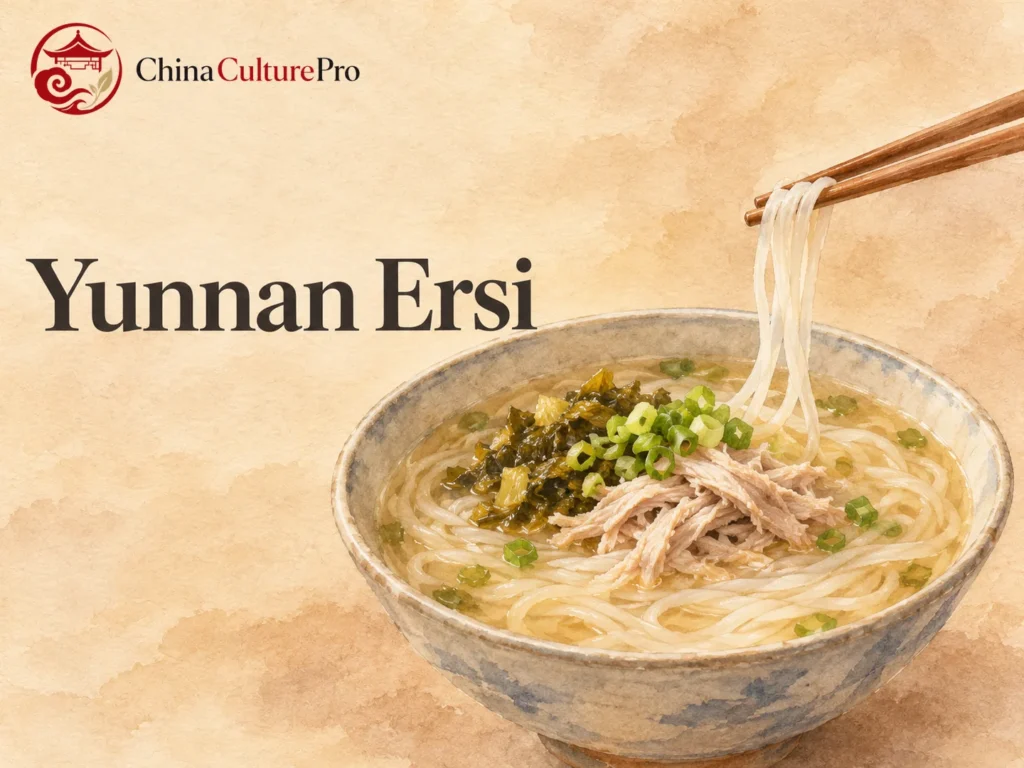

Quick Answer: What Is Yunnan Ersi?
Yunnan ersi (饵丝, ěrsī) is a fine strand made from rice, with a springy, rice-cake-like bite. It can be served hot in stock or steamed and tossed with toppings. The cooking method on the menu determines whether you get a soup or a dressed bowl.[1][2][3]
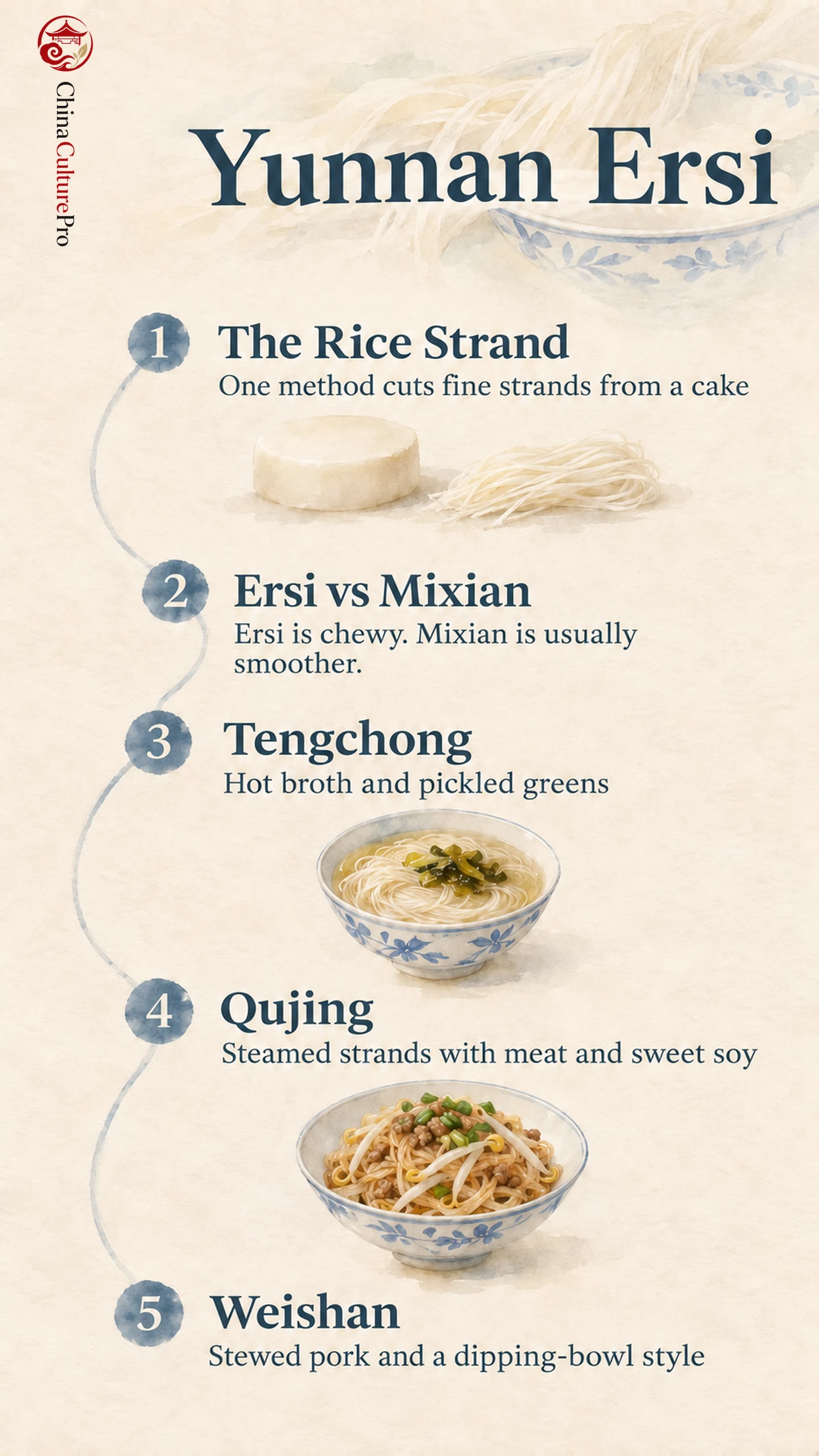
- Tengchong: Try the strands in hot broth with pickled greens and seasonings available on the side.[2]
- Qujing: Steamed ersi is mixed with bean sprouts, pickles, meat sauce and sweet soy sauce.[3]
- Weishan: One style pairs the strands with pork cooked until it pulls into shreds.[4]
Both ersi and other Yunnan rice noodles are made from rice. Read the noodle name and the cooking word to distinguish them.
A bowl of ersi can look like other white rice noodles until you bite into it. The strand has a pliable, slightly dense chew. In one place the cook lets it take on the flavour of stock. In another, a coating of sweet soy sauce and meat sauce does that work.
From Rice Cake to Fine Strands
In Qujing’s documented method, local rice is worked into cylindrical pieces of erkuai (饵块, ěrkuài). The cook slices that firm cake into fine strands. The close link to Yunnan erkuai explains why ersi can have a more cohesive bite than a slick rice noodle.[3]
Producers also use other methods. Yunnan’s production rules give an example of making Tengchong ersi from rice that is steamed and pressed, and include a process for other dried products that uses rice meal or slurry followed by cooking and cutting. The category covers several ways to form strands.[1]
Ersi and Mixian: How to Tell Them Apart
Mixian (米线, mǐxiàn) generally feels smoother and less dense, while ersi often has a soft, slightly tacky chew. Strand thickness and shape can overlap. In Yunnan’s production rules the two foods have distinct processing categories, so round versus flat provides only a rough visual clue.[1]
The label is the quickest guide. Look for 饵丝 for the rice-cake-like strands. 米线 is the label that appears on dishes such as Yunnan rice noodle salad. Either ingredient can appear with a strongly seasoned topping.
Tengchong: Hot Broth and Pickled Greens
Hot broth softens the surface of the strands while they retain their bite. Tengchong reporting describes local winter pickled vegetables and a condiment counter with chilli oil, chives, coriander and other seasonings. Add a little at a time to taste the broth as you adjust the bowl.[2]
Qujing: Steamed with Sweet Soy and Meat Sauce
For Qujing steamed ersi, the strands are lightly coated with oil before steaming. A typical topping set includes bean sprouts, chives and pickled vegetables, with a minced-meat sauce and sweet soy sauce. Mix the toppings through the strands. A little bone broth can be served on the side, leaving the main bowl sauced rather than submerged.[3]
Weishan: Stewed Pork and a Dipping Bowl
Weishan stewed pork (耙肉, pá ròu) is cooked until very tender. A Weishan bowl can bring those shreds and pork broth together with ersi. In a local service called 过江饵丝, the strands and pork broth come separately so you can dip a pinch of strands in the hot broth before eating.[4][5]
FAQs About Yunnan Ersi
Is Ersi a Type of Rice Noodle?
In English it can be described as a rice strand or rice-cake noodle. Yunnan menus use 饵丝 for ersi and 米线 for mixian, two related but distinct rice products.
Is Steamed Ersi Served With Soup?
Qujing steamed ersi is tossed with sauces and toppings. Bone broth may come separately, leaving the strands coated rather than submerged.
Do All Ersi Bowls Have Pork?
Pork appears in Weishan’s stewed-pork preparation and in many other toppings. The strands themselves are a rice product. Ask about the stock and topping separately if you want to leave out meat.
Sources
[1] Yunnan Administration for Market Regulation. Production licensing rules for rice noodles and related products
[2] Tengchong Municipal People’s Government. A bowl of Tengchong ersi (一碗腾冲饵丝,倾注味蕾情怀)
[3] Yunnan Net. Qujing steamed ersi (这碗饵丝“蒸”服你的味蕾了吗?)
[4] Weishan County People’s Government. A walking and food guide to Weishan
[5] Yunnan Net. Weishan stewed-pork ersi (一碗巍山耙肉饵丝开启的柔软清晨)