
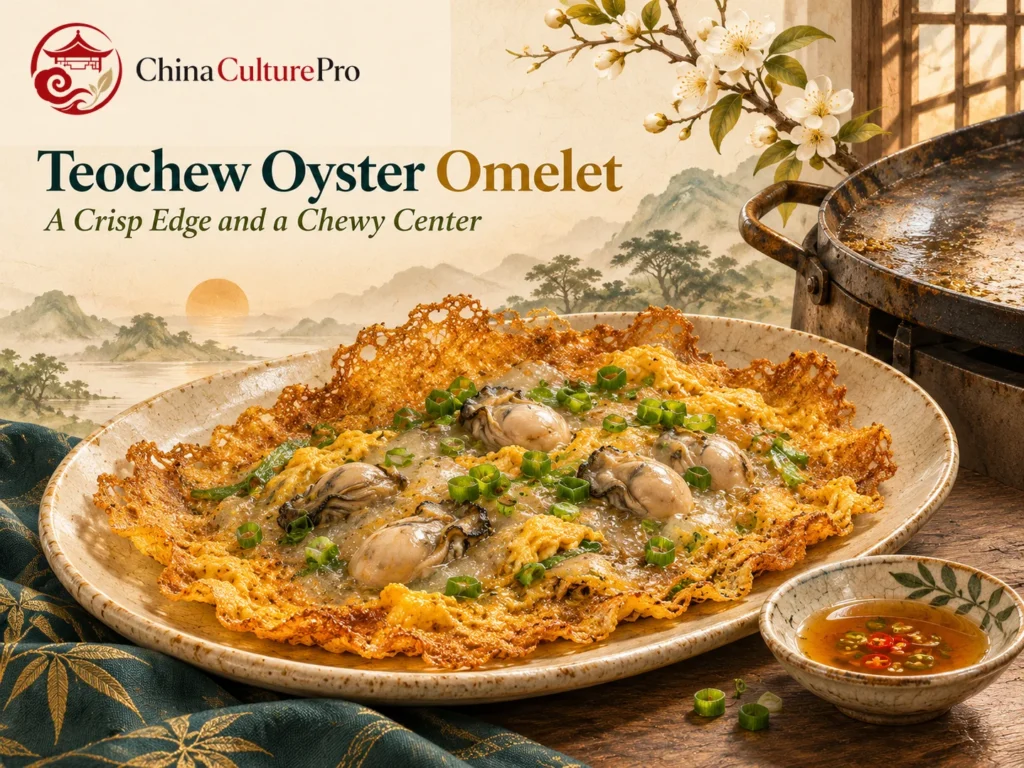

Quick Answer: What Is Teochew Oyster Omelet?
Teochew oyster omelet (蚝烙, háolào) is a thin pan-fried dish of small oysters, starch and egg. It can be listed as an oyster pancake. In Chaoshan, the oyster flavor and the texture of the starch are as important as the egg. [1][2]
- Ingredients: Small shucked oysters, a starch batter and egg. Scallions or coriander can add freshness. [1][2]
- Texture: The thin rim browns against the pan. Starch gives the center some chew around the oysters. [1][3]
- Seasoning: Fish sauce is a documented Chaoshan and Hong Kong pairing. Singapore and Taiwan examples often use different sauces. [1][2][4][5]
The balance of egg and starch varies by cook, so a familiar English menu name may produce a different plate.
The first thing to look for is the edge. Where thin batter meets the hot pan it can turn golden and crisp. Closer to the center, look for patches of cooked starch, egg and individual oysters.
How Regional Oyster Omelets Differ
| Setting | Typical features in documented examples | What changes at the table |
|---|---|---|
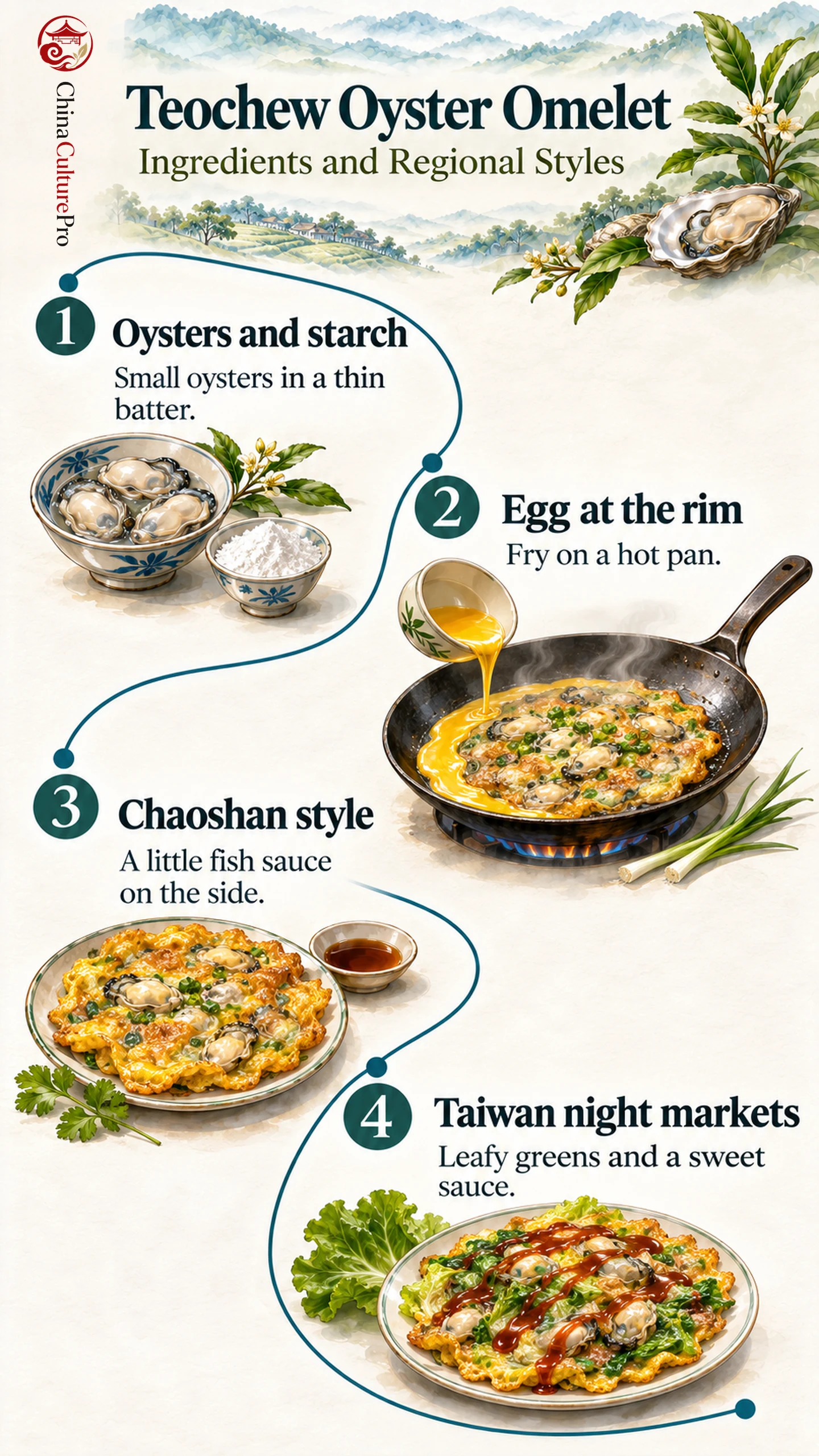
| Shantou, Chaoshan | Oysters in starch batter with a browned, crisp edge. [1] | Fish sauce and coriander can finish the plate. [1] |
| Chiu Chow restaurants in Hong Kong | Cooks may use sweet potato or cassava starch. One chef adds egg around the outer edge after the batter begins to set. [2][3] | The exact starch and egg ratio depends on the restaurant. [2][3] |
| Singapore hawker stalls | Orh luak varies from crisp and egg-forward to wetter, with softer pockets of starch. [4] | Chilli dipping sauce can accompany the oyster and egg. [4] |
| Taiwan night markets | The tourism authority describes oysters fried with starch, egg and leafy greens. [5] | A sweet-sour sauce can be poured over the omelet. [5] |
These examples help explain why ordering “oyster omelet” in several places can lead to sharply different textures. Teochew and Chiu Chow are English names you may see for the Chaoshan version. [2][4][5]
What Starch and Egg Each Do
Sweet potato starch is one traditional option. A Hong Kong guide also documents a restaurant using cassava starch. In the skillet, starch thickens where it holds water, while thinner patches brown. The beaten egg adds structure and flavor. When a cook adds it around the outside as the batter sets, you can see the egg and starch in different parts of the finished pancake. [2][3]
Fish sauce brings a salty, savory note to the oyster. Try it at the table before adding more. In Teochew cuisine, Puning tofu is another crisp-edged dish, with the contrast coming from fried tofu around a soft bean curd center.
How to Cook a Teochew-Style Oyster Omelet
This home-pan method follows the principle of a thin oyster batter with egg added after the base sets. Use small portions so you can judge the center as well as the edge. [2][6]
- Prepare the components: Drain cold shucked oysters and combine food-grade sweet potato starch with enough water to make a pourable slurry. Beat the egg separately. [2]
- Set the base: Oil a skillet, stir the slurry just before pouring, and spread a small portion with the oysters into a shallow layer. [2]
- Add the egg: When the base holds together, pour beaten egg near the edges. Let it set, then turn the pancake if needed for even cooking. [2]
- Cook through and serve: Cook the egg dish to 160°F (71°C) with the oysters fully cooked. Serve hot, with a little fish sauce on the side. [2][6][7]
Choose a pan temperature that sets the rim while leaving time for the center to cook through. A golden edge can appear before the middle is cooked. At a Teochew meal, a cold fish rice plate offers a different way of serving cooked seafood. [1][6][7]
FAQs About Teochew Oyster Omelet
Is a Teochew oyster pancake the same as oyster omelet?
Menus use both translations for the oyster, starch and egg preparation. The starch helps explain why the crisp edge can contrast with the soft, slightly chewy center. [2][3]
Do Teochew cooks use chicken or duck eggs?
A documented Hong Kong recipe uses a combination. Ingredient choices differ by cook, so the menu name alone does not tell you which egg was used. [2]
Is Teochew oyster omelet served with sweet sauce?
Fish sauce is a common pairing for Chaoshan-style oyster omelet. A sweet-sour topping is characteristic of the Taiwanese examples described by the tourism authority. [1][2][5]
Sources
[1] Shantou Bureau of Culture, Radio, Television, Tourism and Sports. Shantou Holiday Food and Travel
[2] Michelin Guide. Recipe Teochew Oyster Pancake
[3] Michelin Guide. Inspectors’ Favourite Dishes From Newly Listed Hong Kong and Macau Bib Gourmands
[4] Michelin Guide. Supper Series Five Late-Night Spots in Singapore for Orh Luak
[5] Taiwan Tourism Administration. Taiwan Snacks
[6] US Food and Drug Administration. Safe Food Handling
[7] US Centers for Disease Control and Prevention. Vibrio and Oysters