


Quick Answer: What Is Triple Delight Chinese Food?
Triple Delight commonly describes a Chinese-American stir-fry combining three main proteins with vegetables. Chicken, beef and shrimp are one combination. Roast pork can take the place of shrimp on another menu, and the sauce or seasoning can change with the version.[1][2][3]
- Common trio: Chicken, beef and shrimp appear together in several menu examples.[1][3]
- Another trio: A documented version combines beef, chicken and roast pork with mixed vegetables.[2]
- Seasoning: Some versions use brown sauce. A menu qualifier such as Kung Pao signals another preparation.[2][3]
The description on the restaurant’s own menu matters more than the English name alone.[1][2][3]
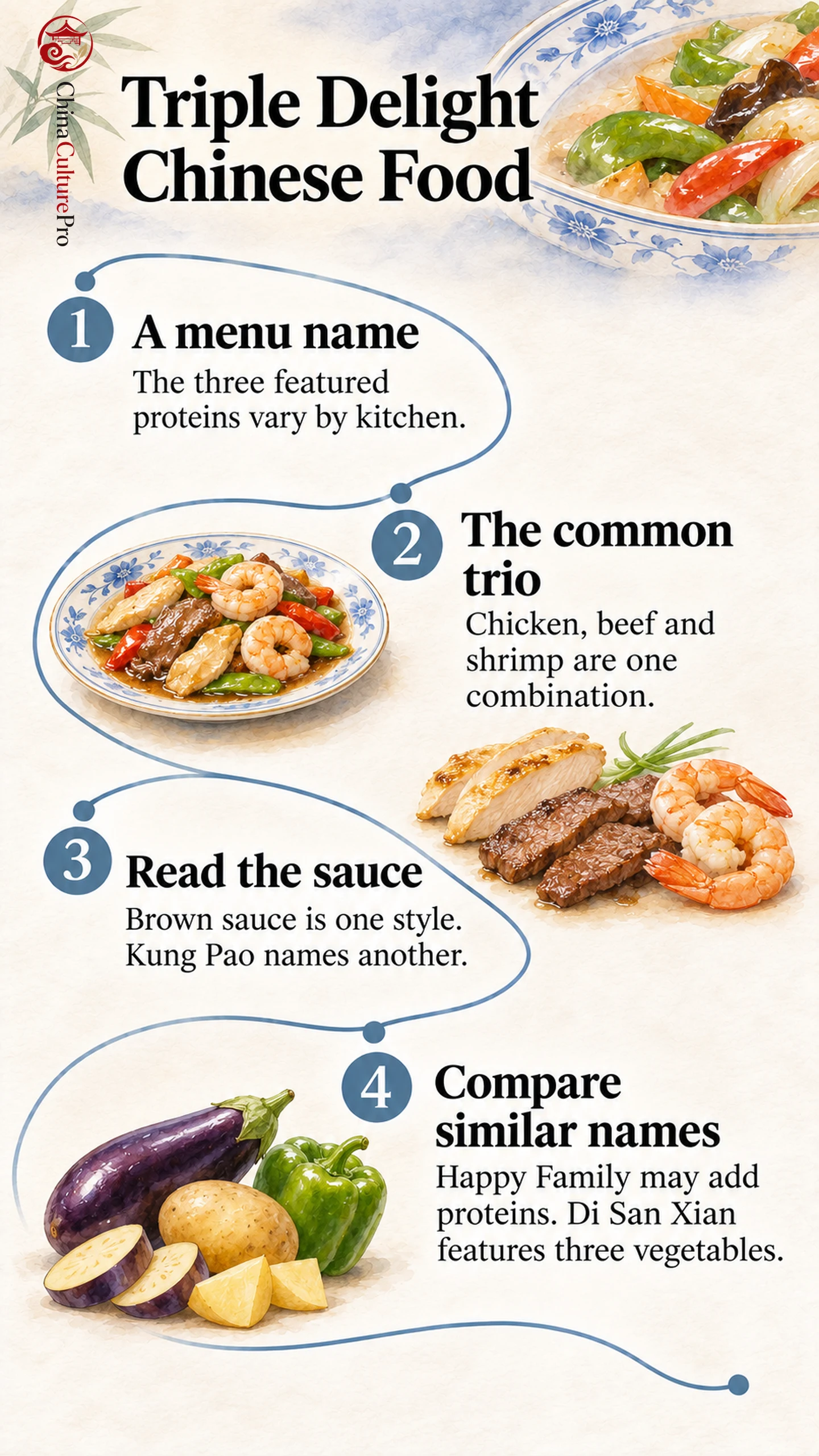
Triple Delight can sound like a recipe with three fixed ingredients. On Chinese-American restaurant menus, the wording gives you a useful clue about the assortment. Read the line underneath the name to find out which three ingredients the kitchen uses and how it cooks them.[1][2][3]
The Three Main Ingredients Can Change
One menu lists chicken, shrimp and beef with mixed vegetables. Another uses beef, chicken and roast pork with vegetables in a brown sauce. These examples show what “Triple” tends to count: the three featured proteins, with vegetables and sauce completing the dish.[1][2]
Pieces of poultry, meat and shrimp contribute different textures. For example, a diner may get slices of beef alongside a tender piece of chicken and firmer shrimp. In a roast-pork version, the already seasoned pork brings a different flavour to the mix. The label can cover both plates, so look for the full protein list if one ingredient is important to your order.[1][2]
How the Sauce and Method Shape the Plate
The menus that describe the cooking method present it as a stir-fry. Mixed vegetables and the three main ingredients are tossed together in sauce. Brown sauce can coat the whole dish, so the vegetables and proteins share a savoury seasoning even while their textures stay distinct. The term “brown sauce” gives a useful flavour cue without telling you the kitchen’s exact formulation.[2][3]
A label such as Kung Pao Triple Delight adds information that the plain name leaves open. Compare the preparations by reading the sauce and heat description as well as the meat and seafood list. The wider guide to Kung Pao chicken explains the seasoning tradition and how versions vary on menus.[3]
Triple Delight and Happy Family
Some menus distinguish Triple Delight, featuring three main proteins, from Happy Family, which brings together a larger assortment. One restaurant, for example, lists shrimp, scallops, pork, chicken, beef and crab in its Happy Family description. That example is a reading cue, since individual kitchens can use the labels differently.[1][3]
The practical comparison is the actual assortment, then the sauce. If both names appear, the ingredient lists show whether the larger assortment adds something you want. Chop suey offers another example of how a Chinese-American menu category can be more stable than its individual combinations.
Why Di San Xian Is a Different Order
Di San Xian (地三鲜, dì sān xiān) can appear in English as Three Fresh Treasures or Three Delights of the Earth. The three signature ingredients in that Northeastern Chinese dish are aubergine, potato and green pepper. The vegetables are typically fried and brought together in sauce. Context and the ingredient list distinguish it from a Chinese-American mixed-protein order.[4]
FAQs About Triple Delight Chinese Food
Is Triple Delight always chicken, beef and shrimp?
That is a common menu combination. A separately documented version uses roast pork alongside chicken and beef, so check the restaurant’s description.[1][2][3]
Is Triple Delight spicy?
Heat depends on the preparation. A plain brown-sauce version and a specifically labelled Kung Pao version can appear separately on a menu.[2][3]
Is Triple Delight the same as Happy Family?
Some restaurants offer both and list more proteins in Happy Family. Compare the individual descriptions, since the two English names do not specify universal recipes.[1][3]
Sources
[1] Qing Qing. All Day Menu
[2] Chopstix. Printed Chinese Restaurant Menu
[3] Imperial Garden. Popular Items and Menu Descriptions
[4] Provenance. Di San Xian, Three Fresh Treasures