
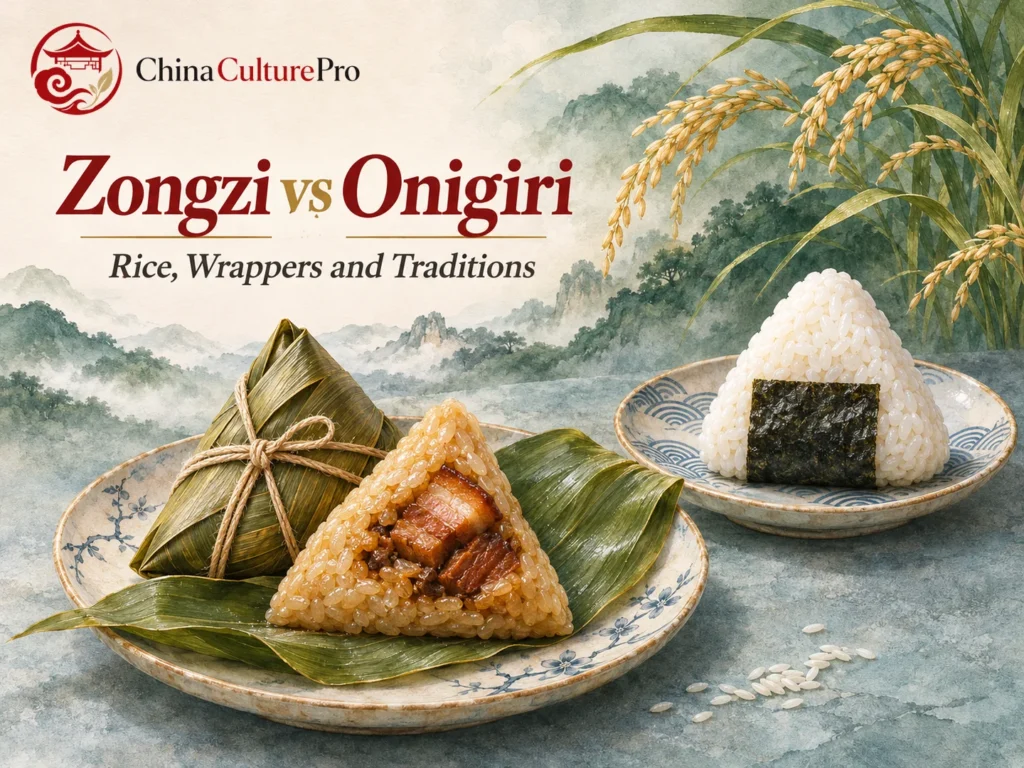

Quick Answer: What Is the Difference Between Zongzi and Onigiri?
Chinese zongzi (粽子, zòngzi) are parcels of glutinous rice that cook inside tied leaves. Japanese onigiri (おにぎり) are portions of already-cooked rice shaped by hand, often with a filling and a piece of edible nori.[1][2][3]
- Rice: Glutinous rice gives zongzi a dense chew. The ordinary Japanese short-grain rice used for onigiri sticks together when shaped.[1][3][4]
- Wrapper: Peel the bamboo or other cooking leaves off zongzi. Eat the nori on an onigiri if it comes with seaweed.[1][2]
- Occasion: Zongzi have a strong association with the Dragon Boat Festival. Onigiri are everyday food for lunch boxes, train trips or a quick meal.[3][5]
For a Japanese dish closer to the shape and cooking method of some zongzi, look for Niigata’s sankaku chimaki.[6]

The same triangular outline can hold two very different foods. A tied green parcel goes into the cooking pot. A white rice triangle takes shape after the rice comes out.
Zongzi and Onigiri at a Glance
| Aspek | Zongzi | Onigiri |
|---|---|---|
| Beras | Glutinous rice.[1] | Typically cooked Japanese short-grain rice.[3][4] |
| Lapisan panekuk | Bamboo or other leaves enclose the rice for cooking.[1][7] | Edible nori is common and optional.[2][3] |
| When it takes shape | Folded and tied before boiling or steaming.[1] | Shaped after the rice is cooked.[2][3] |
| Konteks khas | Dragon Boat Festival foods and other occasions.[5][7] | Everyday packed lunches, outings and convenience-store snacks.[3] |
What Cooking in the Leaf Does for Zongzi
In zongzi, the leaf folds hold rice and fillings together as everything cooks. Bamboo is a traditional choice. Hong Kong’s Centre for Food Safety also lists lotus leaves. Once unwrapped, the cooked glutinous rice holds the molded parcel shape. A savory Hong Kong version might combine mung beans, pork and salted egg yolk. Sweet versions can contain red bean paste.[1][7][8]
Sharing the parcels is one custom associated with the Dragon Boat Festival, also called Duanwu (端午, Duānwǔ). The festival falls on the fifth day of the fifth lunar month. UNESCO describes rice dumplings as one element of celebrations that vary across communities.[5]
Why Onigiri Holds Its Shape
The short-grain rice common in onigiri is naturally cohesive after cooking. Shaping that already-cooked rice around a center gives each portion a compact form. Fillings include grilled salmon, pickled plum and seasoned bonito flakes. Triangles are common. Japan’s agriculture ministry demonstrates a round version as well.[2][3][4]
If nori (海苔, nori) is used, it goes around part or all of the shaped rice. With or without seaweed, a rice ball is simple to carry and easy to eat by hand.[2][3]
Is Japanese Chimaki Closer to Zongzi?
Niigata’s sankaku chimaki is an especially close comparison in preparation. It contains glutinous rice in a triangular bamboo-leaf package tied with rush before boiling. It can be served with roasted soybean flour. In other regions, chimaki includes sweets associated with Tango no Sekku, Japan’s traditional observance linked to Children’s Day. Some versions use a rice-flour dough. The regional name alone does not tell you which texture to expect.[6][9][10]
FAQs About Zongzi and Onigiri
Do You Eat the Leaf on Zongzi?
Peel away the cooking leaves and eat the rice and filling inside. Onigiri often has nori, an edible seaweed that you can eat with the rice.[1][2]
Does Onigiri Use the Same Rice as Zongzi?
Onigiri usually starts with ordinary Japanese short-grain rice. Zongzi traditionally use glutinous rice, the variety also known as sticky rice. Both can hold their shape after cooking.[1][3][4]
Are Zongzi and Onigiri Always Triangular?
Triangles are common shapes for both. The shape of zongzi depends on how the leaves are folded, and onigiri can also be shaped into rounds. The material of the wrapping gives you a better clue than the silhouette.[2][3][6][8]
Sumber
[1] Hong Kong Tourism Board. What to See and Do During the Dragon Boat Festival
[2] Japan Ministry of Agriculture, Forestry and Fisheries. Onigiri (Rice Balls)
[3] Web Japan. Japanese Soul Food: Onigiri
[4] Embassy of Japan in the United States. An Introduction to Japan
[5] UNESCO. Dragon Boat Festival
[6] Japan Ministry of Agriculture, Forestry and Fisheries. Sankaku Chimaki
[7] Hong Kong Centre for Food Safety. Safety Tips for Enjoying Glutinous Rice Dumplings
[8] Hong Kong Education Bureau. Chinese Festivals: Understanding Text Content
[9] National Diet Library, Japan. Wagashi: Seasonal Sweets
[10] Japan Ministry of Agriculture, Forestry and Fisheries. Sasamaki