
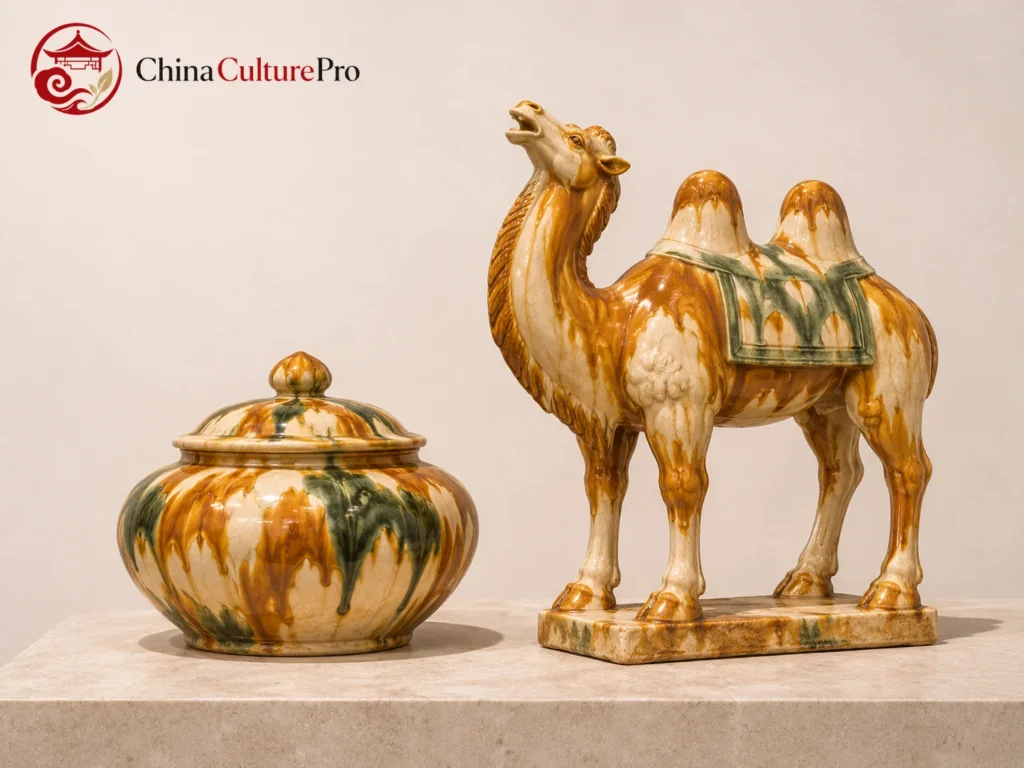

Quick Answer: What Is Tang Sancai?
Tang sancai (唐三彩, Táng sāncǎi) is a family of colored, lead-glazed earthenwares associated with the Tang dynasty, from 618 to 907. The name means Tang three colors. Cream, green and amber are typical, and other colors can appear. Tombs are a major source of the figures and vessels known today. [1][2][3][4][5]
- The glaze can flow during firing. Colors can run into each other, or an impressed pattern can help keep them apart. [2][3][6]
- Figures can combine glaze and paint. A rider’s clothing can carry glaze while a face is painted on exposed clay. [2]
- Findspots tell different stories. Kiln evidence helps identify where pieces were made, and some fragments found overseas show how far they traveled. [5][7][8]
Look at the clay body, colored glaze and painted details separately.

On a Tang figure, amber and green can run into each other across a horse’s body. The rider’s face may be left matte and painted separately. Looking at where the surface changes helps you see what the maker chose to glaze.
What the Three Colors Mean
The common combination includes green, amber and a pale or creamy color. Different proportions or colors can occur. Copper can give green and iron can give amber or brown in this glaze system. The Smithsonian also notes the use of cobalt for blue on some examples. The name describes a family of decoration with a variable palette. [1][2][5]
The body is generally earthenware. A pale body, sometimes with an added white slip, can make the glazes stand out. A shiny coating and a pale background also occur on some Chinese porcelain, but appearance alone does not identify the fired material. The distinction between pottery and porcelain helps explain why the Met labels its Tang covered jar as earthenware with three-color glaze. [2][3][4]
How the Glazes Flowed or Stayed in Place
Potters could fire a formed clay piece, apply the colored glazes and fire it again at a lower temperature. Lead in the glaze helped it melt in that lower-temperature firing. The glaze could become fluid enough to run downward or blend with the color beside it. [2][3][6]
Flow was one effect among several. A funerary jar in the University of Michigan Museum of Art has broad overlapping colors. On a tray in the Met, potters stamped deep outlines into the clay before firing. Those lines helped contain the glaze in the intended areas. Along the rim, light spots against colored glaze form another kind of pattern. The Met explains that the spots were made by applying a resist before glazing. The same glaze family can produce soft boundaries on one object and a defined design on another. [3][6]
Compare this with other ceramic surfaces. The color of Chinese celadon typically comes from iron in a high-fired glaze. In much blue-and-white porcelain, blue pigment forms a design beneath a clear coating. In sancai, different parts of the visible design can be formed by glazes of different colors. [2][3][5][9][10]
What Went Into a Tang Tomb
Tang burial goods (明器, míngqì) could include people, animals and objects associated with life and the afterlife. Horses, camels, riders and vessels gave ceramic makers very different shapes to decorate. The presence of a form in a tomb can tell you how the object was placed. The meaning of a particular figure also depends on its setting and on the other objects found with it. A rider may show clothing or equipment recognizable in life while also taking part in an arrangement for the dead. [2][11][6][8][12]
The Smithsonian’s paired horse riders, dated about 700–750, show different ways of treating a single figure. The riders’ clothing and the horses carry glaze. The faces and hair have details painted on clay left unglazed. The Met’s camel illustrates another animal form, and its covered jar shows how the same glaze family could also be used on a vessel. [2][4][11]
Where Sancai Was Made and Found
Archaeological work at the Liquanfang kiln site in Xi’an gives a production setting for some Tang wares. The evidence places activity at a kiln. A separate study of material from the two Tang capitals distinguished ceramic bodies associated with Huangye, Huangbao and Liquanfang. That sampling gives an example of how potters in different places could make wares with a similar look. [5][13] As in the later history of Jingdezhen porcelain, surviving kiln material can answer questions about manufacture that a museum display of complete vessels cannot. [5][8]
Research also records sancai remains at Chinese palace and temple sites, as well as Chinese lead-glazed fragments at Samarra in present-day Iraq. Scientific comparison helped distinguish some imported Chinese pieces from similar ceramics made in West Asia. The findings show that some pieces moved far beyond the places where they were produced. Color resemblance alone gives little evidence of origin. [7][8]
How to Read a Sancai Object
Notice where each color begins and ends. An edge can follow a stamped design, spread down a curved surface or stop where the maker left clay exposed. On a rider figure, compare the glossy clothes and matte face. On a tray, compare the outline of a stamped motif with the glaze gathered inside it. [2][3][6]
Then check what is known about the findspot. A kiln deposit tells you about production. A tomb or an overseas find can show what happened to the object after it left the kiln. A museum record can also distinguish the body, glaze and added paint when those layers are hard to see. [2][4][5][7][8]
FAQs About Tang Sancai
Does Tang sancai always have three colors?
Green, amber and cream are a common combination. Some pieces use different numbers or shades, and some include blue. [1][2][5]
Is Tang sancai porcelain?
Classic Tang sancai is lead-glazed earthenware. The glaze can shine, while the underlying body remains pottery of a different type from porcelain. [2][3][4]
Was Tang sancai only made for tombs?
Funerary finds are central to the surviving record. Archaeologists have also identified sancai remains in other settings, including Chinese palace and temple sites and some finds overseas. [2][3][7][8]
Источники
[1] National Museum of Asian Art. Sancai
[2] National Museum of Asian Art. Tomb Figures of a Man and Woman on Horseback
[3] The Metropolitan Museum of Art. Tray
[4] The Metropolitan Museum of Art. Covered Jar
[5] Journal of Archaeological Science. Western Technical Traditions of Pottery Making in Tang Dynasty China
[6] University of Michigan Museum of Art. Jar
[7] Smithsonian Museum Conservation Institute. Analysis of Tang Lead-Glazed Pottery and Related Islamic Pottery
[8] Jingyi Shen, University of Nottingham. Scientific Analysis of Tang Sancai Ceramics
[9] National Museum of Asian Art. Acquisition: Four Chinese Celadon Ceramics
[10] Victoria and Albert Museum. Chinese Blue-and-White Ceramics
[11] The Metropolitan Museum of Art. Camel
[12] The Metropolitan Museum of Art. The Vibrant Role of Mingqi in Early Chinese Burials
[13] Ceramics International. Circulation of Tang Sancai Wares and Lead Materials in the Two Capital Cities of the Tang Empire