

Quick Answer: What Is Mauritian Sino-Creole Food?
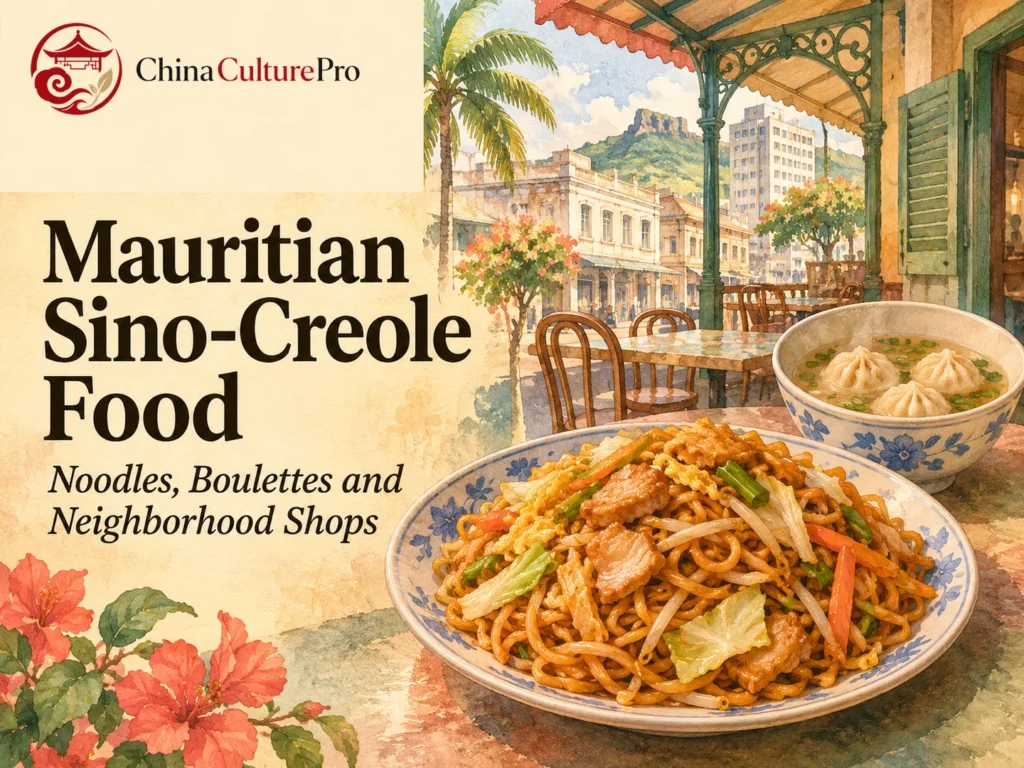
Mauritian Sino-Creole food describes Chinese-influenced dishes that became part of local cooking in Mauritius. Mine frite is stir-fried noodles, boulettes are often served as steamed dumplings or balls in broth, and bol renversé is a rice-and-stir-fry dish turned out of a bowl. Chinese-run groceries and restaurants helped bring these food traditions into wider local life. [1][2][3][4]
- Noodles: Mine frite names a fried preparation. The toppings and seasonings can vary. [1][3]
- Broth: Boulettes can contain different fillings or ingredients, depending on the stall or kitchen. [2][3]
- Rice: Bol renversé is named for the upturned bowl that shapes the dish. [2][3]
Read the dish name and ask about the ingredients if you want to know what a particular kitchen serves.

At a Mauritian counter, noodles, dumplings in broth and a mound of rice turned out of a bowl can all belong to the same broad food history. Their names tell you what to expect in different ways. The shops, markets and families behind those dishes explain how Chinese food traditions took on local forms. [1][2][3]
How Chinese-Run Shops Shaped Mauritian Food Life
Research on Port Louis distinguishes earlier Hokkien and Cantonese arrivals from later migration by Hakka speakers from Meixian. Those movements brought people with different home languages and connections to the island. Historical research also describes a network of Chinese-run groceries, known in Creole as boutik sinwa or by related spellings. They served local customers outside the Chinese community as well. [1][4]
A grocery and a restaurant served different needs. One sold everyday supplies, while the other offered prepared meals. In Port Louis, research documents restaurants and general shops in Chinatown and identifies it as both a cultural and commercial center. The guide to Hakka diaspora networks gives wider context for the kin and hometown ties behind some migration routes. [1][4]
Mine Frite: What the Noodle Name Tells You
Mine refers to noodles in Mauritian Creole, and mine frite means fried noodles. It is the cooking method that the name identifies. A serving may include vegetables, egg, chicken or shrimp. A neighboring name, mine bouilli, refers to boiled noodles. The difference is between a stir-fried plate and a boiled noodle preparation. [1][3][5]
The rice and noodle dishes may be familiar from Chinese-influenced kitchens elsewhere, but the local names and ways of serving them reflect Mauritius. Use the Chinese noodles guide for the broader food category. Use the local menu to see which vegetables, meat or seafood a kitchen adds. [1][3]
Boulettes: Small Dumplings and Balls in Broth
Mauritius’s tourism site describes boulettes as small steamed dumplings served in hot broth, sometimes with vegetables or noodles. It lists examples made with shrimp, fish, tofu or vegetables. The name describes a category of food rather than one fixed filling. A vendor may serve several varieties in one bowl. [2][3]
The broth also changes how a person encounters the dish. A small order can be a snack. A bowl with noodles can make a larger meal. That range helps explain why boulettes show up in accounts of local street food as well as Chinese Mauritian cuisine. [1][2][3]
Bol Renversé: How the Upturned Bowl Shapes the Dish
Bol renversé means upturned bowl. Descriptions of the Mauritian dish include rice, vegetables and a meat or seafood stir-fry, often with an egg. The ingredients are arranged in a bowl and turned onto a plate. The name refers to the serving form, while the combination depends on the kitchen. [2][3]
The three names are useful for reading a menu because each tells you something different: a way to cook noodles, a category of dumplings or a way to present rice. The guide to Cuban Chinese food culture offers another example of how dishes change with migration. The Chinese diaspora culture guide connects the food traditions to the broader history of settlement. [1][2][3]
FAQs About Mauritian Sino-Creole Food
What is mine frite?
Mine frite is Mauritian fried noodles. The noodles may be stir-fried with vegetables and other ingredients, depending on the kitchen. [1][3][5]
Are boulettes always made with the same filling?
Mauritian food accounts describe several varieties, including seafood, tofu and vegetable examples. Check what a particular vendor is serving. [2][3]
Is Sino-Mauritian food eaten only in Chinatown?
Chinese Mauritian food traditions are part of everyday food in several settings. Boulettes and noodles appear in street food and other local kitchens as well as in Port Louis Chinatown. [1][2][4]
Источники
[1] Cultural Affairs Bureau, Macao. Macao, From the Ocean to the Archives
[2] Mauritius Tourism Promotion Authority. Savour the Best of Mauritian Cuisine
[3] Rough Guides. Food and Drink in Mauritius
[4] Kiyomi Yamashita, Ritsumeikan University. Transformation of the Chinese Community in Mauritius and the Regional Characteristics of the Port Louis Chinatown
[5] Mauritius.com. Mauritian Cuisine: The Dishes That Tell the Island’s Story