

Quick Answer: What Is a Gaiwan?
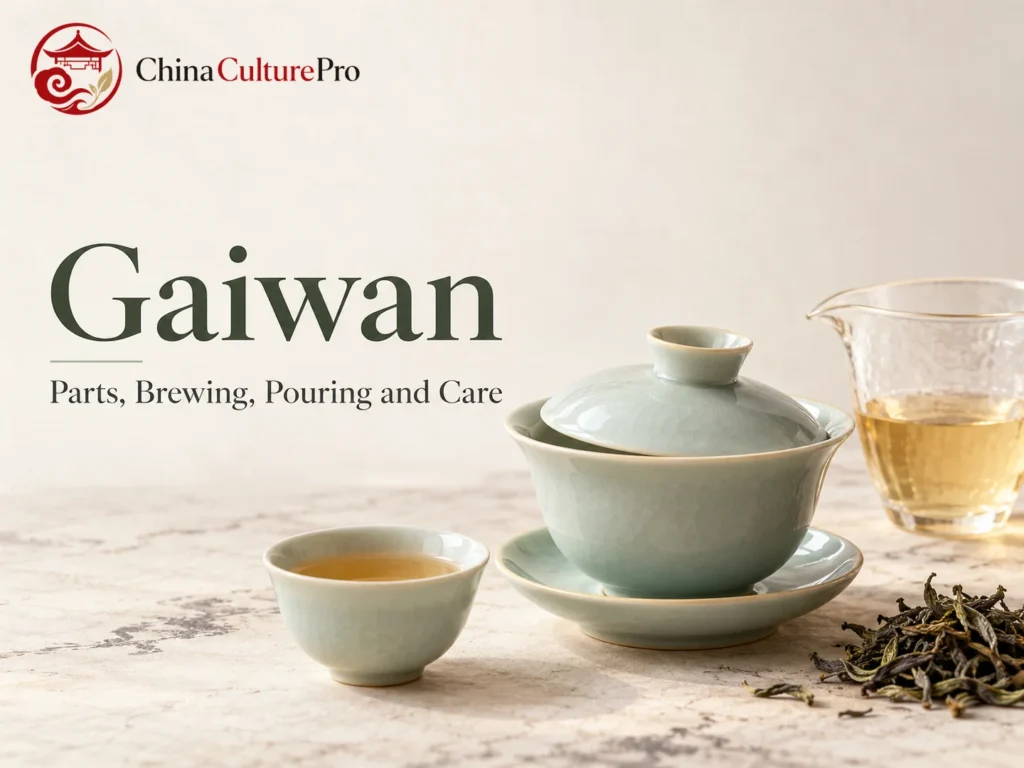
A gaiwan (盖碗, gàiwǎn) is a Chinese lidded bowl used for brewing or drinking loose-leaf tea. A familiar set includes a bowl, a fitted lid and a saucer, usually without a handle or spout.
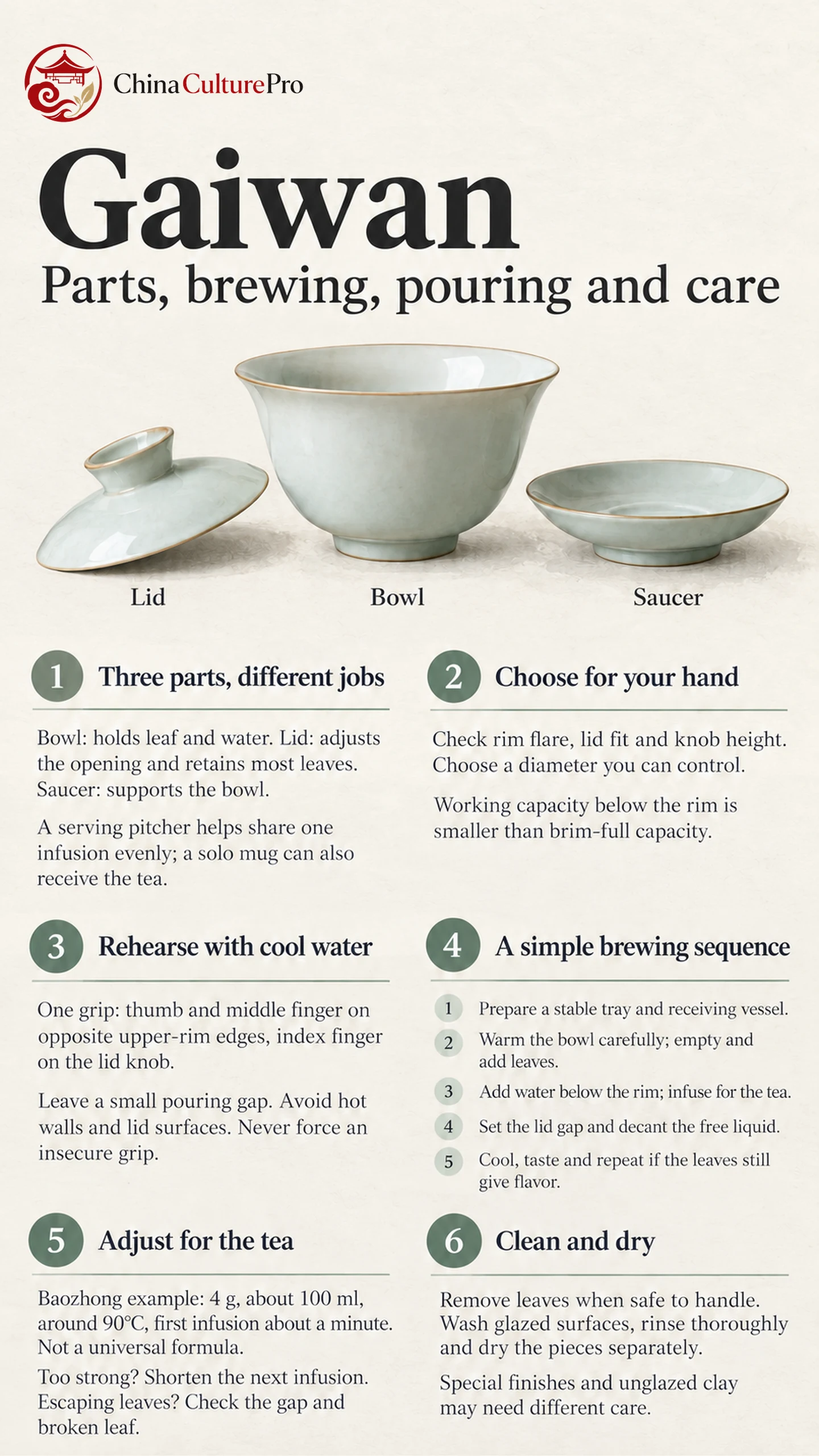
- Bowl: Holds the leaves and water, with room for leaves to open.
- Lid: Controls the opening used to retain leaves during drinking or pouring.
- Saucer: Supports the bowl and can assist handling in drinking styles.
You can drink from the bowl or decant into another vessel. These are different uses; a brewing gaiwan does not require a long ceremony or one fixed tea recipe.
A small covered bowl can brew tea, hold back leaves and serve as a drinking cup. Its simplicity makes the details matter: a comfortable rim, a secure lid and a controlled pour are more useful than elaborate decoration when exploring Chinese drinks.
The Bowl, Lid and Saucer Have Different Jobs
The broad opening makes it easy to see the leaves, add water and remove the spent leaf. A slight shift of the lid creates a gap. That gap acts as a coarse leaf barrier rather than a fine mesh filter: small broken fragments may still pass through.
| Часть | Practical function | Что уточнить |
|---|---|---|
| Bowl | Contains leaves and water. | An outward rim and a manageable diameter make the pouring grip easier to control. |
| Lid | Retains leaves and adjusts the opening. | The knob should be easy to touch without pressing fingers against the hot lid surface. |
| Saucer | Supports the bowl. | A stable fit helps when setting the vessel down or using a saucer-supported drinking method. |
Historical museum records describe drinking from covered bowls while the lid holds back the leaves. They document historical drinking practices; they do not establish one exclusive inventor for the vessel.[1][5]
For decanting, a gongdao bei (公道杯, gōngdào bēi) is a serving pitcher that receives an infusion before it is shared. It helps distribute one brew evenly among tea cups. A heat-safe mug can also receive a solo serving; a pitcher is useful rather than compulsory.[2]
Choosing a Gaiwan That Fits Your Hand
Choose a bowl you can hold comfortably while keeping the lid controlled. For a first purchase, the relevant size is not the largest bowl available but one that fits your hand and intended serving. Try the intended grip before committing to a filled pour.
Working capacity is the water you actually use below the rim, after allowing for leaves. It is smaller than a brim-full measurement. A seller’s listed capacity therefore does not tell you exactly how much tea reaches the cups.
A plainly glazed porcelain bowl makes it easy to inspect the liquor and clean out leaves. Shape matters alongside material: rim flare, lid movement and knob height all affect handling. For a first vessel, prioritize a comfortable grip over ornament or maximum capacity. The gaiwan versus teapot comparison helps if you prefer a handled pouring vessel.
How to Hold the Rim and Set the Lid Gap
Rehearse over a tray with cool water before adding hot tea. Set a small opening at the front, place the thumb and middle finger at opposite sides of the upper rim, and use the index finger to control the lid knob. This is one common grip, not a requirement to force every hand onto every bowl.[3]
The opening must let liquid flow while retaining most leaves. An opening that is too small can slow the pour; one that is too large lets more leaf escape. Keep the pouring path clear of your other hand and place the receiving vessel close enough to avoid reaching awkwardly.
Do not grip the hot bowl wall or press a fingertip onto the lid surface. Leave space below the rim when filling; overfilling can heat the contact area and cause spills.[2] If the vessel feels insecure or too hot to hold, set it down. Learning does not require accepting a burn. A saucer-supported method or a handled brewer may suit you better.
How to Brew Tea in a Gaiwan
Once the cool-water grip feels controlled, use this basic sequence. Water temperature and steeping time should match the particular tea, not the bowl’s name.
- Prepare the setting: Place the gaiwan and a heat-safe receiving vessel on a stable tray or surface. Keep the pouring route clear and check that the bowl and lid are sound.
- Warm and add leaves: Warm the vessel with suitable hot water, empty it carefully, then add the measured leaves. Do not handle hot water until the grip is secure.
- Add water and infuse: Add water below the rim and set the lid. Start with the tea’s brewing guidance; leave enough space for leaves to expand.
- Set the gap and decant: Move the lid slightly, secure the rim-and-knob grip and pour into the pitcher or mug. Drain the free liquid between infusions.
- Taste and repeat: Let the liquor cool to a comfortable drinking temperature before tasting. Refill the gaiwan for another infusion if the leaves still give a pleasant flavor, adjusting the next steep as needed.
The sequence separates brewing from serving and can be repeated without adding theatrical gestures. A public brewing demonstration likewise uses a lid gap and decanting before serving.[3]
Adjusting the Tea and Solving Common Problems
As one concrete starting example, a published Baozhong (包种, Bāozhǒng) oolong demonstration uses 4 g of leaf with about 100 ml of water, around 90°C, and a first infusion of about a minute. This is a tea-specific example, not a universal gaiwan formula. A tightly rolled oolong, delicate green tea or broken leaf may call for different handling.[4]
Change one factor at a time. If the brew is too strong, shorten the next steep or use less leaf at the next session. If it is weak, consider a longer infusion before adding several changes together. The oolong and green tea comparison explains why processing and leaf form affect brewing choices.
If leaves escape, first inspect the lid gap and the amount of broken leaf. If water dribbles, rehearse the angle and check that leaves are not blocking the opening. A fine strainer is optional for fragments; it does not replace a stable grip. Letting leaf and water separate between infusions also makes flavor easier to control.[4]
Cleaning and Drying Your Gaiwan
After the vessel has cooled enough to handle, remove the leaves, wash the glazed surfaces and rinse thoroughly. Clean under the lid and around the foot, then let the pieces dry separately before storage. Avoid strong residual cleaning smells. Follow the maker’s instructions for decorative finishes and special materials; care practices for unglazed Yixing clay teapots should not automatically be copied onto every gaiwan.
FAQs About Gaiwans
Can you drink directly from a gaiwan?
Yes. Use the lid to hold back leaves and let the tea cool to a comfortable drinking temperature. The saucer can support the bowl. Direct drinking differs from decanting an infusion into a pitcher or cup.
Can a gaiwan brew green tea?
Yes. A covered bowl is not restricted to oolong or pu-erh. Choose leaf quantity, water temperature and infusion length for the green tea, and avoid assuming that a tightly covered hot bowl suits every delicate leaf.
Do you need to rinse every tea?
No. A rinse is a tea-specific choice, not a compulsory step built into the vessel. Warming the empty gaiwan is different from rinsing tea leaves. A brief rinse does not reliably remove all caffeine.
Is a gaiwan better than a teapot?
Neither is universally better. The gaiwan offers easy leaf access and an adjustable opening, while a handled pot may make pouring more comfortable. The right choice depends on hand fit, material and the kind of session, rather than a compulsory tea ceremony.
Источники
[1] National Museum of Natural Science. 蓋碗
[2] Teasenz, original brewing demonstration. How to Use a Gaiwan without Burning your Hands
[3] Tea Angle, original brewing guide. How to use a Gaiwan
[4] SANBAOTEA, original brewing demonstration. Brew Tea in a Gaiwan
[5] National Palace Museum Southern Branch. 茶文化區