


Quick Answer: What Are Chinese Spring Rolls?
Chinese spring rolls(春卷,chūnjuǎn)wrap a filling in a thin skin. The familiar crisp version uses a flour wrapper sealed around vegetables, meat or a sweet filling, then fried.[1][3]
- Wrapper: A thin skin becomes a delicate, crisp shell when fried.
- Filling: Vegetables, pork and mushrooms are common savory choices; sweet versions also exist.
- Texture: The brittle outside contrasts with the softer filling.
- Occasion: Spring celebrations, family meals and dim sum offer different settings.
The name covers regional differences, including soft rolls that are eaten without frying.
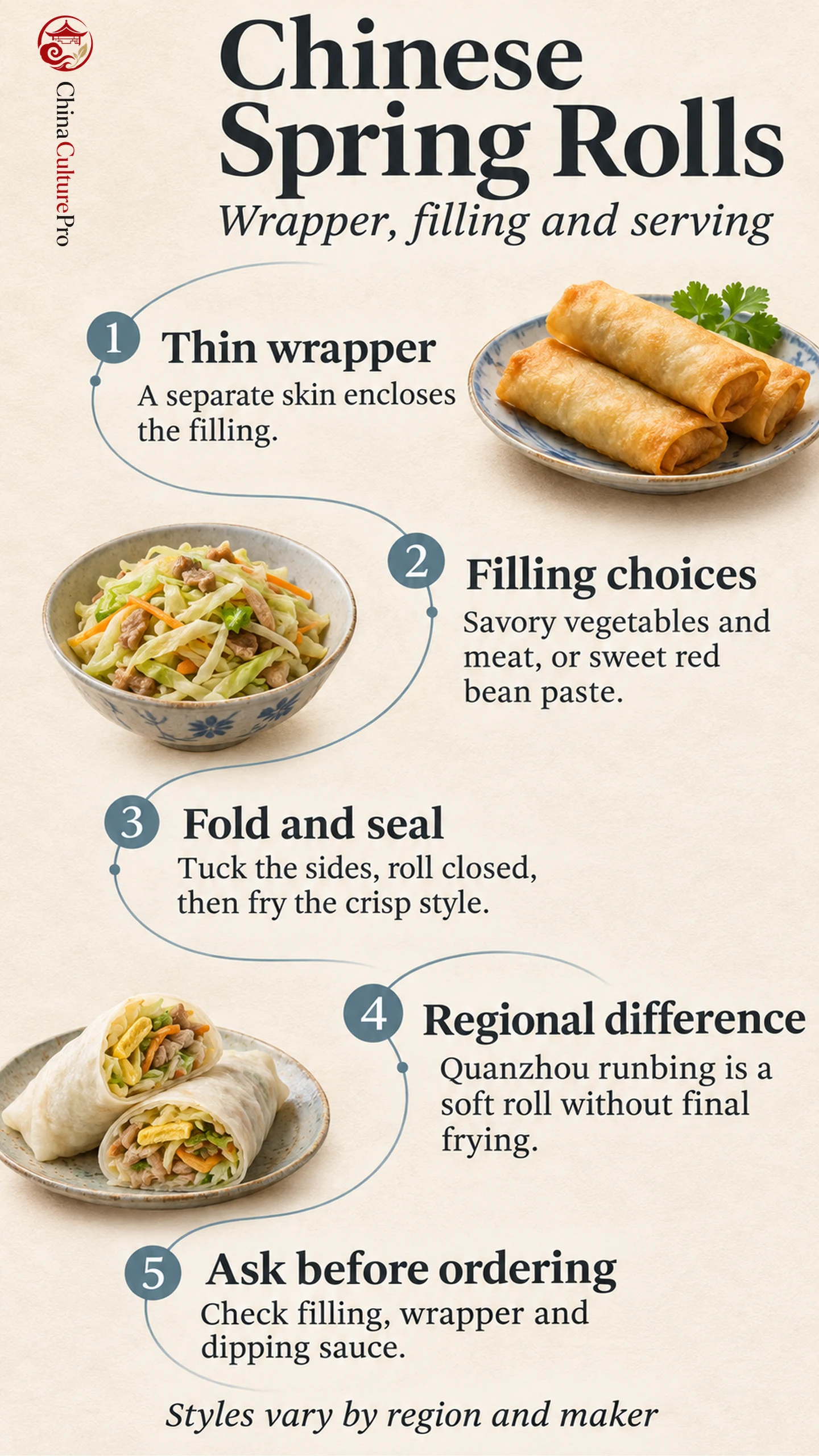
Look beyond the golden wrapper: the filling and local serving style explain which spring roll is on your plate.
The Wrapper, Filling and Sauce
For the fried style, a thin wheat-flour wrapper encloses the filling completely. It is a separate layer, not batter poured over a loose mound of vegetables. Once fried, that layer supplies the crisp first bite.[4]
Inside, shredded ingredients make the filling easier to distribute along the roll. A Shanghai family version combines napa cabbage, pork and shiitake mushrooms. A Cantonese family version adds ingredients such as carrot and bamboo shoots. These examples demonstrate different combinations, rather than two compulsory regional ingredient lists.[1][2]
Sweet fillings change the eating experience without changing the enclosing form. Red bean paste brings a smooth, sweet center instead of a vegetable-and-meat mixture. It is one documented Shanghai option, so “spring roll” alone does not tell you whether the filling is savory.[4]
Dipping sauce is a further choice. Vinegar accompanies the Shanghai family example; dim sum accounts describe several condiments or no sauce at all. A sauce beside the roll should not be confused with the seasoning already cooked into its filling.[1][2]
How Crisp Spring Rolls Are Assembled
A common cooked-filling method separates filling preparation from wrapping and final frying:[2]
- Cook and season the shredded filling, reducing loose liquid.
- Let the filling cool before placing it on a thin wrapper.
- Fold the wrapper over the filling and tuck in the sides.
- Roll into a closed parcel and seal the final edge.
- Fry the assembled roll and drain before serving.
The folded sides keep the filling enclosed. The finished roll should therefore be understood as a filled parcel, rather than an open pancake folded at the table. Its shell and filling remain two distinct textures.[2][4]
Regional Styles and Spring Traditions
| Ситуация | Документированный пример | Serving distinction |
|---|---|---|
| Шанхай | Cabbage and pork, or sweet red bean paste | Fried, enclosed rolls |
| Cantonese dim sum | Vegetable-and-pork combinations | Small shared dishes with optional condiments |
| Quanzhou | Runbing(润饼,rùnbǐng), also locally called spring rolls | Thin skins enclosing cooked mixed fillings, eaten without final frying |
A family account of Shanghai food traditions places spring rolls at New Year celebrations. A local spring-food account also connects rolls and pancakes with welcoming the season. This does not mean every family eats the same filling on one fixed date.[1][4]
The dim sum setting gives fried rolls a different role: one dish among several shared plates. In Quanzhou, within Fujian’s food culture, runbing may contain cooked vegetables, seafood, meat, egg and peanut powder. Local records describe family gatherings at Qingming and several other holidays.[2][5]
Spring pancakes belong to the broader world of Chinese flatbreads. Their soft, meal-time wrapping format should not be mistaken for the sealed, fried rolls described above.[4]
Choosing and Eating Spring Rolls
Ask whether the roll is fried or soft, then choose the filling. A meat-free name does not explain every seasoning: a published vegetable-and-pork preparation uses oyster sauce, while other examples include soy sauce and sesame oil. Check the actual recipe when avoiding animal ingredients, wheat, soy or sesame.[1][3]
For runbing, ask about seafood, egg and peanuts as well as meat. These can be mixed through the filling and may not be obvious from the outside.[5]
Fried rolls are commonly served warm. Try the first bite before adding sauce, then dip as desired. If a condiment is unfamiliar, ask whether it is vinegar, a sweet sauce or soy sauce rather than assuming every dark dipping sauce is identical.[2][3]
FAQs About Chinese Spring Rolls
Are Chinese Spring Rolls Always Savory?
No. Sweet red bean paste is a documented filling as well as savory vegetable-and-meat mixtures.[3][4]
Are All Chinese Spring Rolls Fried?
No. Quanzhou runbing, also called spring rolls locally, encloses cooked fillings in a soft skin without a final frying stage.[5]
Are Vegetable Spring Rolls Vegan?
They can be, but the name alone is insufficient. Confirm the filling, wrapper, sauces and cooking arrangements with the maker.
Источники
[1] Judy Leung. Shanghai-Style Spring Rolls
[2] Bill Leung. Cantonese Spring Rolls
[3] Elaine. Chinese Spring Rolls
[4] Information Office of Shanghai Municipality. Special Dishes as Everything Comes Back to Life
[5] Quanzhou Municipal People’s Government. Runbing: Spring Rolls