


Quick Answer: What Made Chinese Copper-Red Glazes Red?
A Chinese copper-red glaze (铜红釉, tónghóngyòu) gets its color from copper that changes chemically as the vessel is fired. In a red glaze, the color is part of the glaze layer. In underglaze copper red (釉里红, yòulǐhóng), potters painted copper-bearing designs beneath a clear glaze.[1][2]
- A copper-red glaze can cover a whole area of the vessel.[1]
- The combination of heat and oxygen conditions affects the resulting color.[2]
- Qing objects show effects from deep glossy red to pink with greenish mottling.[3][4]
Start with the placement of the color, then read the object’s date and glaze description.
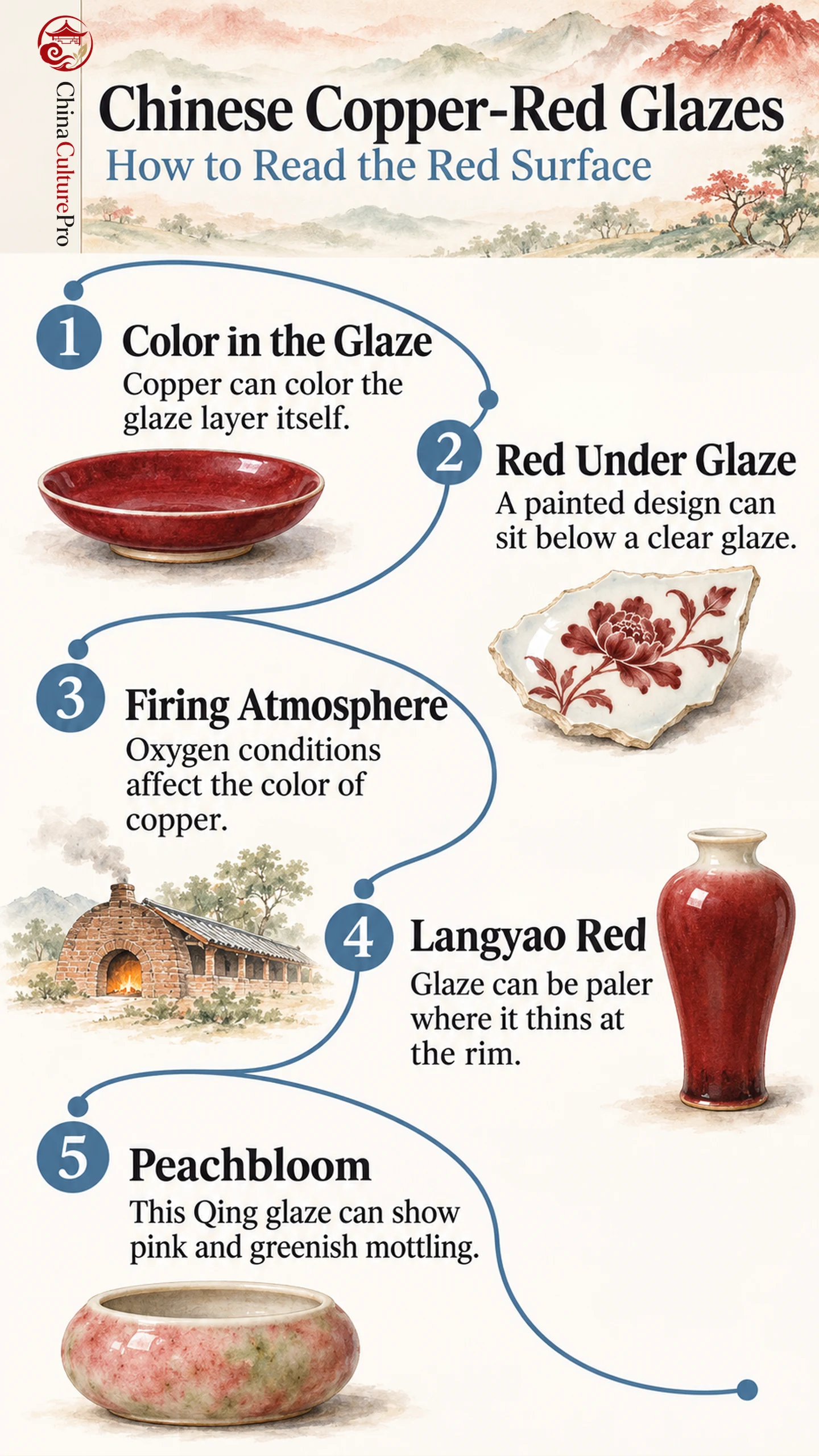
Two Chinese ceramics may look red in a museum photograph even though one has a red glaze and the other has red brushwork under a clear coat. A third can get its red color from a different element.
Red Glaze and Underglaze Red
Color in a glaze coats a surface. A painted design in underglaze red has a separate position beneath the clear glaze. This second arrangement also occurs in cobalt-blue decoration, though those blue designs use a different colorant.[2][6]
The distinction helps when a vessel has several colored details. Describe the field and each painted area separately, then compare the wording with the museum record.
How Firing Conditions Matter
Copper can produce different colors under different conditions. Many historical Chinese copper reds depend on high-temperature firing in a reducing atmosphere, meaning one with relatively little oxygen available for oxidation. The chemistry of the fired layer affects the final appearance.[2] The history of Chinese kiln types explains how pottery workshops arranged their firing spaces.
Early Ming Red at Jingdezhen
The imperial kilns at Jingdezhen made notable high-fired copper-red wares during the early Ming, especially in the Yongle and Xuande periods. The Palace Museum also holds a later Chenghua-period dish with a bright red glaze. These examples put the color in the history of Ming porcelain without treating it as one unchanging product.[1][5]
The Palace Museum describes later use of a lower-fired iron red as an alternative. Red alone does not establish copper as the colorant. Iron-bearing glazes form a separate family with their own range of colors.[1]
Reading Two Qing Copper Reds
On a Kangxi-period Langyao red (郎窑红, lángyáohóng) vase, the Palace Museum identifies an upper rim where the glaze thins and the pale body shows through. Lower down, thicker glaze appears deeper red. A single glaze therefore gives visibly different colors at the rim and lower on the body.[3]
The Met’s Kangxi brush washer illustrates another effect. Its peachbloom glaze is pinkish red with patches of greenish mottling. The color variation is part of the surface the museum describes.[4]
FAQs About Chinese Copper-Red Glazes
Is underglaze red the same as copper-red glaze?
In underglaze red, the copper-bearing design lies beneath a clear glaze. In copper-red glaze, the color is in the glaze itself.[2]
Can copper produce more than one red effect?
Yes. A deep Langyao red and a mottled peachbloom can both use copper as the colorant.[3][4]
Does every red Chinese glaze contain copper?
No. The Palace Museum also records red glazes colored with iron.[1]
Источники
[1] Музей Гугун. Chenghua dish with bright red glaze
[2] International Union of Crystallography. Colouration mechanism of underglaze copper-red decoration porcelain
[3] Palace Museum. Langyao-red pipa-shaped vase
[4] The Metropolitan Museum of Art. Kangxi-period brush washer
[5] British Museum. Room 95 Chinese ceramics gallery guide
[6] Palace Museum. On early Yuan underglaze red and its decoration