
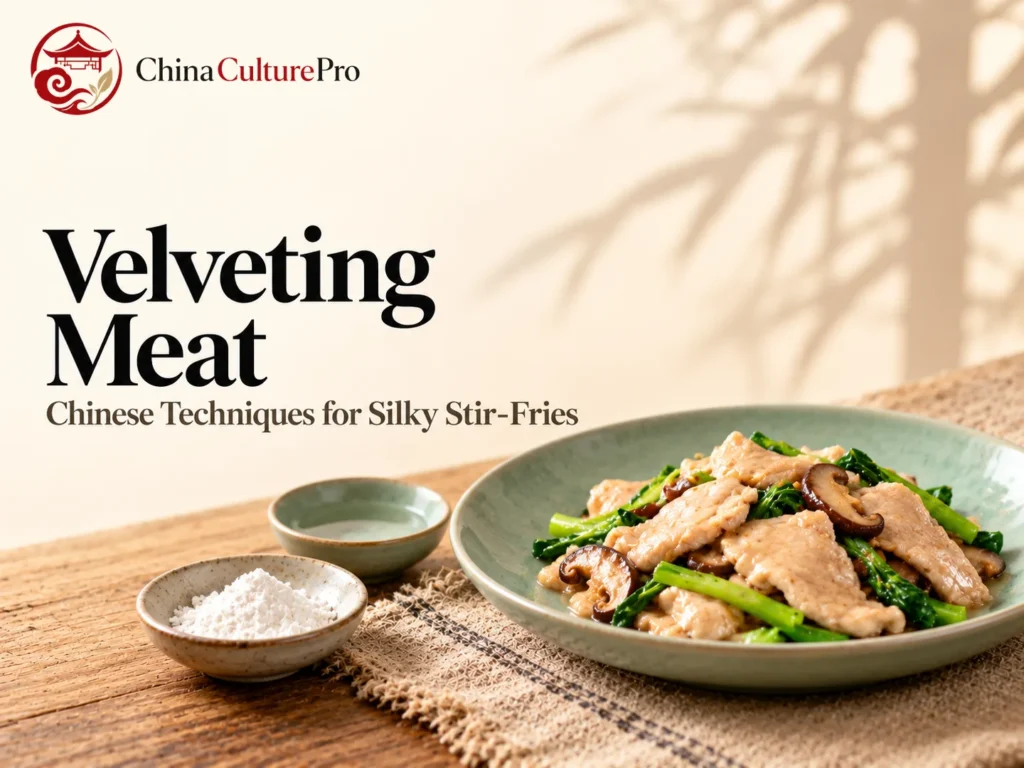

Quick Answer: What Is Velveting Meat?
Velveting meat is a Chinese preparation approach that gives sliced meat a smooth, tender surface for stir-fries and other dishes. It commonly combines a thin starch-based coating with an initial cooking stage, followed by finishing with vegetables, sauce or broth. Recipes differ in both the coating and the cooking medium. [1][2][3]
- Coating: Starch and liquid form a light layer; egg white and seasonings are optional in some versions.
- Tenderizing: Baking soda is a separate, optional treatment rather than the definition of velveting.
- Cooking: Oil-blanching, water-blanching and home adaptations such as searing produce different effects.
- Finish: The meat must reach its safe finished state, not merely look coated or opaque.
Velveting aims for silkiness rather than a thick crisp batter. It helps texture but does not make meat impossible to overcook.
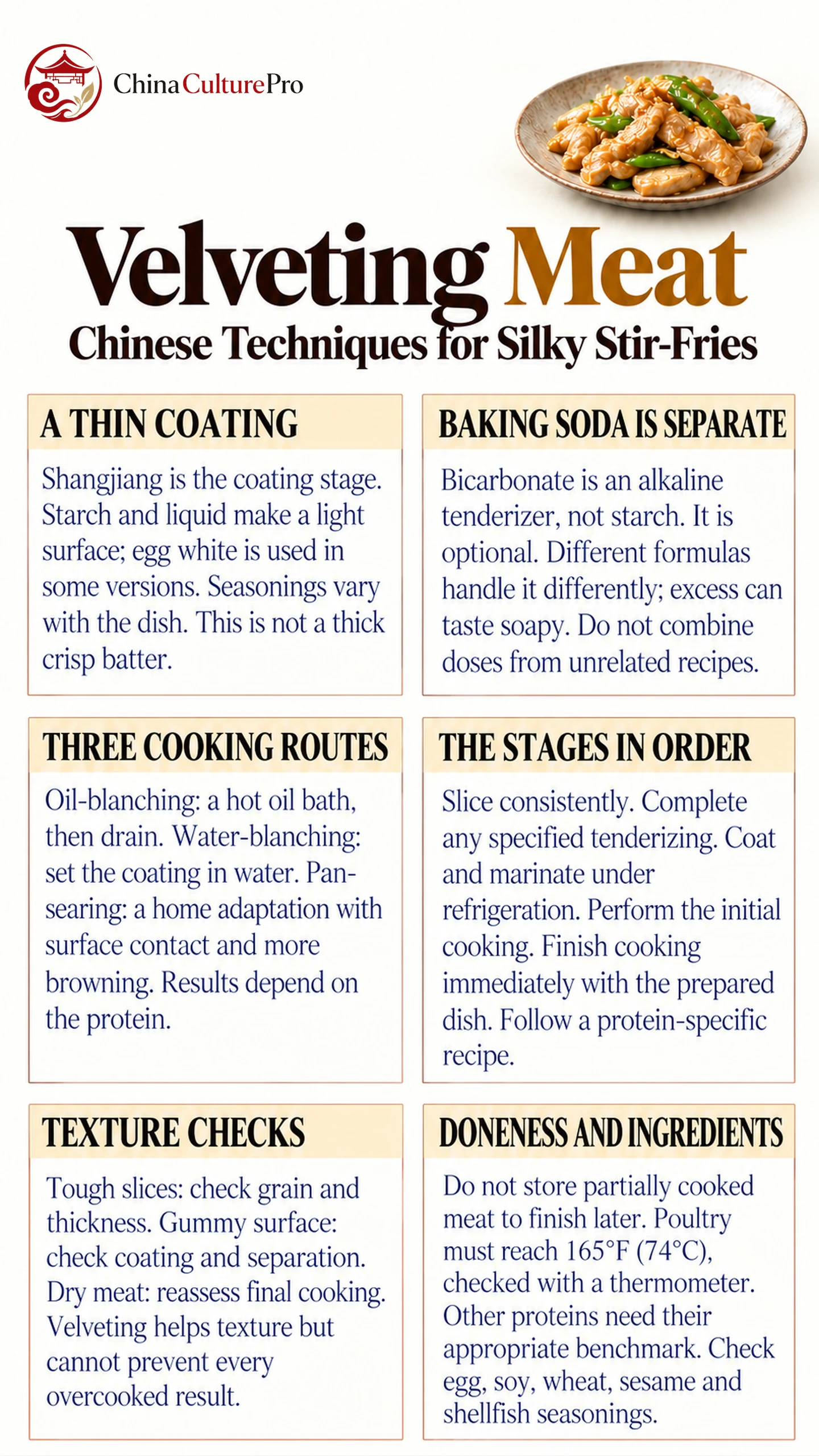
Tender chicken slices in a lightly sauced stir-fry feel different from breaded fried chicken or an uncoated steak. That silky surface comes from preparation as well as heat. Separating the coating, optional tenderizer and cooking stages explains why velveting recipes can look so different.
The Coating: Starch, Liquid and Optional Egg White
The coating stage is called shangjiang(上浆,shàngjiāng), literally applying a slurry. It places a thin, moist layer around small pieces of protein. English velveting often includes the cooking steps that follow, so the two expressions do not always describe exactly the same span of work. [1][3][9]
Cornstarch is a common coating ingredient; potato starch also appears in professional practice. Liquid helps distribute the coating, and heating sets it into a smooth surface. This is not the same as coating meat in a thick batter intended to fry into a crunchy shell. [3]
Some versions combine starch and egg white; others use water, oil and starch without egg. Soy sauce, oyster sauce or rice wine may add flavor, but they are not interchangeable requirements. The coating should suit the finished dish: a pale, delicate sauce and a darker savory stir-fry need not start with identical seasonings. [1][3]
Velveting vs Baking-Soda Tenderizing
Baking soda is an alkaline tenderizer. It can raise meat pH; it is not a starch and does not perform the same job as a starch coating. A cook can use a coating without baking soda, or combine a measured tenderizing treatment with a later coating. [2][5]
This distinction matters especially with beef. Some methods use a separate treatment followed by rinsing, while other recipes incorporate a much smaller amount into the marinade. Those are different formulations, not instructions to combine freely. Too much baking soda or excessive treatment can leave an unpleasant soapy taste and change the texture. [2]
Naturally tender chicken may not need that additional treatment. Choose a recipe written for the protein and cut you have; adding more tenderizer is not automatically an improvement. [1][2]
Oil, Water and Pan-Searing Methods
The initial cooking stage sets the coating and develops the texture needed for the final dish. These routes should be distinguished within the broader range of Chinese cooking methods. [1][3]
| Metode | What changes |
|---|---|
| Oil-blanching: guoyou(过油,guòyóu) | Passing coated pieces through hot oil before draining and finishing. The aim is a tender surface rather than a deep golden crust. [3] |
| Water-blanching: guoshui(过水,guòshuǐ) | Setting the coated pieces in water, sometimes with a little oil. This avoids needing a large bath of oil, though the handling and outcome depend on the protein. [3][4] |
| Pan-searing adaptation | Cooking coated slices against a hot pan surface before combining them with the rest of the dish. It can develop more browned flavor than a gentle blanch. [1][2] |
A Velveting Workflow for Home Cooking
Use the following order to understand a protein-specific recipe. The ingredient amounts and degree of initial cooking must come from that recipe, not a universal rule for every kind of meat. [1][2][3]
- Trim and slice the meat into consistent pieces, cutting across the grain where appropriate. Prepare the other stir-fry ingredients before starting the cooking stage.
- If the recipe requires a separate tenderizing treatment, complete that step as directed. Do not add it merely because another recipe uses it.
- Mix the specified coating and seasonings with the meat. Marinate in the refrigerator rather than leaving raw meat on the counter. [8]
- Use the recipe’s oil, water or searing method. Separate pieces gently so the coating does not become one large clump.
- Finish cooking immediately with the prepared dish. Check safe doneness; do not refrigerate partially cooked meat to complete another day. [6][7]
Choosing Meat and Fixing Texture Problems
Thin, evenly cut pieces suit quick cooking better than large, irregular chunks. Chicken breast, pork and sliced beef are common candidates; delicate fish and shrimp also have their own versions. Velveting does not make every tough, connective-tissue-rich cut behave like a tender steak. [1][2][3]
- Tough slices: check the grain direction and thickness as well as the treatment. Cutting beef across its fibers is a separate source of tenderness. [2]
- Gummy coating: reassess the amount of coating and whether pieces were separated properly. A light surface layer is the goal. [3][4]
- Dry finished meat: check the final cooking stage. An initial blanch does not remove the need to control the rest of the cooking. [1]
- Soapy flavor: excessive baking soda can be the cause. Follow one tested formulation rather than adding an extra dose to an already tenderized meat. [2]
Safety and Ingredient Checks
Keep raw meat and its utensils separate from ready-to-eat food. Marinate under refrigeration, then move through the cooking stages without a storage break after partial cooking. A silky surface or white exterior does not establish safe doneness. [6][7][8]
For poultry, the U.S. safe internal-temperature benchmark is 165°F (74°C), measured with a food thermometer. For beef, pork, lamb and veal steaks, chops and roasts, it is 145°F (63°C) with at least a three-minute rest; ground forms of those meats require 160°F (71°C). Apply the benchmark for the actual food, not simply the word velveted. [7]
Check optional egg white, soy, wheat-containing sauces, sesame and shellfish-derived seasonings when dietary restrictions matter. A corn-based starch does not establish that the whole marinade is gluten-free. After preparation, wok cooking still determines the finish, whether the meat is combined with greens or Chinese mushrooms. [1][3]
FAQs About Velveting Meat
Is Egg White Necessary for Velveting?
No. Egg white is used in some coatings, while other successful formulations rely on starch, liquid and oil. Follow the intended method rather than adding egg to every recipe.
Is Velveting the Same as Marinating?
Marinating is part of many velveting methods, but a flavor marinade alone does not necessarily create the same surface. The thin coating and its subsequent cooking help distinguish the technique.
Can You Velvet Meat Without a Wok?
Yes. Water-blanching uses a suitable pot, and some home adaptations sear coated pieces in a pan. The important choices are the coating, handling and complete cooking, not the vessel’s name.
Should Velveted Meat Be Crispy?
Usually the goal is smooth and tender. A seared adaptation may brown slightly, but a thick, crunchy coating belongs to a different intended result. The final dish and method determine the texture.
Sumber
[1] Bill Leung. How to Velvet Chicken for Stir-Fry
[2] Bill Leung. How to Velvet Beef for Stir-Fry
[3] Michelin Guide. Technique Thursday: Velveting in Chinese Cooking
[4] Shao Z. An Introduction to Water-Velveting
[5] Poultry Science research. The Use of Sodium Bicarbonate for Marination of Broiler Breast Meat
[6] USDA FSIS. Is It Safe to Partially Cook Meat or Poultry and Finish It Later?
[7] USDA FSIS. Safe Internal Temperatures for Meat and Poultry
[8] USDA FSIS. How Long Can You Marinate Meat and Poultry?
[9] Jining Culture and Tourism Bureau. Regional Cooking Report: Coating, Oil-Blanching and Finishing