


Quick Answer: What Is Snow Fungus Sweet Soup?
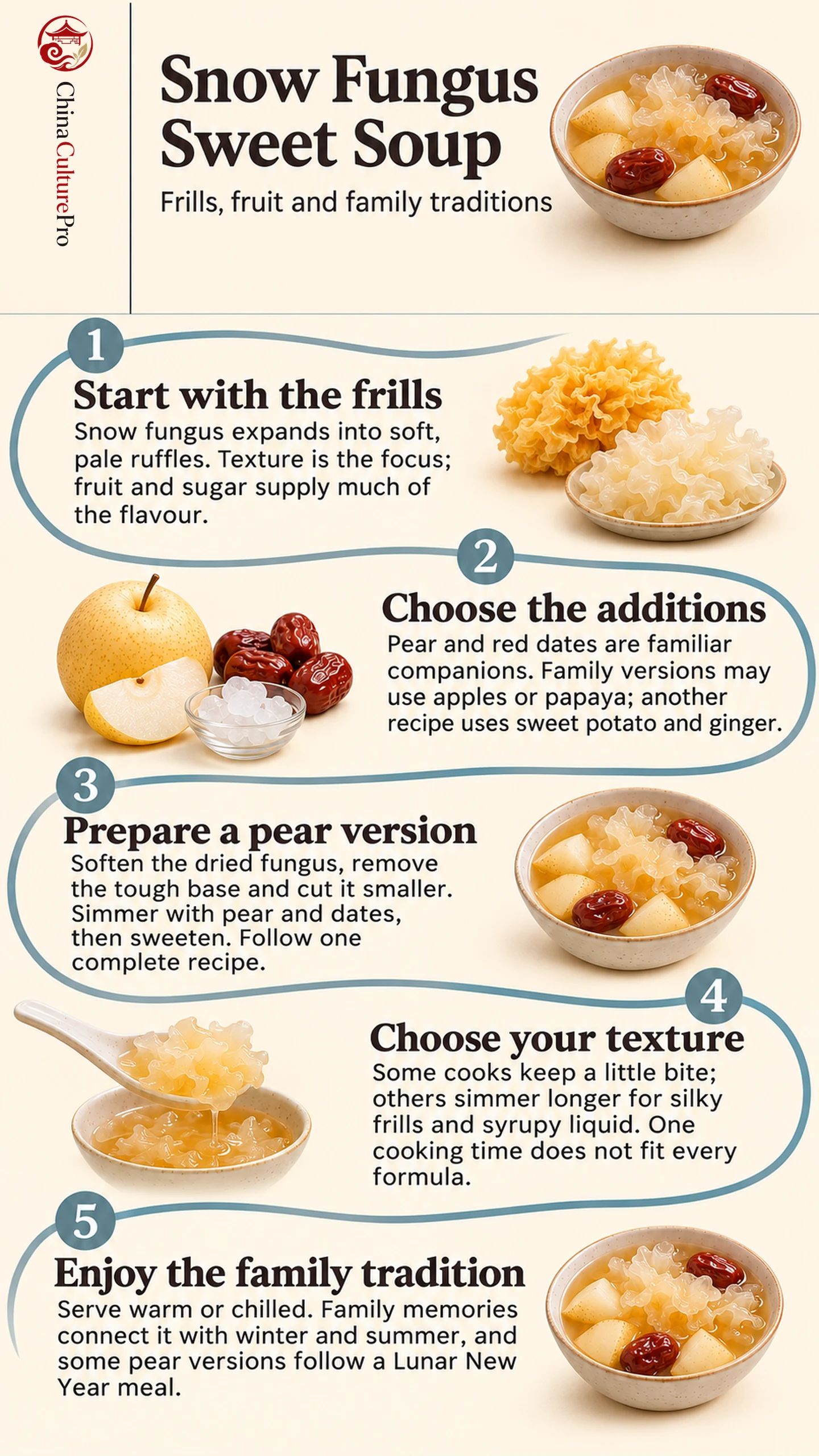
Snow fungus sweet soup is a Chinese dessert built around the soft, ruffled texture of snow fungus, Yin Er (银耳, yín ěr). Fruit, dried dates and sugar can give the liquid its sweetness.[1][2][3]
- The pale fungus is valued mainly for texture, rather than a strong flavour.
- Dried pieces are softened in water and their hard base removed.
- Finished soups range from light and gently chewy to thicker and silky.[1][2]
Pear is a familiar addition, but it does not define every family version.[3][4]
Snow Fungus, Fruit and Gentle Sweetness
Rehydrated snow fungus opens into delicate, frilled pieces. It gives the dessert an appearance and mouthfeel quite different from a smooth fruit purée.[1][3]
| Bahan | Role in a pear version |
|---|---|
| Snow fungus | Soft, ruffled pieces in the liquid |
| Pear | Fruit sweetness and tender chunks |
| Red dates | Dried-fruit flavour and sweetness |
| Rock sugar | An adjustable sweet finish |
Dates and fruit contribute sweetness too, so the final sugar amount can be adjusted to the ingredients and the chosen recipe.[1][2]
How a Simple Pear Version Is Made
One home recipe uses 30 g dried snow fungus, two pears, 10–12 pitted red dates, 1,200 ml water and 80–100 g rock sugar, or sugar to taste.[2]
- Soak the fungus until soft, about 20 minutes in this recipe.
- Remove the hard yellow underside and cut the frills into smaller pieces.
- Core and cut the pears. Bring them, the dates and fungus to a boil in the measured water, then simmer gently for 30 minutes.
- Add sugar to taste and stir until dissolved.[2]
This is a relatively short-cooked pear soup. Other versions deliberately cook longer for a different texture.[1][2]
From Delicate Frills to a Silky Soup
Cooking time changes the eating experience. A family account describes enjoying some remaining bite, while allowing a longer simmer for softer frills. The fungus need not disappear into the liquid.[3]
A longer-cooked pear recipe aims for a syrupy soup with a light amber colour. After initial simmering of the fungus and pear, its final low simmer lasts another one to two hours. That timing belongs to that recipe, not the shorter method above.[1]
Family Recipes, Seasons and Variations
One writer recalls eating the soup hot in winter and chilled in summer, and recreating a parent’s version while living away from home. Such memories place the dessert in everyday family cooking, not only restaurant menus.[3]
A pear version is also presented as a dessert after a Tahun Baru Imlek meal. This is one family food tradition, rather than a rule that the soup belongs exclusively to that festival.[1]
Fruit choices are flexible: apples or papaya appear in family descriptions. A separate sweet-potato version combines the fungus with ginger, rock sugar and goji berries and can be served warm or chilled.[3][4]
FAQs About Snow Fungus Sweet Soup
Does every version contain pears?
No. Fruit options include apples and papaya. A separate version uses sweet potato instead.[3][4]
Why remove the hard yellow base?
It stays tough compared with the soft frills, so recipes trim it away before cooking.[1][2]
Is a very thick soup the only correct texture?
No. Some cooks prefer a lighter soup with more bite, while others aim for a softer, syrupy result.[1][3]
Sumber
[1] Judy. Snow Fungus Soup with Pears
[2] Ann Low. Snow Fungus and Pear Sweet Soup
[3] Jennifer Wong, SBS Food. Making Snow Fungus Sweet Soup from Memory
[4] Adam Liaw, SBS Food. Sweet Potato and Snow Fungus Dessert Soup