


Quick Answer: What Is Bai Tang Gao?
Bai Tang Gao(白糖糕,báitánggāo)is a sweet Cantonese steamed rice cake with a springy, slightly chewy honeycomb crumb. Baak tong gou is a Cantonese spelling; bai tang gao is Mandarin pinyin.[1]
- Base: Rice flour or rice batter, water and sugar.
- Leavening: Fermentation helps create the characteristic porous structure.
- Cooking: The batter is steamed rather than baked.
- Eating: The cake is cooled and cut into portions.
The familiar rice-flour version does not require egg to become spongy, and “white sugar cake” is not a complete ingredient list.
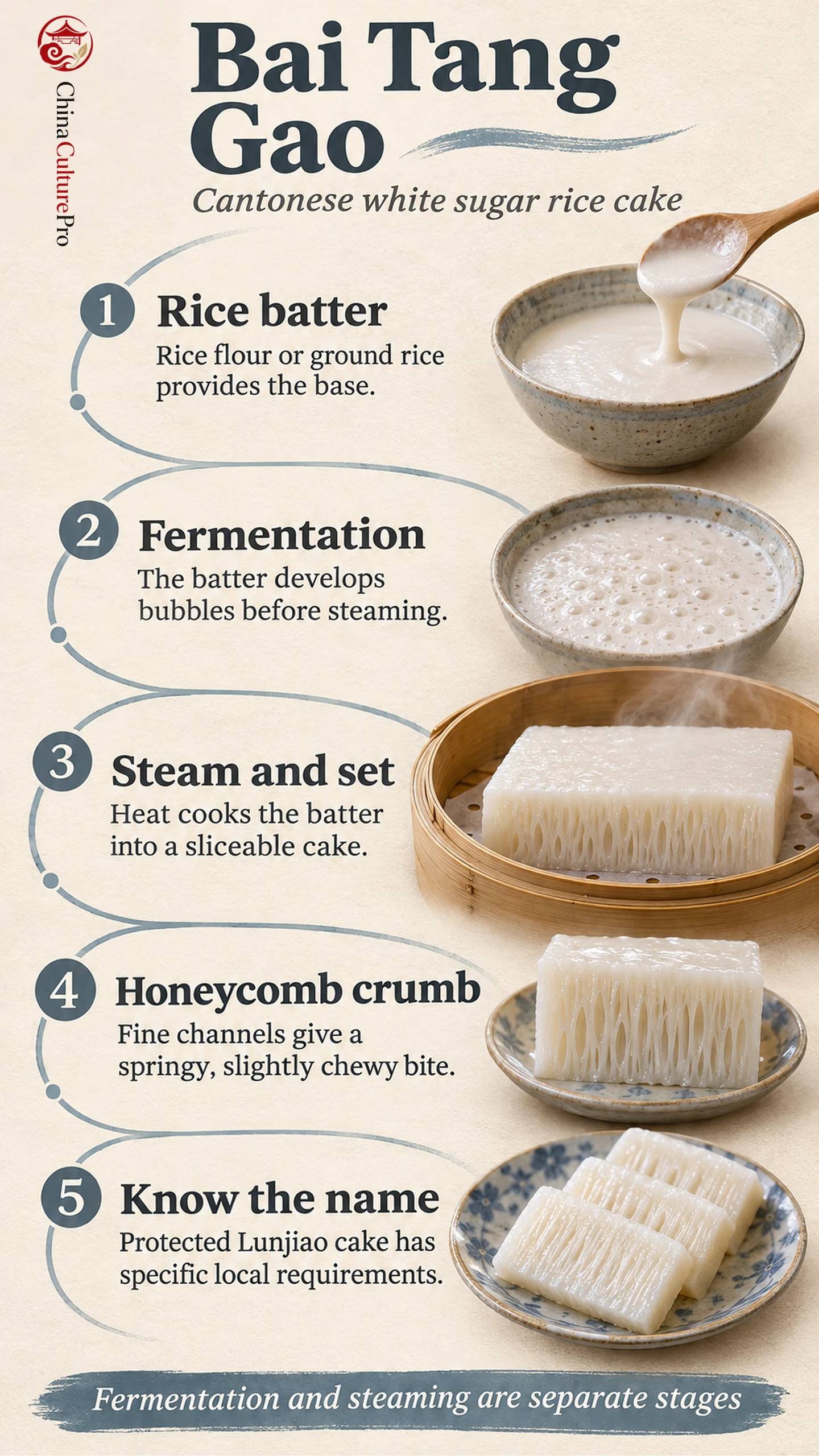
Its glossy top gives little away. The cut face reveals the airy channels and resilient rice-cake texture underneath.
Rice Batter, Sugar and Fermentation
Rice flour forms the cake’s body; sugar provides sweetness and water turns the ingredients into a batter. This is not kneaded wheat dough, and the familiar recipe is not based on glutinous rice flour.[1]
Yeast fermentation is a separate stage before steaming. The batter develops bubbles, then heat sets it into a cake. The result sits between a sponge-like crumb and a chewy rice cake, with a fermented aroma in some versions.[1][2]
The rice itself may enter the process in different forms. A protected local rice-cake specification begins with soaked rice ground into a batter, whereas home recipes can begin with packaged rice flour. These starting points should not be confused with a requirement to use one product in every kitchen.[2][4]
How the Honeycomb Cake Is Made
One rice-flour method follows this sequence:[2]
- Mix rice flour and water into a smooth base.
- Dissolve sugar in water and let the sweet liquid cool appropriately for the yeast.
- Combine the yeast, sweet liquid and rice mixture.
- Let the batter ferment until bubbles develop.
- Transfer to a prepared pan, steam, then cool and cut.
Fermenting and steaming do different jobs. The first develops the batter; the second cooks and sets it. The cake is not made by simply cooling an unfermented bowl of sweet rice liquid.[2]
Reading the Crumb and Recipe Variations
| Aspek | What it tells you | What it does not guarantee |
|---|---|---|
| Honeycomb-like channels | A porous steamed rice-cake structure | One identical fermentation method |
| Pale, glossy surface | The familiar appearance of the white cake | A complete list of ingredients |
| Springy bite | A soft cake with some chew | The crumb of a baked egg sponge |
Some home versions add pandan for fragrance and baking powder alongside yeast. That variation still ferments its batter; it is not evidence that every bai tang gao uses baking powder or that fermentation is irrelevant.[3]
Compare water chestnut cake, which has a smoother starch-set body, and ma lai go, a different steamed sponge. Similar serving shapes do not make their batters interchangeable.
The Lunjiao Connection and Everyday Food Memories
Lunjiao cake(伦教糕,Lúnjiāo gāo)is closely associated with this fermented rice-cake tradition. Its official geographical-indication requirements apply to a defined area of Lunjiao in Shunde, Guangdong, and specify a rice-batter process using a cake starter.[4]
That place-based product should not be treated as a label automatically earned by every home-made white sugar cake. The specification describes a particular protected product, while English recipe names cover a wider range of preparations.[1][4]
Personal food memories place the cake at both breakfast and the tea table. One cook recalls a grandmother buying it for breakfast; another remembers weekend family visits to a tea house. These accounts give it an everyday setting within breakfast traditions and dim sum, without proving a single invention story.[3][5]
Choosing and Eating Bai Tang Gao
Look for the style you want: a sliced rice cake with a springy, porous cut face. A portion can be served warm or cool. Its appeal is the contrast between a smooth surface and a tender, slightly chewy interior.[3]
For dietary restrictions, ask about flour, added flavorings and the preparation environment. A simple rice, sugar, yeast and water recipe exists, but premixes and individual variations require their own ingredient checks. Do not infer a complete allergen profile from the English name.[1][3]
FAQs About Bai Tang Gao
Is Bai Tang Gao Made from Wheat Flour?
The familiar Cantonese version uses rice flour or rice batter. Check the particular recipe or premix if avoiding wheat.[1][4]
Does It Need Egg to Become Spongy?
No. Published rice-flour and yeast versions develop their texture without egg.[1][2]
Is Every Bai Tang Gao a Protected Lunjiao Product?
No. The protected Lunjiao specification has a defined production area and requirements; a generic recipe name does not establish that status.[4]
Sumber
[1] Judy Leung. White Sugar Sponge Cake: Bai Tang Gao
[2] Lesaffre. White Sugar Sponge Cake
[3] Ann Low. Chinese Steamed Rice Cake
[4] China National Intellectual Property Administration. Lunjiao Cake Geographical-Indication Product Requirements
[5] Bee Leng. Steamed Rice Cake